
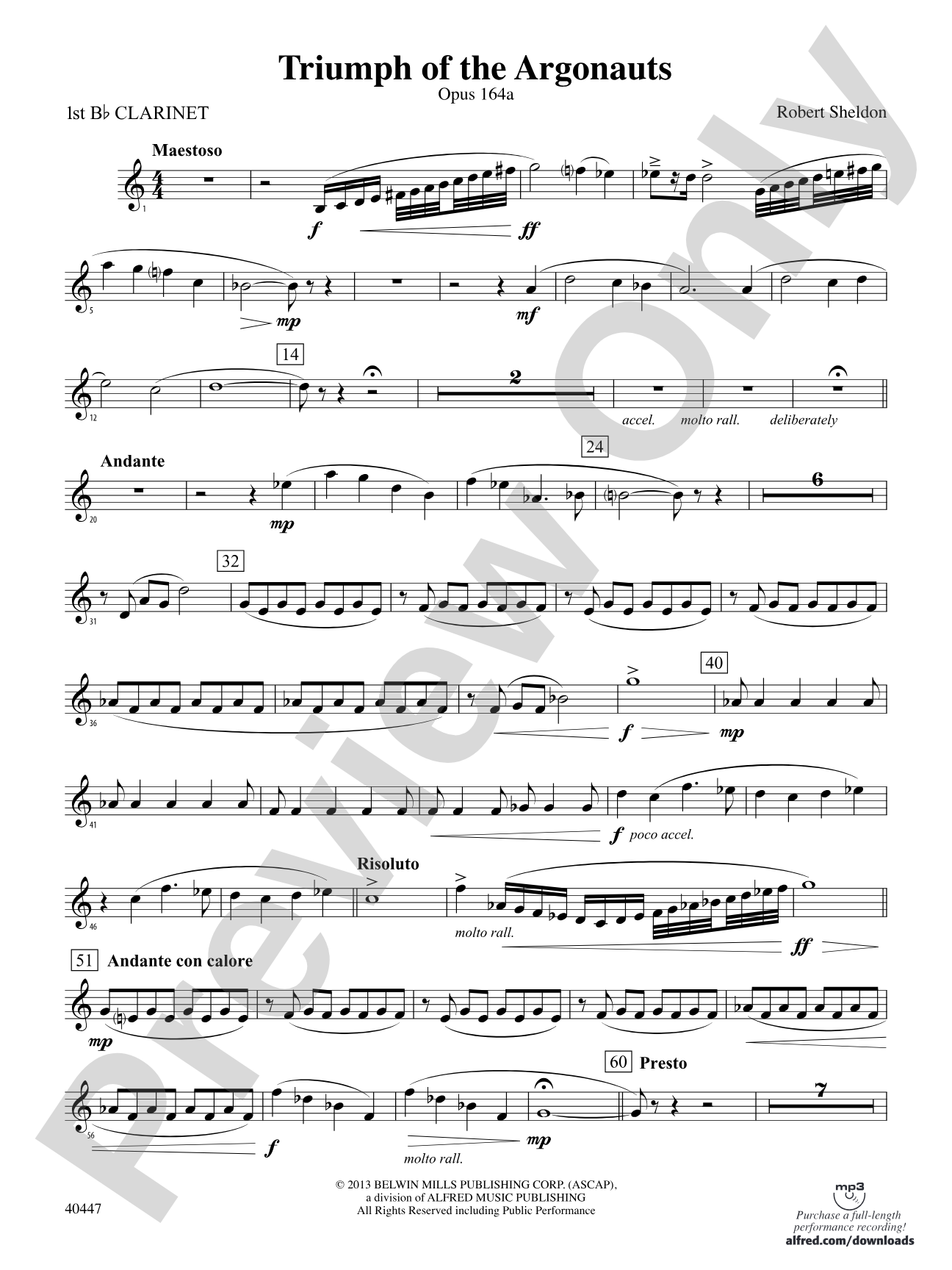

Triumph of the Argonauts: 1st B-flat Clarinet
Op. 164a
By Robert Sheldon
Grade: 4
Item: 00-PC-0015981_C1
$3.00
Pickup currently not available
Description
Inspired by the heroic journey of Jason in search of the Golden Fleece, this victorious piece is perfect for contest or festival, providing challenges for all sections. This title is available in MakeMusic Cloud.


Don't just read it, hear it, play along with it, and watch your students grow with it. In MakeMusic Cloud, Triumph of the Argonauts: 1st B-flat Clarinet comes alive with professional accompaniment, adjustable tempo, and built-in practice tools that turn solo practice into real progress.
Open in the Player
Jump straight in and assign it today.
Start Your Free Trial
Open this title and explore the full library in minutes.
Sample Audio
1
Audio File
--:--
0:00
0:00
Sample Video
No sample videos found.
Additional Details
Series:
Belwin Concert Full Orchestra
Publisher:
Alfred Music
Page Count:
236
SKU:
00-PC-0015981_C1
More about this title
About the Composer: Robert Sheldon

Robert Sheldon stands among today's most widely performed composers, with works that appear regularly on concert and contest programs across North America and beyond. His music has been performed at Carnegie Hall, Symphony Hall, Orchestra Hall, and the Kennedy Center, and he continues to accept commissions for new compositions each year. Sheldon has earned recognition from the American School Band Directors Association, Phi Beta Mu, and ASCAP, reflecting the depth and craft evident in every score he writes.
As lead author of Sound Innovations for Concert Band and a frequent clinician at state conferences and university music programs, Sheldon remains deeply engaged with music education. He serves regularly as guest conductor for All-State and Regional Honor Bands and has worked with ensembles across the United States, Japan, Canada, Italy, Germany, Australia, and China. In 2020, VanderCook College of Music awarded him an honorary doctorate in recognition of his contributions to the field.
Why we love this
Sheldon's programmatic writing invites orchestras to tell a story rather than simply execute passages, and the dramatic arc of Jason's quest gives every section a stake in the narrative. The scoring balances technical demands across the ensemble without abandoning musicality, making it rewarding for directors who want their students challenged but also heard. This is the kind of contest piece that sounds substantial without requiring years of advanced technique.
What to expect
The piece captures the sweep and determination of a mythic journey, with moments of heroic brass fanfares, lyrical string passages that recall longing and adventure, and a cumulative energy that builds toward triumph. Sheldon's orchestration breathes; there are moments of contemplation alongside passages of bold, full-ensemble momentum that make the victory feel earned.
Who it's for
Orchestra directors preparing ensembles for festival or contest who want repertoire that combines musical sophistication with accessible narrative appeal. Grade 4 orchestras will find technical demands that stretch developing players across all sections while staying within their reach, and the story gives younger musicians a framework for understanding phrasing and character.
How to get the most out of it
- Shape the opening material to establish the heroic character early; resist the urge to rush, as the foundation sets the tone for the entire narrative arc.
- Coordinate carefully between your brass and woodwind voices during moments where the story shifts momentum; clarity of line makes the program element resonate.
- Balance accompaniment and solo writing throughout. Sheldon often gives meaningful material to inner voices, so encourage your second and third players to own their parts fully.
- Use the full dynamic range the score offers. Programmatic music gains power when contrasts feel intentional and dramatic, not accidental.
How to use it
Pair this as a festival centerpiece or contest selection where you want to showcase both ensemble musicianship and the ability to convey narrative through orchestral color. It also works well alongside lighter concert openers, giving a program clear dramatic shape and appeal to audiences who connect with story-driven music.
Skills your students will build
- Sustaining lyrical phrasing in string and woodwind lines
- Balancing dynamic range to support programmatic storytelling
- Coordinating brass and woodwind section transitions at moderate tempos
- Reading and executing compound meter changes within a Grade 4 context
- Maintaining rhythmic precision during syncopated accompaniment patterns