
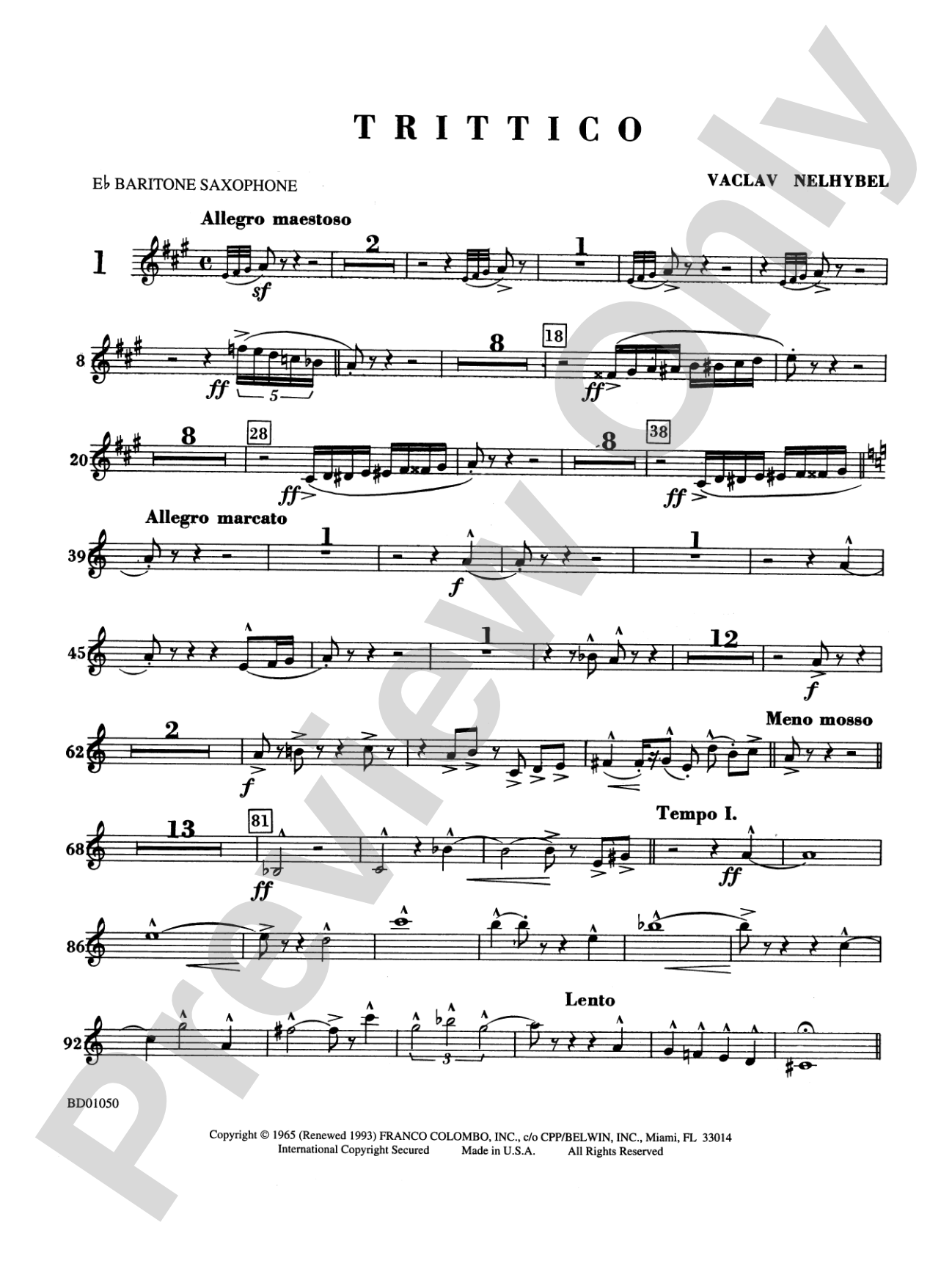

Trittico: E-flat Baritone Saxophone
By Václav Nelhýbel
Grade: 3.5 (Medium Easy to Medium)
Item: 00-PC-0001999_BTX
$3.00
Pickup currently not available
Description
This release celebrates the 30th anniversary of the first performance of this work by the conductor and band to whom it is dedicated: Dr. William Revelli and the University of Michigan Symphonic Band. This explosive composition with its dramatic use of mood and color is a must for every quality library. (10:42) This title is available in MakeMusic Cloud.


Don't just read it, hear it, play along with it, and watch your students grow with it. In MakeMusic Cloud, Trittico: E-flat Baritone Saxophone comes alive with professional accompaniment, adjustable tempo, and built-in practice tools that turn solo practice into real progress.
Open in the Player
Jump straight in and assign it today.
Start Your Free Trial
Open this title and explore the full library in minutes.
Sample Audio
1
Audio File
--:--
0:00
0:00
Sample Video
Additional Details
Series:
Belwin Classic Band
Publisher:
Alfred Music
Page Count:
324
SKU:
00-PC-0001999_BTX
More about this title
About the Composer: Vaclav Nelhybel
Vaclav Nelhybel (1919-1996) was a Czech-American composer whose prolific output shaped the concert band repertoire throughout the latter half of the twentieth century. He wrote over 150 works for band, many of which have become cornerstones of the standard literature, and his compositional voice—marked by accessible orchestration, clear formal structures, and genuine musical substance—made him a trusted voice for conductors building their libraries.
Nelhybel's approach to band writing prioritized color and contrast without sacrificing musical coherence. His works remain essential teaching tools for directors seeking to develop student musicianship through repertoire that demands precision, balanced voicing, and interpretive maturity.
Why we love this
Trittico delivers compositional sophistication at a grade level where such writing is genuinely rare. Nelhybel's command of harmonic color and structural clarity makes this work rewarding to teach and conduct; students engage with genuine musical ideas rather than exercises dressed up as concert pieces. The dramatic range and mood shifts keep ensemble energy high throughout rehearsal and performance.
What to expect
Trittico moves between sections of raw dramatic intensity and moments of introspective lyricism, all delivered with orchestral sophistication. The harmonic language is modern without being austere; students hear that contemporary composition can be both intellectually engaging and genuinely moving. The work has the sweep of a true concert piece.
Who it's for
This score works for conductors who have a solid Grade 3 or upper Grade 2.5 ensemble and want repertoire that actually rewards student musicianship. It fits programs where band music serves as the centerpiece of a concert rather than supporting material, and directors programming contest or festival performance will find genuine substance here.
How to get the most out of it
- Shape the dynamic contours deliberately across full phrases rather than treating the score as a series of isolated dynamic markings. Nelhybel's dramatic intent depends on creating clear peaks and valleys.
- Balance the distribution of melodic material across sections. Guide less experienced players to listen actively when they're not in the primary line; this transparency is essential for the work's color contrasts to register.
- Attend closely to the marked tempos between sections. The tempo relationships are compositional; transitions should feel deliberate, not abrupt.
- Resist the urge to rush the ensemble through technical passages. Clarity of articulation and clean attacks matter more than velocity here.
How to use it
Program Trittico as the anchor work for a fall festival performance or spring concert when your ensemble has sufficient rehearsal time to absorb its nuances. Pair it with lighter baroque or neoclassical pieces to let its dramatic intensity shine, or book it as the finale where its emotional arc can leave a strong closing impression. The 10-minute duration makes it substantial enough to anchor a half-program.
Skills your students will build
- Reading and executing precise dynamic shaping across multi-measure phrases
- Balancing sectional voicing with clear harmonic awareness
- Executing clean articulation in sustained and moving passages
- Responding to conductor gesture during tempo transitions between contrasting sections
- Sustaining ensemble focus through dramatic mood and color changes