Triple Threat: 1st Percussion Sheet Music Preview

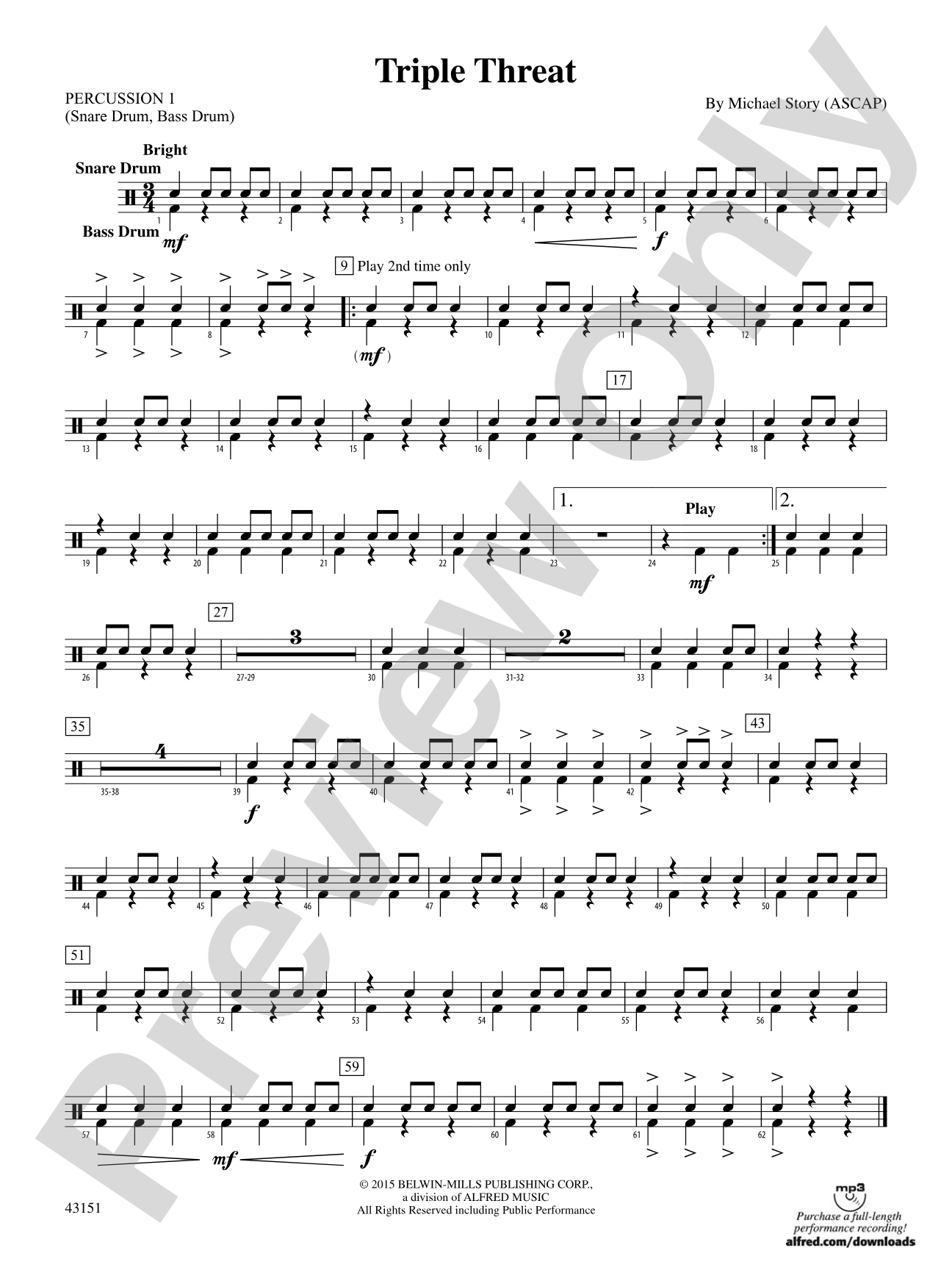
Triple Threat: 1st Percussion

By Michael Story

Grade: 0.5 (Very Easy)

Item: 00-PC-0016797_PC1

Digital Download
$3.00
Description
It's all about the threes! In triple meter, in ABA form with frequent use of three quarter note melodies, this is three times better for your first year band. Musically engaging, this will set them up for a triple play! (2:00)

Don't just read it, hear it, play along with it, and watch your students grow with it. In MakeMusic Cloud, Triple Threat: 1st Percussion comes alive with professional accompaniment, adjustable tempo, and built-in practice tools that turn solo practice into real progress.

Sample Audio
0:00
0:00
Sample Video
Additional Details
Series: Belwin Very Beginning Band
Publisher: Alfred Music
Page Count: 132
SKU: 00-PC-0016797_PC1

More about this title

About the Composer: Michael Story

Michael Story is a prolific composer and arranger whose catalog spans concert band, jazz ensemble, and wind band literature. His work is distinguished by accessibility without sacrifice of musical integrity, making him a trusted voice for music educators building foundational repertoire with developing ensembles.

Story has long understood that early-level compositions need engaging melodies and clear harmonic language to sustain student interest. His pieces for beginning bands consistently balance teachable moments with genuine musicality, allowing conductors to build technique while keeping rehearsals musically rewarding.

Why we love this

Story builds the entire piece around a single compositional constraint (triple meter and three-note melodies) without ever feeling didactic. First-year students get immediate success playing a real concert piece that sounds polished, while you gain a genuine musical framework for teaching meter recognition and phrase shaping.

What to expect

Bright and straightforward, with an almost folk-song simplicity that belies the compositional logic underneath. The ABA form creates natural arc and closure, while the repeated three-note figures give the piece a memorable, almost playful character that keeps young musicians engaged from start to finish.

Who it's for

Beginning concert bands in their first or second year, where students need to tackle triple meter without overwhelming harmonic or rhythmic complexity. This score and parts set works equally well for a first concert or a winter festival where musical confidence matters as much as technical precision.

How to get the most out of it

  • Lock the pulse at rehearsal by having the entire band count the triple feel aloud for the first two minutes of work. Triple meter trips up young musicians most when the beat subdivisions are unclear, so make the three-feel tactile before worrying about ensemble balance.
  • Shape the three-quarter-note figures as micro-phrases rather than individual notes. Young players tend to tongue each quarter note as an isolated attack; encourage them to hear each three-note group as one musical gesture with a gentle arrival point.
  • Emphasize the formal landmark of the return to A. Many first-year conductors miss the chance to use the ABA structure as a teaching tool; mark the score clearly and have students listen for their entrance back into the familiar material in the third section.
  • Keep the tempo conversational and unhurried. A two-minute piece can rush if the band feels pressure. Allow the steady triple meter to breathe, especially in the B section where students may encounter new textural roles.

How to use it

Program this as an opening piece on a first-year band concert to showcase early progress and establish a confident tone for the audience. It also sits well in a festival slot where judges appreciate efficient use of a brief format and clear compositional structure without sacrificing musicality.

Skills your students will build

  • Reading and conducting triple meter (3/4) with confidence
  • Phrasing three-note melodic units as cohesive musical ideas
  • Recognizing and responding to ABA formal structure
  • Building dynamic shape and expression in a simple harmonic environment
  • Playing balanced ensemble parts when melody rotates among sections

You May Also Like