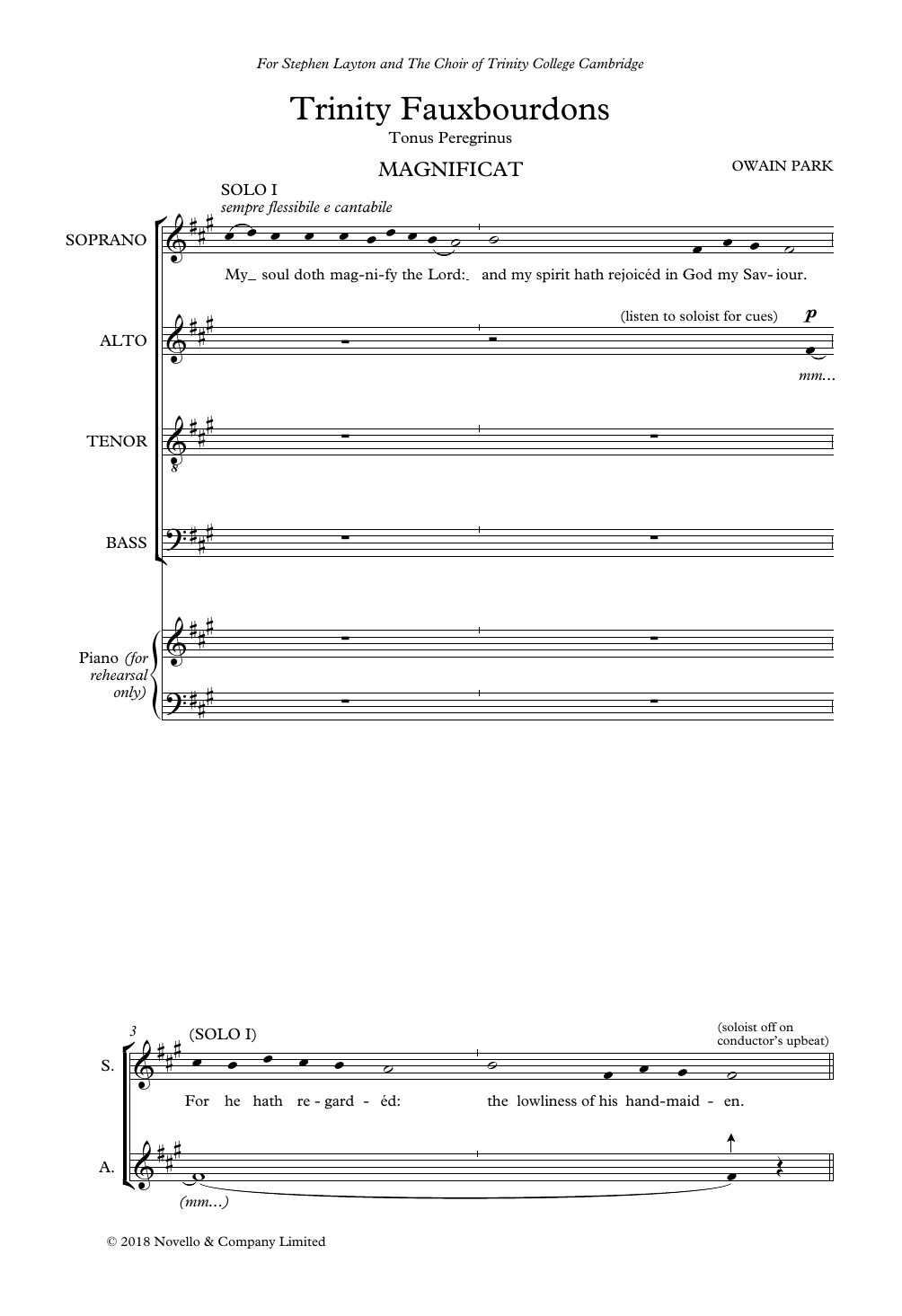
Trinity Fauxbourdons Sheet Music Preview

Trinity Fauxbourdons: SATB Choral Octavo

By Owain Park

Item: 35-DS01750171

Digital Download
$4.00
Description

Trinity Fauxbourdons: SATB Choral Octavo isn't in MakeMusic Cloud just yet...but it could be. Let us know you'd like to see it, and you'll help shape what comes next. In the meantime, start a free trial and dive into thousands of interactive titles your students can play along with today.

Sample Audio
No sample audio found.
Sample Video
Additional Details
Publisher: Hal Leonard
Page Count: 16
SKU: 35-DS01750171

More about this title

About the Composer: Owain Park

Owain Park is a Welsh composer and conductor whose work spans choral, orchestral, and sacred music. His compositions are marked by a gift for memorable melody and sophisticated harmonic language that appeals to both singers and audiences. Park's pieces appear regularly on concert programs across the UK and beyond, where they're valued for their musicality and relative accessibility.

Why we love this

Park's fauxbourdon technique creates a genuinely affecting harmonic texture without demanding extreme vocal ranges or atonal complexity. The piece rewards careful attention to blend and intonation while remaining within the reach of motivated high school and college choirs.

What to expect

The fauxbourdon creates a luminous, almost ethereal quality. Parallel sonorities unfold with clarity and directness, evoking both medieval and modern sensibilities at once. There's an understated elegance here, a sense of harmony serving emotion rather than display.

Who it's for

This octavo suits SATB choirs at the high school, college, and semi-professional levels who are comfortable with sustained writing and ensemble blend. It works equally well for choirs exploring modal and Renaissance-influenced harmony or those seeking contemporary repertoire that honors classical craft.

How to get the most out of it

  • Balance the parallel harmony blocks so that no single voice dominates; fauxbourdon writing depends on the listener hearing all four parts as equal contributors to the texture.
  • Shape each phrase with gentle dynamic swells rather than abrupt changes. The effect is cumulative, and restraint in individual phrases builds emotional weight across the full arc.
  • Tune the thirds and sixths by ear during rehearsal. The parallel harmony will expose intonation problems immediately, and singers often need to adjust expectations from equal temperament.

How to use it

Pair this with other contemporary settings of classical techniques or place it alongside Renaissance motets for a concert exploring harmonic language across centuries. Its moderate length and lyrical character make it ideal for a position where you want to reset the emotional temperature between more dramatic works.

Skills your students will build

  • Maintaining consistent tone quality in parallel voice-leading
  • Reading and tuning major and minor thirds within fauxbourdon harmony
  • Balancing four independent lines while creating unified ensemble blend
  • Responding to subtle dynamic shaping in music without text-driven drama

You May Also Like