
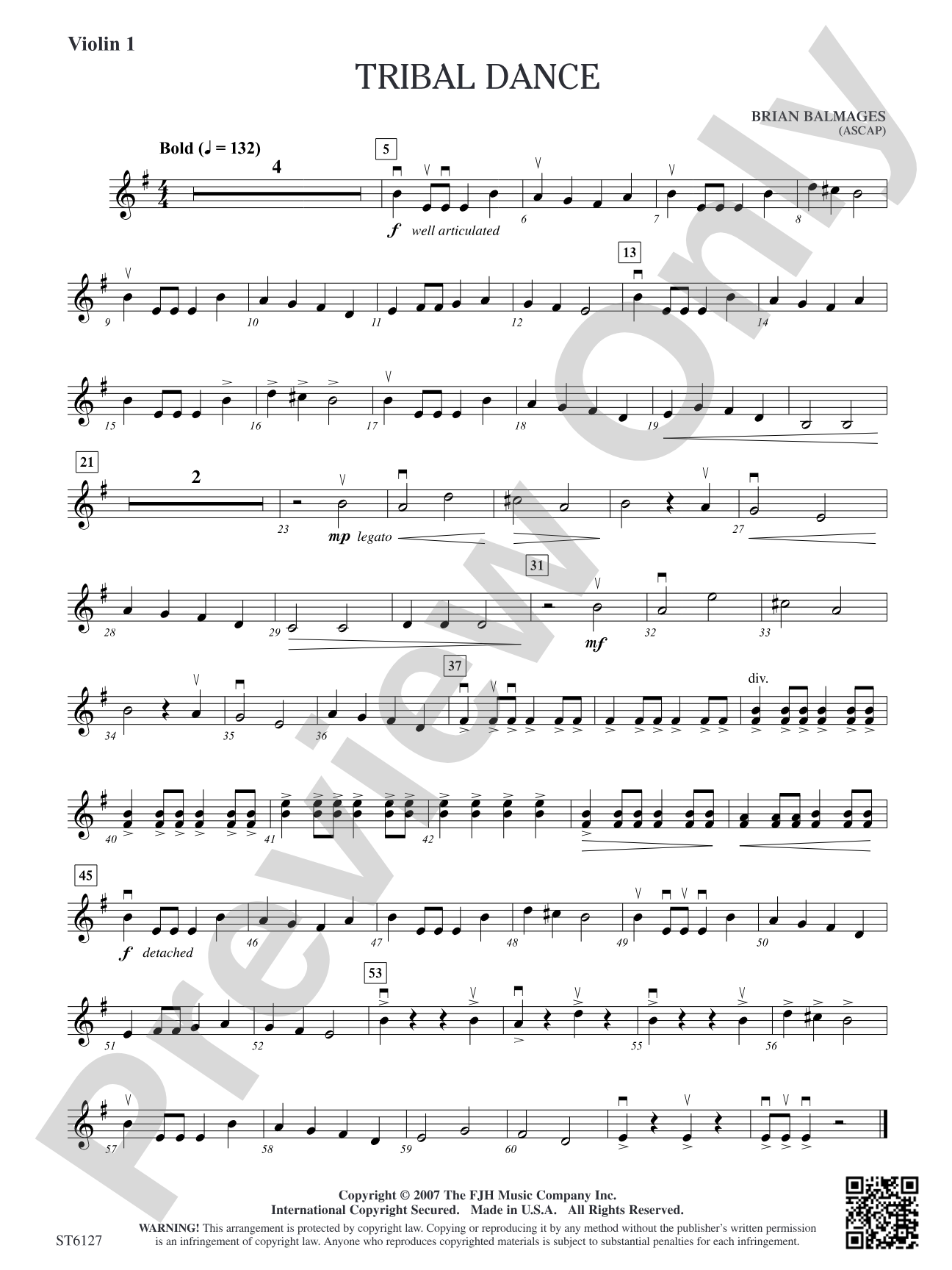

Tribal Dance: Violin 1
By Brian Balmages
Grade: 1
Item: 98-PC-DST6127_VN1
$7.00
Pickup currently not available
Description
Intense and driving rhythms conjure images of ancient tribal rituals in this thrilling new work for beginning string orchestra. The bold opening statements immediately grab your audience before a more dark and mysterious section reflects on the magical aspects of these gatherings. A dramatic ending caps this easy yet stunning work with optional percussion- sure to inspire your young musicians!


Tribal Dance: Violin 1 isn't in MakeMusic Cloud just yet...but it could be. Let us know you'd like to see it, and you'll help shape what comes next. In the meantime, start a free trial and dive into thousands of interactive titles your students can play along with today.
Request This Title
Tell us you want it.
Start Your Free Trial
Explore everything that's ready to play right now.
Sample Audio
1
Audio File
--:--
0:00
0:00
Sample Video
No sample videos found.
Additional Details
Series:
FJH Beginning Strings
Publisher:
The FJH Music Company, Inc.
SKU:
98-PC-DST6127_VN1
More about this title
About the Composer: Brian Balmages

Brian Balmages has established himself as a composer and conductor working across orchestral, band, and chamber repertoires at the highest levels. His compositions have been commissioned and performed by professional orchestras, university ensembles, and school groups in some of the world's most prestigious venues, including Carnegie Hall, the Kennedy Center, and the Sydney Opera House. He received the A. Austin Harding Award from the American School Band Directors Association and won the 2020 NBA William D. Revelli Composition Contest for Love and Light.
Beyond composition, Balmages maintains an active conducting schedule that takes him to all-state ensembles, university orchestras, and professional groups internationally. He has guest conducted at major conferences including the Midwest Clinic and College Band Directors Conference, and his work was performed during the 2013 Presidential Inaugural Prayer Service. He currently serves as Director of MakeMusic Publications and Digital Education for Alfred and MakeMusic.
Why we love this
Balmages has a gift for writing opening gestures that stop rehearsals in their tracks, and this piece delivers exactly that. The architecture is smart: an immediate hook that commands attention, a contrasting section that develops musicianship through texture and color, and a payoff ending that reminds your orchestra why they chose to play strings in the first place.
What to expect
The opening hits like a ceremonial drum call, primal and direct. Then the music pulls inward into shadows and mystery, with sustained harmonies that feel ancient and hypnotic. The final section erupts with all the power of tribal celebration, leaving audiences exhilarated.
Who it's for
Beginning string orchestras hungry for music that sounds bigger than Grade 1 and grabs audience attention immediately. This works equally well for schools building confidence in new string programs or those looking to showcase what young musicians can accomplish at the elementary and early middle school level.
How to get the most out of it
- Lock the rhythmic foundation in the lower strings first. Once your cellos and basses establish the driving pulse with confidence, the upper voices lock in naturally and the whole piece gains its intended intensity.
- Shape the mysterious middle section by varying bow weight rather than tempo. Lighter bow strokes on held notes create the magical quality Balmages writes into this section without losing the structural momentum.
- Bring the optional percussion parts into rehearsal once the strings are secure. The addition transforms the ending from effective to genuinely thrilling, and young musicians respond to that collective energy.
- Mark the transitions between sections clearly in your conducting. Your orchestra will follow the shift from bold to mysterious to climactic if your gestures make the structural points unmistakable.
How to use it
Schedule this early in a concert where you need maximum impact from your developing orchestra. The dramatic arc and cultural resonance work particularly well in multicultural programs or in spots where you're introducing audiences to what string ensembles can express. Consider pairing it with another Grade 1 work that's more lyrical to show range.
Skills your students will build
- Ensemble rhythmic cohesion in driving, syncopated patterns
- Sustaining tone quality across shifting dynamics and textures
- Responding to structural changes and conducting gestures
- Reading and executing contrasting character sections within a single work
- Rhythmic independence within ensemble contexts