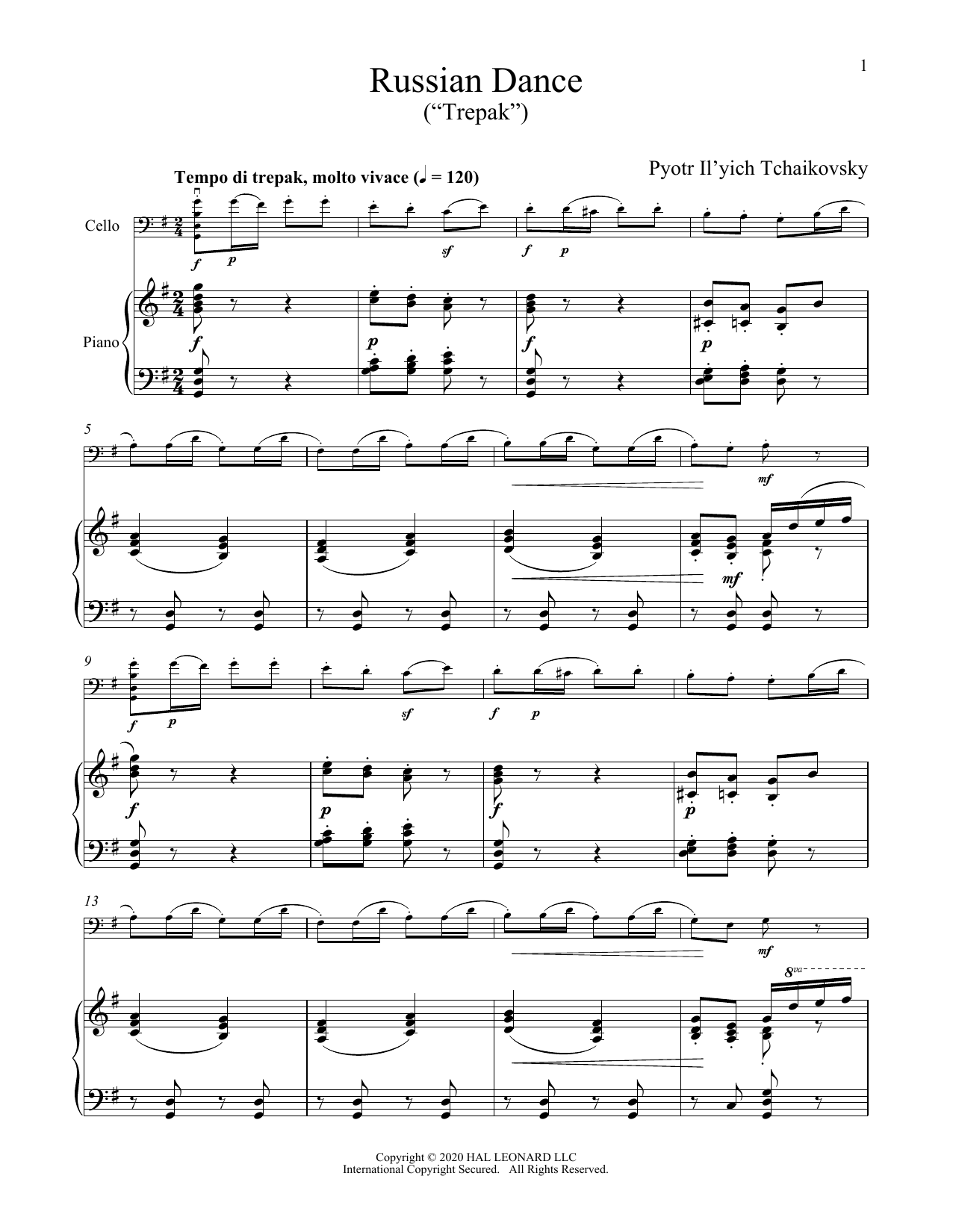
Trepak (from The Nutcracker) Sheet Music Preview

Trepak (from The Nutcracker): Cello and Piano

By Pyotr Il'yich Tchaikovsky

Item: 35-DS00472394

Digital Download
$5.99
Description

Discover MakeMusic Cloud: thousands of interactive titles your students can play along with today.

Sample Audio
No sample audio found.
Sample Video
Additional Details
Publisher: Hal Leonard
Page Count: 5
SKU: 35-DS00472394

More about this title

About the Composer: Pyotr Il'yich Tchaikovsky

Pyotr Il'yich Tchaikovsky (1840-1893) shaped the sound of 19th-century Russia, blending Western European forms with distinctly Russian melodic character. His gift for writing memorable, emotionally direct themes made him one of the most performed composers in the concert hall and the ballet studio.

The Nutcracker, premiered in 1892, stands as one of the most beloved ballets ever written. Its genius lies not in complexity but in Tchaikovsky's ability to craft character pieces that are instantly singable, visually evocative, and endlessly rewarding to perform at many levels.

Why we love this

Trepak is instantly recognizable, rhythmically energetic, and structured in a way that gives cellists genuine musical statement without requiring virtuosic passage work. The piece sits perfectly for intermediate students while sounding impressive to audiences who know it from the ballet, making it an excellent choice for holiday concerts or general repertoire.

What to expect

Bright, spirited, and rhythmically insistent. The Trepak bounces with the energy of a winter celebration, full of forward momentum and infectious joy, yet with moments of lyrical warmth that keep it from feeling merely decorative.

Who it's for

Intermediate cellists working toward more sophisticated repertoire. This transcription is also ideal for students preparing a holiday concert program or anyone seeking a short, audience-friendly character piece that has real musical depth.

How to get the most out of it

  • Lean into the rhythmic drive of the opening theme; this is a Russian folk dance, so the pulse should feel grounded and propulsive rather than delicate
  • Shape the melody in phrases that breathe with the piano's harmonic movement, especially through key areas
  • Balance the technical passages in the middle section with the lyrical material around them to keep the narrative clear

How to use it

Feature this on a winter or holiday concert for immediate audience recognition and engagement. It pairs well with other shorter character pieces or can anchor a mixed-level recital, and its modest length makes it an excellent pairing with a longer work or chamber piece in the same program.

Skills your students will build

  • Stylistic awareness of Russian folk material and Romantic-era character pieces
  • Phrasing in a melody-driven context with active piano accompaniment
  • Clear articulation and rhythm in the dance idiom
  • Tone control across varying dynamic levels

You May Also Like