Tre sbirri ... Una carrozz Sheet Music Preview

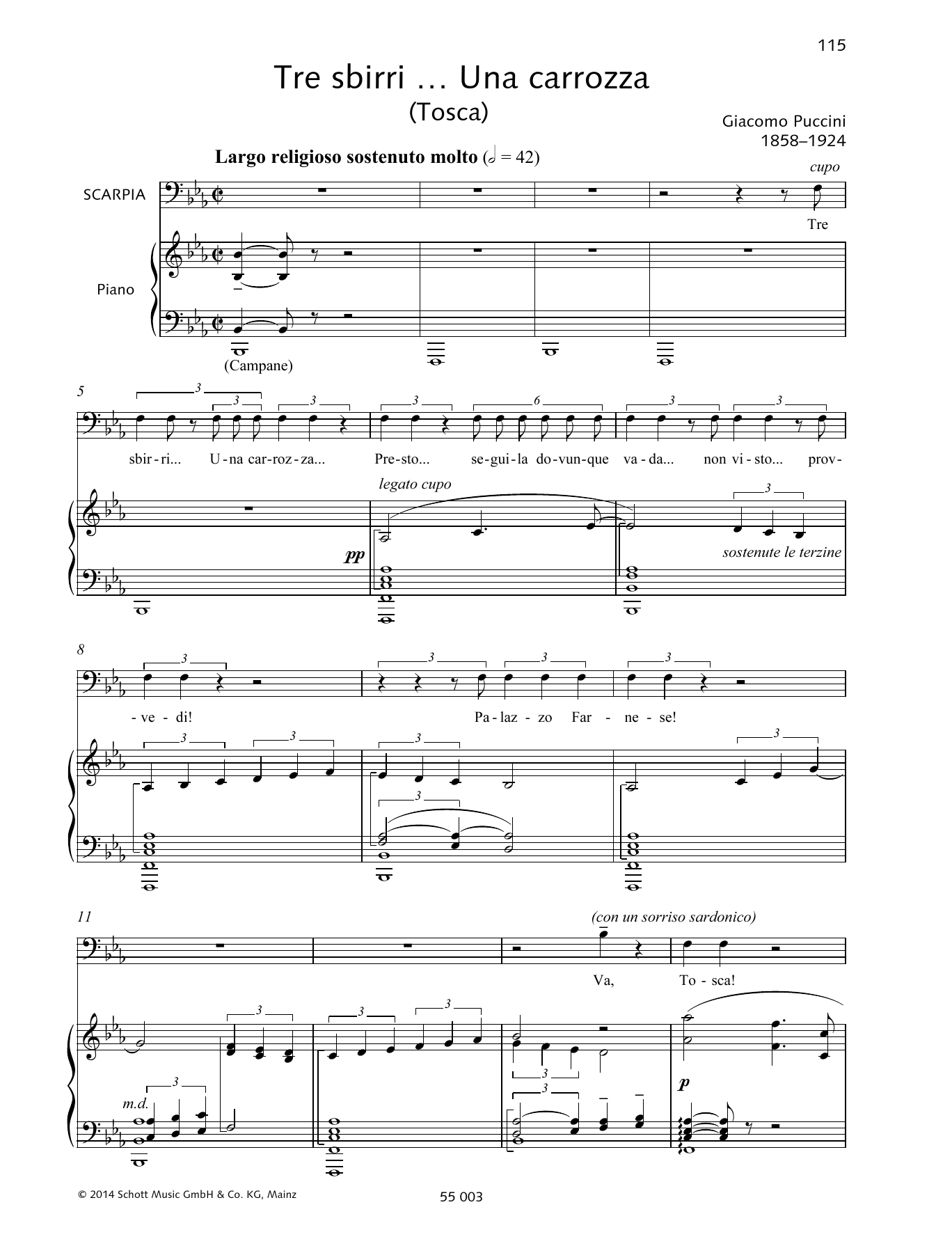
Tre sbirri... Una carrozz: Piano Vocal

By Giacomo Puccini / Arranged by Francesca Licciarda

Item: 35-DS00369793

Digital Download
$4.99
Description

Tre sbirri... Una carrozz: Piano Vocal isn't in MakeMusic Cloud just yet...but it could be. Let us know you'd like to see it, and you'll help shape what comes next. In the meantime, start a free trial and dive into thousands of interactive titles your students can play along with today.

Sample Audio
No sample audio found.
Sample Video
Additional Details
Publisher: Hal Leonard
Page Count: 6
SKU: 35-DS00369793

More about this title

About the Composer: Giacomo Puccini

Giacomo Puccini (1858–1924) shaped the operatic landscape of the late nineteenth and early twentieth centuries with his gift for melody and dramatic instinct. His operas, including La bohème, Tosca, and Madama Butterfly, remain cornerstones of the repertoire because they balance sophisticated harmonic language with unforgettable vocal lines that connect directly to audiences.

For music educators, Puccini's work offers a masterclass in text setting and character development through music. His arias and ensembles teach singers how to phrase operatic lines with both technical precision and emotional authenticity, making him essential study for voice students serious about classical repertoire.

Why we love this

This excerpt captures Puccini at his most theatrical. The piano part demands nimble accompaniment while the vocal line floats above with the kind of lyrical elegance that makes singers want to return to it again and again. It's the sort of material that convinces students why opera matters.

What to expect

Bustling urban energy mixed with Puccini's characteristic lyricism. The music captures characters in motion, their voices cutting through an active harmonic landscape that feels both grounded and buoyant.

Who it's for

Singers with solid foundational technique who are beginning to explore operatic repertoire will find this excerpt manageable and immediately rewarding. Accompanists preparing collaborative pianists should note the harmonic density relative to its modest page count.

How to get the most out of it

  • Balance the vocal line generously in the upper register without letting the piano disappear; Puccini writes conversational moments that require both parts to breathe together.
  • Attend carefully to the harmonic movement in the piano, which supports specific moments of dramatic tension. Slight tempo adjustments here pay dividends in the voice.
  • Shape phrases according to the Italian text; Puccini's syllabic writing means every word carries weight, so clarity of diction serves the music's dramatic arc.

How to use it

Include this in a voice recital exploring Italian opera, or program it alongside other short operatic scenes to demonstrate how composers build character through song. It works well in studio classes where singers are developing interpretation skills in the classical idiom.

Skills your students will build

  • Singing with accurate pitch in Puccini's chromatic harmonic language
  • Coordinating breath, phrase shape, and text delivery across short operatic forms
  • Accompanying singers while maintaining rhythmic clarity in an active texture
  • Interpreting Italian language opera with appropriate dramatic inflection

You May Also Like