
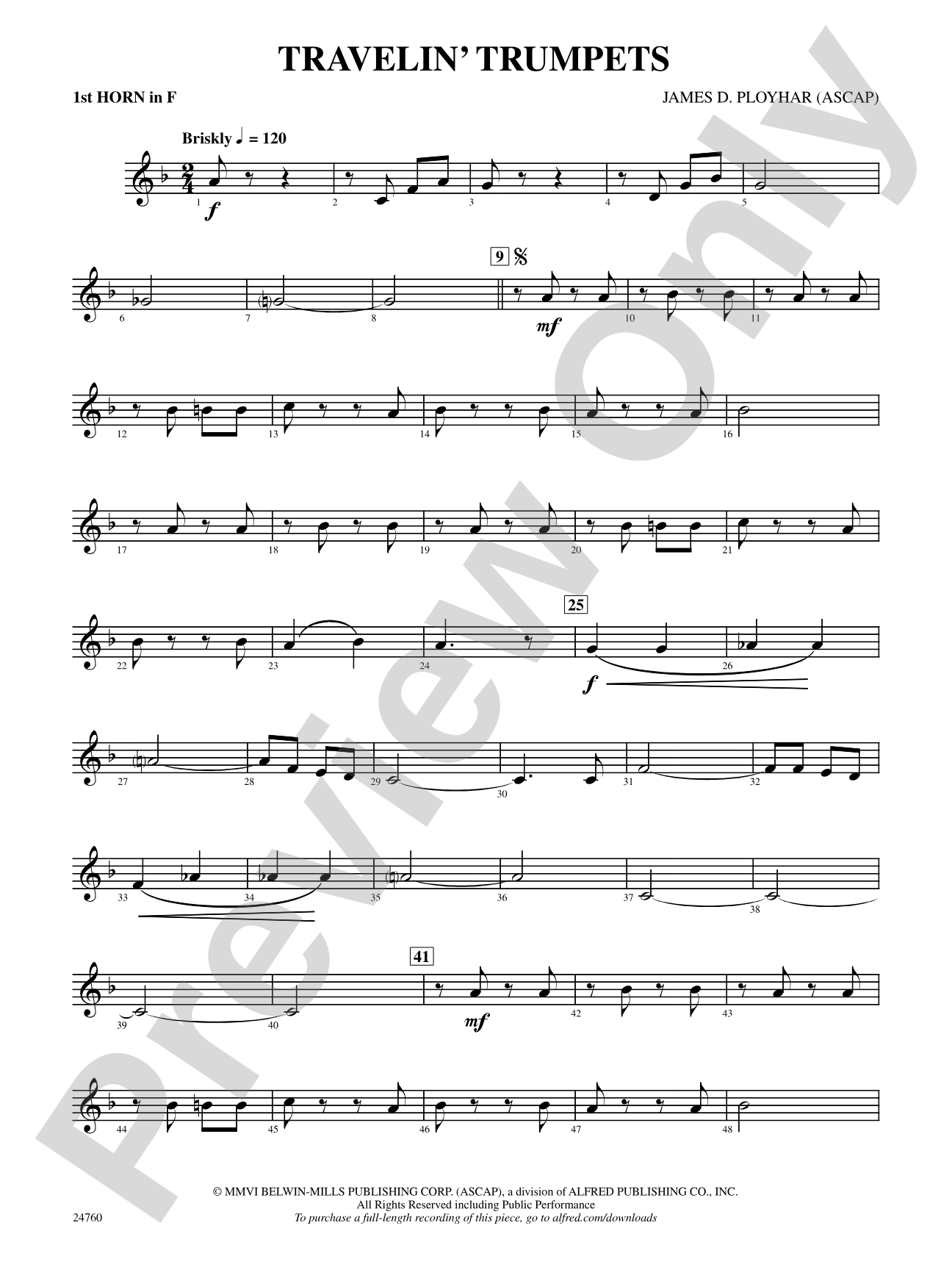

Travelin' Trumpets: 1st F Horn
Trumpet Section Feature
By James D. Ployhar
Grade: 3 (Medium Easy)
Item: 00-PC-0000904_H1
$3.00
Pickup currently not available
Description
The trumpet section moves front and center to demonstrate their lightning technique required to perform Travelin' Trumpets. The director is encouraged to proivide a brisk tempo which should cause fingers to fly. The band accompaniment is rather easy since the trumpet section does most of the work. Hopefully, nothing will catch fire!


Don't just read it, hear it, play along with it, and watch your students grow with it. In MakeMusic Cloud, Travelin' Trumpets: 1st F Horn comes alive with professional accompaniment, adjustable tempo, and built-in practice tools that turn solo practice into real progress.
Open in the Player
Jump straight in and assign it today.
Start Your Free Trial
Open this title and explore the full library in minutes.
Sample Audio
1
Audio File
--:--
0:00
0:00
Sample Video
No sample videos found.
Additional Details
Series:
Belwin Concert Band
Publisher:
Alfred Music
Page Count:
232
SKU:
00-PC-0000904_H1
More about this title
About the Composer: James D. Ployhar
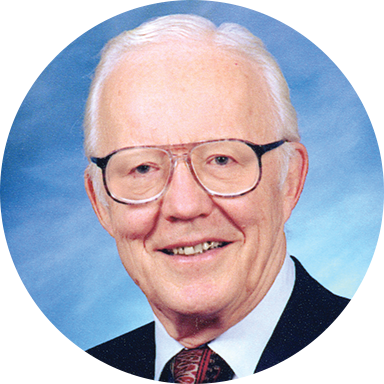
James D. Ployhar has established himself as a prolific composer and music educator with more than 800 published works to his name. His pedagogical influence extends globally through the Contemporary Band Course, originally his creation and now published by Alfred Music, which has been adopted widely in schools across the United States and translated into French and Norwegian for use throughout Scandinavia. His compositional foundation was strengthened through study with Morris Hutchings Ruger at California State University-Long Beach, and his orchestration knowledge was deepened through collaboration with Knud Havalde of the Danish Royal Philharmonic Orchestra.
Beyond the page, Ployhar has shaped band music through nearly two decades of public school teaching and countless clinics at the university level across the United States, Canada, Norway, Germany, and England. His contributions have been recognized with the National Band Association Citation of Excellence and the Distinguished Alumnus Award from Valley City State University. He holds membership in the American Bandmasters Association and continues to influence music education through works that balance musical substance with practical classroom needs.
Why we love this
Ployhar knows exactly what energizes an audience and what makes a trumpet section feel like stars. The lightning-quick technical demands fall squarely on the players who should carry them, while the rest of the band stays accessible enough that rehearsal time focuses on feature support rather than struggling with ensemble parts. The novelty framing gives you permission to program something fun without sacrificing musicianship.
What to expect
Bright, propulsive, and playful. Fingers fly, the trumpet line soars above a snappy accompaniment, and the whole performance radiates the kind of joy that comes from watching skilled players do what they do best. The novelty tag doesn't mean silly; it means confident, entertaining, and built for applause.
Who it's for
Concert bands at the Grade 3 level looking to spotlight a strong trumpet section and build audience engagement with a piece that showcases technical fireworks. It works equally well for directors who want their trumpets to feel the thrill of carrying a feature without asking the rest of the ensemble to handle complex material.
How to get the most out of it
- Push the tempo to the upper limit of what your trumpet section can handle cleanly. The piece lives in that space where speed and precision meet; too slow dulls the whole effect.
- Balance the trumpet feature prominently in the mix without burying the band parts. The accompaniment should support like a good rhythm section at a jazz club, not disappear.
- Mark the rhythmic figures in the supporting sections clearly in rehearsal. Even easy parts need to sit tight together so the trumpets have a rock-solid foundation for their runs.
How to use it
Land this near the middle of a concert where energy can climb after opening pieces, or use it as a closer if you want to send the audience out energized. It pairs well on a program with more lyrical selections, providing contrast and a moment for the band to celebrate its trumpet section in front of an audience.
Skills your students will build
- Fast articulation and finger technique in sustained scalar and scalar-based passages
- Playing trumpet features with appropriate balance and projection over band accompaniment
- Maintaining ensemble precision at quick tempos while executing rapid note sequences
- Responding to conductor tempo choices and adapting technical execution to varying speeds