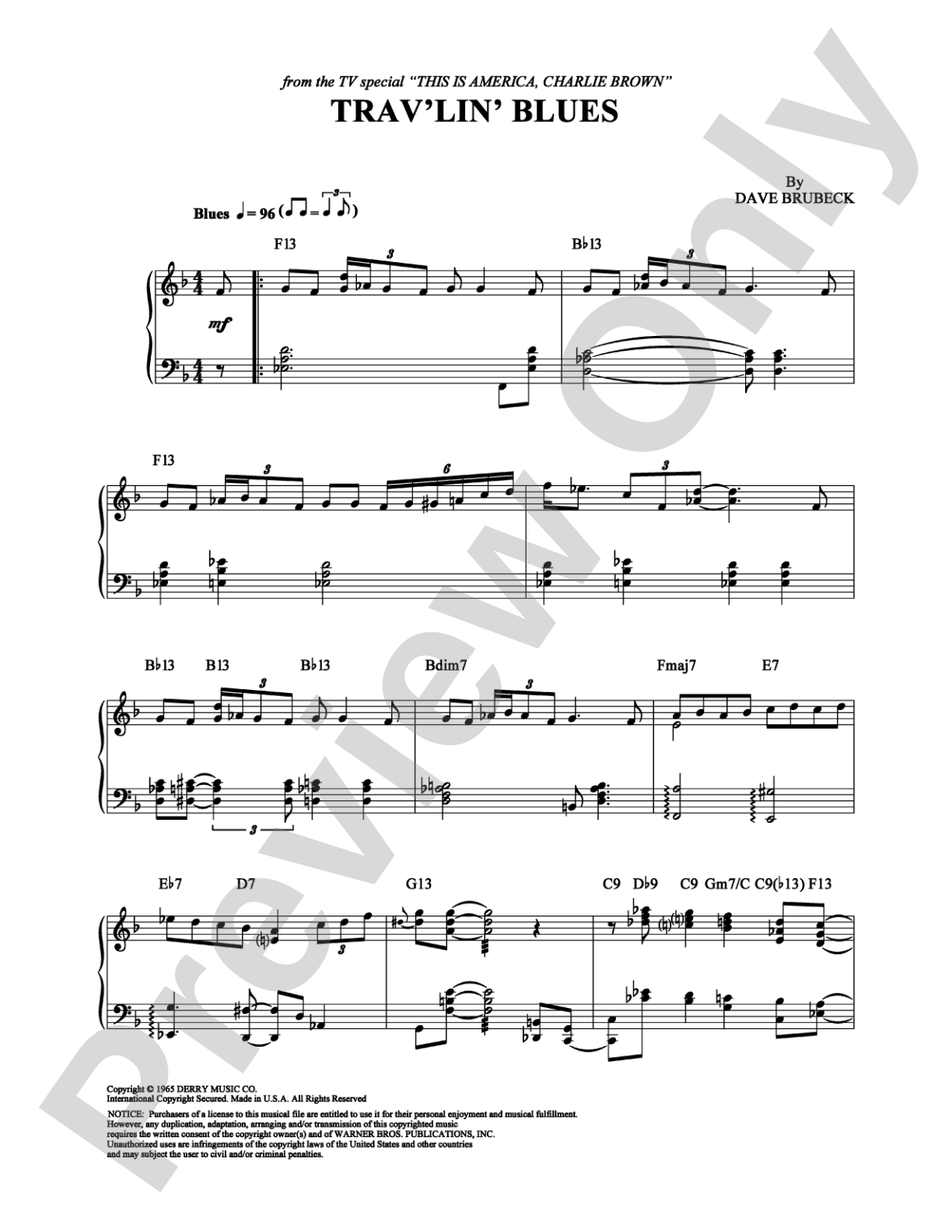
Trav'lin' Blues: Piano Digital Sheet Music

Trav'lin' Blues: Piano Digital Sheet Music

Dave Brubeck

Item: 00-PS-0000953

Digital Download
$3.99
Description

Trav'lin' Blues: Piano Digital Sheet Music isn't in MakeMusic Cloud just yet...but it could be. Let us know you'd like to see it, and you'll help shape what comes next. In the meantime, start a free trial and dive into thousands of interactive titles your students can play along with today.

Sample Audio
No sample audio found.
Sample Video
Additional Details
SKU: 00-PS-0000953

More about this title

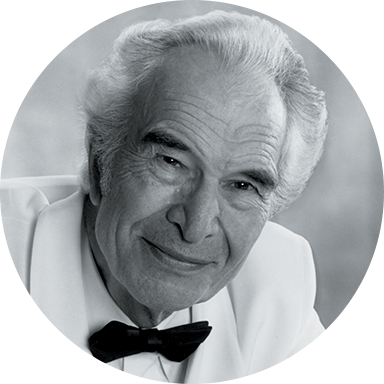
About the Artist: Dave Brubeck

Dave Brubeck

Dave Brubeck stands as one of jazz's most inventive pianists, a musician equally comfortable improvising over complex harmonic structures and composing fully realized works across multiple genres. His body of work spans jazz standards, choral compositions, orchestral pieces, chamber music, and solo works for piano and other instruments. He studied composition with Darius Milhaud at Mills College following World War II, an experience that shaped his lifelong integration of jazz language with classical forms.

Brubeck's cultural impact extended far beyond the recording studio. His 1959 album "Time Out" became the first jazz record to sell over a million copies, introducing millions to sophisticated jazz harmony and rhythm. Beyond music, he was a pioneering figure in breaking racial barriers in mid-twentieth-century America. His sacred works, including the mass "To Hope!" and the oratorios "The Voice of the Holy Spirit" and "Beloved Son," have been recorded by major ensembles including the London Symphony Orchestra. His lifetime achievements earned him a Grammy Lifetime Achievement Award, the Presidential Medal of the Arts, and induction into the American Classical Music Hall of Fame.

Why we love this

Brubeck's "Trav'lin' Blues" captures the sophisticated harmonic sensibility and swing-era groove that made him essential listening for any pianist interested in jazz language. The piece balances improvisation-friendly structures with enough notational clarity that pianists can unlock Brubeck's harmonic vocabulary and phrasing without guesswork. It's a compelling choice for recitals or programs exploring the intersection of composed jazz and performance freedom.

What to expect

Relaxed and grounded, with the easy conversational quality of a blues in motion. The piece has a traveling quality in its title and harmonic movement, inviting the performer into a groove that feels both straightforward and harmonically sophisticated.

Who it's for

Pianists with intermediate-to-advanced jazz literacy looking for authentic Brubeck material at a manageable technical level. This works equally well for students developing jazz improvisation skills and for recitalists seeking repertoire that demonstrates command of blues language and swing feel.

How to get the most out of it

  • Observe the rhythmic placement of the melody against the walking or laid-back harmonic backdrop; Brubeck's compositions often reward a slightly behind-the-beat phrasing that sits differently than classical repertoire.
  • Use the harmonic structure as your improvisation framework rather than feeling bound to every note on the page. Brubeck composed pieces specifically to accommodate solo interpretation.
  • Pay attention to dynamic shaping within phrases. Jazz phrasing often involves subtle volume rides that bring out melodic contour without dramatic swells.

How to use it

Pair this with other jazz standards or classical pieces to create a program exploring twentieth-century harmony and vernacular traditions. It works especially well in informal recital settings or educational concerts where you want to spotlight jazz composition alongside classical forms.

Skills your students will build

  • Walking bass lines and comping patterns
  • Blues harmony and chromaticism
  • Swing eighth-note feel and rhythmic placement
  • Improvisation within a composed structure
  • Jazz articulation and phrasing

You May Also Like