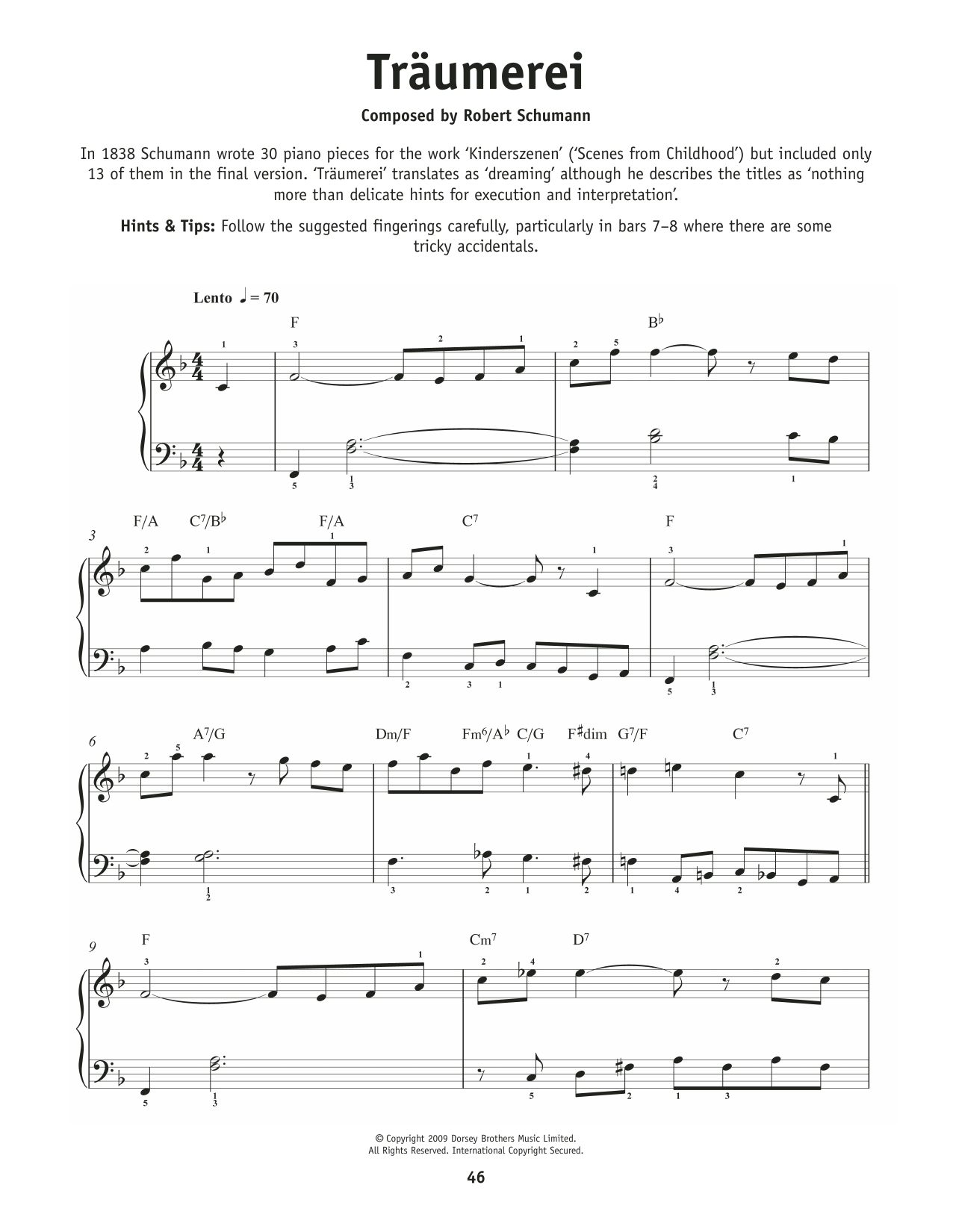
Robert Schumann (1810-1856) shaped Romantic piano music by bringing literary sensibility and harmonic innovation to the instrument. His gift for writing character pieces—short works with distinct emotional identities—made the piano a vehicle for intimate storytelling rather than virtuosic display alone.
Schumann's works for solo piano remain central to music education because they reward both technical development and interpretive maturity. His melodies sing naturally under the hands, while his harmonic language opens students' ears to the expanded possibilities of Romanticism.
Why we love this
Traumerei distills everything that makes Schumann essential: a singing melody that floats effortlessly over gentle accompaniment, harmonic turns that surprise without overwhelming, and emotional depth that feels earned rather than imposed. It sits at exactly the right technical level for intermediate pianists who are ready to shape a phrase but don't need to conquer Liszt-level difficulties.
What to expect
Intimate and contemplative. The melody drifts like a thought half-remembered, supported by gently undulating accompaniment that creates space rather than urgency. There's a quiet lyricism here that invites listeners into a moment of private reflection.
Who it's for
Intermediate pianists ready to play repertoire with real musical content and emotional maturity. This work makes sense for students around Grade 4-5 ABRSM or RCM levels who can sustain legato and manage unequal hand independence.
How to get the most out of it
Shape the melody with your weight and timing rather than aggressive dynamics; Schumann's writing speaks clearly when you let the voice emerge naturally from the texture
Listen for the harmonic movement underneath the right hand, which gives you structural guideposts for where phrases actually breathe
Resist rushing the gentle sections, which often feel slower in the moment than they sound to an audience
Experiment with the pedal to create atmosphere, but change it frequently enough to keep the harmony transparent
How to use it
Traumerei works beautifully in recitals as a palate cleanser between larger works or as the centerpiece of a short Schumann program. It also serves well as the emotional anchor in a Romantic piano concert, giving both performer and audience a moment of rest.
Skills your students will build
Sustaining legato melody while managing independent accompaniment texture
Reading and interpreting Romantic-era harmonic language and voice leading
Shaping phrases without relying on tempo changes
Pedal technique for creating color and sustain without muddying harmony
Understanding character and mood through subtle dynamic and tonal choices
You May Also Like
Scan to Complete Your Purchase
Use your phone's camera to scan the code below
You'll log in on your phone and the order will be added to your account