

Train Come Runnin': TB a cappella Choral Octavo
Words and music by Andy Beck
Item: 00-PO-0007876
$2.40
Minimum order quantity: 20 copies
Pickup currently not available
Related Items
Train Come Runnin': TB a cappella Choral Octavo |
$2.40
|
View |
Description
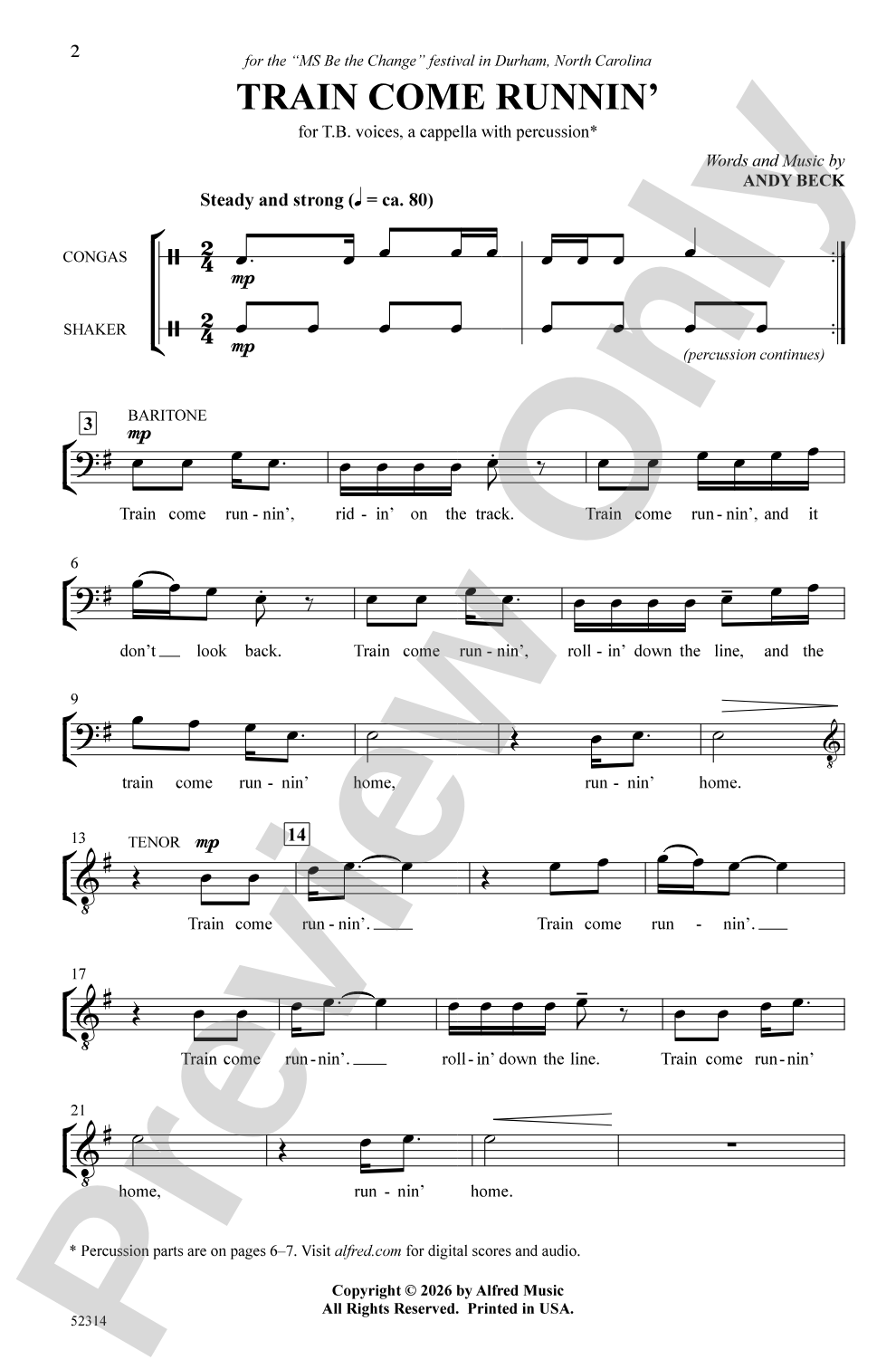
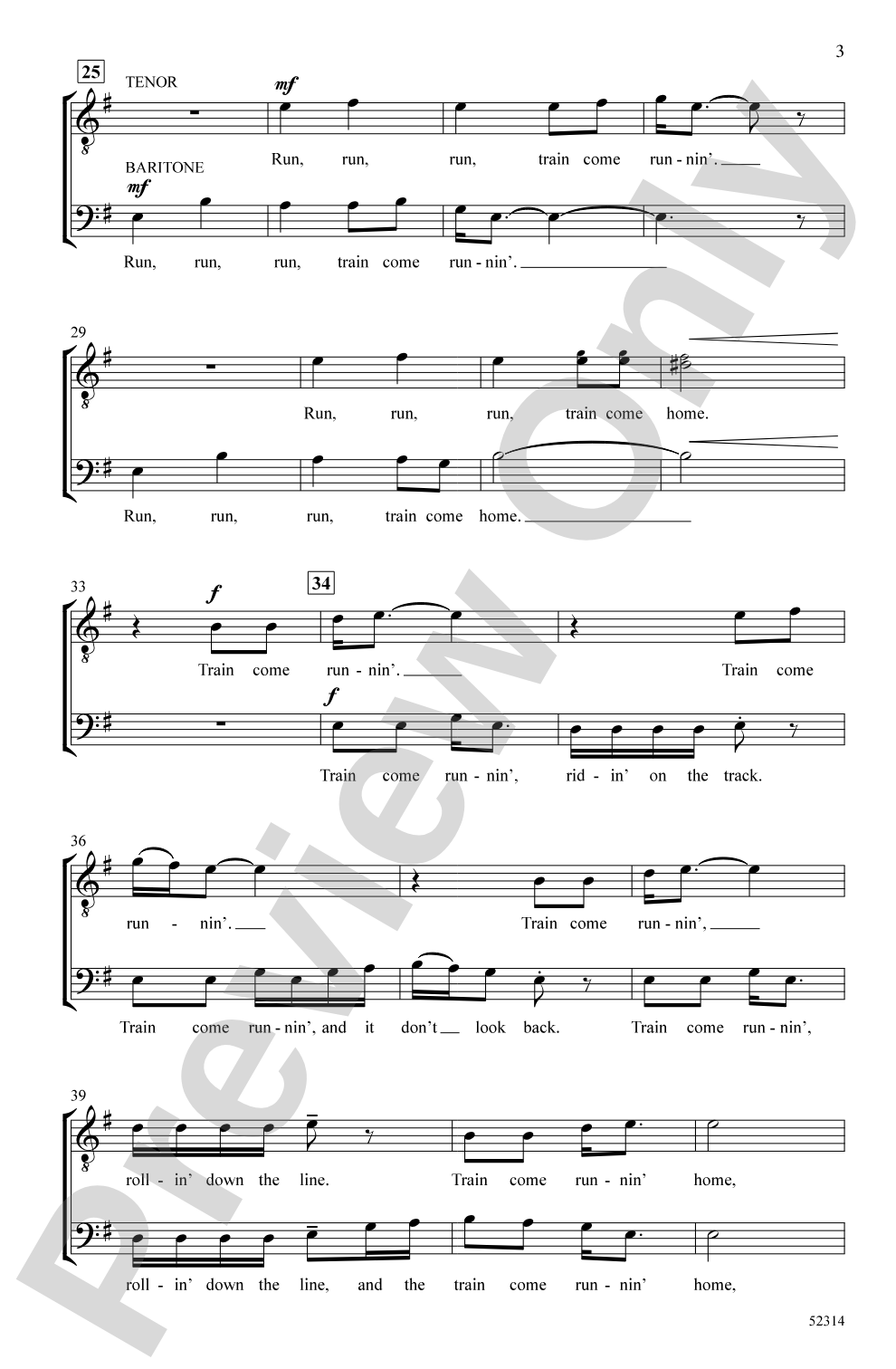
A cappella singers imitate the sounds of "steam in the engine" and "steel on the track" in this original workman's song constructed especially for emerging voices. Basses first, then tenors; each section introduces their hardy hook, sung in a modest tessitura, accompanied by a rhythmic shaker and conga ostinato. After a brief independent-entrance bridge, the two lines link in solid singable polyphony. It's a great piece to build confidence and skills in developing singers.


Train Come Runnin': TB a cappella Choral Octavo isn't in MakeMusic Cloud just yet...but it could be. Let us know you'd like to see it, and you'll help shape what comes next. In the meantime, start a free trial and dive into thousands of interactive titles your students can play along with today.
Request This Title
Tell us you want it.
Start Your Free Trial
Explore everything that's ready to play right now.
Sample Audio
1
Audio File
--:--
0:00
0:00
Sample Video
Additional Details
Series:
Alfred Choral Designs
Publisher:
Alfred Music
Page Count:
8
SKU:
00-PO-0007876
Instrumentation:
Congas, Shaker
More about this title
About the Composer: Andy Beck

Andy Beck directs choral publications at Alfred Music and has composed and arranged over 450 choral works for singers at every level. His output spans concert pieces, vocal resources, children's musicals, and pedagogical materials including Sing at First Sight, Foundations in Choral Sight Singing, and Vocalize! 45 Vocal Warm-Ups That Teach Technique. His compositions are performed by choirs worldwide, as a quick search on YouTube will demonstrate.
Beyond publishing, Beck works regularly as a guest conductor, choreographer, adjudicator, and clinician for music educators across the United States and internationally. He has served as commissioned composer and guest conductor for honor choirs and all-state groups throughout the Southeast. Beck holds degrees in Music Education from Ithaca College and Northwest Missouri State University; he maintains active performance work as a tenor, directing musical theatre and singing with the North Carolina Master Chorale Chamber Choir.
Why we love this
Beck writes with deep understanding of what emerging singers need to gain confidence and independence. The construction here is clever: two single-line hooks that are genuinely singable, rhythmic percussion that locks the groove without overwhelming, and a bridge that demands focus before the payoff of genuine two-part harmony. It's a concert piece that also teaches.
What to expect
Industrial, rhythmic, and grounded in folk tradition. The imitated sounds of steam and steel give the piece texture and character while the solid hooklines feel earned and satisfying when they lock together. There's pride in the singing here, a workman's steadiness that resonates beyond the novelty of the onomatopoeia.
Who it's for
Emerging TB or upper-level youth choir singers who benefit from clear, achievable melodic lines and a performance vehicle that builds both vocal confidence and ensemble awareness. Directors seeking a concert piece that simultaneously strengthens sight-reading, part independence, and the experience of genuine two-part singing.
How to get the most out of it
- Establish the rhythmic ostinato (congas and shaker) before voices enter so singers can anchor themselves to a clear pulse.
- Keep the bass and tenor hooks distinct in rehearsal by working each section's line separately until each group owns their part completely.
- Use the brief bridge as a moment for singers to feel their own independence; let them sit with the space and their single line before moving into polyphony.
- Balance the onomatopoeia (steam, steel) as textural elements rather than comic moments; these sounds should feel integrated into the song's fabric.
How to use it
Program this on a concert where you want to show growth in ensemble skill and two-part singing without asking singers to manage complex harmonies. It works well in a contest or festival setting where emerging voices need a piece with personality and clear musical narrative. The modest duration and straightforward technical demands also make it ideal for mid-year programming when you're building foundational skills.
Skills your students will build
- Singing independent melodic lines in a two-part texture (TB voicing)
- Maintaining a single part while other voices enter (part independence)
- Synchronizing with rhythmic accompaniment (congas and shaker ostinato)
- Singing onomatopoeia with musical intention rather than purely literal sound effects
- Building confidence through achievable tessitura and clear melodic contour