
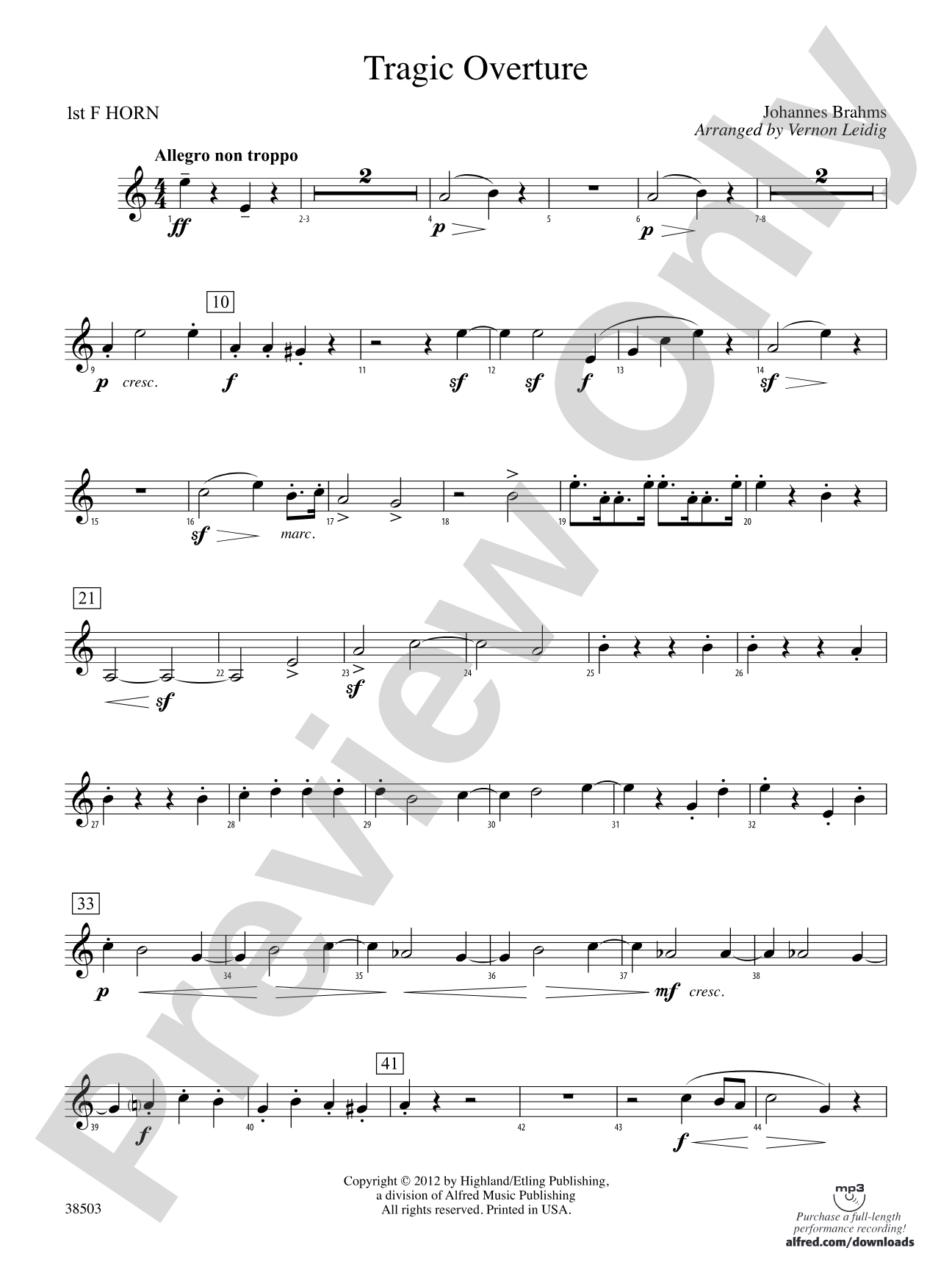

Tragic Overture: 1st F Horn
By Johannes Brahms / arr. Vernon Leidig
Grade: 3
Item: 00-PC-0015550_H1
$3.00
Pickup currently not available
Description
All the dark and passionate themes of this great work are maintained, yet this arrangement is perfect for intermediate orchestras. Even though the piece does not have a programmatic theme beyond that of the title, glimmers of hope dominate and it seems to end with a victorious feel. Perfect for festival and contest. This title is available in MakeMusic Cloud.


Don't just read it, hear it, play along with it, and watch your students grow with it. In MakeMusic Cloud, Tragic Overture: 1st F Horn comes alive with professional accompaniment, adjustable tempo, and built-in practice tools that turn solo practice into real progress.
Open in the Player
Jump straight in and assign it today.
Start Your Free Trial
Open this title and explore the full library in minutes.
Sample Audio
1
Audio File
--:--
0:00
0:00
Sample Video
Additional Details
Series:
Highland/Etling Full Orchestra
Publisher:
Alfred Music
Page Count:
184
SKU:
00-PC-0015550_H1
More about this title
About the Composer: Johannes Brahms
Johannes Brahms (1833-1897) stands as one of the nineteenth century's most structurally rigorous and emotionally profound composers. His symphonies, concertos, and overtures bridge Romantic expression with Classical form, earning him recognition as a direct heir to Beethoven's legacy. Brahms composed his Tragic Overture in 1880 as an independent concert work, crafting a piece that explores darkness and struggle through densely woven orchestration and memorable thematic development.
For music educators, Brahms represents an essential study in how thematic unity and harmonic sophistication can coexist with immediate emotional impact. His orchestral writing demands precision from ensemble players while rewarding them with some of the most satisfying music in the repertoire.
Why we love this
Vernon Leidig's arrangement preserves the architectural power of Brahms's original while making it accessible to orchestras still building their technical and interpretive confidence. The Grade 3 scoring strips away nothing essential; instead, it clarifies the major thematic lines and harmonic progressions that make this overture so compelling. Conductors get a masterwork with genuine substance, students encounter serious Romantic repertoire, and the piece delivers the dramatic arc needed for meaningful concert programming.
What to expect
Dark clouds gather and press forward with restless energy, yet beneath the turbulent surface lies an undercurrent of resilience. The piece unfolds like a struggle acknowledged and ultimately transcended, moving from shadow toward unexpected brightness. By the final measures, what began in sorrow resolves into something more like hard-won affirmation.
Who it's for
Intermediate orchestras ready to engage serious Romantic repertoire without overwhelming their current technical resources. This arrangement serves conductors who want their students to experience Brahms's orchestral thinking firsthand, learning how a master architect builds tension, develops ideas, and shapes large-scale dramatic arcs. It's ideal for ensembles preparing for festival or contest competition.
How to get the most out of it
- Shape the opening theme with a clear sense of inevitability. This movement needs weight and forward momentum; avoid letting it drift into mere melancholy.
- Balance the lower voices carefully when the texture thickens. Brahms layers ideas across the ensemble, and each strand must remain audible without dominating.
- Bring out the momentary tonal shifts and harmonic surprises. These create the piece's emotional tension; they're easy to obscure if the orchestra isn't listening actively.
- Articulate the final ascent with precision and conviction. The conclusion builds toward resolution; make sure brass and woodwinds project the shift in character clearly.
How to use it
Position this as a centerpiece work that demonstrates your orchestra's interpretive maturity. It pairs naturally with lighter or more lyrical pieces, offering programming contrast while remaining substantive enough to anchor a concert. The piece also provides excellent contest repertoire; its emotional directness and clear structure impress adjudicators while its Grade 3 accessibility makes it achievable within a focused rehearsal schedule.
Skills your students will build
- Maintaining consistent ensemble sound across changing orchestral texture
- Responding to subtle harmonic progressions and tonal shifts
- Balancing independent melodic lines within a dense harmonic context
- Sustaining musical energy through extended phrases without losing focus
- Executing dynamic contrast and timbral shaping across full orchestra