
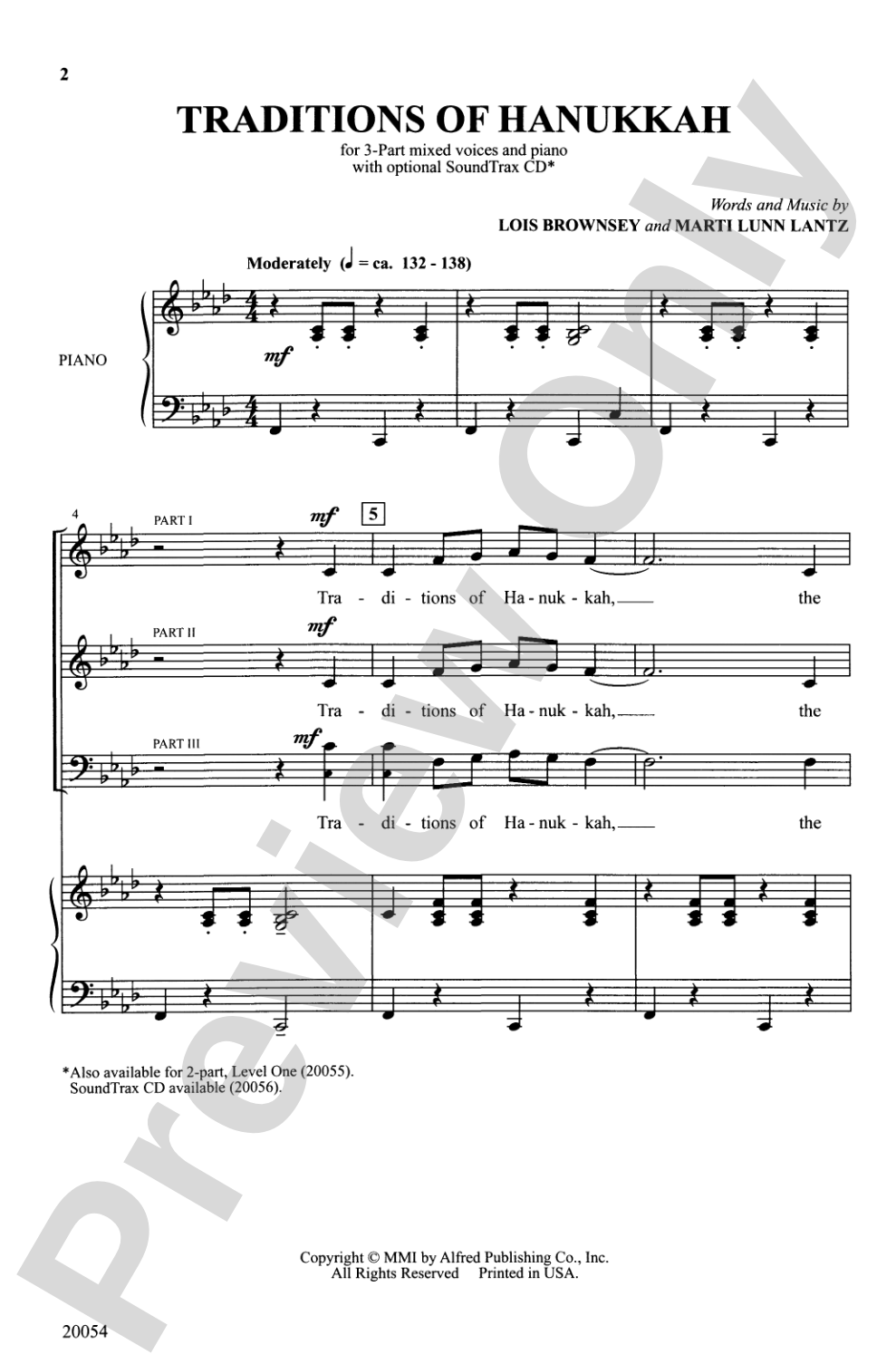
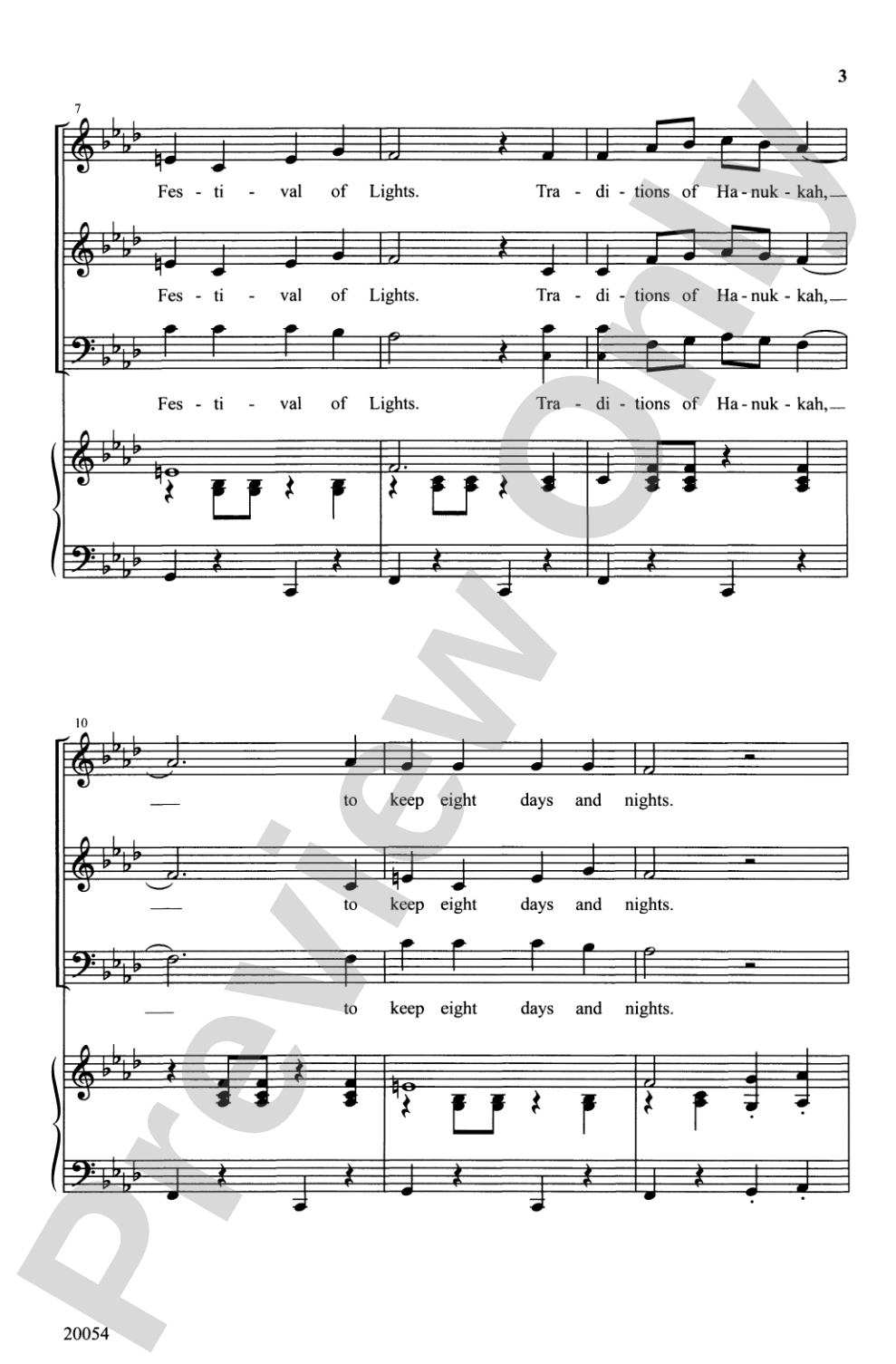
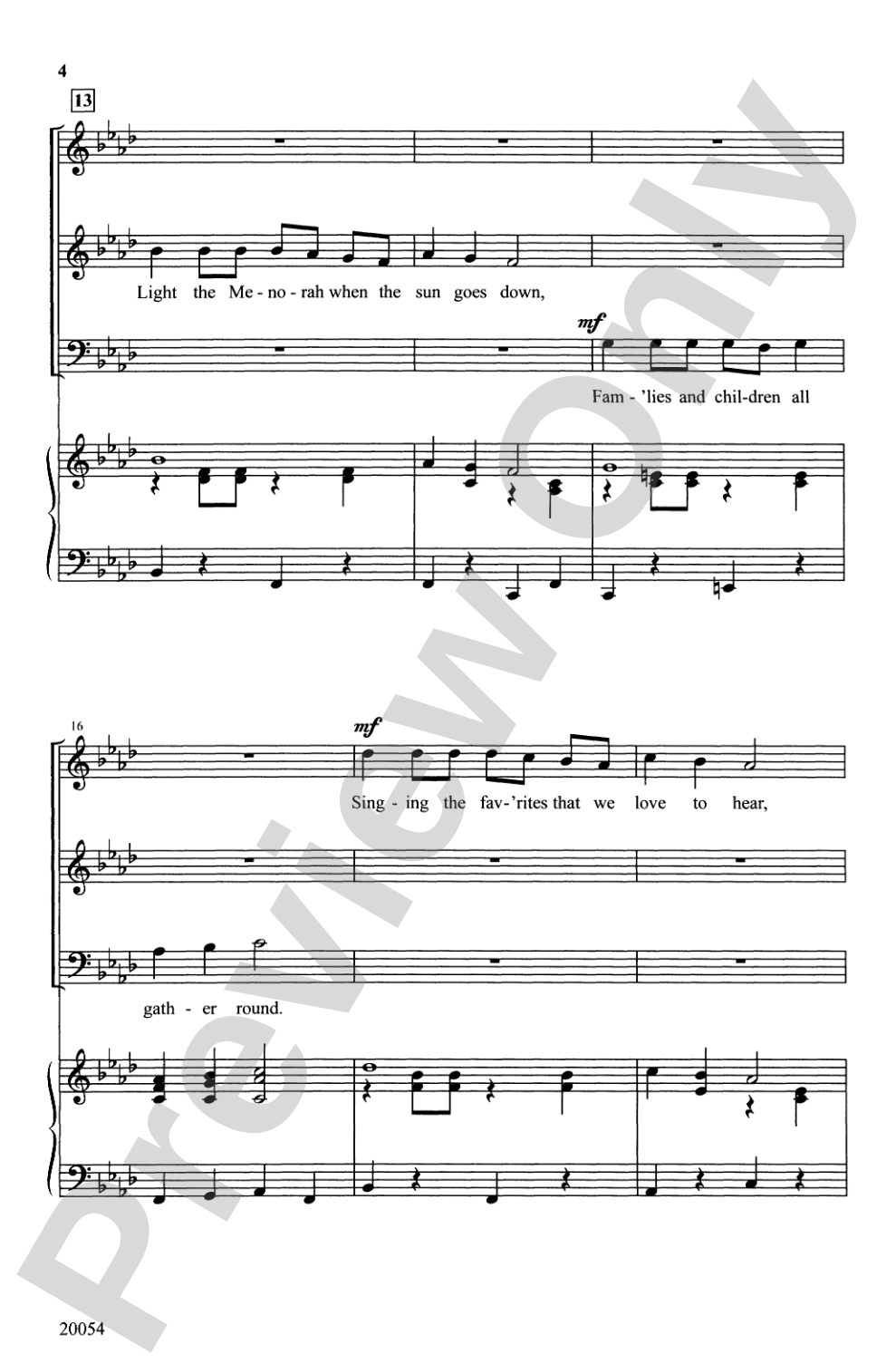

Traditions of Hanukkah: 3-Part Mixed Choral Octavo
Music by Lois Brownsey and Marti Lunn Lantz
Item: 00-PO-0004191
$2.25
Minimum order quantity: 20 copies
Pickup currently not available
Description
There are many traditions of Hanukkah, and this piece captures them all. The musical feel is gentle, yet traditional, complete with a "lai, lai, lai" chorus. The text tells of the Hebrew holiday's traditions, including the lighting of the Menorah and playing with the dreidel. The SoundTrax CD is arranged in an authentic Hebrew style. A great cross-cultural touch for your December concerts.


Traditions of Hanukkah: 3-Part Mixed Choral Octavo isn't in MakeMusic Cloud just yet...but it could be. Let us know you'd like to see it, and you'll help shape what comes next. In the meantime, start a free trial and dive into thousands of interactive titles your students can play along with today.
Request This Title
Tell us you want it.
Start Your Free Trial
Explore everything that's ready to play right now.
Sample Audio
1
Audio File
--:--
0:00
0:00
Sample Video
No sample videos found.
Additional Details
Series:
Alfred Archive Edition: Alfred Choral Designs
Publisher:
Alfred Music
Page Count:
12
SKU:
00-PO-0004191
More about this title
About the Composer: Lois Brownsey

Lois Brownsey studied at Temple University in Philadelphia and trained at the Guitar Workshop, bringing a foundation in both classical study and contemporary performance. With her long-time writing partner Marti Lunn Lantz, she has created a catalog of choral works that celebrate cultural diversity and seasonal traditions. Their collaborations for Alfred include arrangements and original compositions spanning holiday themes, world music, and pop culture, establishing them as specialists in accessible, joyful ensemble writing.
Brownsey's background includes performing and composing across pop, rock, and blues genres throughout the United States and internationally from 1973 to 1997. She co-wrote several choral pieces with Sally K. Albrecht focused on Jewish holiday observance. Today she remains active in the arts community of the Pocono Mountains, where she and her husband Kent Heckman, a recording engineer, operate Red Rock recording Studios. That facility has become a hub for many Alfred choral projects.
Why we love this
Directors programming December concerts will find this piece refreshing precisely because it treats Hanukkah traditions with genuine warmth rather than surface-level celebration. The "lai, lai, lai" chorus gives singers something memorable and joyful to anchor the piece, while the text grounds the music in specific cultural details—the Menorah, the dreidel—that make the holiday tangible for all listeners. The recorded accompaniment in authentic Hebrew style lifts the entire ensemble and signals to your audience that this music comes from a place of real cultural engagement.
What to expect
The music wraps familiar Hanukkah customs in a gentle, accessible embrace. The "lai, lai, lai" sections feel like joining in a community celebration, while the verses that describe Menorah lighting and dreidel play ground the piece in cultural specificity. Altogether, it's warm and inclusive, inviting singers and listeners alike into the traditions it celebrates.
Who it's for
Choirs singing SAB or 3-part mixed voicings who want to include Jewish heritage repertoire in their winter season. This piece works well for groups new to multicultural choral music, since the straightforward 3-part texture and recorded accompaniment support strong singing without requiring advanced ensemble skills.
How to get the most out of it
- Balance the narrative text sections with the choral refrain so storytelling clarity doesn't compete with the festive "lai, lai, lai" moments; think of the verses as intimate and the chorus as communal.
- Use the recorded accompaniment to establish the authentic Hebrew musical style, then have singers internalize that harmonic color so their voices stay blended even when learning their parts independently.
- Shape phrase endings gently to maintain the described gentle musical feel; resist the urge to punch accents or over-articulate, which would undermine the piece's warm character.
- Rehearse the text declamation early so singers grasp the holiday references and can sing with understanding, not just mechanics.
How to use it
Place this alongside other winter holiday pieces to create a program that reflects your community's actual religious and cultural tapestry. It works especially well in schools and community ensembles that intentionally program beyond Christmas repertoire, or as a bridge piece that welcomes families observing Hanukkah to see their traditions honored on stage.
Skills your students will build
- Singing SAB voicing with clear harmonic balance
- Understanding and articulating cultural context in music
- Interpreting text-driven choral writing with appropriate phrasing and dynamics
- Listening to and internalizing authentic musical styles through recorded accompaniment