

Torna, O Bella: SSA Choral Octavo
Music by Christoph Willibald Gluck / ed. and arr. Patrick M. Liebergen
Item: 00-PO-0001254
$1.80
Minimum order quantity: 20 copies
Pickup currently not available
Description
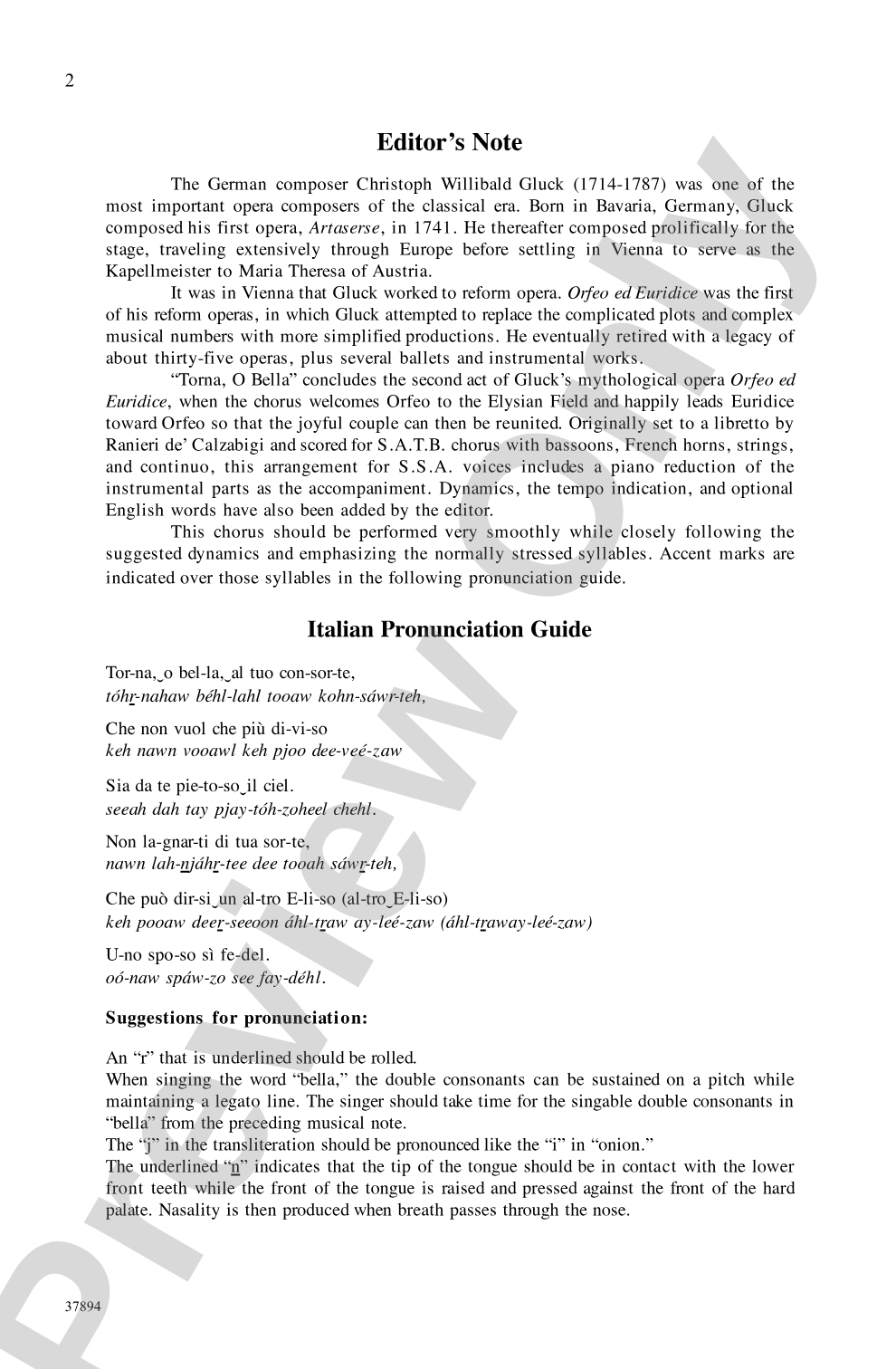
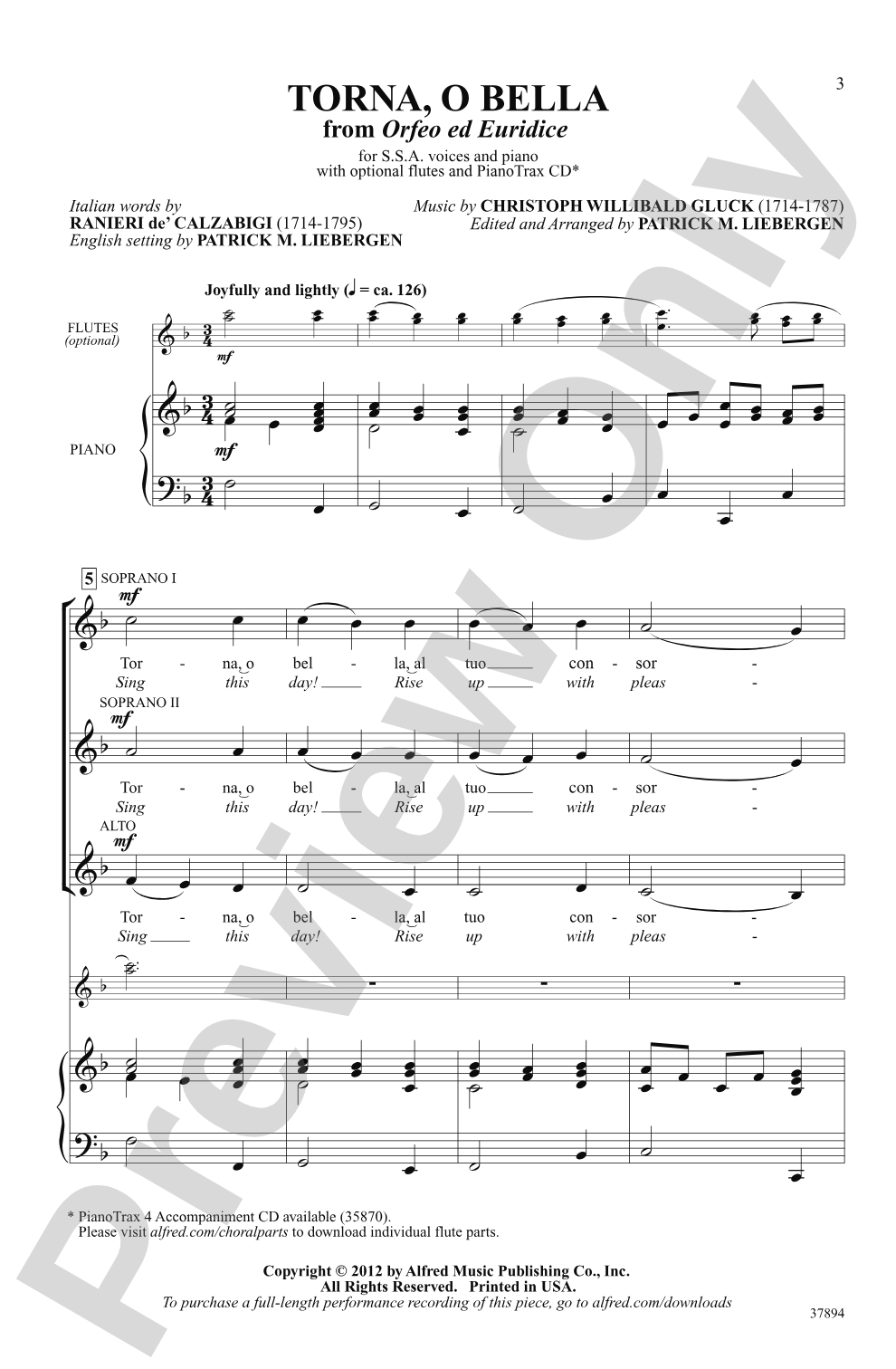
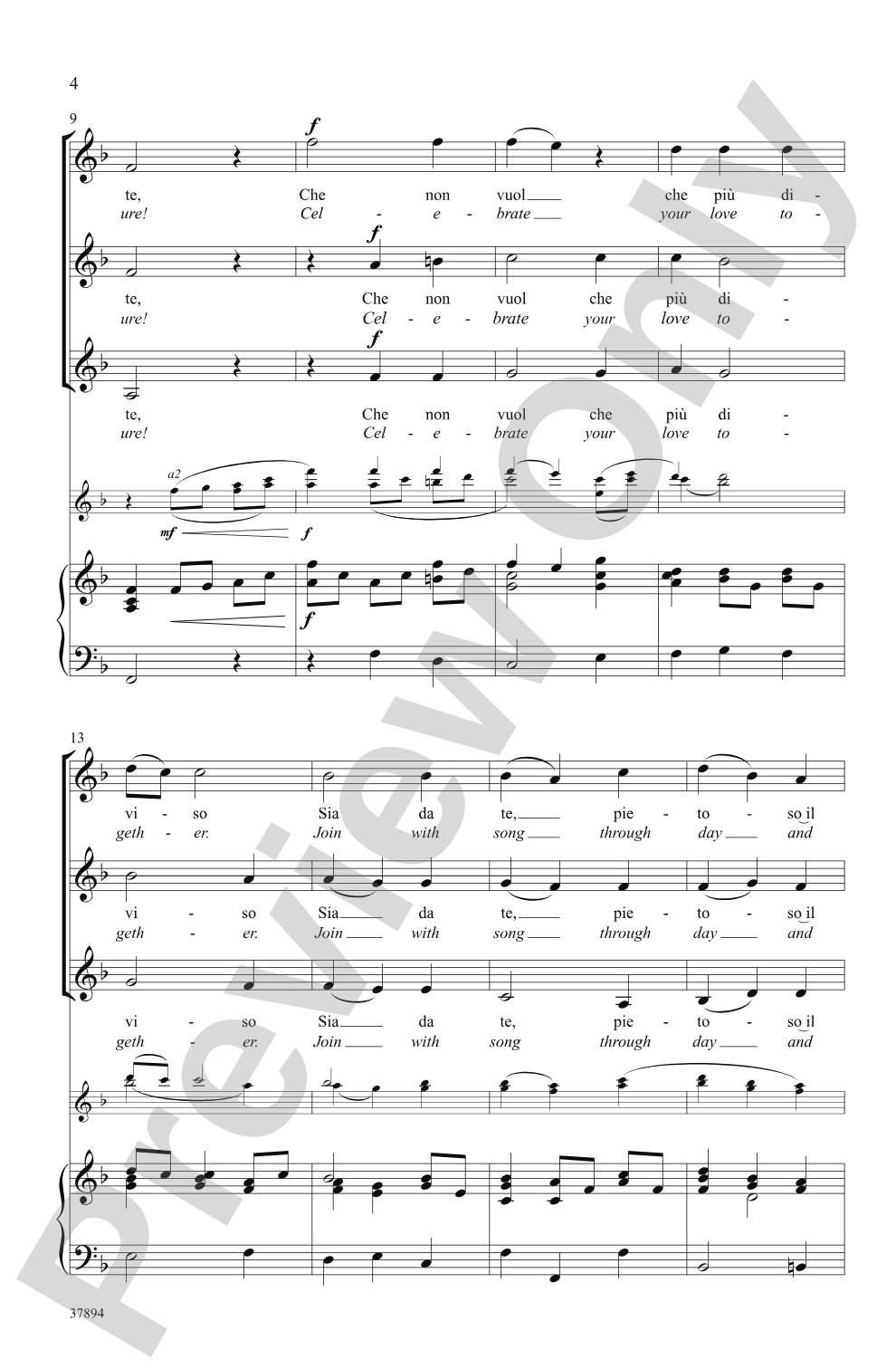
This joyful chorus concludes the second act of Gluck's mythological opera, as Orfeo and Euridice are reunited. The 3/4 lilt and ringing sonorities work especially well for SSA choirs. Accompaniment available on PianoTrax 4 CD (00-35870).


Torna, O Bella: SSA Choral Octavo isn't in MakeMusic Cloud just yet...but it could be. Let us know you'd like to see it, and you'll help shape what comes next. In the meantime, start a free trial and dive into thousands of interactive titles your students can play along with today.
Request This Title
Tell us you want it.
Start Your Free Trial
Explore everything that's ready to play right now.
Sample Audio
1
Audio File
--:--
0:00
0:00
Sample Video
No sample videos found.
Additional Details
Series:
Alfred Choral Designs
Publisher:
Alfred Music
Page Count:
12
SKU:
00-PO-0001254
Instrumentation:
2 Opt. Flutes
More about this title
About the Composer: Christoph Willibald Gluck
Christoph Willuck Gluck (1714-1787) fundamentally reshaped opera in the 18th century by demanding that music serve the drama rather than showcase the singer. His reform operas stripped away excessive ornamentation and da capo arias, replacing them with direct emotional expression and orchestral innovation. Gluck's influence extended across Europe, and his works remain cornerstones of the operatic repertoire and essential models for composers seeking musical clarity and dramatic purpose.
Torna, O Bella comes from Orfeo ed Euridice (1762), perhaps his most celebrated reform opera. The piece captures a moment of profound joy—the mythological lovers reunited—and distills that emotion into a chorus of such crystalline beauty that it stands independently in concert settings. Gluck's gift for writing vocal lines that sing naturally while maintaining harmonic sophistication makes his music perpetually rewarding for choirs.
Why we love this
The 3/4 waltz lilt paired with Classical restraint gives this arrangement an uncommon elegance; your SSA singers will love how the vocal writing sits so comfortably in their range while sounding genuinely operatic. Gluck's harmonic language is clean enough that intonation challenges stay manageable, but sophisticated enough to reward careful ensemble work. This is the kind of piece that audiences recognize as "real music" while your singers feel the security of excellent voicing.
What to expect
Reunion and relief expressed through crystalline harmony. The piece unfolds with the serenity of lovers finding each other again, its 3/4 lilt suggesting a gentle celebration rather than exuberant triumph. Beneath that calm surface runs a current of genuine emotion—Gluck's genius for direct expression makes even a short excerpt feel complete and moving.
Who it's for
SSA and SSAA choirs seeking repertoire that honors the Classical tradition without requiring soloistic fireworks. Directors of intermediate-to-advanced choirs will find this especially useful for concert programs that need a moment of pure lyricism alongside more modern works.
How to get the most out of it
- Shape the melodic line with subtle dynamic swells rather than dramatic contrasts; the "lilt" of 3/4 invites gentle phrasing that lets the text breathe naturally.
- Balance the optional flute parts carefully so they enhance rather than compete with the voices. Test run-throughs both with and without them to find your ensemble's sweet spot.
- Tune the ringing sonorities deliberately. In passages of sustained harmony, brief check-ins on vowel consistency and breath support will sharpen the blend considerably.
- Establish a comfortable tempo that allows the text to land clearly without rushing the 3/4 momentum. Gluck's opera singers were storytellers first; your choir should be too.
How to use it
Program this as a palette cleanser between heavier or more contemporary repertoire; its elegant brevity and tonal clarity offer audiences genuine rest. It also works beautifully in a thematic concert exploring mythological subjects, or as a closing statement in a program featuring European vocal literature. The optional instrumental parts make it flexible enough for either a cappella concert singing or a more elaborated ensemble setting.
Skills your students will build
- Sustaining steady 3/4 meter with a lyrical, dance-like quality
- Balancing part independence with harmonic blend in three-voice writing
- Shaping long legit phrases with minimal harmonic or orchestral support
- Executing clean vowel transitions in Classical-era text
- Reading and interpreting performance indications from the Classical period