Toreador Song Sheet Music Preview

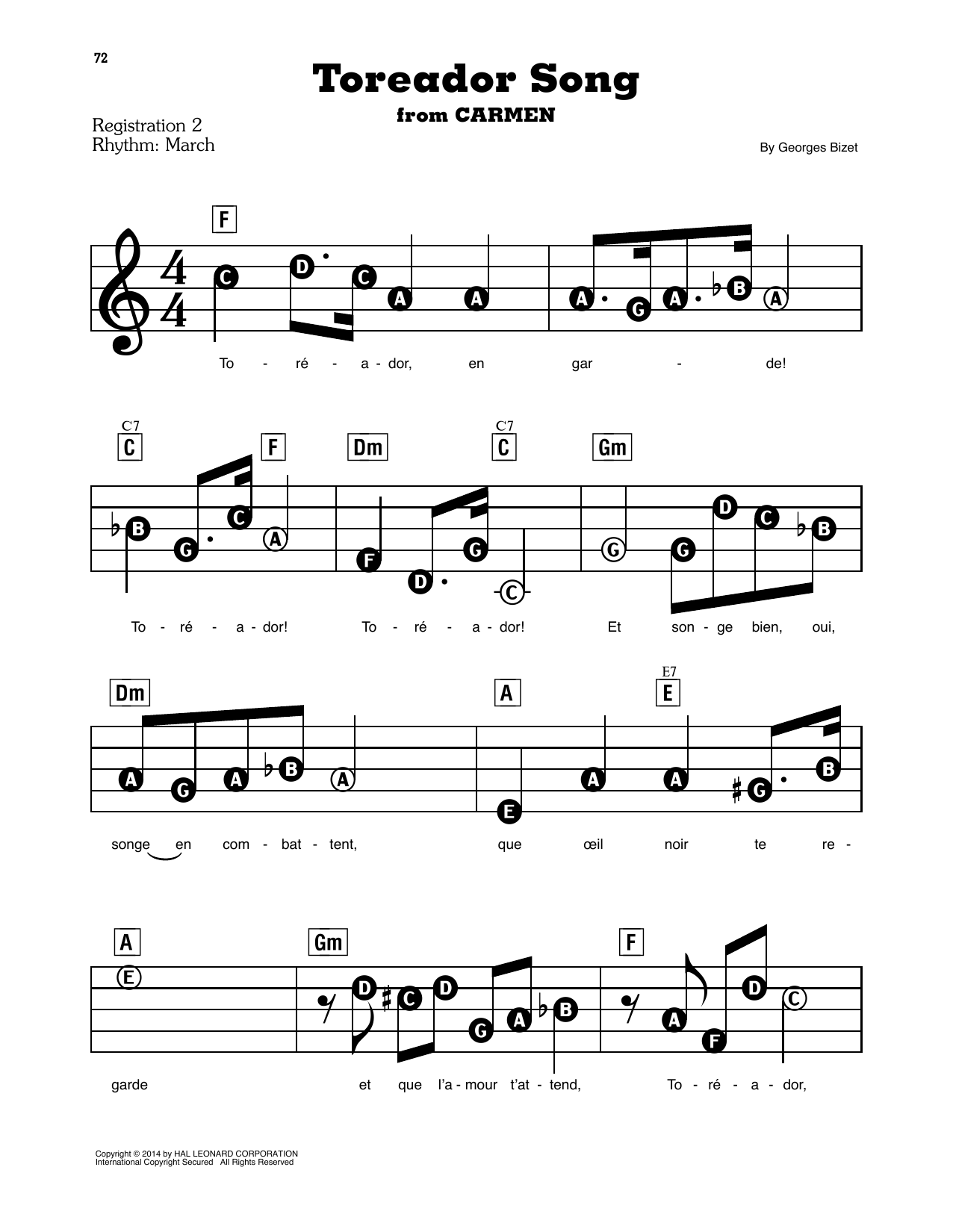
Toreador Song: E-Z Play Today

Item: 35-DS00725025

Digital Download
$4.99
Description

Toreador Song: E-Z Play Today isn't in MakeMusic Cloud just yet...but it could be. Let us know you'd like to see it, and you'll help shape what comes next. In the meantime, start a free trial and dive into thousands of interactive titles your students can play along with today.

Sample Audio
No sample audio found.
Sample Video
Additional Details
Publisher: Hal Leonard
Page Count: 3
SKU: 35-DS00725025

More about this title

About the Creator: Georges Bizet

Georges Bizet (1838–1875) was a French composer whose operatic works defined the Romantic era. His gift for melody and dramatic tension made him a master of the stage, though he saw limited success during his lifetime. The Toreador Song from Carmen remains one of the most recognizable opera melodies ever written, a testament to his instinct for music that speaks across centuries and skill levels.

Why we love this

This E-Z Play arrangement strips away nothing essential from Bizet's swagger and bravado. Students get to own one of opera's most iconic melodies without wrestling through dense accompaniment, which means they can focus on phrasing, character, and the sheer satisfaction of playing something they actually recognize.

What to expect

Swagger and ceremony. The Toreador Song announces itself with the confidence of a matador entering the arena, full of pride and presence. There's joy in the rhythm, boldness in the melody, and a theatrical flair that makes even short practice sessions feel like a performance.

Who it's for

Students who want to play recognizable, stylish music without years of technique under their belts. This arrangement works equally well for early intermediate pianists building confidence and for advanced students who need a quick, satisfying win in their practice rotation.

How to get the most out of it

  • Lean into the marcato rhythms in the left hand; they define the march-like character that makes this melody strut.
  • Shape the melody with a clear sense of arrival at the peaks of each phrase rather than playing it as a straight line.
  • Let the staccatos breathe. Avoid making them tight or rushed; they're confident punctuation, not nervous energy.
  • Balance the octaves in your right hand so the top note sings without drowning out the harmonic foundation beneath it.

How to use it

This works beautifully in a concert celebrating familiar melodies from classical music or as an intermission piece that keeps energy high without demanding serious dramatic context. It's also the kind of piece that connects with audiences who don't typically attend classical concerts, making it ideal for community events or educational demonstrations.

Skills your students will build

  • Reading and executing marcato articulation
  • Maintaining steady march-like rhythms in accompanying patterns
  • Phrasing melodies with shape and direction
  • Balancing melody and accompaniment across the staff
  • Playing with character and dramatic intent

You May Also Like