Topsail March: Flute Sheet Music Preview

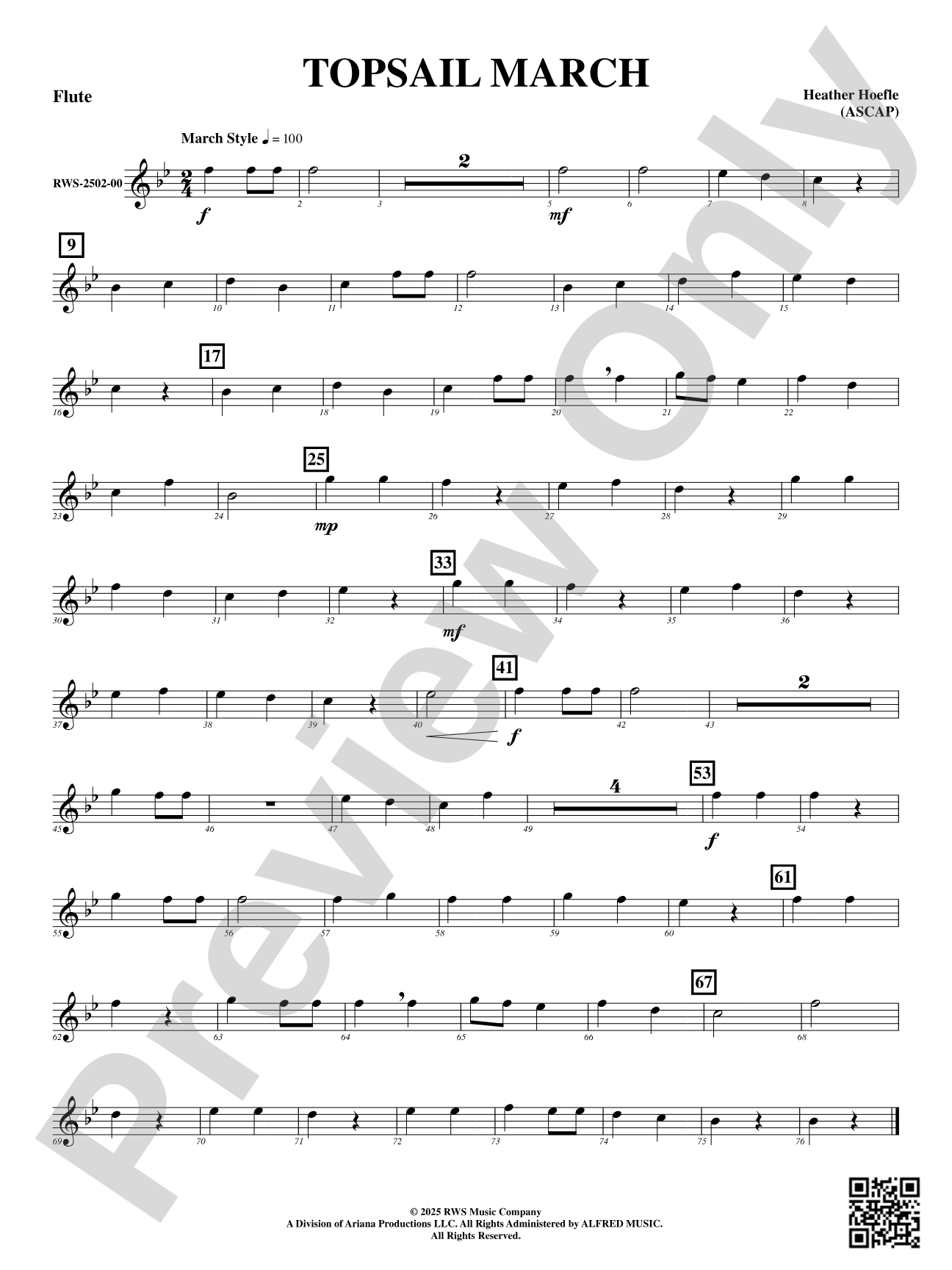
Topsail March: Flute

By Heather Hoefle

Level:.5

Item: 98-PC-RWS2502_F1

Digital Download
$3.99
Description
Open your beginning band's next concert or festival with the bold and confident Topsail March (pronounced Tops'l). This spirited 2/4 march by Heather Hoefle helps young musicians develop march style while using only the first six notes, making it an excellent choice for building fundamental skills and delivering a strong performance. (1:20)

Topsail March: Flute isn't in MakeMusic Cloud just yet...but it could be. Let us know you'd like to see it, and you'll help shape what comes next. In the meantime, start a free trial and dive into thousands of interactive titles your students can play along with today.

Sample Audio
0:00
0:00
Sample Video
Additional Details
Series: RWS - Very Beginning Band
Publisher: RWS Music Company
SKU: 98-PC-RWS2502_F1

More about this title

About the Composer: Heather Hoefle

Heather Hoefle has built her reputation on writing music that meets beginning musicians exactly where they are. Her work in the RWS Very Beginning Band series demonstrates a deep understanding of how young players develop confidence and technique together, prioritizing accessibility without sacrificing musicality or purpose.

Why we love this

Hoefle understands what beginning band conductors actually need: a piece that sounds confident and complete while respecting where young musicians are developmentally. The restriction to six notes never feels like a limitation; instead, it forces elegant orchestration that teaches ensemble balance from day one. You get a festival-ready opener that builds genuine musicianship, not just note-reading.

What to expect

Spirited and uncluttered. The march form moves with purpose, anchored by a clear harmonic foundation that feels substantial despite its simplicity. There's real character here: confident but not bombastic, lyrical without being saccharine.

Who it's for

Beginning band programs (Grades 3-5, or equivalent skill level) looking for a substantial opener that doesn't require chromatic pitches or complex rhythmic concepts. Directors who want their newest musicians to experience genuine performance success at a concert or festival without waiting until spring repertoire.

How to get the most out of it

  • Shape the articulation distinctly. Young bands often rush march style or flatten it; consistent tongue placement across the section makes the rhythm dance rather than trudge.
  • Balance the melody against the countermelody. With limited note variety, clarity of line becomes your primary expressive tool. Let the lower voices support, not bury, the tune.
  • Establish a steady, confident tempo before rehearsal. A secure conductor beat gives young musicians permission to commit fully to the style.
  • Draw attention to the moment the full band enters. The transition from reduced to full voicing is a real musical event; treat it as one.

How to use it

Open your fall or winter concert with this. It establishes ensemble confidence immediately and gives families a tangible sense of what their young musicians are learning. It also works beautifully at festival competitions where judges appreciate musicality over complexity.

Skills your students will build

  • March style and articulation conventions
  • Ensemble balance and listening across parts
  • Sustained phrasing in a duple meter
  • Confidence performing in a traditional form
  • Melodic and counter-melodic awareness

You May Also Like