Tomorrow's Yesterdays: Flute Sheet Music Preview

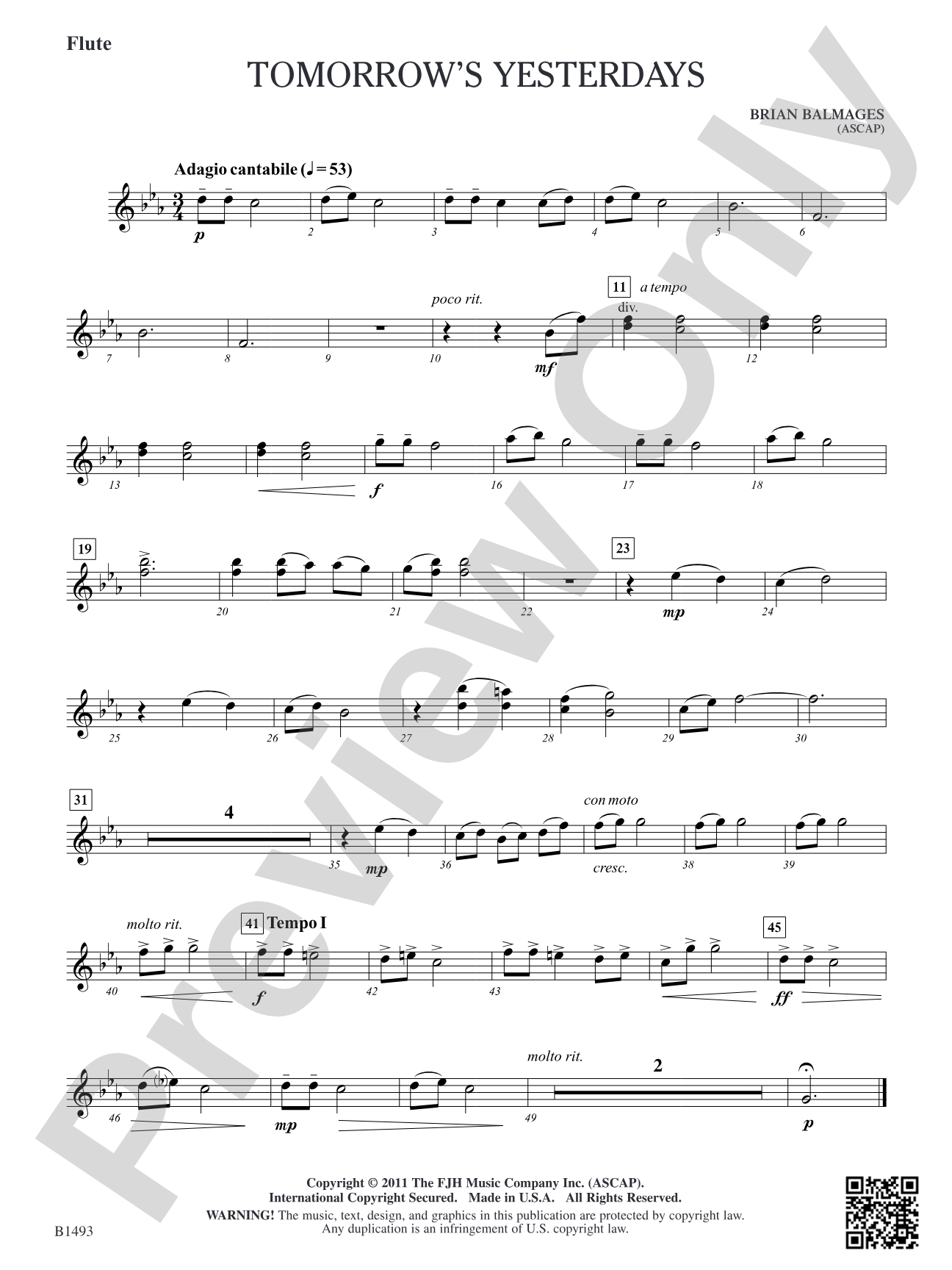
Tomorrow's Yesterdays: Flute

By Brian Balmages

Grade: 1

Item: 98-PC-DB1493_F1

Digital Download
$7.00
Description
Allow the youngest of musicians to experience a truly emotional work with this tragic, yet hopeful work about loss and heartbreak. The lyrical lines, complex harmonies and textures remind us to always cherish wonderful memories from the past as we move ever forward. Designed to be anything but the typical "ballad," this is sure to bring out the true musician in everyone.

Don't just read it, hear it, play along with it, and watch your students grow with it. In MakeMusic Cloud, Tomorrow's Yesterdays: Flute comes alive with professional accompaniment, adjustable tempo, and built-in practice tools that turn solo practice into real progress.

Sample Audio
0:00
0:00
Sample Video
Additional Details
Series: FJH Beginning Band
Publisher: The FJH Music Company, Inc.
SKU: 98-PC-DB1493_F1

More about this title

About the Composer: Brian Balmages

Brian Balmages

Brian Balmages has established himself as a composer and conductor working across orchestral, band, and chamber music. His works have reached audiences at Carnegie Hall, the Kennedy Center, Sydney Opera House, and the Toronto Centre for the Arts, performed by ensembles ranging from professional orchestras to elementary school bands. He holds membership in the American Bandmasters Association and received the A. Austin Harding Award from the American School Band Directors Association. In 2020, he won the NBA William D. Revelli Composition Contest for Love and Light.

Balmages maintains an active conducting schedule with all-state ensembles, university groups, and professional orchestras worldwide. He has appeared at the Midwest Clinic, Western International Band Clinic, and numerous regional conferences. He holds degrees from James Madison University and the University of Miami, where he was commissioned to compose for the university president's inauguration. Currently, he serves as Director of MakeMusic Publications and Digital Education for Alfred and MakeMusic.

Why we love this

Grade 1 bands rarely encounter serious emotional territory, yet this work treats loss and memory with genuine musical depth. The lyrical writing and harmonic language encourage young musicians to listen and respond as artists rather than note-readers, which is the kind of experience that builds real musicianship from the start.

What to expect

Quiet dignity mixed with genuine sorrow, tempered by the hope of cherishing what has passed. The harmonies and textures create an atmosphere of reflection, inviting the band to move beyond surface-level playing into something introspective and aware.

Who it's for

Beginning band directors seeking repertoire that respects their students' intelligence and emotional capacity. Grade 1 musicians ready to invest in sustained tone production and thoughtful phrasing rather than flashy technical display.

How to get the most out of it

  • Shape the phrasing through sustained tone rather than dynamic extremes; young bands often resort to added volume when what's needed is consistent air support and legit singing through the line.
  • Balance the inner voices carefully during the complex harmony sections so the piece feels rich without becoming muddy; section leaders need clear instruction about their role in supporting the primary melodic material.
  • Resist rushing during the reflective passages; establish a tempo that allows young musicians time to hear and respond to the harmonic movement without dragging.

How to use it

Position this as a centerpiece of a concert exploring memory, loss, or growth; it provides emotional weight appropriate for a spring concert or end-of-year program. The piece works equally well as an opening movement that sets a serious tone for the remainder of the concert.

Skills your students will build

  • Sustaining legato phrasing across phrase boundaries
  • Listening to and blending inner harmonic voices
  • Responding to emotional content through musical nuance rather than technical complexity
  • Maintaining consistent tone during sustained passages at soft dynamics

You May Also Like