Tomb of the Pharaoh: 2nd E-flat Alto Saxophone Sheet Music Preview

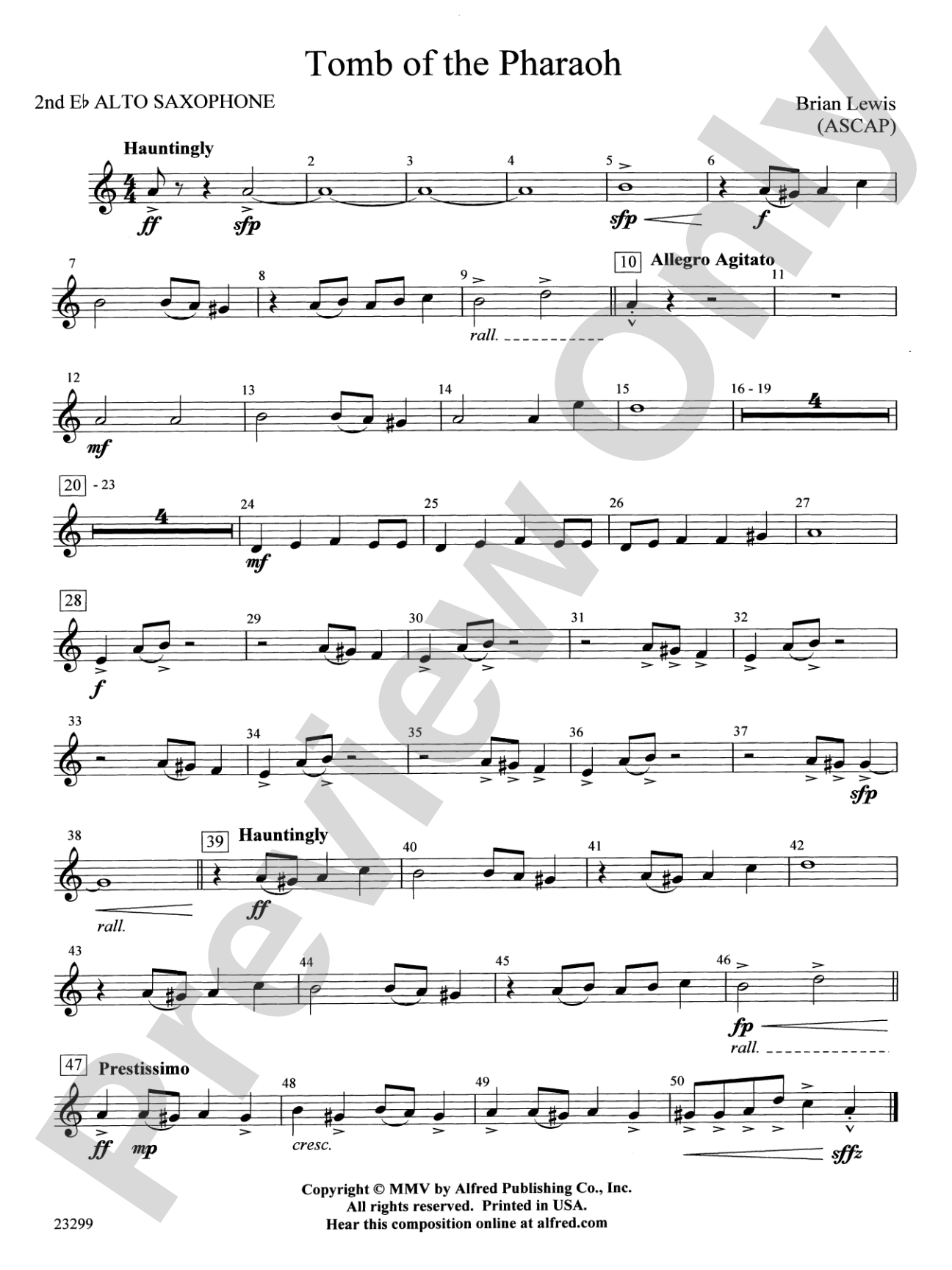
Tomb of the Pharaoh: 2nd E-flat Alto Saxophone

By Brian Lewis

Grade: 1.5 (Easy)

Item: 00-PC-0000649_AX2

Digital Download
$3.00
Description
Your students will love exploring the Tomb of the Pharaoh! Written in C minor with raised fourths and sevenths, every section is given the melody. Your percussionists will also get a chance to shine as they provide the rhythmic energy for the piece. This exciting new work will have your students begging to practice this one over and over again!

Don't just read it, hear it, play along with it, and watch your students grow with it. In MakeMusic Cloud, Tomb of the Pharaoh: 2nd E-flat Alto Saxophone comes alive with professional accompaniment, adjustable tempo, and built-in practice tools that turn solo practice into real progress.

Sample Audio
0:00
0:00
Sample Video
Additional Details
Series: Alfred Debut Series
Publisher: Alfred Music
Page Count: 118
SKU: 00-PC-0000649_AX2

More about this title

About the Composer: Brian Lewis

Brian Lewis

Brian Lewis holds degrees in composition from Baldwin-Wallace Conservatory and in conducting from Western Michigan University, where he also earned his teaching certification. His career spans public school music education in Michigan, film scoring training through USC's prestigious program, and commissioned choral works performed by high school ensembles.

Why we love this

Lewis writes with a keen understanding of what energizes young musicians: every section gets a turn with the melody, which builds individual confidence and ownership of the piece, while the percussion writing gives those students genuine musical responsibility rather than filling time. The harmonic language (C minor with raised fourths and sevenths) opens ears to color and tension without overwhelming musicians still building harmonic literacy, and the programmatic hook of exploring an ancient tomb naturally sustains student engagement through multiple rehearsals.

What to expect

An adventure unfolding with mysterious harmonic shadows, propelled forward by driving percussion and illuminated by passing moments where each instrumental family steps into the spotlight. The piece has theatrical energy without requiring a narrative knowledge; the music itself tells the story.

Who it's for

Grade 1.5 bands looking for concert repertoire with real musical substance and strong student engagement. This work suits ensembles ready to balance foundational technical demands with expressive melodic playing and ensemble communication.

How to get the most out of it

  • Balance the melody between sections deliberately rather than assuming the highest voice will project; since every part gets the theme, clarify who carries it in each phrase during early rehearsals so listeners follow the musical narrative.
  • Give your percussion section clear cues about dynamic shape and rhythmic precision, as their work genuinely drives the piece's energy and sets the groove for everyone else.
  • Explore the harmonic color created by the raised fourths and sevenths; point out these moments to your band so they understand why certain sonorities feel unsettling or exotic, reinforcing their ear for chromatic alteration.

How to use it

Program this as a concert opener or anchor a thematic set around world music or history curricula. Its accessible level and strong student appeal also make it valuable mid-year repertoire when building ensemble confidence before tackling more technically demanding works.

Skills your students will build

  • Playing a clearly defined melody within ensemble texture while maintaining rhythmic precision
  • Reading and responding to dynamic and harmonic color created by chromatic alteration (raised scale degrees)
  • Listening across sections to identify and balance the moving melodic line
  • Interpreting programmatic intent through musical choices in phrasing and articulation
  • Rhythmic independence and ensemble interdependence through percussion-driven ensemble coordination

You May Also Like