

Today's Hope: 2-Part Choral Octavo
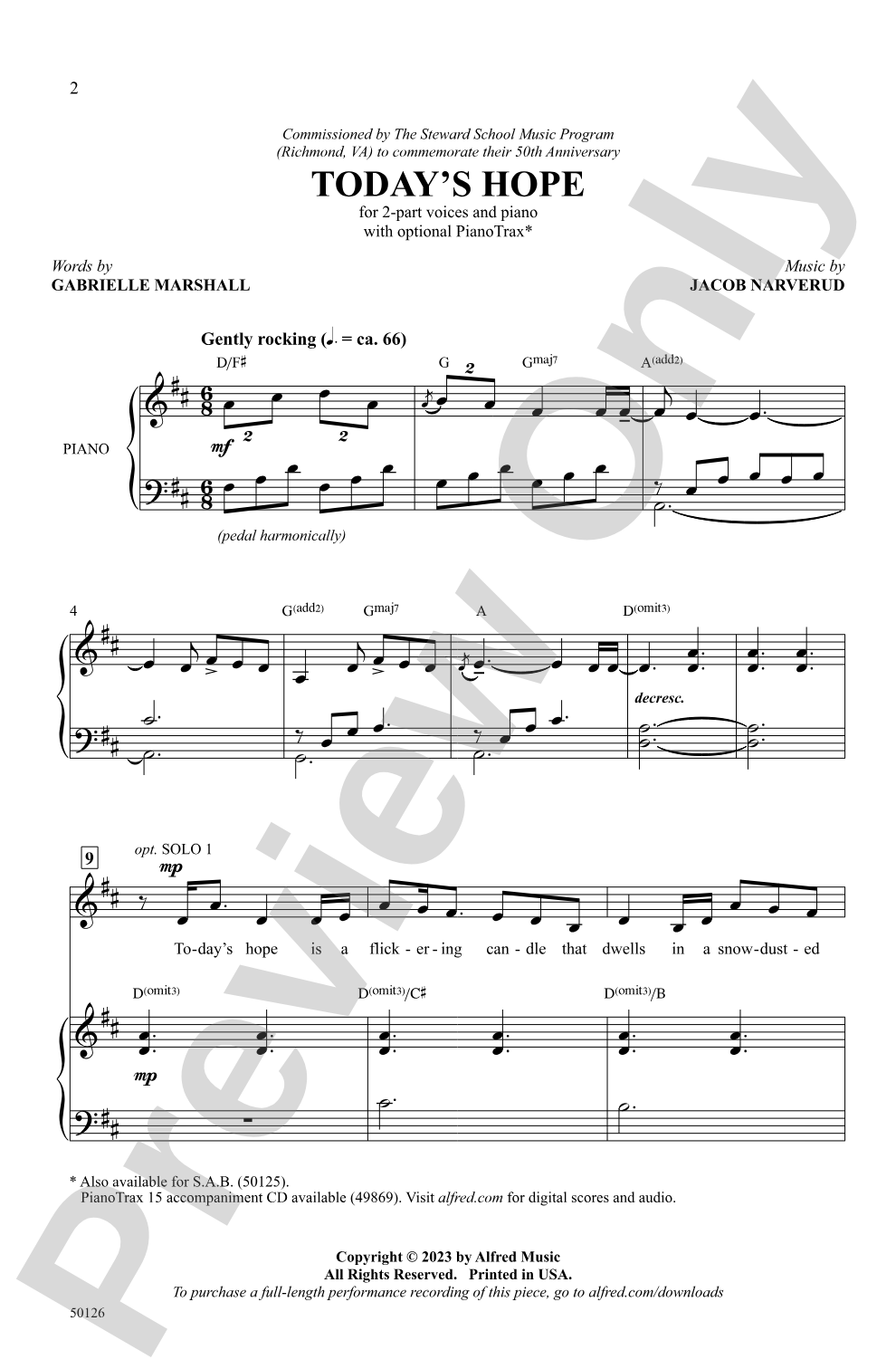
Words by Gabrielle Marshall, music by Jacob Narverud
Item: 00-PO-0007004
$2.20
Minimum order quantity: 20 copies
Pickup currently not available
Description
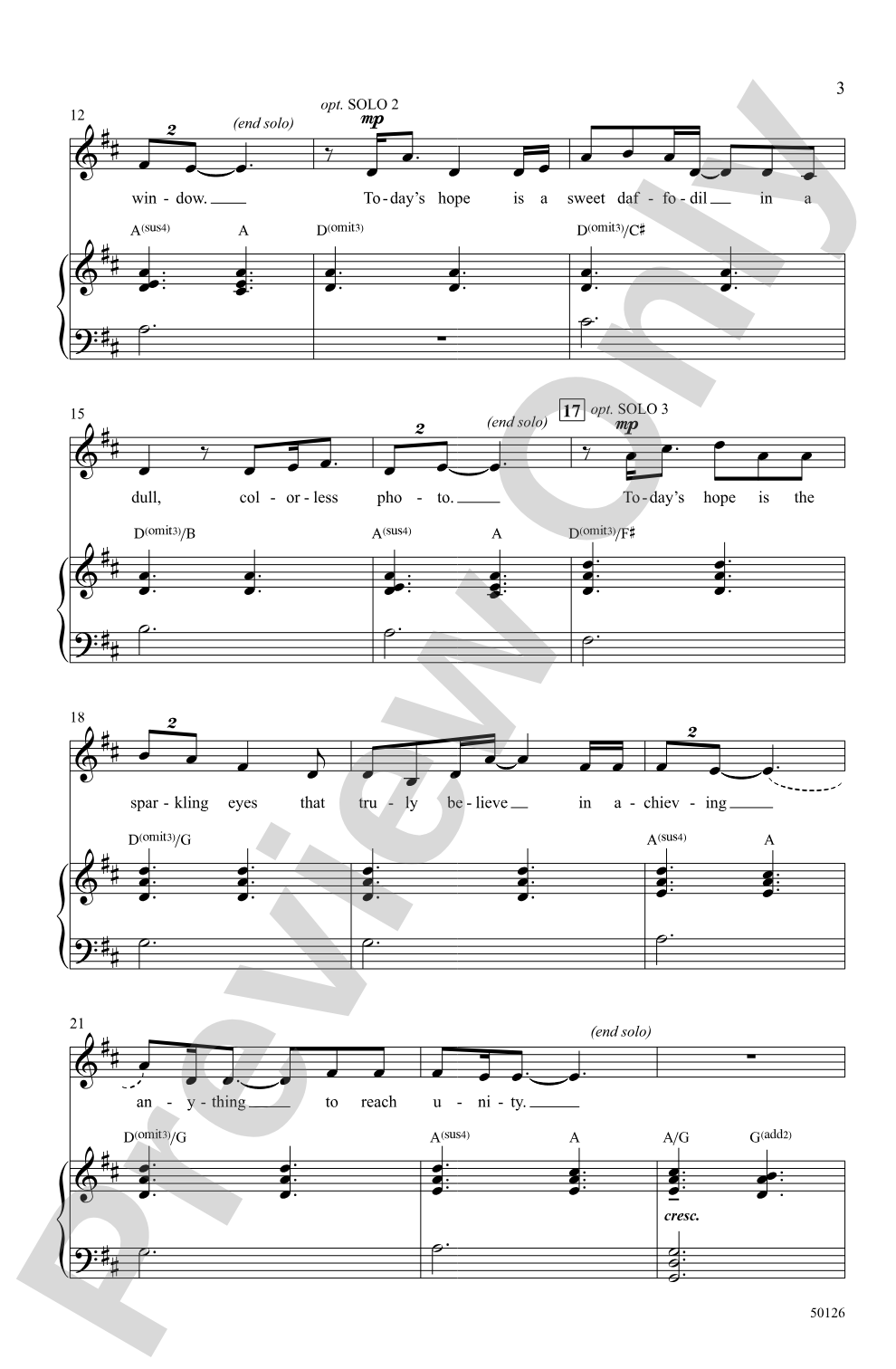
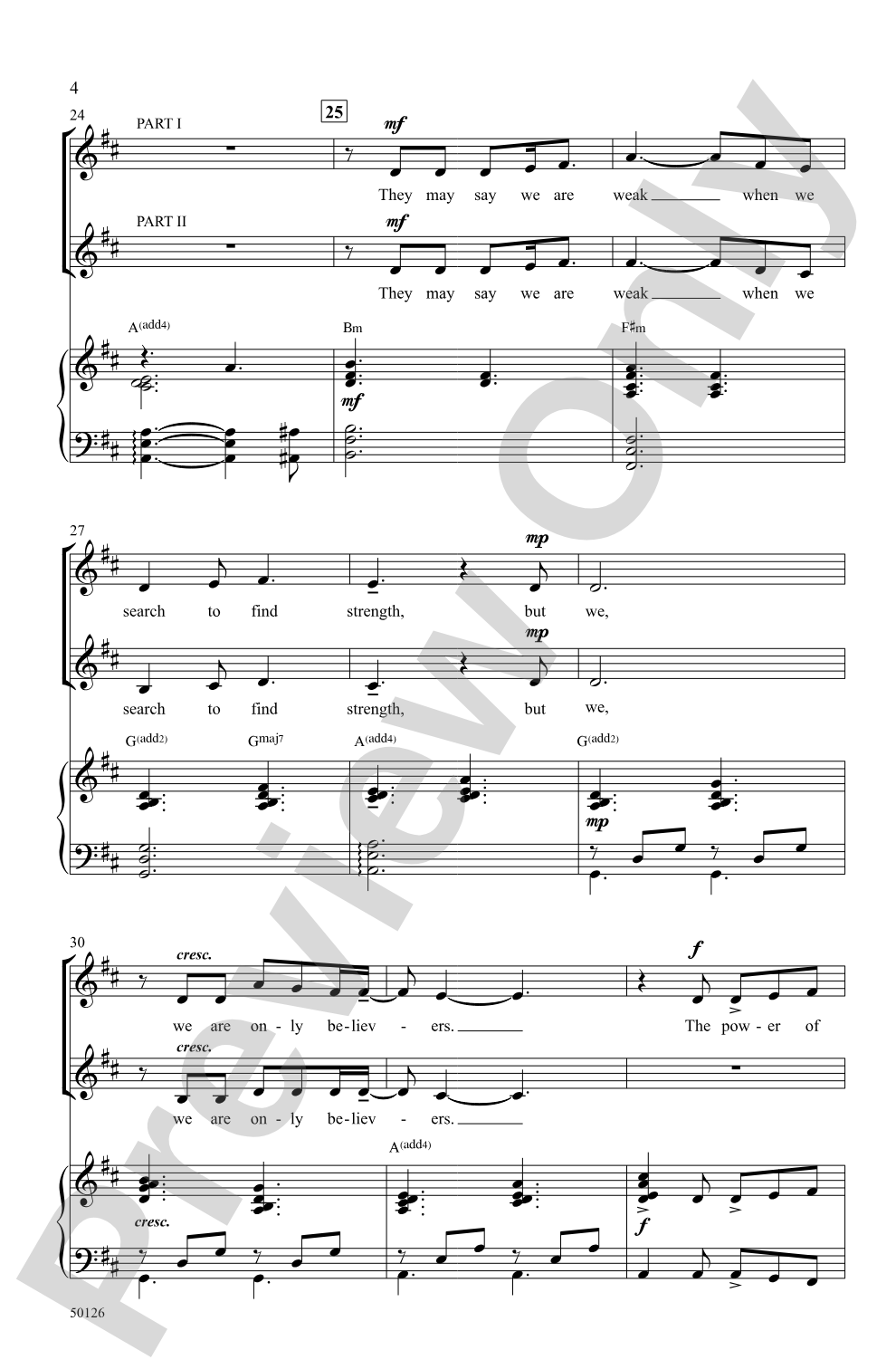
With uplifting student-written lyrics, this pop-style original encourages young people to embrace their ability to affect change. "The power of hope today will fuel the dreams of tomorrow." A strong contemporary groove and an irresistible hook will engage, inspire, and ignite enthusiasm. A few solo opportunities provide a platform for individual voices to shine.


Today's Hope: 2-Part Choral Octavo isn't in MakeMusic Cloud just yet...but it could be. Let us know you'd like to see it, and you'll help shape what comes next. In the meantime, start a free trial and dive into thousands of interactive titles your students can play along with today.
Request This Title
Tell us you want it.
Start Your Free Trial
Explore everything that's ready to play right now.
Sample Audio
1
Audio File
--:--
0:00
0:00
Sample Video
Additional Details
Series:
Alfred Choral Designs
Publisher:
Alfred Music
Page Count:
12
SKU:
00-PO-0007004
More about this title
About the Composer: Jacob Narverud

Jacob Narverud (born 1986) is a Kansas-based composer and arranger whose work spans choral music, contemporary composition, and artist leadership. He founded and directs the Tallgrass Chamber Choir, a professional ensemble drawing musicians from across the Great Plains, and serves as editor for Santa Barbara Music Publishing. His commissions have reached over fifty choral organizations throughout North America, Australia, and Japan, establishing him as one of the most performed contemporary choral composers in schools and concert halls today.
Narverud's catalog includes numerous international bestsellers that appeal to choirs across all skill levels. His compositions balance accessibility with artistic sophistication, making complex contemporary idioms approachable for student ensembles while maintaining the musical substance that challenges experienced singers. His dual roles as publisher and composer give him deep insight into what works in rehearsal and what resonates with young performers.
Why we love this
Narverud understands the adolescent voice and what actually moves young singers. The combination of student-written lyrics with his contemporary groove gives the piece authentic ownership in the rehearsal room. Instead of preaching about hope, the hook and rhythmic pocket make the message feel genuinely compelling to performers who might otherwise resist an inspirational text.
What to expect
The piece radiates forward momentum and genuine optimism without sacrificing musical substance. A strong contemporary groove creates immediate energy, while the memorable hook lodges itself in singers' minds and ears, making this feel like a song they already know rather than a new score they are learning.
Who it's for
Two-part choirs at the middle school and early high school level will find this accessible and engaging. It works particularly well for mixed groups, transition ensembles, or programs looking to connect with singers who respond to contemporary idioms over traditional choral fare.
How to get the most out of it
- Anchor the groove in the rhythm section and lock the supporting voices into that pocket before spotlighting the melody line.
- Rehearse the solo opportunities as individual moments in full rehearsal so those students feel invested in their featured parts from week one.
- Use the recorded accompaniment to check your ensemble's internal balance and to build confidence during early learning phases.
- Shape the hook with dynamic contrast, resisting the urge to sing it at full volume every time; let the repetition carry the power instead.
How to use it
This is an ideal graduation concert opener or finale that energizes an audience while celebrating student voices literally and figuratively. It also programs well in spring concerts or festival competitions where contemporary repertoire signals that your ensemble embraces current music and speaks directly to your singers' world.
Skills your students will build
- Contemporary harmonic language and modal interchange
- Rhythmic precision in syncopated pop grooves
- Dynamic control and phrasing in repetitive melodic material
- Solo performance confidence and individual vocal expression
- Blend and balance when supporting a featured melodic line