
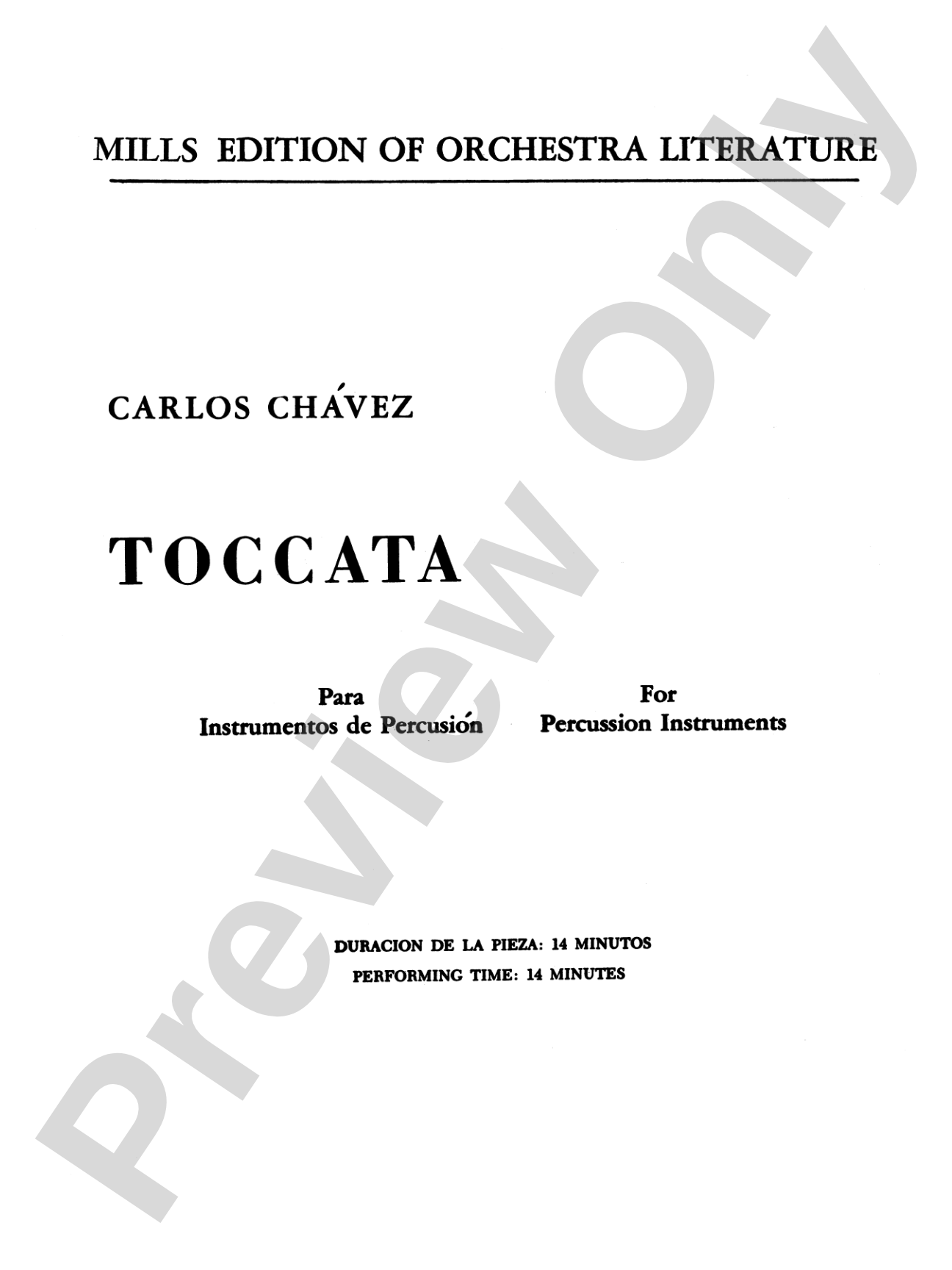
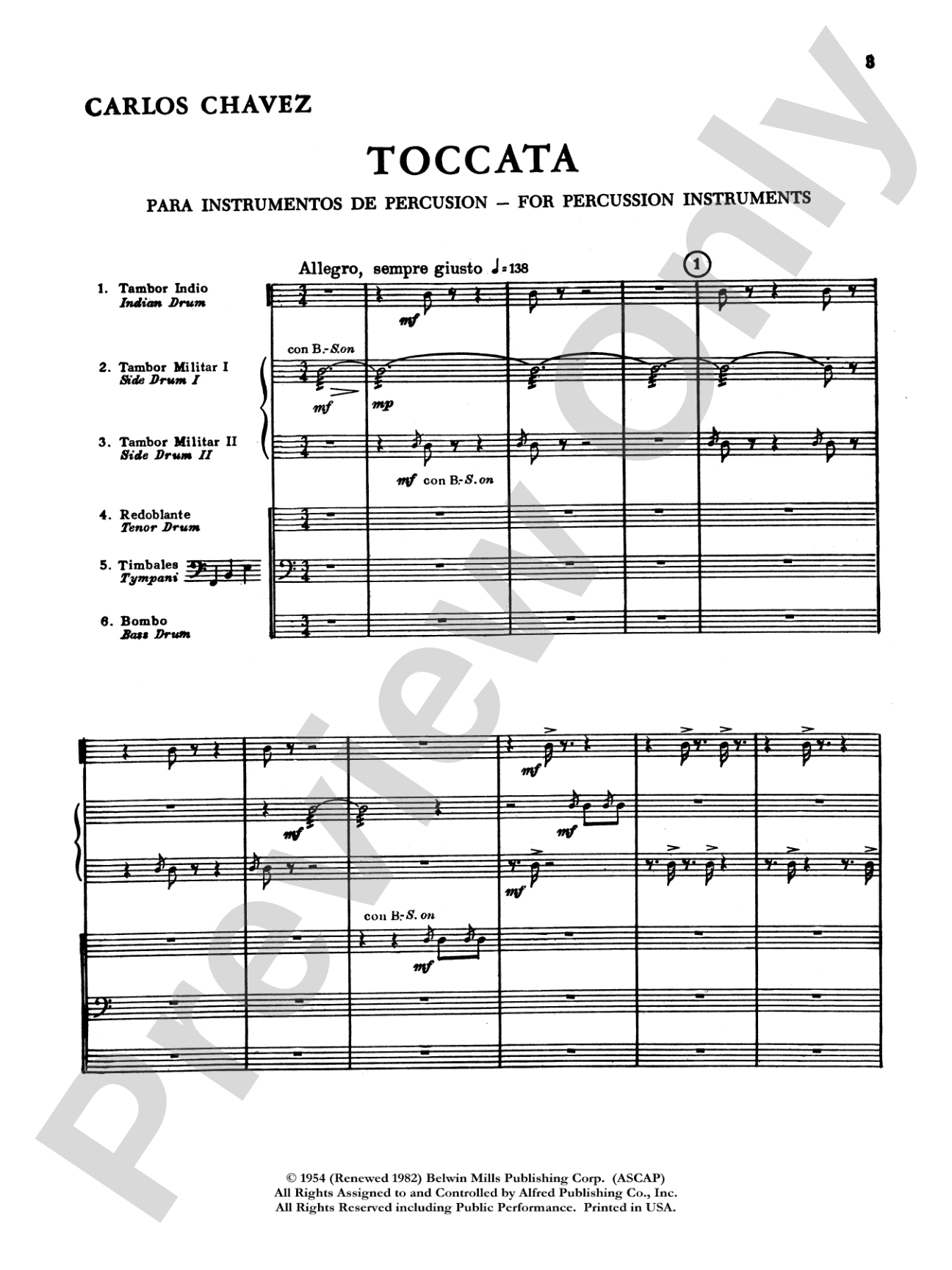
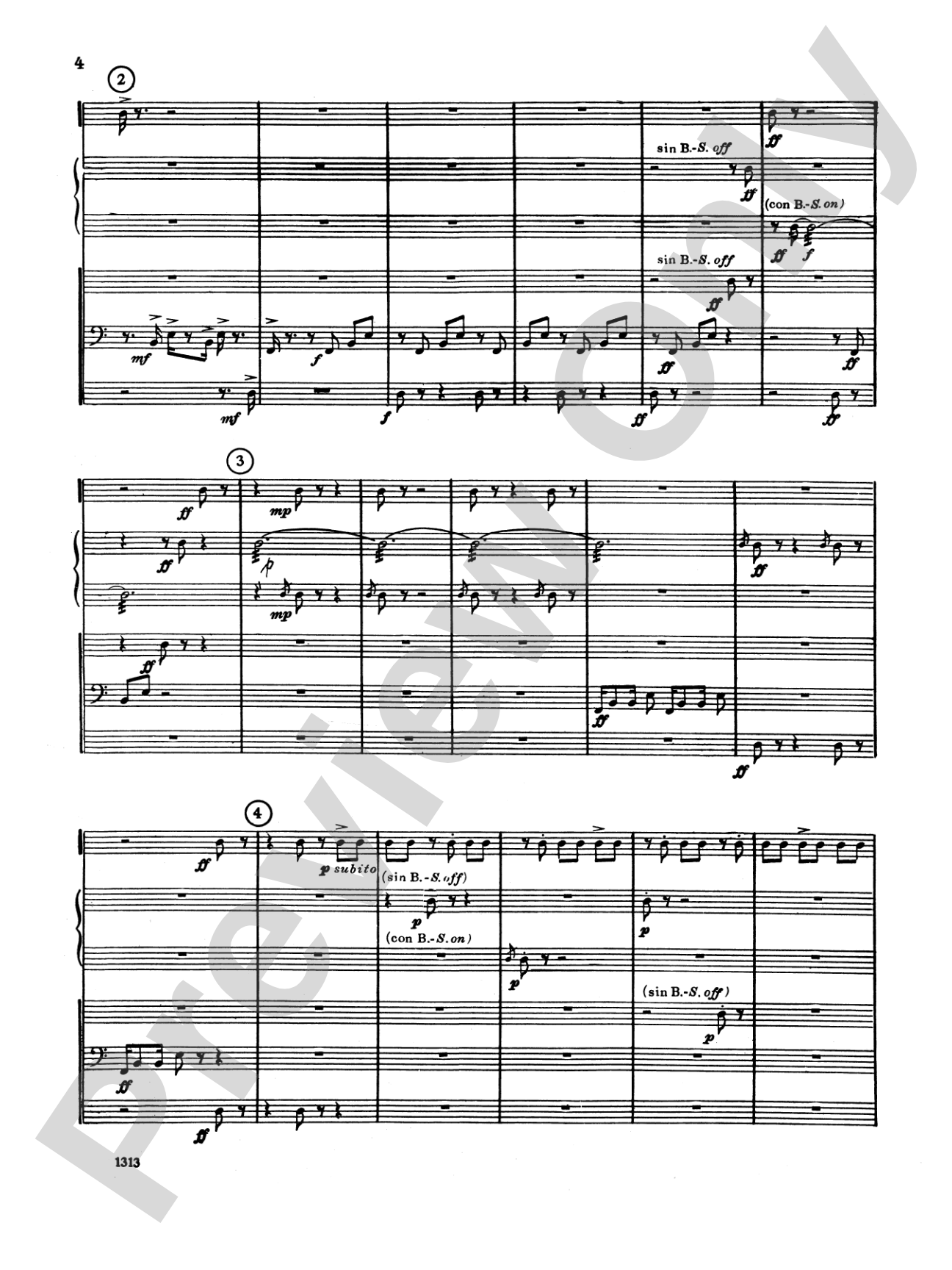
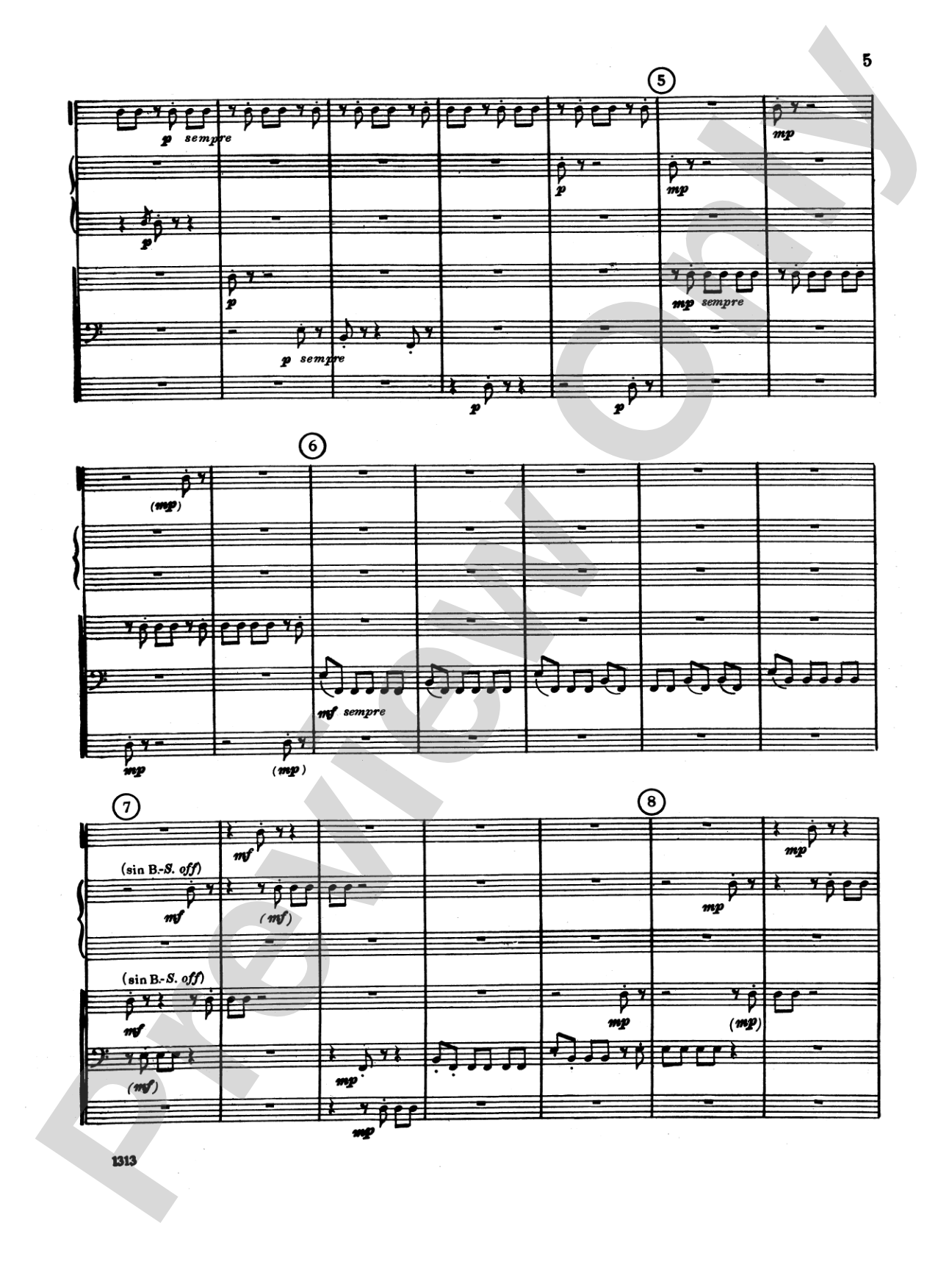
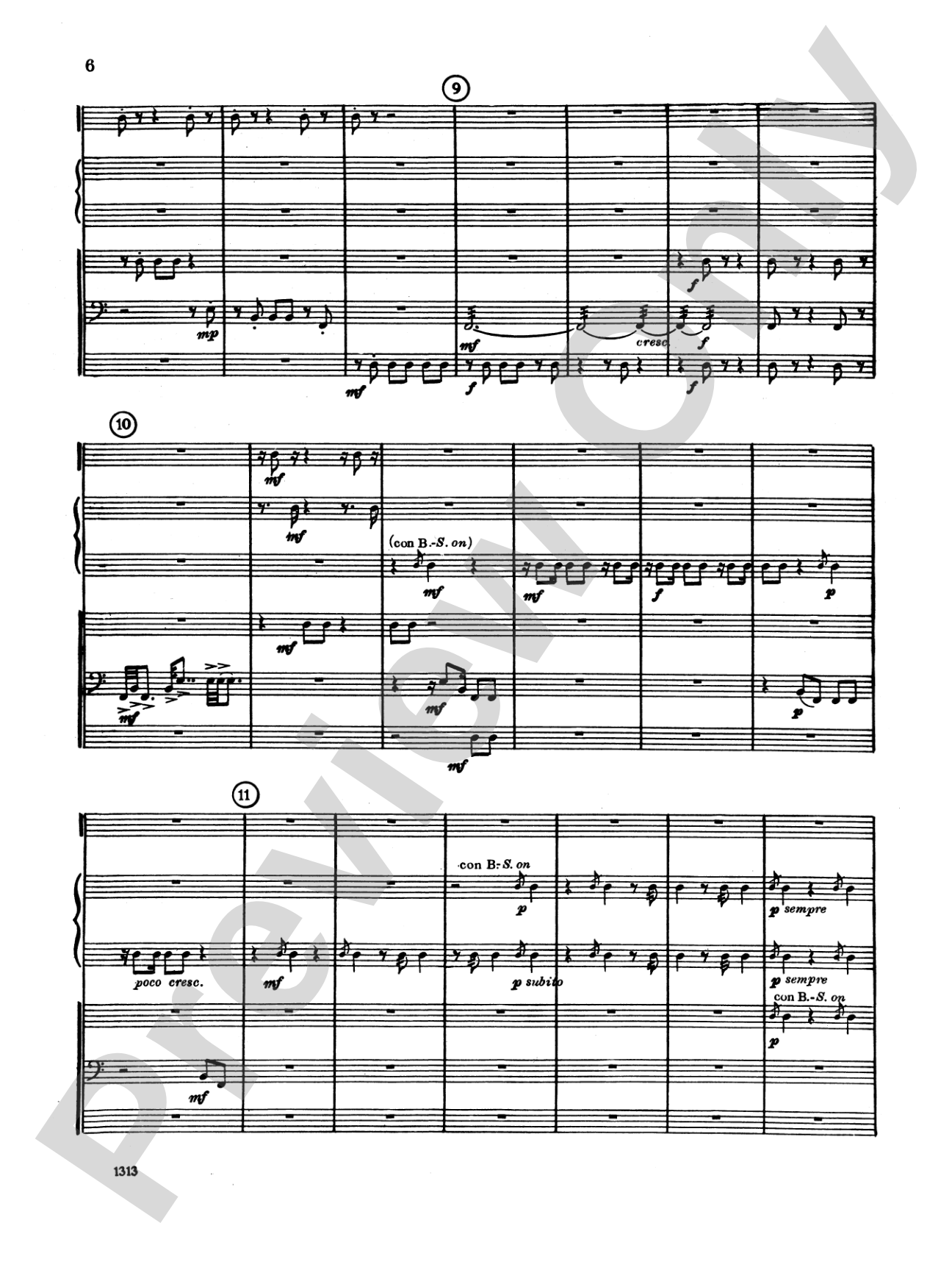
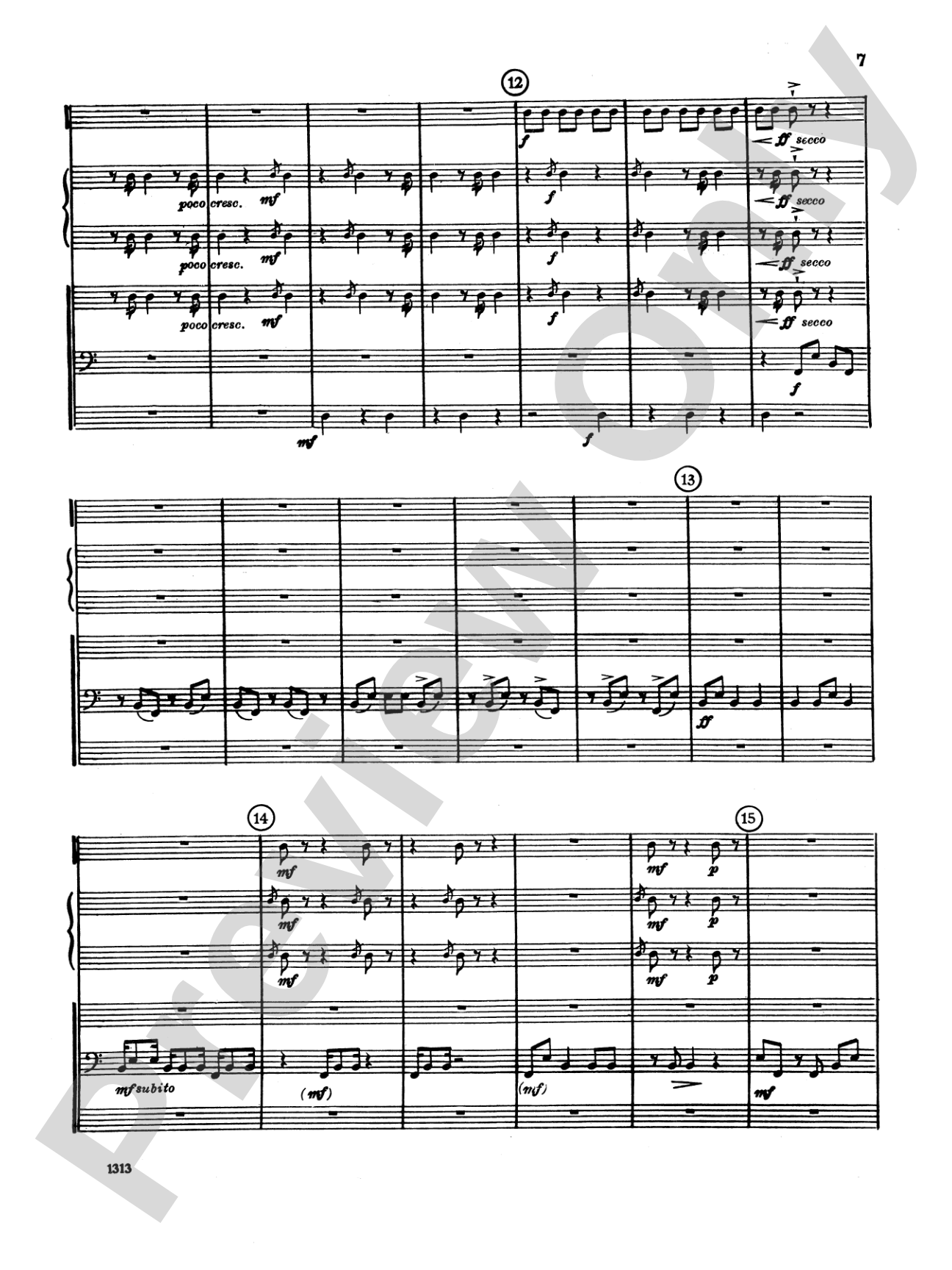
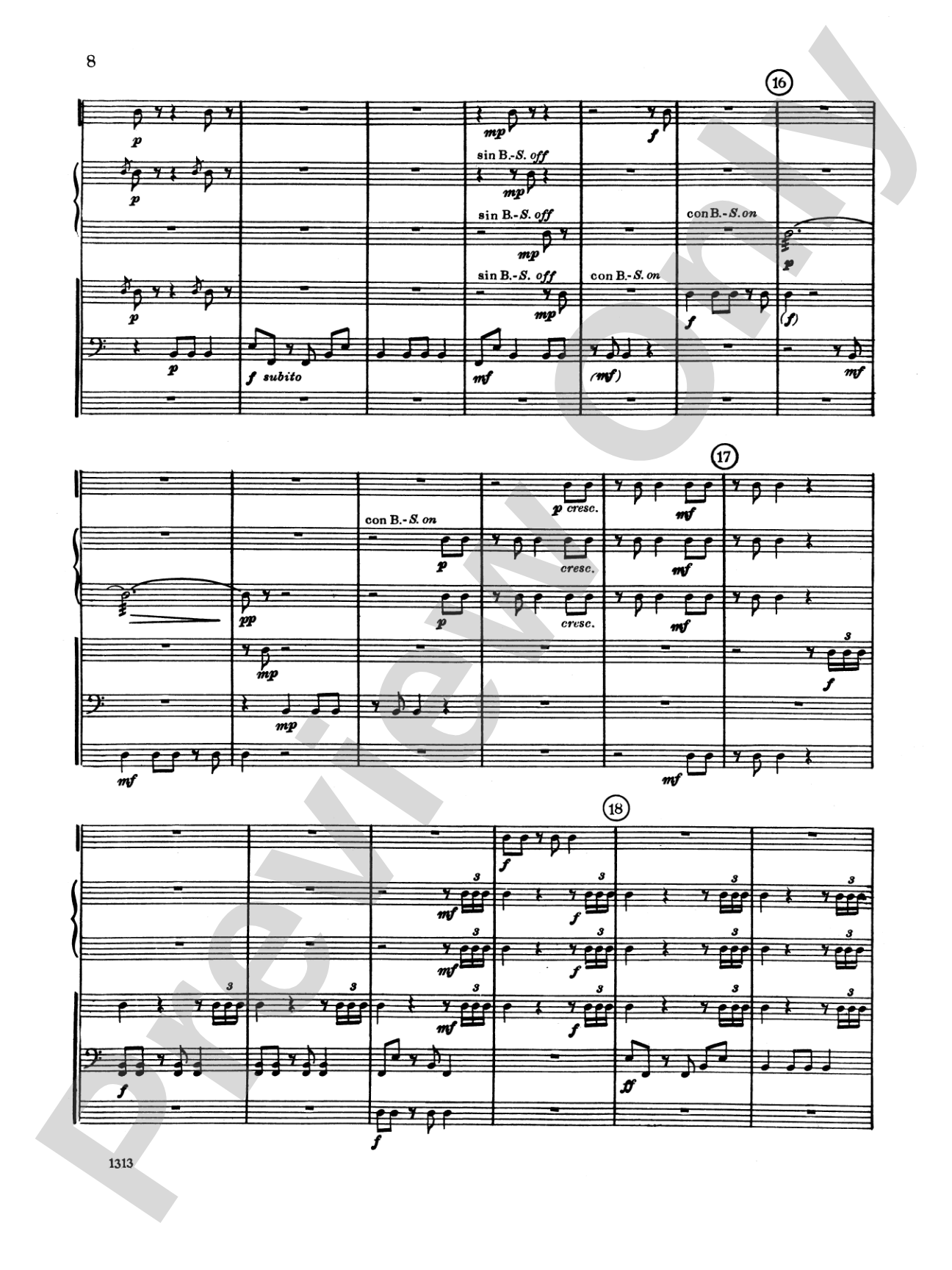
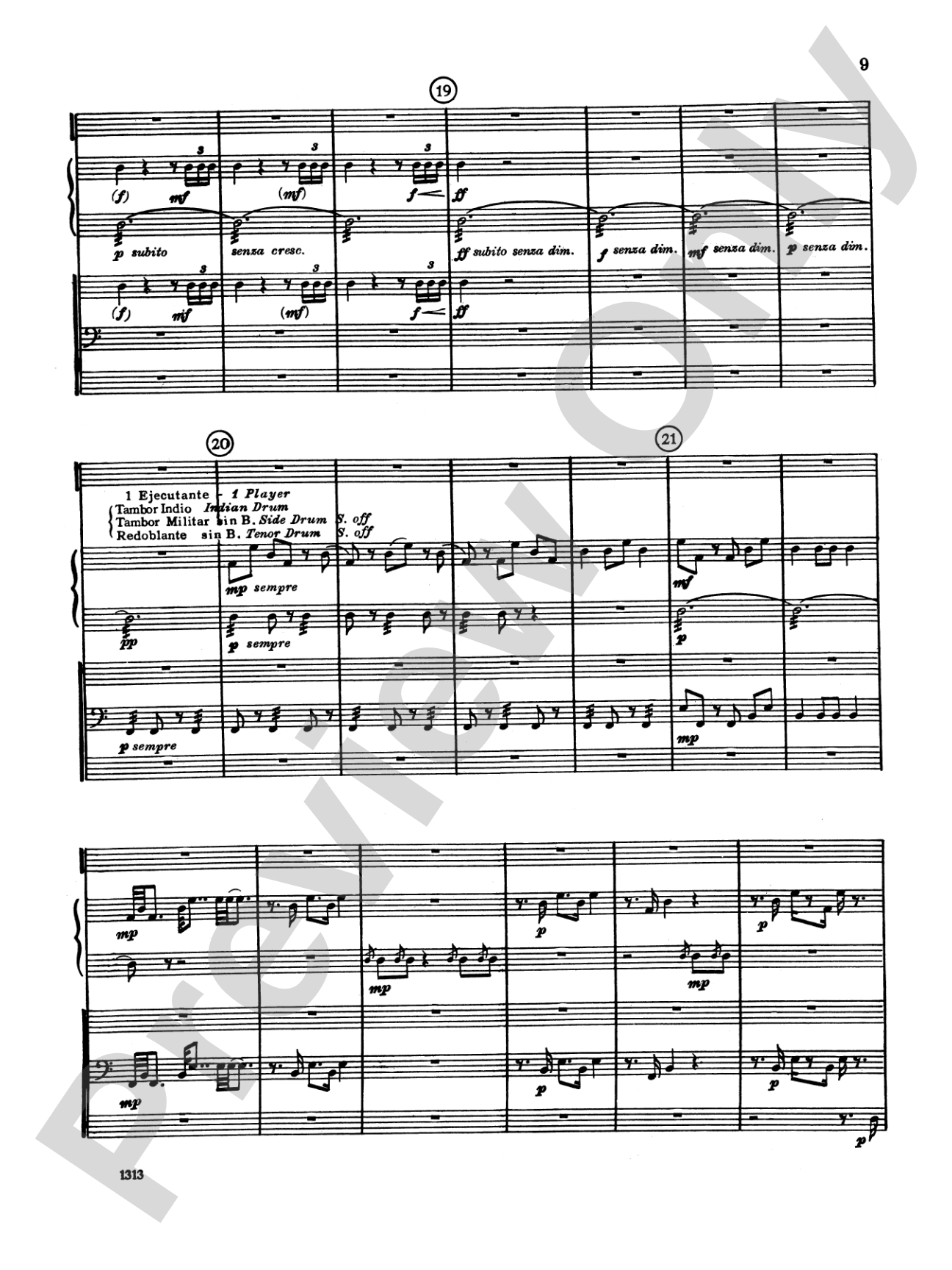
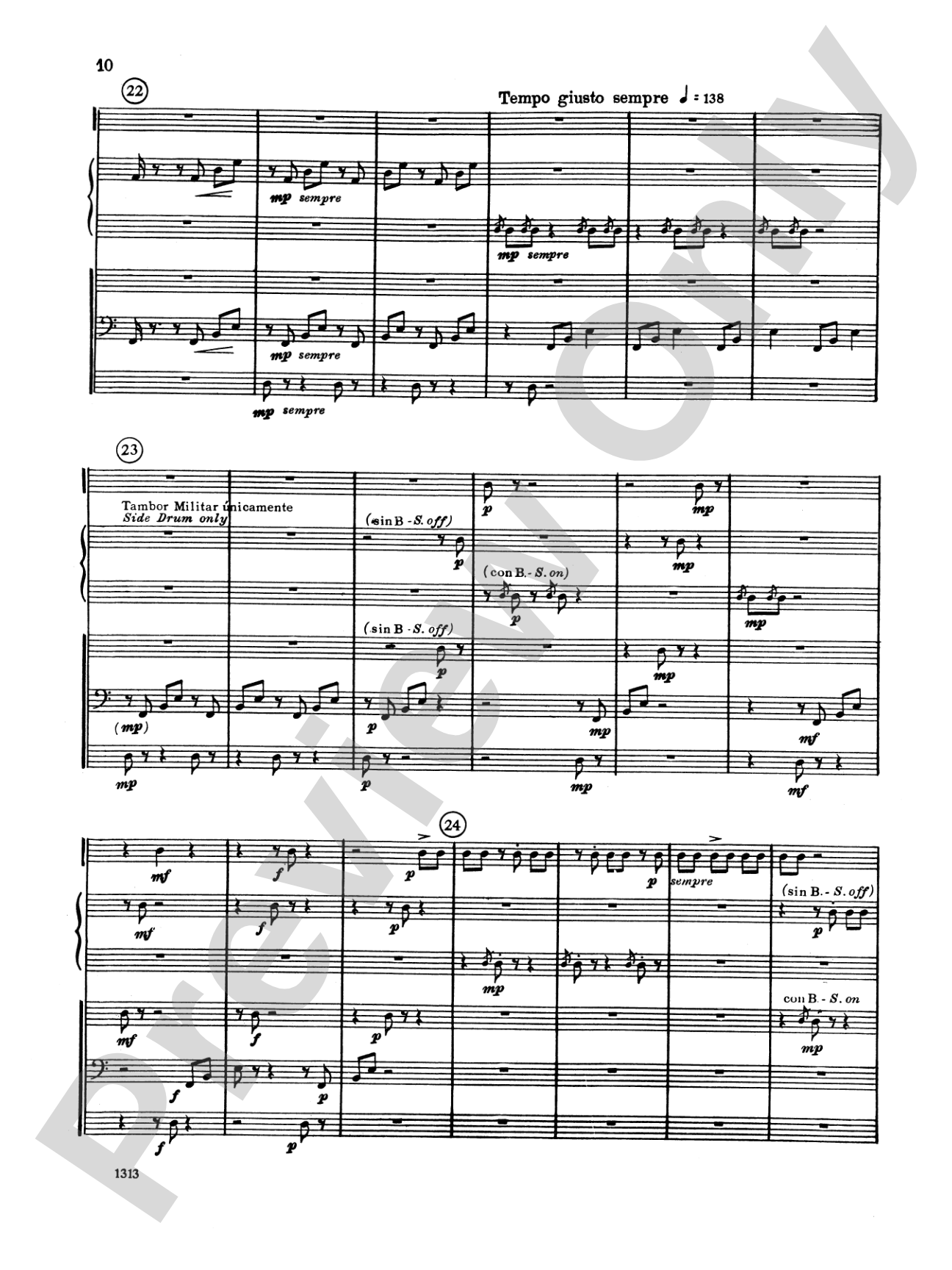
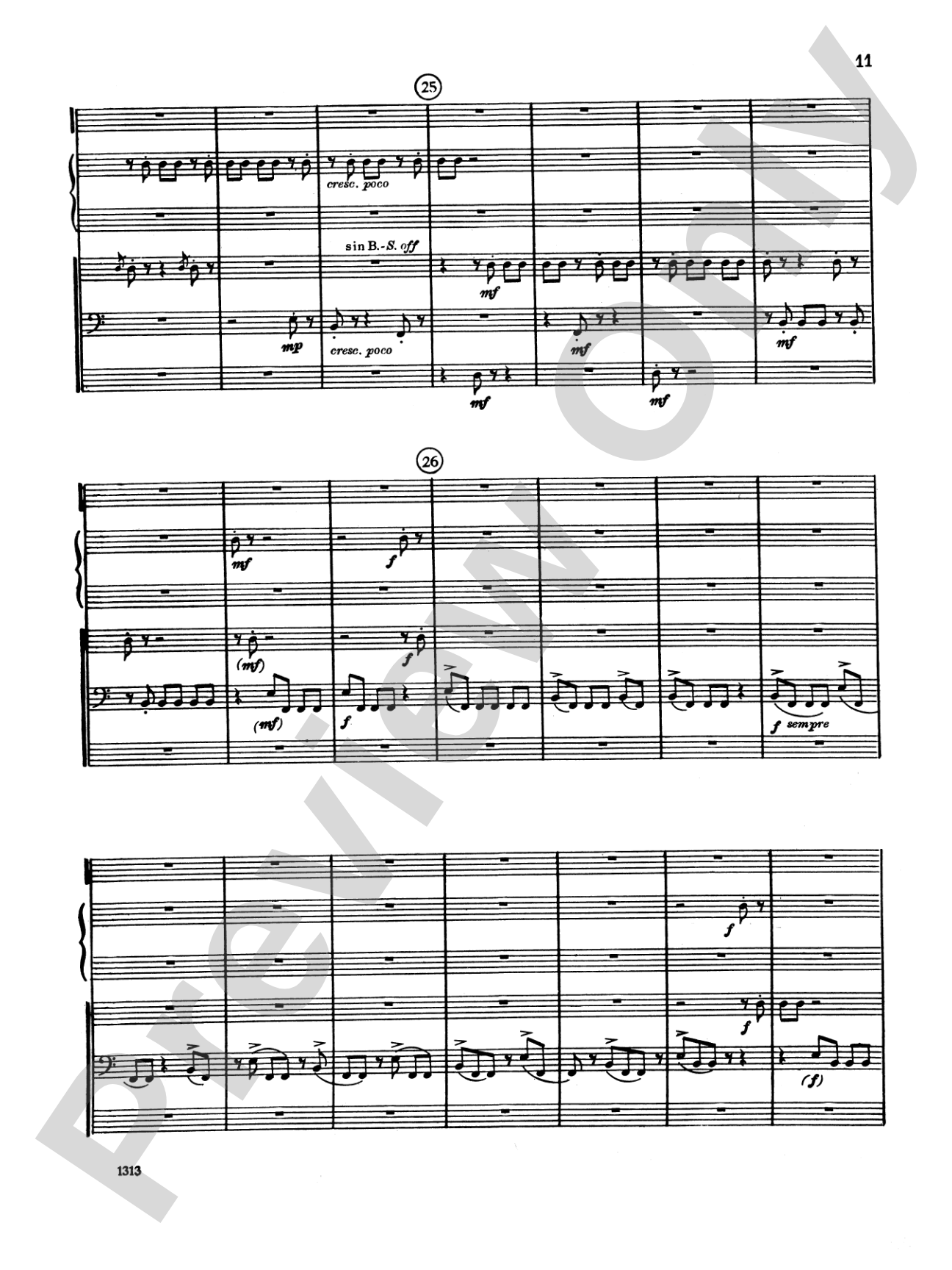
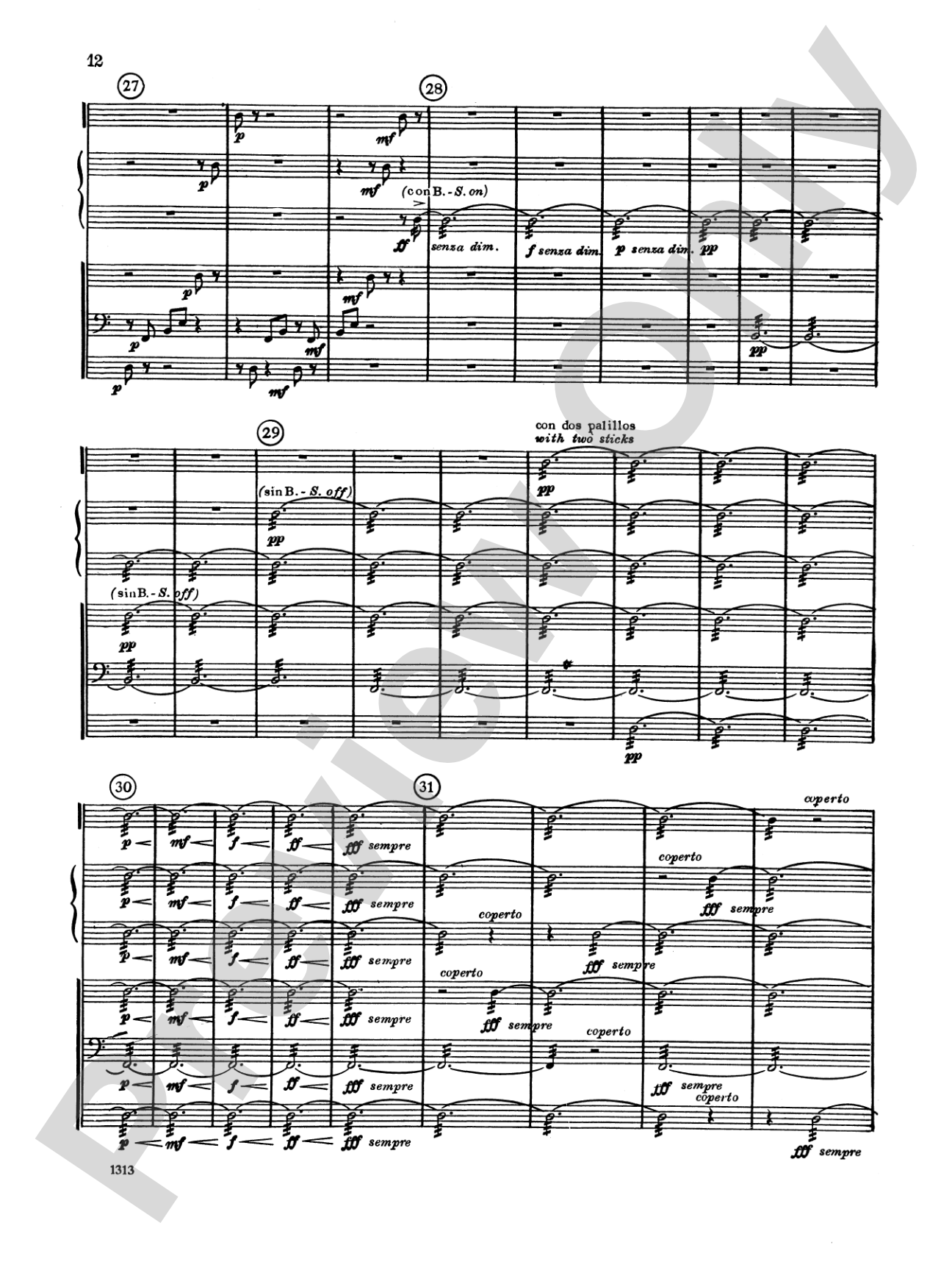
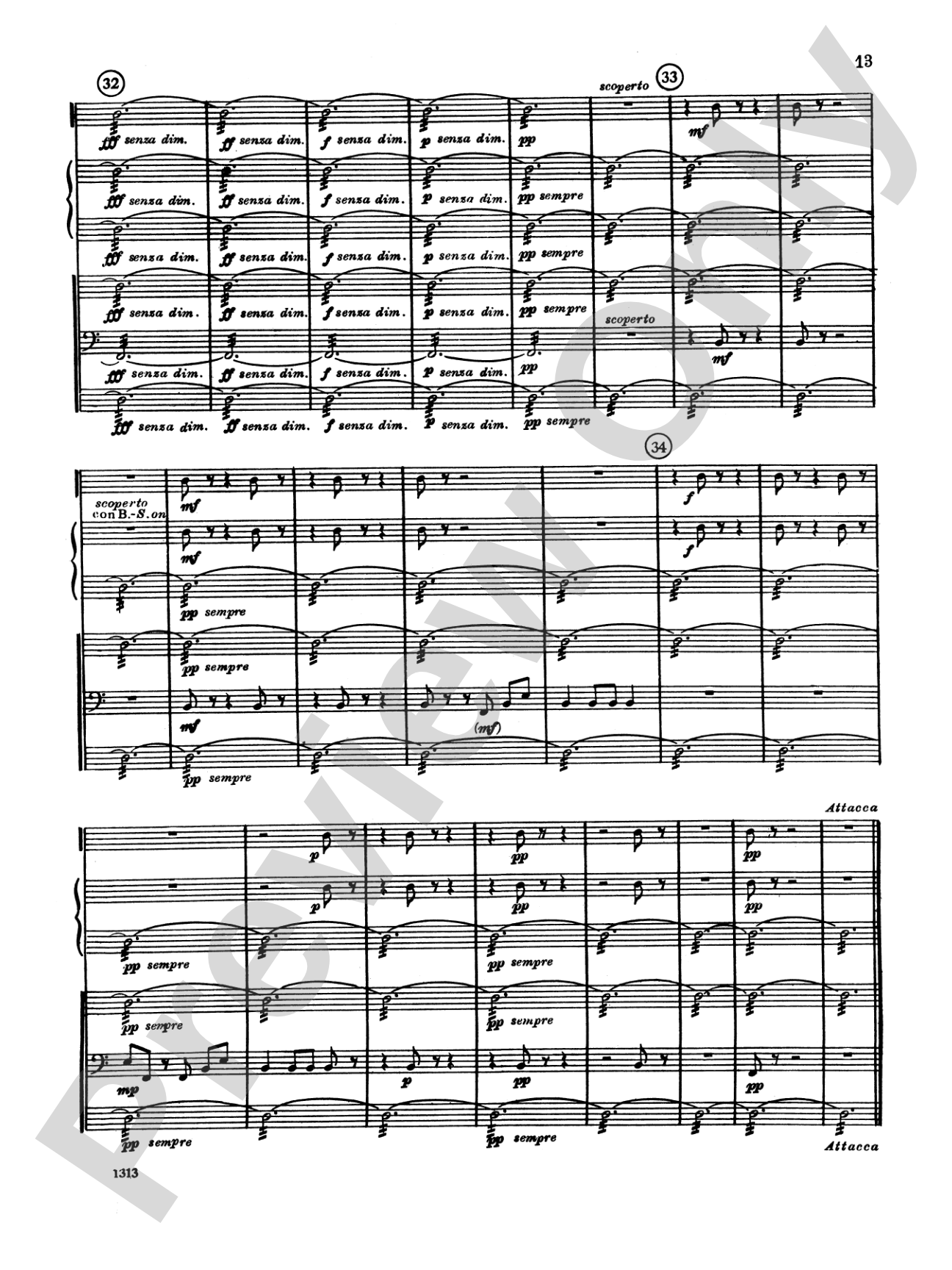
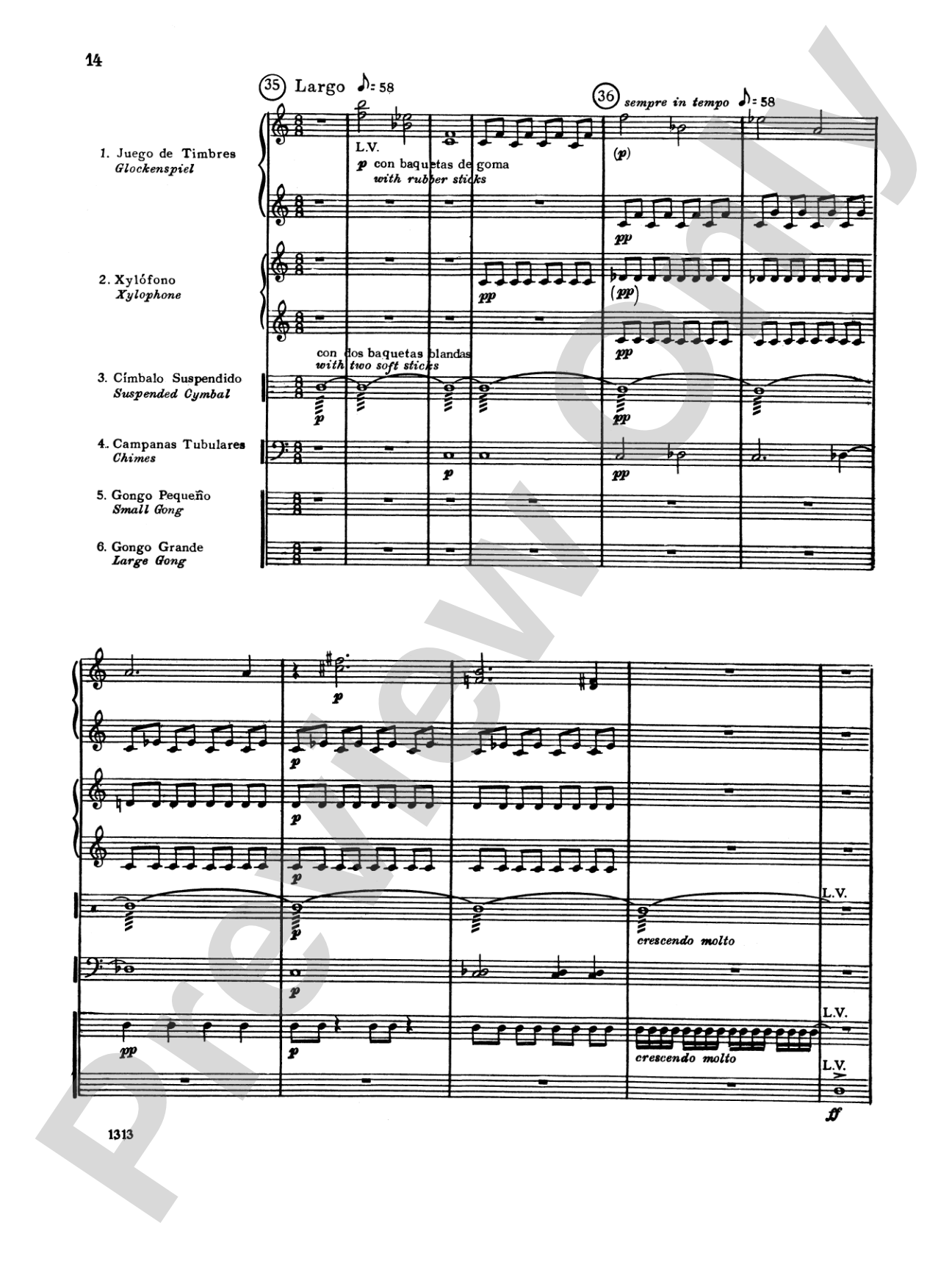
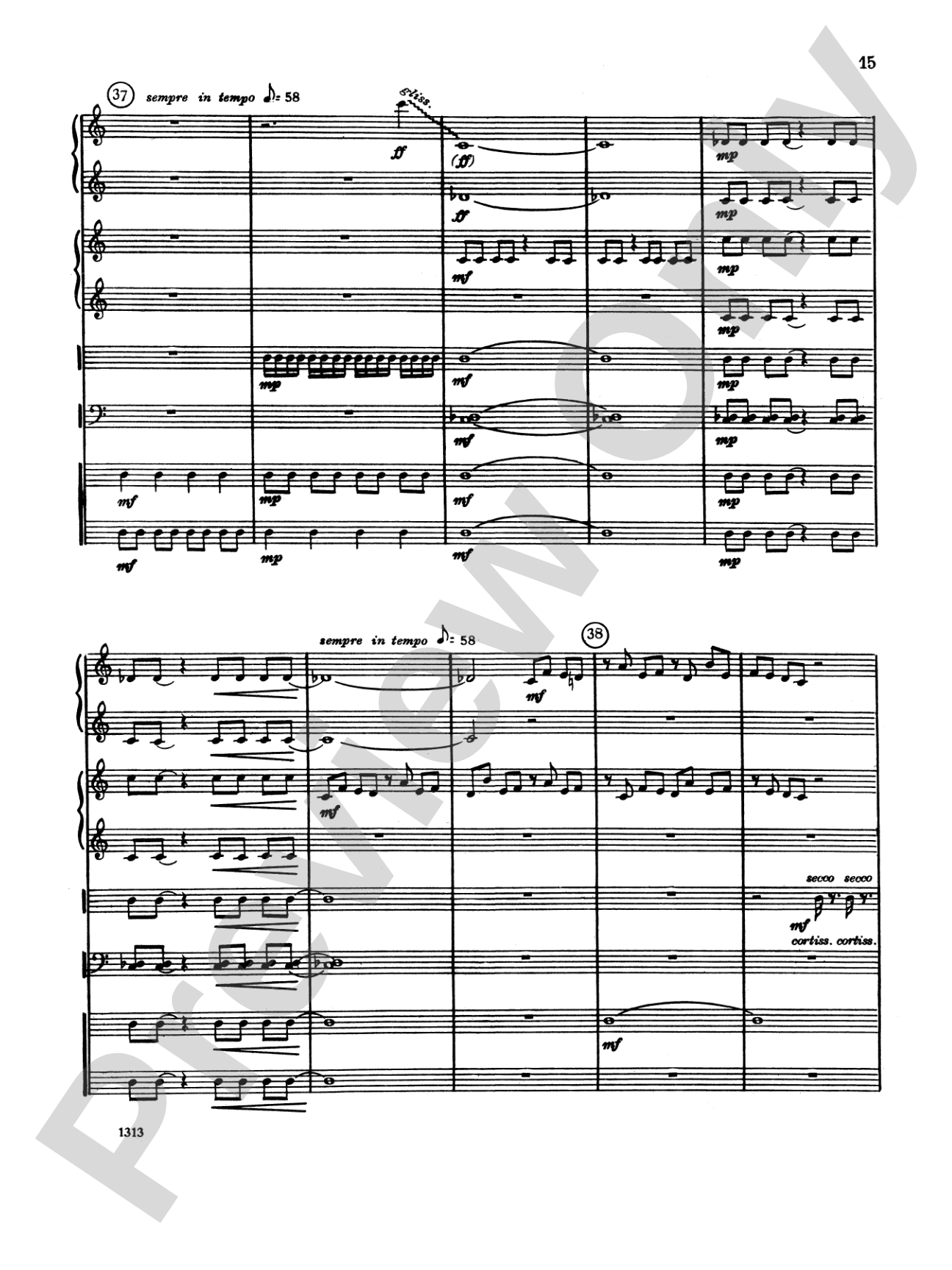
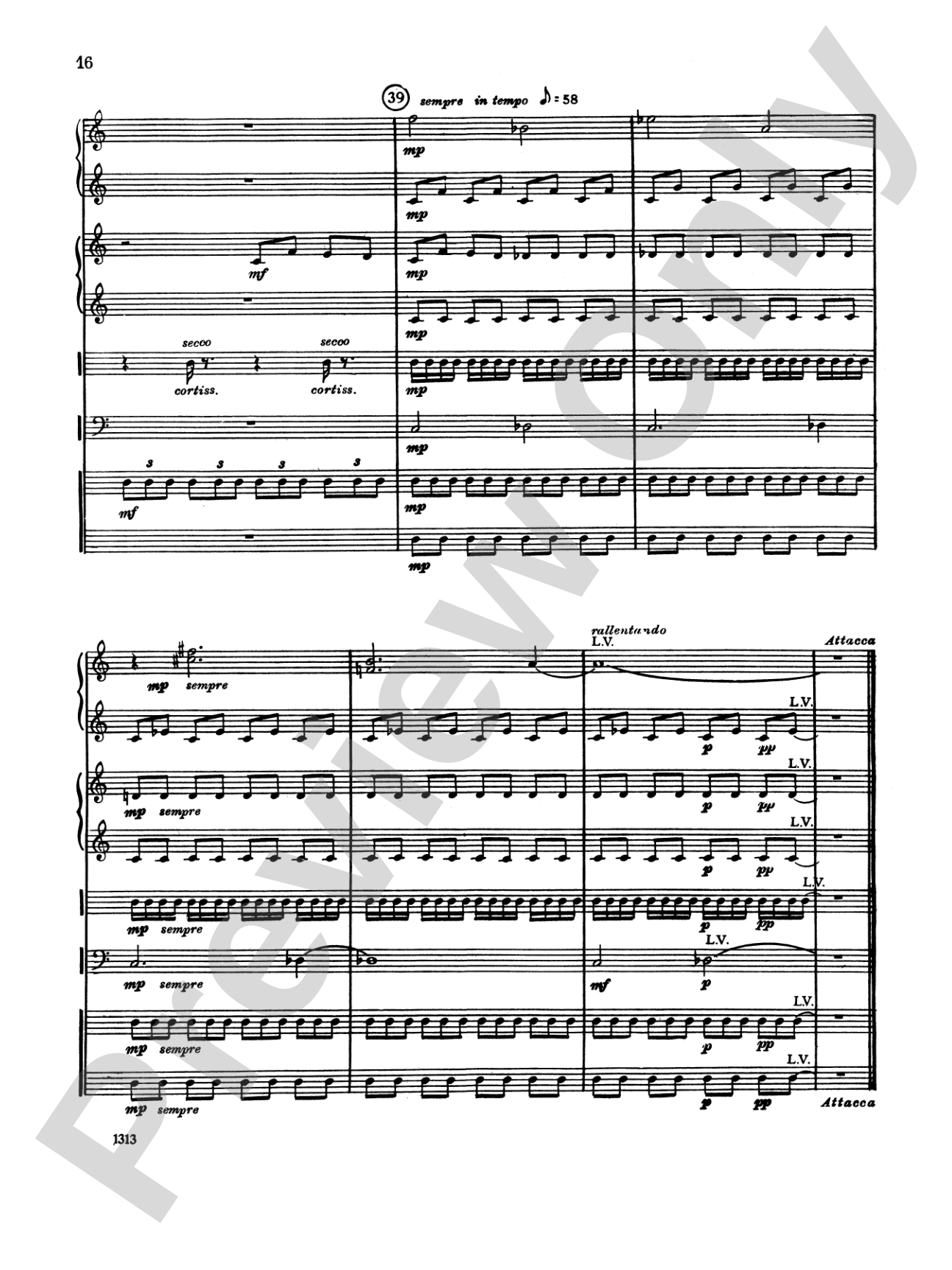
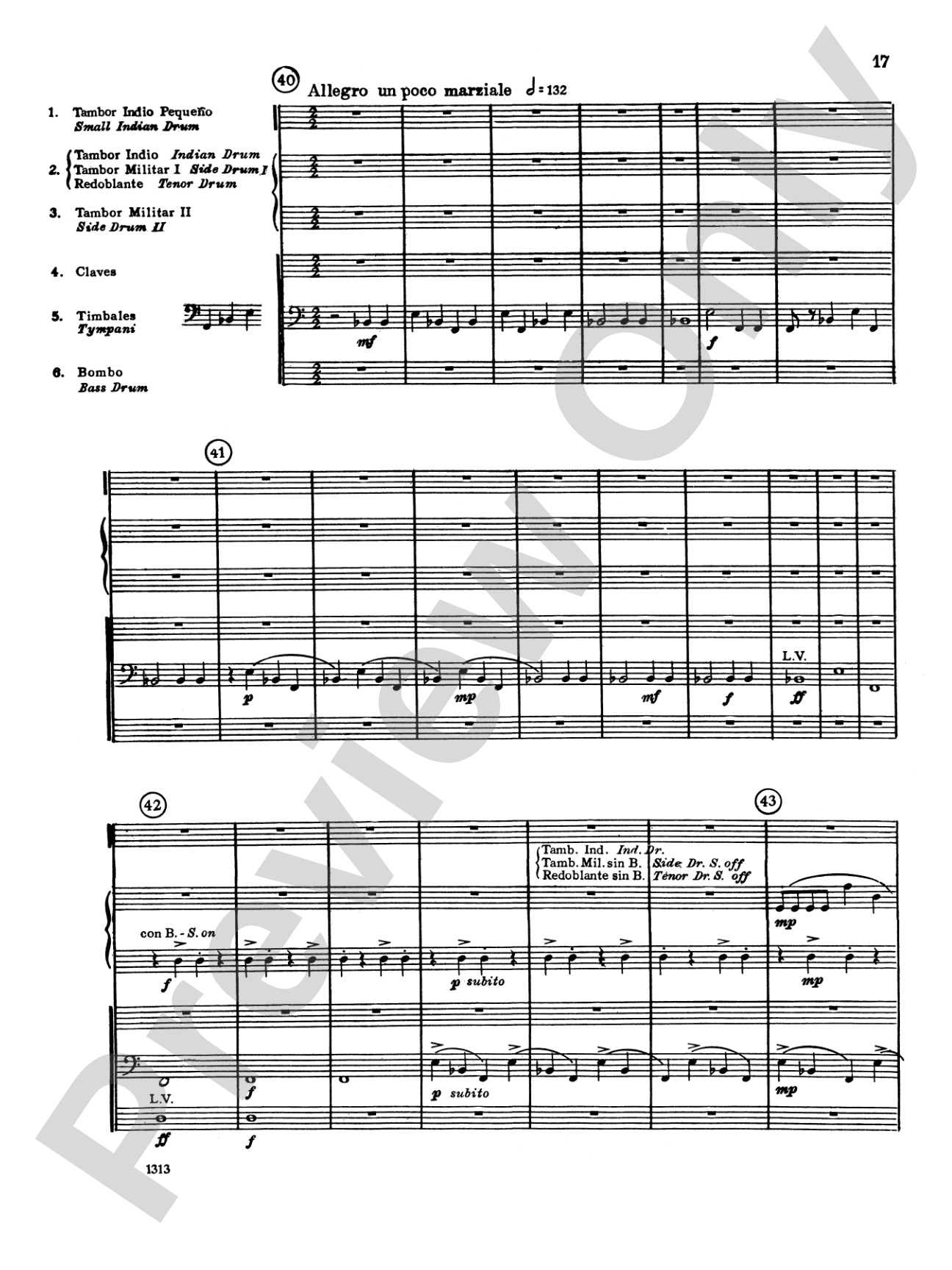
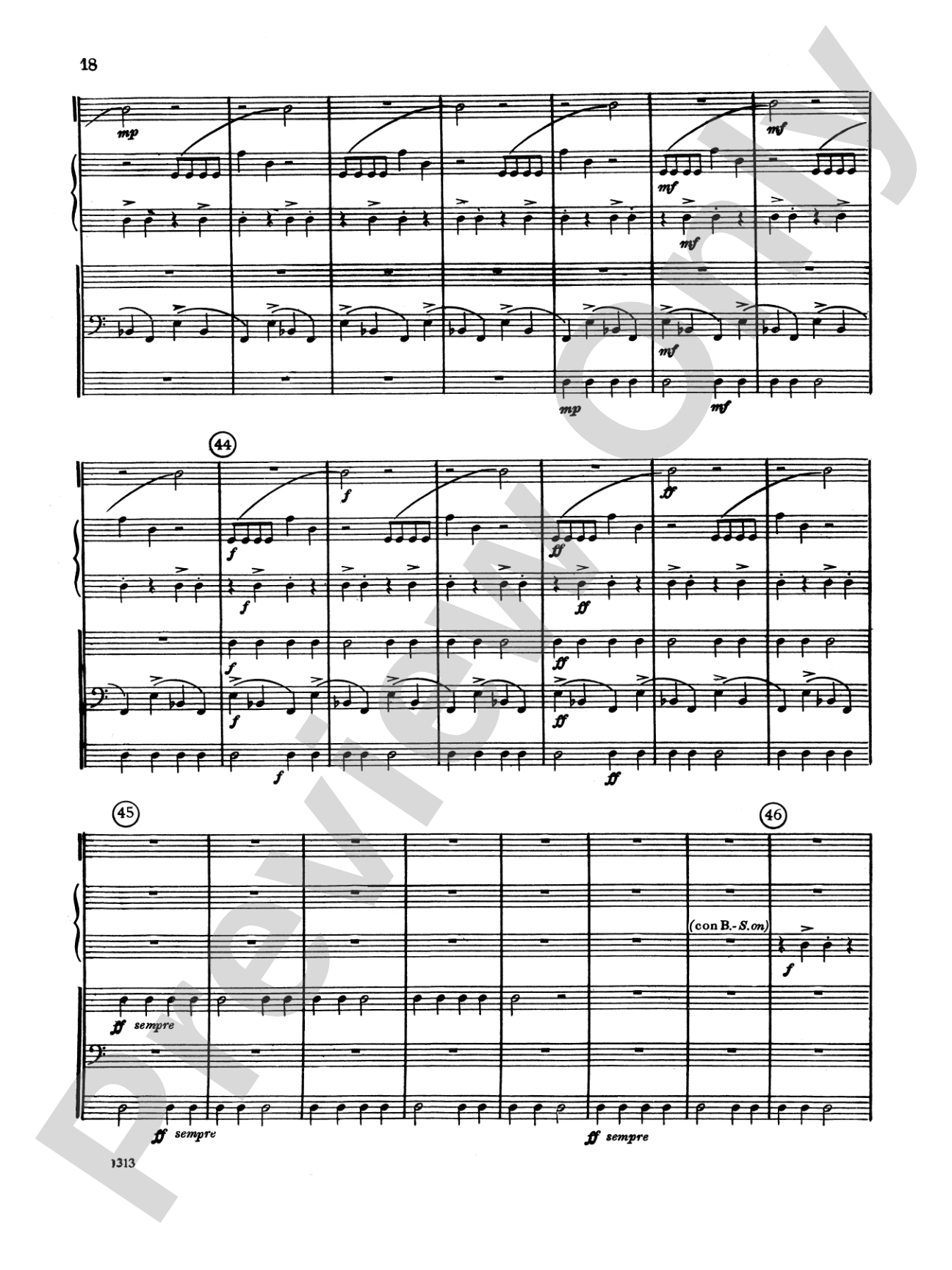
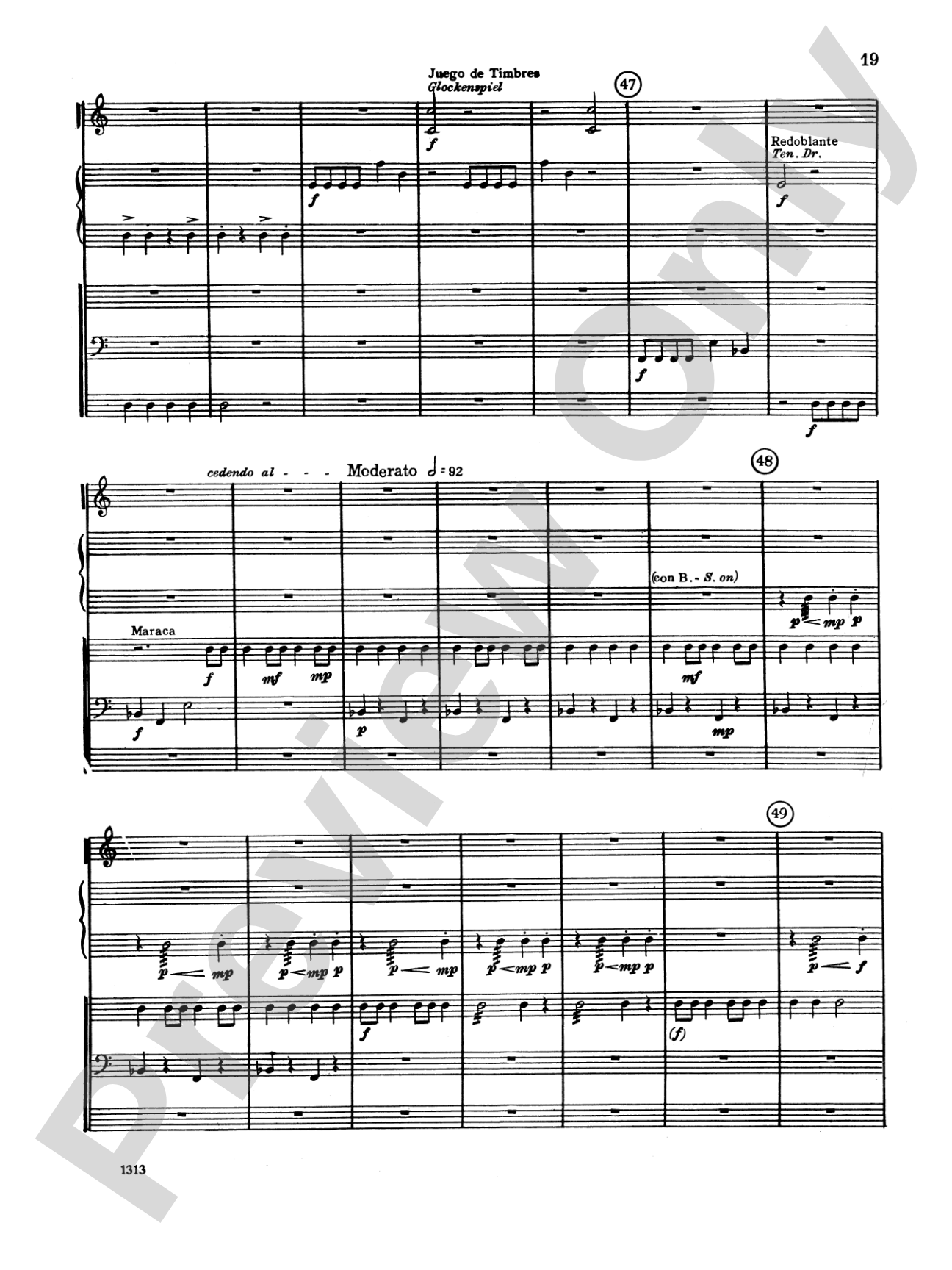
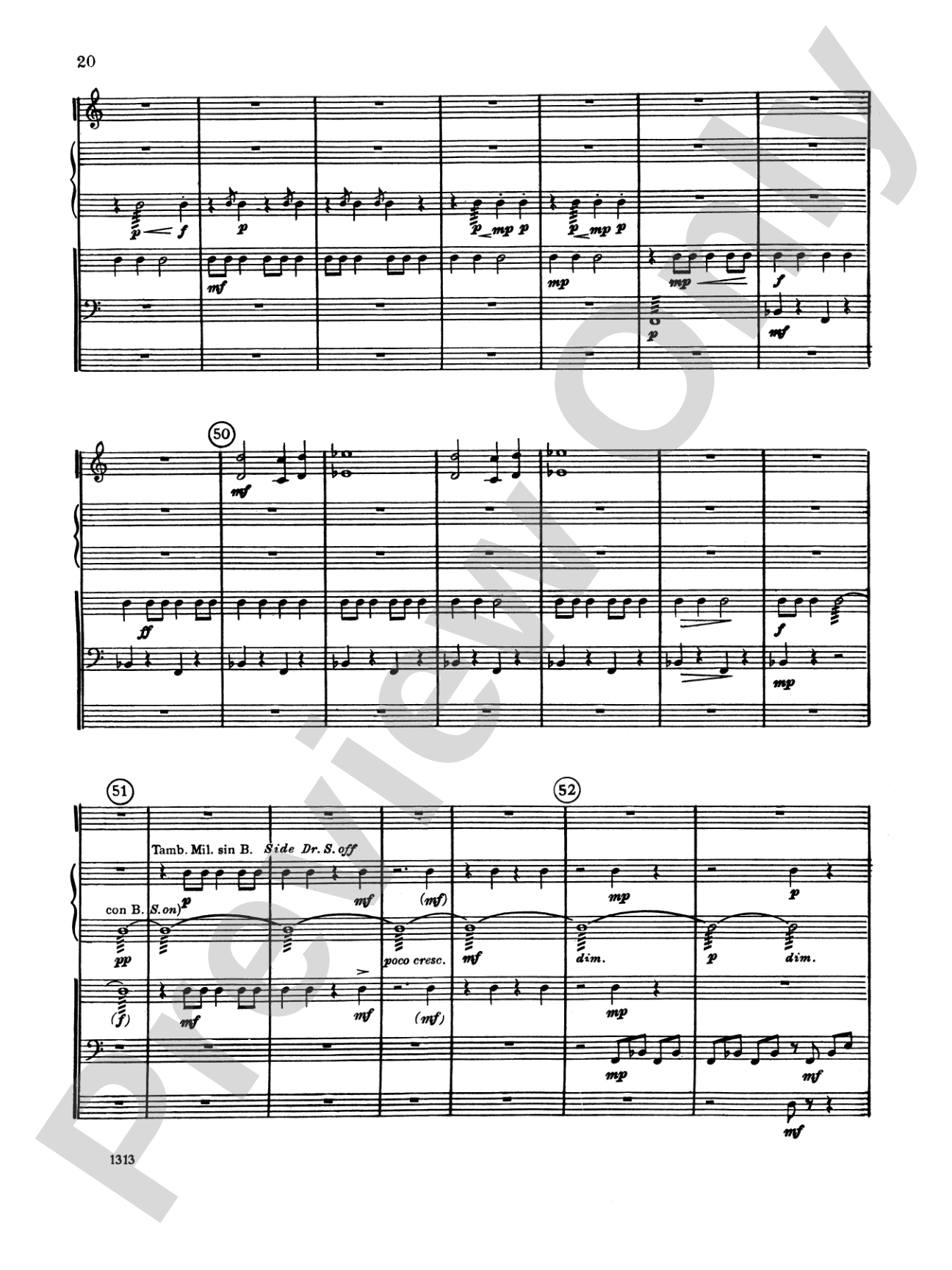
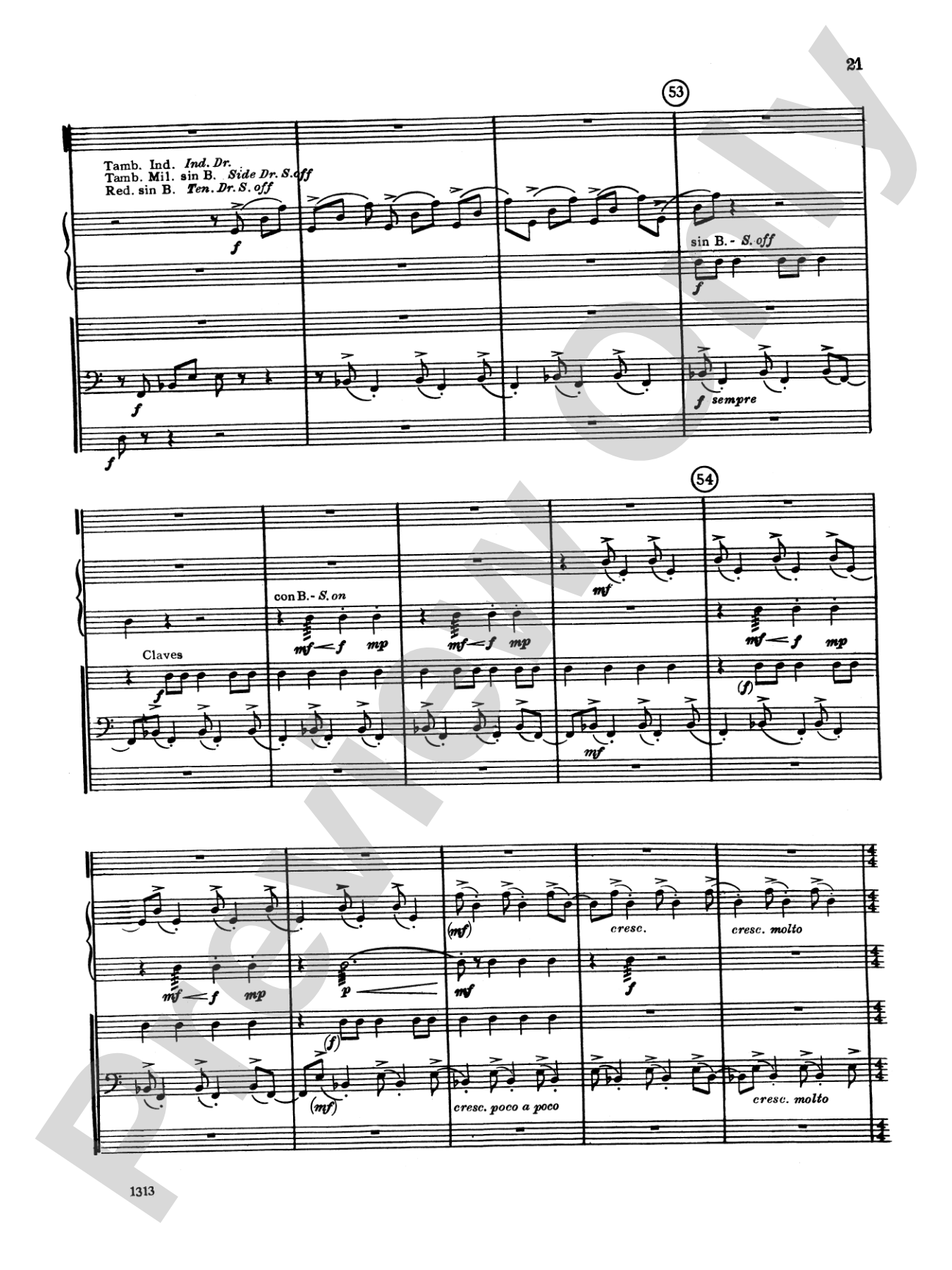
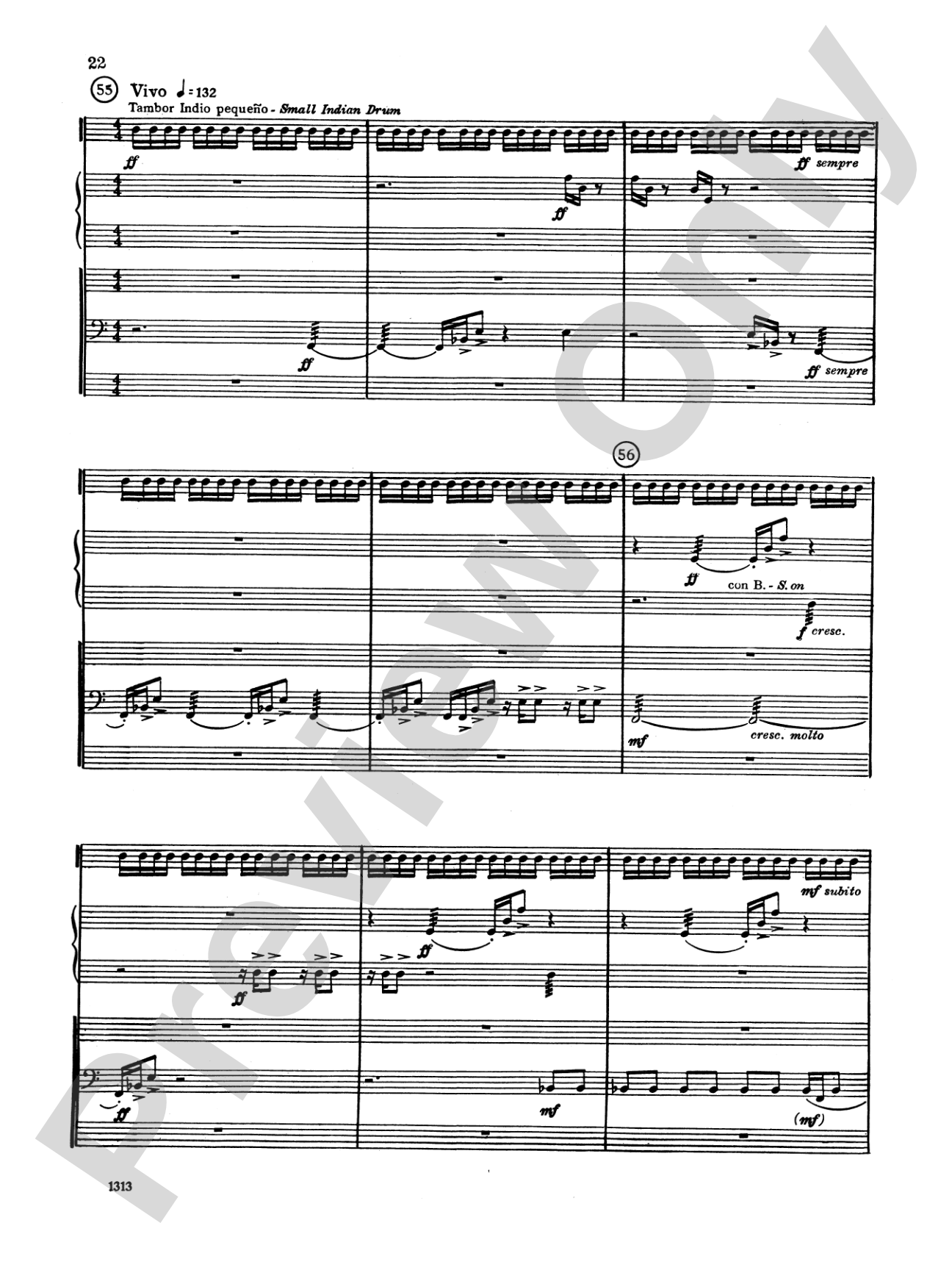
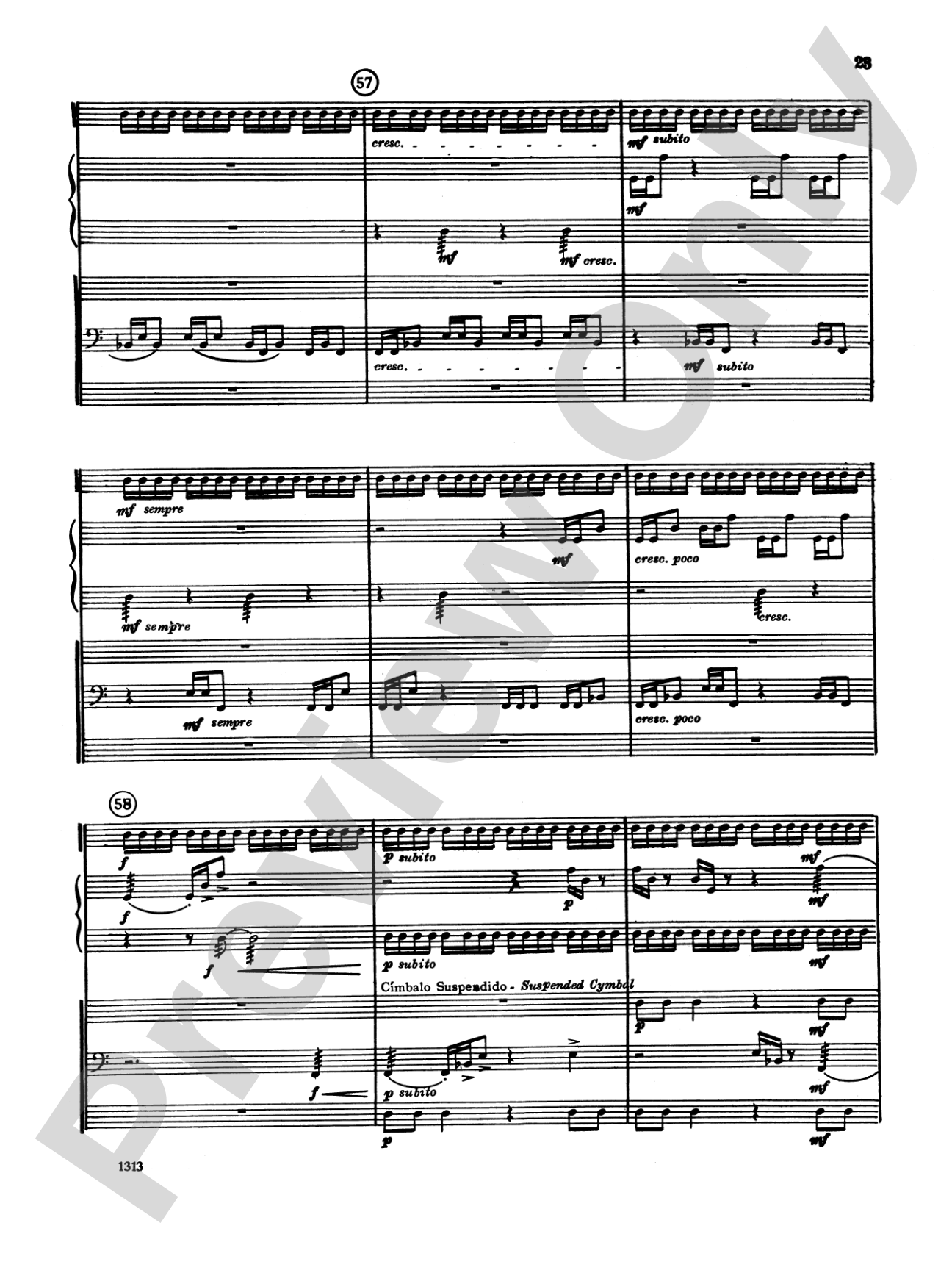
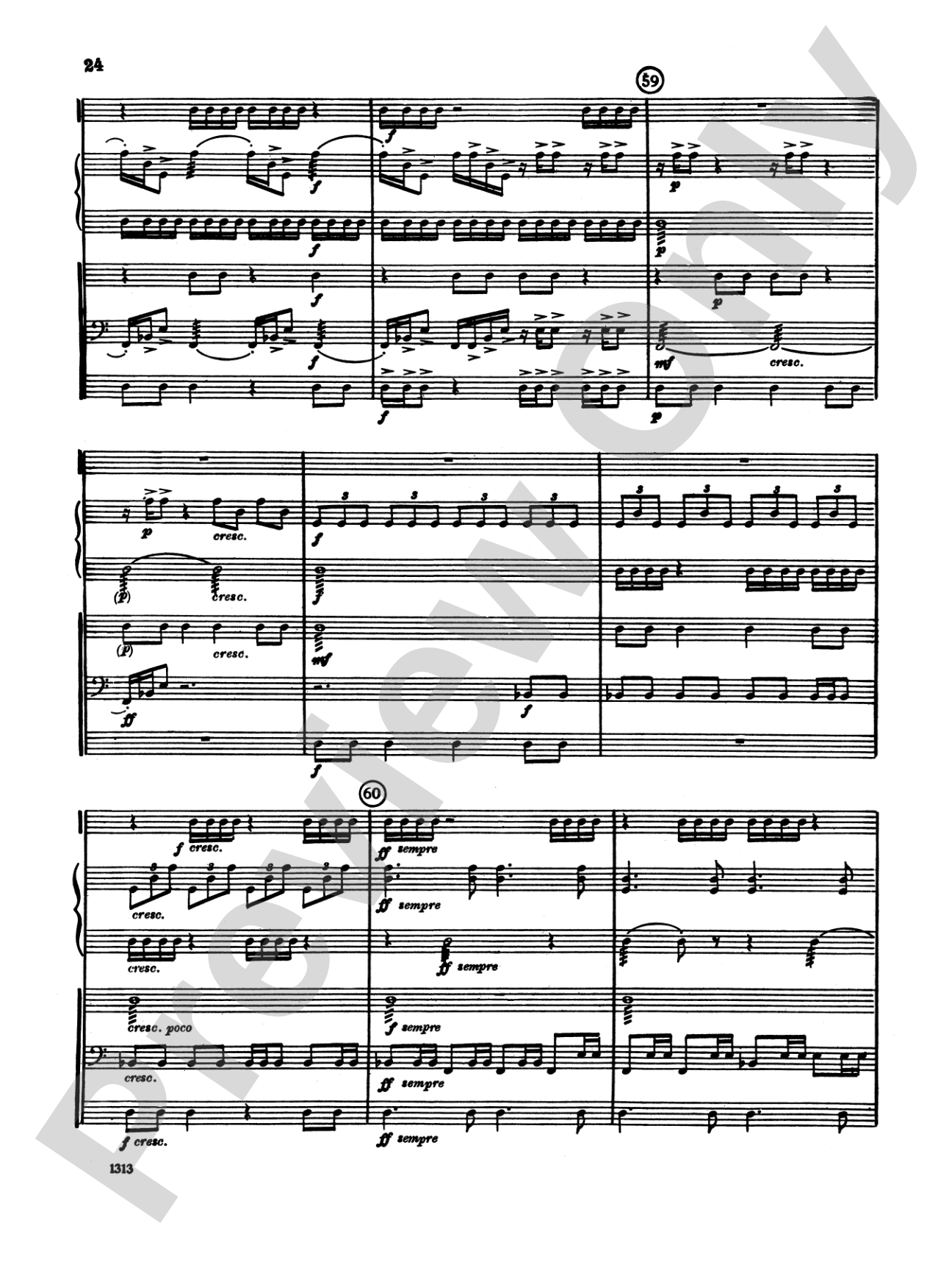
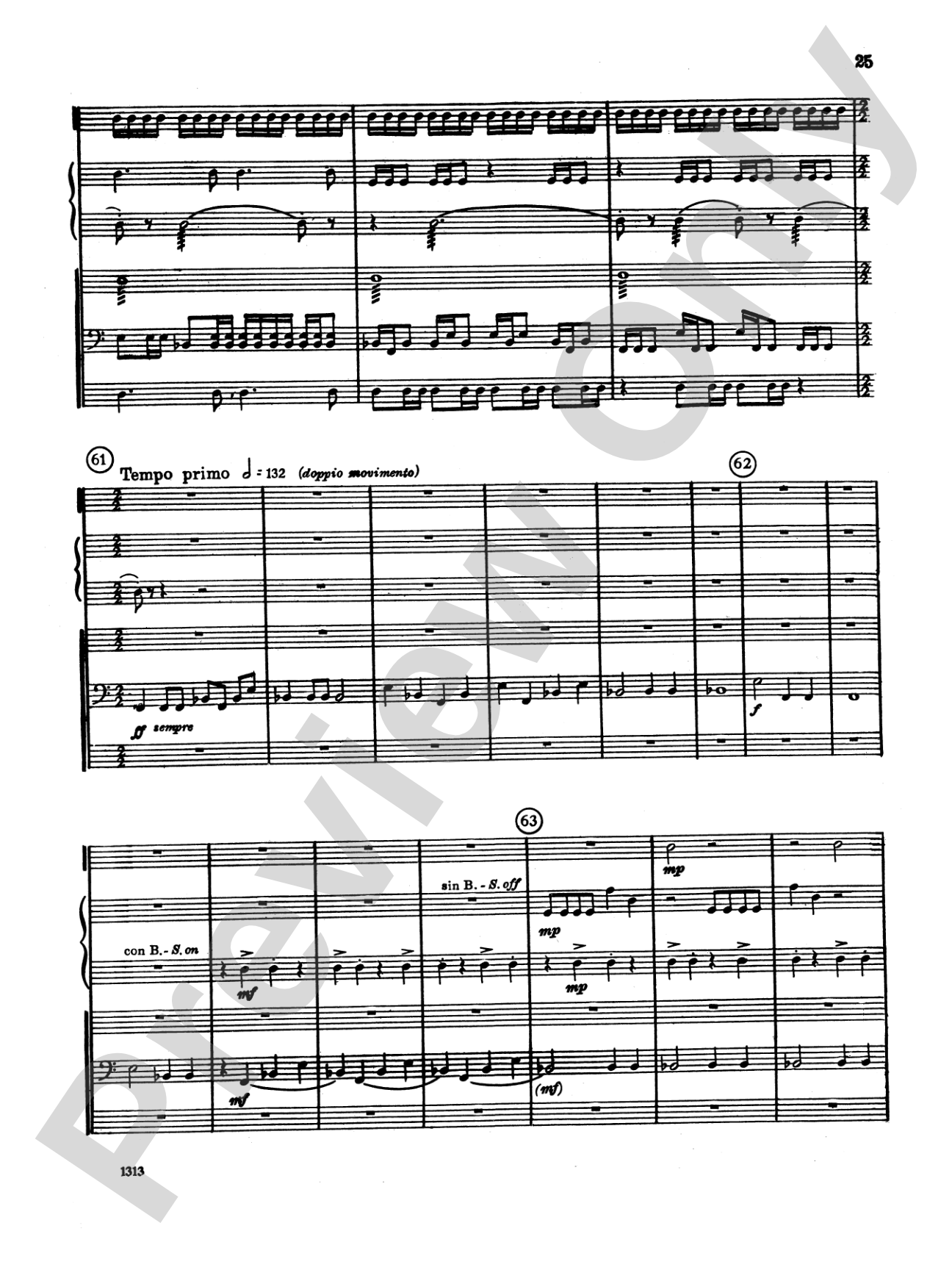
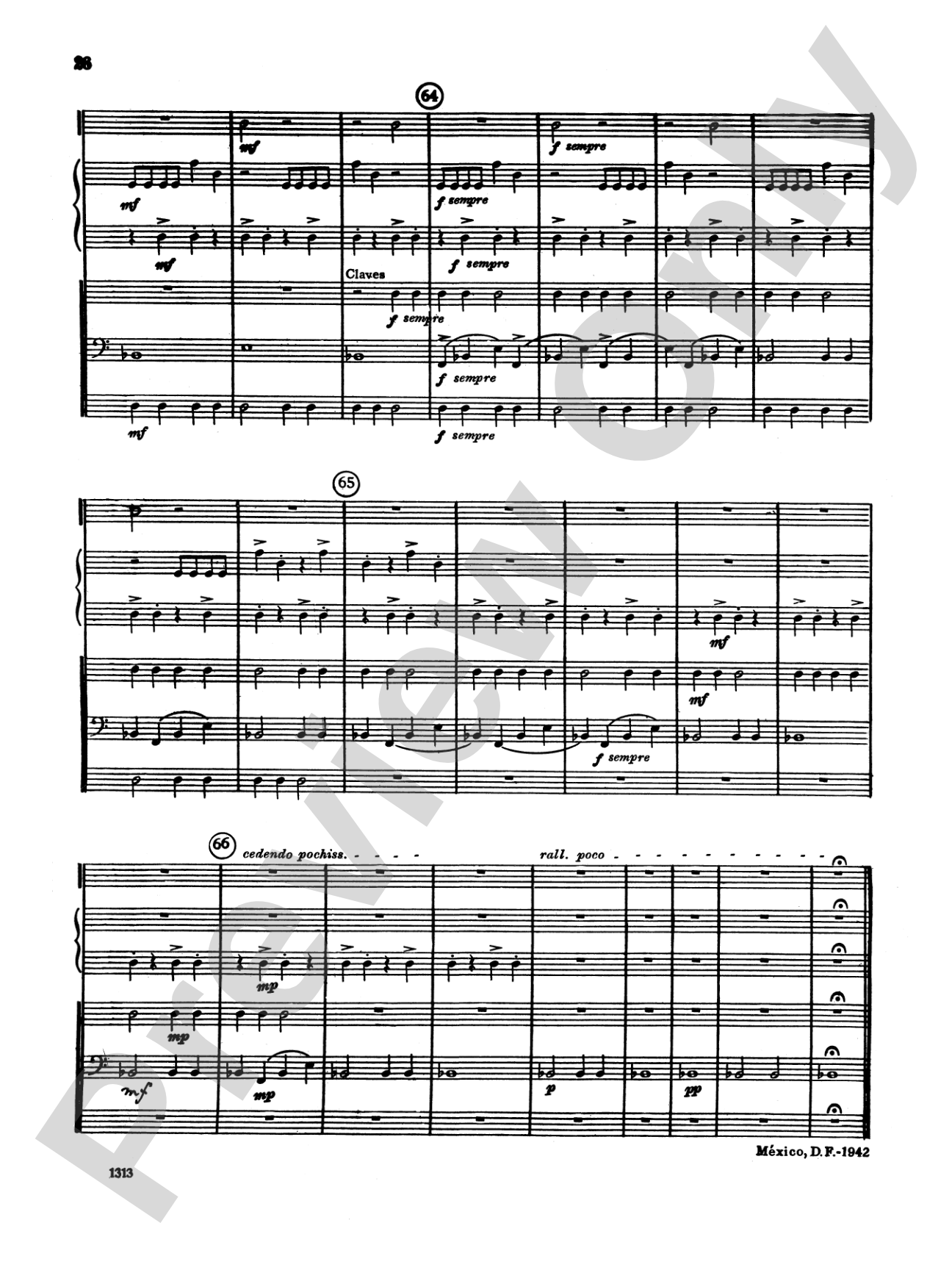
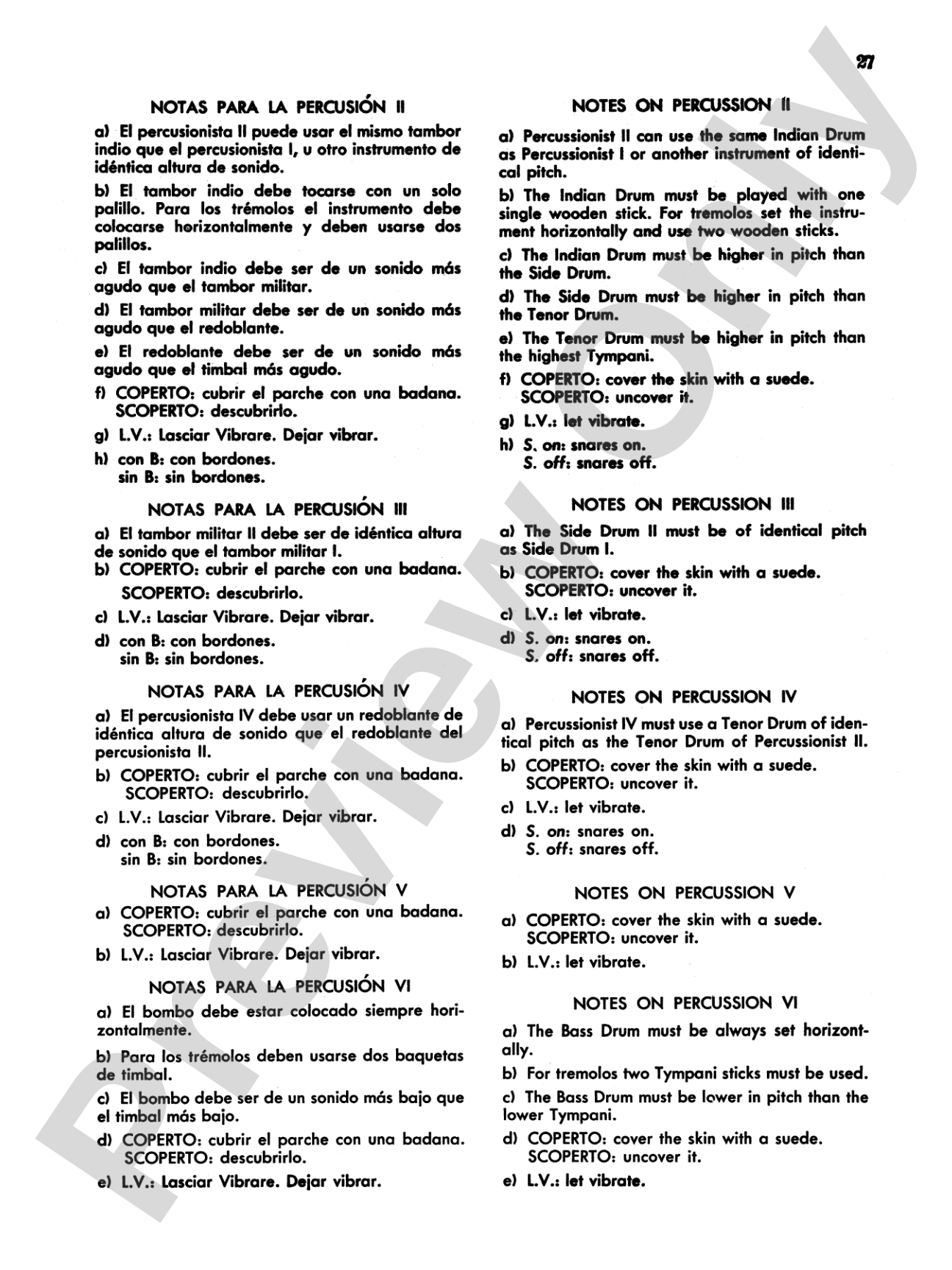


Toccata: Score
For 6 Players
By Carlos Chávez
Level: Intermediate Plus
Item: 00-PR-0001924
$8.00
Pickup currently not available
Description
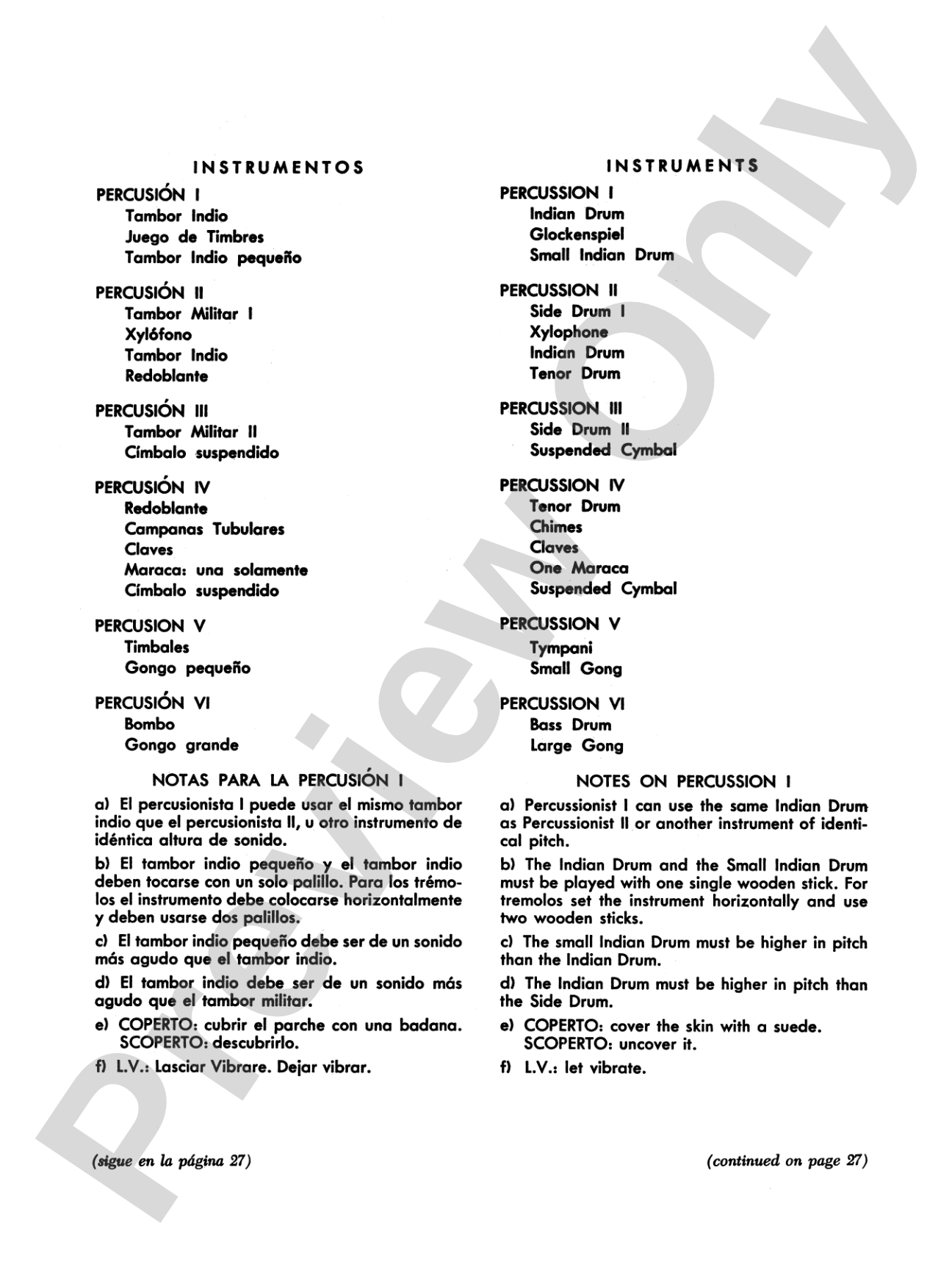
For six players. Instrumentation: Indian drums, glockenspiel, side drums, xylophone, tenor drums, suspended cymbals, chimes, claves, one maraca, timpani, tam-tam, bass drum.


Don't just read it, hear it, play along with it, and watch your students grow with it. In MakeMusic Cloud, Toccata: Score comes alive with professional accompaniment, adjustable tempo, and built-in practice tools that turn solo practice into real progress.
Open in the Player
Jump straight in and assign it today.
Start Your Free Trial
Open this title and explore the full library in minutes.
Sample Audio
No sample audio found.
Sample Video
No sample videos found.
Additional Details
Series:
Percussion Ensemble Series
Publisher:
Alfred Music
Page Count:
76
SKU:
00-PR-0001924
More about this title
About the Composer: Carlos Chávez
Carlos Chávez (1899-1978) was Mexico's leading composer of the twentieth century and a tireless advocate for contemporary music. As conductor of the Mexico City Symphony Orchestra and founder of the Conservatorio Nacional de Música, he shaped Mexican musical life for decades while composing works that drew from indigenous Mexican traditions, modernist techniques, and rhythmic sophistication. His percussion writing stands among the most inventive in the classical repertoire, reflecting both his deep engagement with non-Western instruments and his commitment to expanding what modern ensembles could express.
Why we love this
Chávez writes for percussion with genuine respect for each instrument's voice, creating textures that feel both colorful and architecturally rigorous. The score demands attentive listening and precise coordination across six players, making it an ideal vehicle for intermediate-plus ensembles ready to move beyond unison rhythms into genuine chamber music thinking.
What to expect
Toccata pulses with rhythmic vitality and colorful instrumental dialogue. The music moves between moments of crystalline clarity, where individual percussion voices stand apart, and denser sections where the ensemble coalesces into shimmering, complex textures that feel both ancient and utterly modern.
Who it's for
Intermediate-plus percussion ensembles ready to tackle a major twentieth-century work with authentic complexity. Your players need secure individual technique, the ability to sustain focus across multiple pages of intricate rhythmic interplay, and genuine interest in exploring non-Western and extended percussion sonorities.
How to get the most out of it
- Balance the ensemble by mapping each instrument's acoustic reach in your rehearsal space; timpani and bass drum will project far, so adjust dynamic levels proportionally during full-section runs.
- Establish a shared pulse early by conducting or using a metronome through the opening sections until all players internalize the foundational rhythmic grid.
- Highlight the glockenspiel and chimes parts in rehearsal separately; their melodic material often carries structural importance that can be buried if the ensemble focuses only on rhythmic lock.
- Allocate extra time to passages where two pitched instruments (xylophone and glockenspiel, or Indian drums and timpani) share the texture; clarity of timbre makes these moments coherent rather than cluttered.
How to use it
Program this as a concert centerpiece that demonstrates your ensemble's rhythmic sophistication and tonal awareness. Pair it with lighter twentieth-century percussion works or earlier ensemble pieces to show range, or let it stand alone as the substantive work on a program weighted toward contemporary repertoire and world music.
Skills your students will build
- Reading and executing complex, non-aligned rhythmic patterns across six independent parts
- Listening for balance and blend among pitched and unpitched percussion voices
- Coordinating ensemble attacks and releases across multiple tempos and meters
- Understanding extended and non-Western percussion techniques (Indian drums, tam-tam, suspended cymbals)
- Developing independence as a section player while maintaining an acute awareness of the whole ensemble's sound