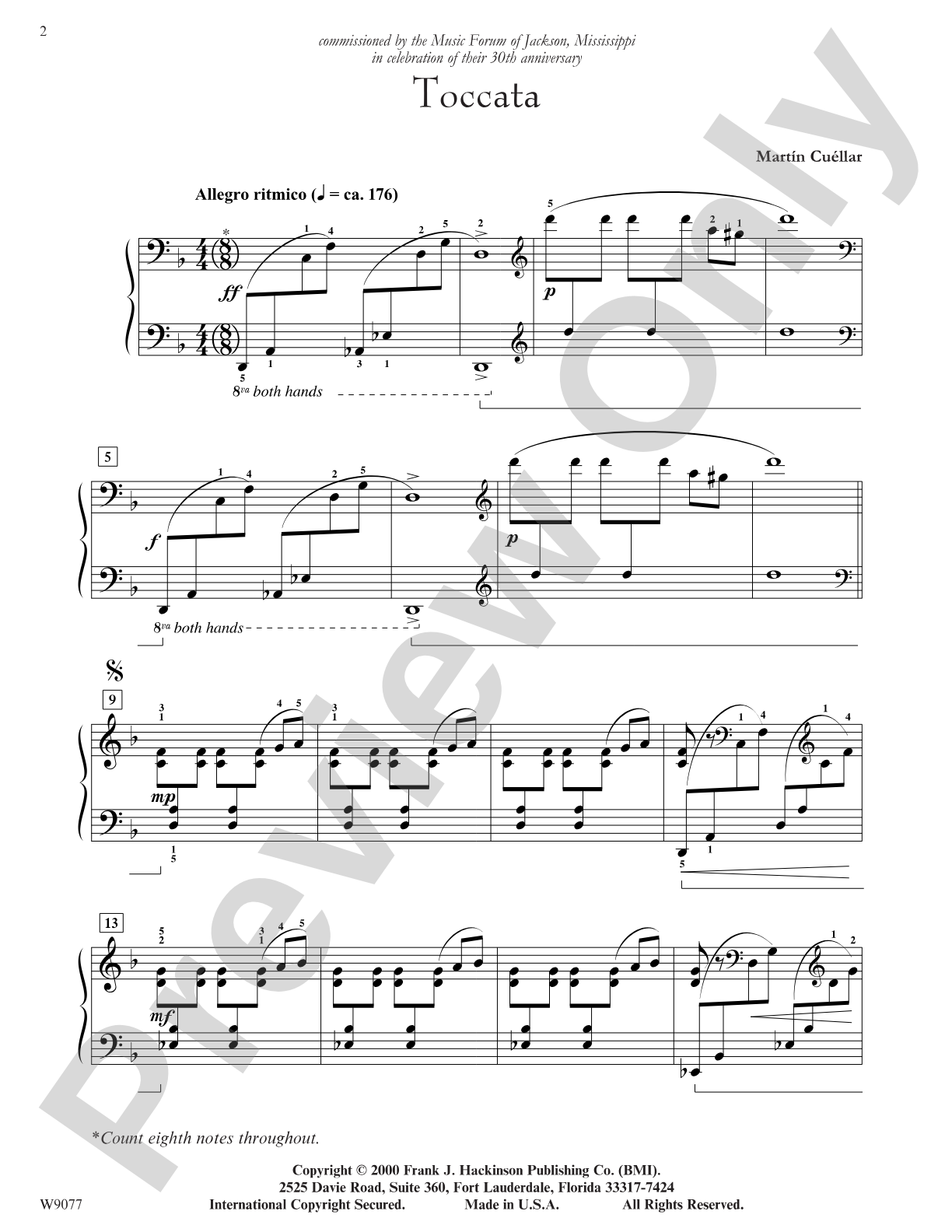
This energetic toccata features bold "3 + 3 + 2"� rhythms, along with a contrasting legato B section. Contains a wide range of expression and dynamics.
Discover MakeMusic Cloud: thousands of interactive titles your students can play along with today.
Cuéllar captures the rhythmic energy of toccata writing without relying on relentless sixteenth-note figuration. The "3 + 3 + 2" metric pattern creates genuine rhythmic interest and sits naturally under the fingers once students internalize the pulse, making this a rewarding technical study that feels modern and engaging. The contrasting B section gives players a chance to demonstrate musical control and expressive range in a single, cohesive performance.
What to expect
The piece charges forward with propulsive energy, its asymmetrical rhythm creating a sense of forward momentum that feels almost dance-like. When the legato B section arrives, the contrast brings a moment of introspection and lyricism before the driving character returns, leaving performers and listeners with a sense of rhythmic vitality and musical refinement.
Who it's for
Late intermediate pianists ready to tackle contemporary rhythmic concepts and expressive interpretation. This work suits recital preparation, festival programming, or as a bridge piece between classical toccata tradition and modern compositional language.
How to get the most out of it
Lock in the "3 + 3 + 2" rhythm early by counting or tapping it independently before adding pitch. This pattern will feel awkward at first, but consistent isolation work transforms it into muscle memory.
Shape the legato B section with genuine phrase direction rather than uniform dynamics. Let the melody breathe and find natural peaks of intensity within the gentler character.
Use the wide dynamic range as an architectural tool. Mark your score with tempo and character changes, then rehearse transitions between sections until they feel inevitable rather than abrupt.
How to use it
Program this as a centerpiece on a student recital to anchor the second half, or pair it alongside classical toccatas to highlight how rhythmic language has evolved. Its intermediate-plus difficulty makes it suitable for competitions or festivals where students want a contemporary work that stands apart from standard Baroque repertoire.