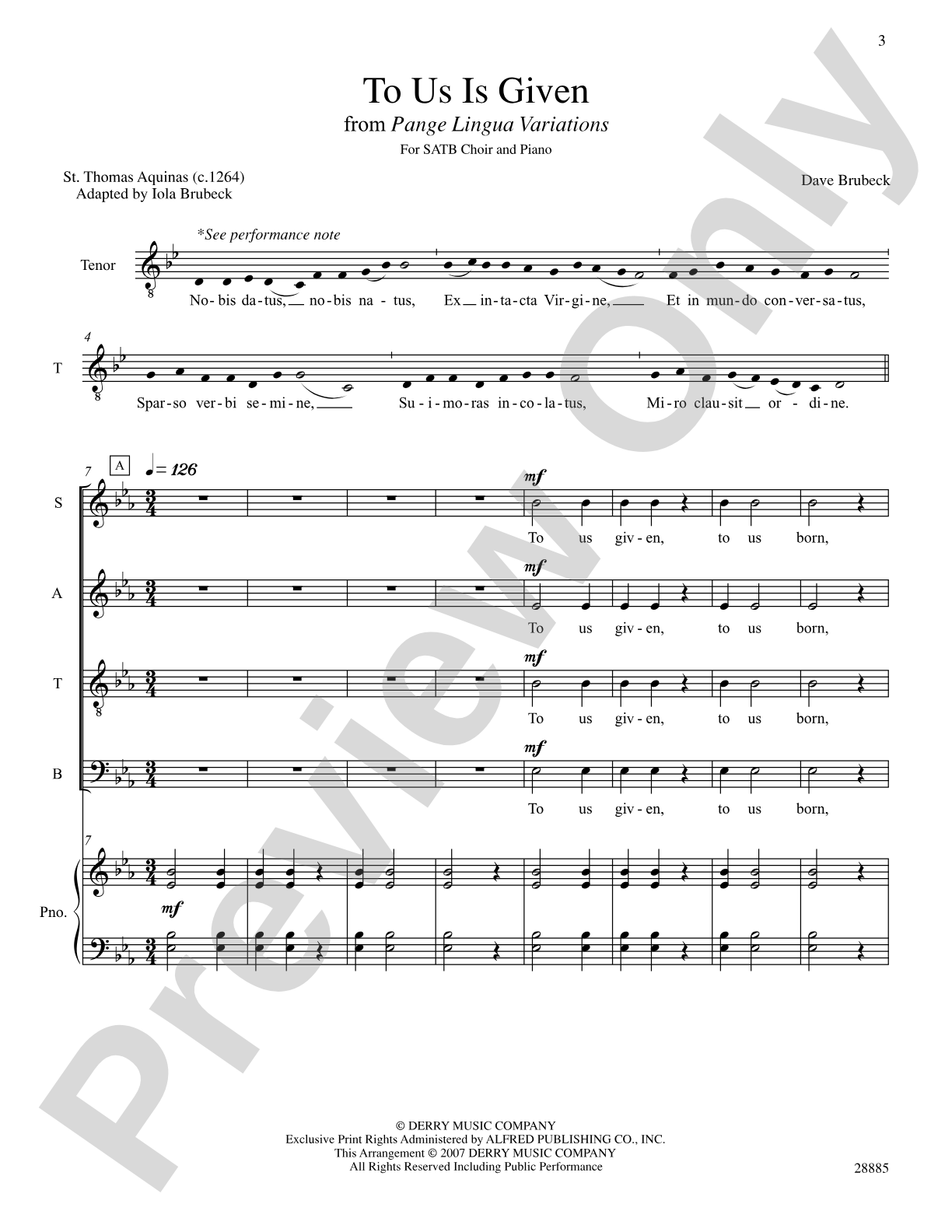
To Us Is Given Sheet Music Preview

To Us Is Given: SATB Choral Octavo

By Dave Brubeck

Item: 00-PO-0004380

Digital Download
$2.25

Minimum order quantity: 20 copies

Description

To Us Is Given: SATB Choral Octavo isn't in MakeMusic Cloud just yet...but it could be. Let us know you'd like to see it, and you'll help shape what comes next. In the meantime, start a free trial and dive into thousands of interactive titles your students can play along with today.

Sample Audio
No sample audio found.
Sample Video
Additional Details
Series: Lawson-Gould: The Dave Brubeck Series
Publisher: Alfred Music
Page Count: 12
SKU: 00-PO-0004380

More about this title

About the Composer: Dave Brubeck

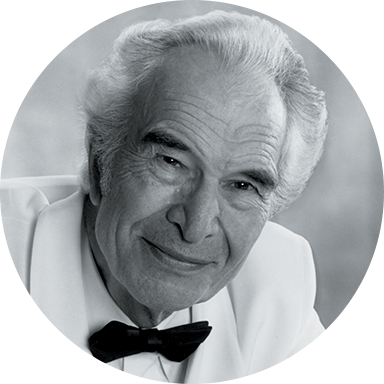
Dave Brubeck

Dave Brubeck brought the language of jazz into the concert hall with equal fluency, composing across genres that included symphonies, ballets, masses, and chamber works alongside his legendary recordings. His studies with Darius Milhaud at Mills College after World War II shaped his philosophy of blending jazz idioms with classical forms, a fusion that defined both his performing career and his compositional voice. He broke racial barriers in mid-20th-century American music and received the Presidential Medal of the Arts from President Clinton, a Grammy Lifetime Achievement Award, and induction into the American Classical Music Hall of Fame in 2003.

Beyond "Take Five" and the million-selling album "Time Out," Brubeck created large-scale sacred works that have been performed worldwide. His mass To Hope! reached audiences in Germany, Austria, Russia, and English-speaking countries, while oratorios including The Voice of the Holy Spirit and Beloved Son were recorded by the London Symphony Orchestra and London Voices. These choral works demonstrate his commitment to merging accessible melodic invention with sophisticated harmonic language.

Why we love this

Brubeck's sacred choral writing carries the warmth and accessibility that made his jazz recordings beloved while respecting the gravity of the text. A Christmas piece from this master of melody offers singers a memorable, singable line without sacrificing harmonic interest or emotional depth. Programming a Brubeck choral work signals to your audience that sacred music can be both intellectually substantive and joyfully performed.

What to expect

Warm, luminous, and grounded. Brubeck's sacred writing carries an optimistic quality without sacrificing depth, blending lyrical melody with harmonies that shift color in unexpected ways. The piece breathes with the ease of natural speech and song, yet its sophistication reveals itself with each rehearsal.

Who it's for

Choirs with solid fundamentals and openness to Brubeck's harmonic language will find this piece accessible yet rewarding. The piece suits collegiate singers, adult community choirs, and strong high school ensembles, particularly those with experience in contemporary or jazz-influenced repertoire.

How to get the most out of it

  • Honor the jazz-influenced phrasing by treating rests as breath points rather than full stops; let the line breathe naturally rather than mechanically.
  • Balance the four voices so that the harmonic color emerges clearly; Brubeck's chord voicings often contain subtle chromatic movement that listeners will appreciate when parts don't overshadow one another.
  • Pay attention to text underlay and diction throughout, as Brubeck's sacred works rely on clarity of language to anchor the melodic ideas.
  • Explore the piece's relationship to both gospel and classical traditions; your interpretation should reflect how Brubeck himself synthesized these worlds.

How to use it

This octavo pairs beautifully in a winter concert that celebrates music crossing genres and traditions. Position it alongside traditional carols to show how a mid-century master approached the sacred Christmas text, or feature it as the centerpiece of a concert exploring American choral innovation. Its moderate length makes it an excellent complement to longer choral works or instrumental selections.

Skills your students will build

  • Reading chromatic voice leading and modern harmonic movement in a choral context
  • Balancing jazz-influenced phrasing within formal choral performance
  • Blending SATB parts when harmonic color matters as much as individual lines
  • Interpreting text with clarity and intention in a sacred setting

You May Also Like