
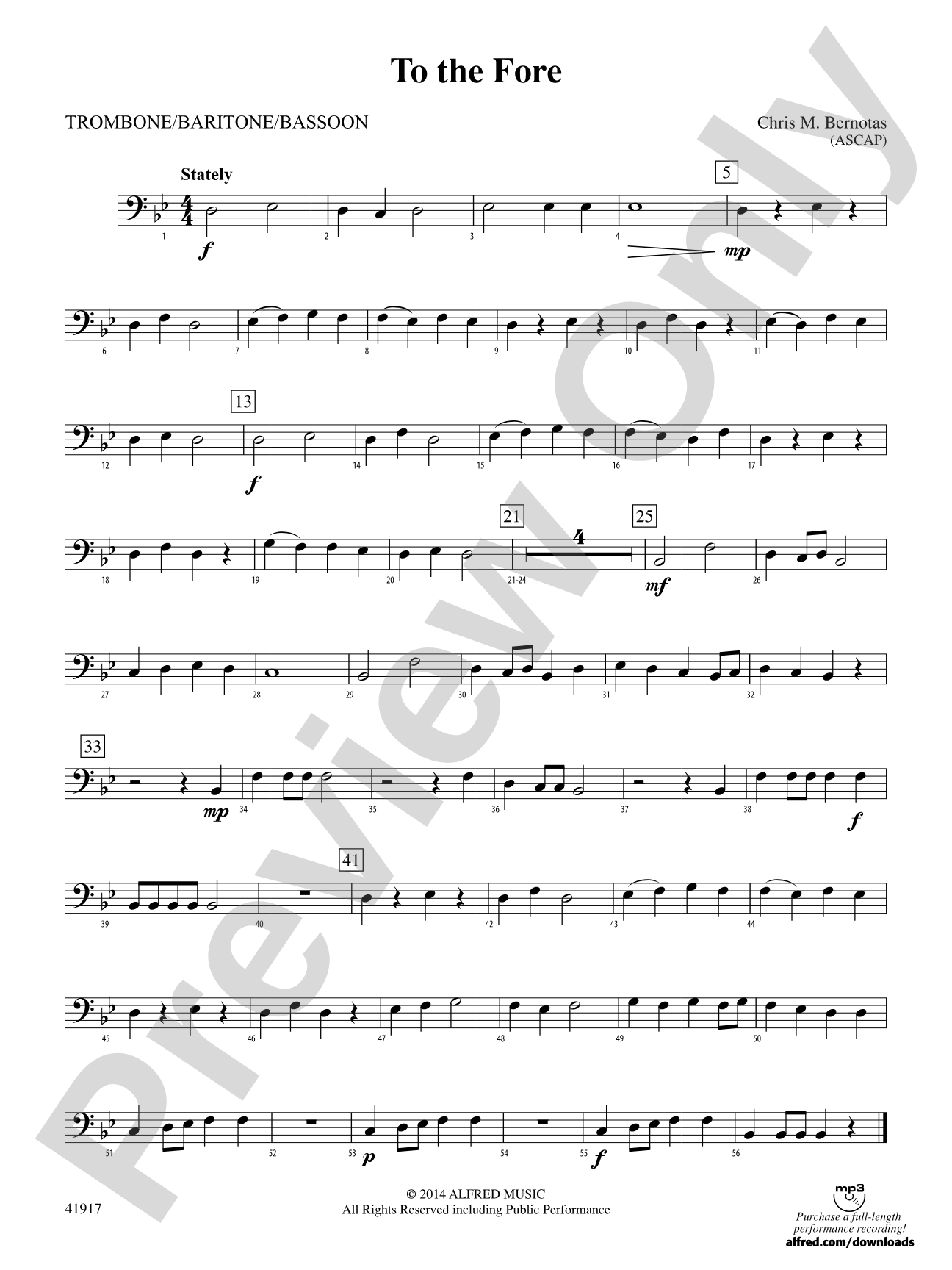

To the Fore: 1st Trombone
By Chris M. Bernotas
Grade: 0.5 (Very Easy)
Item: 00-PC-0016399_TN1
$3.00
Pickup currently not available
Description
An appealing and spirited march for your beginning band. While this piece uses only six notes, it maintains all of the excitement that a march should provide. Your students will stand tall as each section has the chance to present the melody. A strong sense of rhythm, catchy melody, and several dynamic changes provide for many teachable moments. (1:55) "To the Fore" correlates to Book 1, Level 2 of Sound Innovations for Concert Band.


Don't just read it, hear it, play along with it, and watch your students grow with it. In MakeMusic Cloud, To the Fore: 1st Trombone comes alive with professional accompaniment, adjustable tempo, and built-in practice tools that turn solo practice into real progress.
Open in the Player
Jump straight in and assign it today.
Start Your Free Trial
Open this title and explore the full library in minutes.
Sample Audio
1
Audio File
--:--
0:00
0:00
Sample Video
Additional Details
Series:
Sound Innovations for Concert Band
Publisher:
Alfred Music
Page Count:
134
SKU:
00-PC-0016399_TN1
More about this title
About the Composer: Chris M. Bernotas

Chris M. Bernotas directs instrumental publications at Alfred Music, where he shapes curricular resources and repertoire for bands and orchestras across North America and beyond. With over 25 years in music education, he combines deep classroom experience with a gift for composing music that teaches while it engages. His works appear regularly in festival programs and honor groups, valued equally for their musicality and their capacity to address specific pedagogical challenges at every developmental level.
Beyond the page, Bernotas is an active clinician and guest conductor who works directly with directors and students on interpretation, technique, and ensemble culture. He has co-authored foundational resources including Sound Innovations Ensemble Development, Sound Percussion, and Sound Artistry. His advocacy for thoughtful music education extends through presentations and workshops on conducting, composition, and pedagogy, reflecting a conviction that the best educational music comes from someone who understands what happens in rehearsal.
Why we love this
A march written for true beginners that refuses to compromise on energy or musicality. Every section gets a turn with the melody, building ownership and pride across the ensemble, while the limited pitch set and strong rhythmic foundation create natural teaching points for dynamics, phrasing, and ensemble balance without overwhelming young players.
What to expect
Spirited and uplifting. Despite using only six notes, the march radiates confidence and momentum through a catchy, singable melody and purposeful rhythm. There's an infectious quality to it: every student feels capable, and the frequent sectional features create moments of genuine musical pride.
Who it's for
Beginning bands at the Grade 0.5 level and students transitioning from method books into concert literature. The piece works equally well for young ensembles in their first year and for directors seeking high-interest material that develops musicianship without technical obstacles.
How to get the most out of it
- Shape the dynamic changes to create forward momentum; avoid simply playing loud and soft, instead treat crescendos and diminuendos as narrative arcs that keep the march's character alive.
- Lock the rhythm section early in rehearsal so the melody parts can focus on executing their featured moments with confidence and clarity.
- Maintain a steady, marchlike tempo throughout; the six-note limitation allows you to concentrate on stylistic details like articulation and balance rather than technical complexity.
How to use it
Open a spring concert with this march to establish energy and set a confident tone for your program. Its 1:55 duration makes it ideal as a standalone opener before moving into slower, more introspective pieces. It also works well as a contest or festival selection where accessibility and musicality both matter.
Skills your students will build
- Dynamic control and phrasing across simple melody lines
- Sectional leadership and featured melody playing
- Rhythmic foundation in march style (steady pulse, articulation clarity)
- Ensemble balance when shifting between solo and supporting roles