To Hope! (A Celebration) Cover Image

To Hope! (A Celebration): SATB with SATB Soli Choral Book

$12.95 USD
Sale price  $12.95 USD Regular price 
Skip to product information
To Hope! (A Celebration) Cover Image

To Hope! (A Celebration): SATB with SATB Soli Choral Book

A Mass in the Revised Roman Ritual

By Dave Brubeck

Item: 00-OCT02600

$12.95
Shipped

One moment…

Description
A mass in the Revised Roman Ritual. Classically conceived, but featuring elements of Brubeck's jazz idiom, this dynamic mass can be performed in many different ways including with a jazz ensemble, as a concert piece, for church service, or its individual pieces could be used in non-Eucharistic worship such as Vespers and other celebrations. The work is set for soloists, chorus, piano accompaniment, and optional handbells and celeste. Full score and parts for brass quintet, percussion and strings are available to rent, go to presser.com/request-rental. Titles include: Lord Have Mercy (Kyrie) * Alleluia * Holy, Holy, Holy * While He Was at Supper (Institution-Narrative) * Through Him, With Him (Doxology) * Great Amen * Lamb of God * Gloria and more.

To Hope! (A Celebration): SATB with SATB Soli Choral Book isn't in MakeMusic Cloud just yet...but it could be. Let us know you'd like to see it, and you'll help shape what comes next. In the meantime, start a free trial and dive into thousands of interactive titles your students can play along with today.

Sample Pages

Sample Audio
No sample audio found.
Sample Video
Additional Details
Publisher: Alfred Music
Page Count: 92
ISBN10: 0-7692-6001-2
ISBN13: 978-0-7692-6001-3
UPC: 029156183252
SKU: 00-OCT02600
Instrumentation: Piano Acc., & Opt. Handbells & Celeste

More about this title

About the Composer: Dave Brubeck
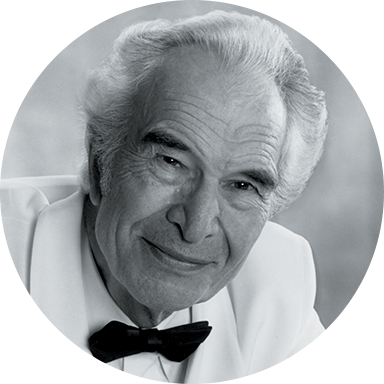
Dave Brubeck

Dave Brubeck stands as one of the few musicians to achieve equal mastery in jazz improvisation and classical composition. Beyond his legendary work as a pianist and bandleader, he spent decades writing concert music across nearly every genre: masses, oratorios, chamber works, and orchestral pieces that merged the harmonic language of jazz with traditional compositional forms. His album "Time Out" became a watershed moment in jazz history, but his later sacred works represent a different kind of ambition, the creation of liturgical music that honored both spiritual text and his lifelong commitment to musical innovation.

Why we love this

Brubeck wrote a mass that actually sounds like Brubeck, the harmonic language, the rhythmic sophistication, the sense of gentle swing, without ever sacrificing the dignity of the liturgy. The flexibility built into this score (jazz ensemble, concert hall, church service, Vespers selections) means you're not locked into one performance mode; the music lives in multiple contexts and rewards different interpretations each time.

What to expect

Reverent but never stiff. The score carries warmth and accessibility while maintaining real musical substance; it sounds familiar enough to put listeners at ease, yet offers enough harmonic and rhythmic sophistication to engage serious musicians. There's an underlying optimism in the writing that matches the title.

Who it's for

Cathedral choirs, collegiate ensembles, and parish choirs ready to program something beyond conventional mass settings. This works equally well for directors seeking a meaningful concert piece as for those needing flexible liturgical music that holds up under repeated performance.

How to get the most out of it

  • Balance the soloists prominently enough that their phrases read as distinct from the choral sections; Brubeck's writing gives soloists real material, not filler lines.
  • Let the jazz vocabulary breathe. The rhythmic freedom in certain passages isn't meant to feel metrically rigid; singers and accompanists need permission to shape the phrasing.
  • The optional handbells and celeste add luminous color but aren't necessary; perform this with piano alone if needed and the score loses nothing essential.
  • Rehearse the doxology and great amen with particular attention to harmonic clarity; these moments contain some of Brubeck's most interesting voice leading.

How to use it

Perform the complete mass as your main choral work, or extract individual movements for specific liturgical occasions or concert sets. The "Gloria" and "Lamb of God" work particularly well as shorter concert selections if you need to program Brubeck without committing to the full score.

Skills your students will build

  • Reading and performing jazz-influenced harmonic language within a classical sacred framework
  • Balancing solo and choral textures in liturgical music
  • Navigating flexible rhythmic phrasing while maintaining ensemble cohesion
  • Approaching twentieth-century sacred music that doesn't follow traditional mass conventions
  • Ensemble collaboration across varied instrumentation (piano, optional handbells, celeste, optional jazz ensemble)

You May Also Like