
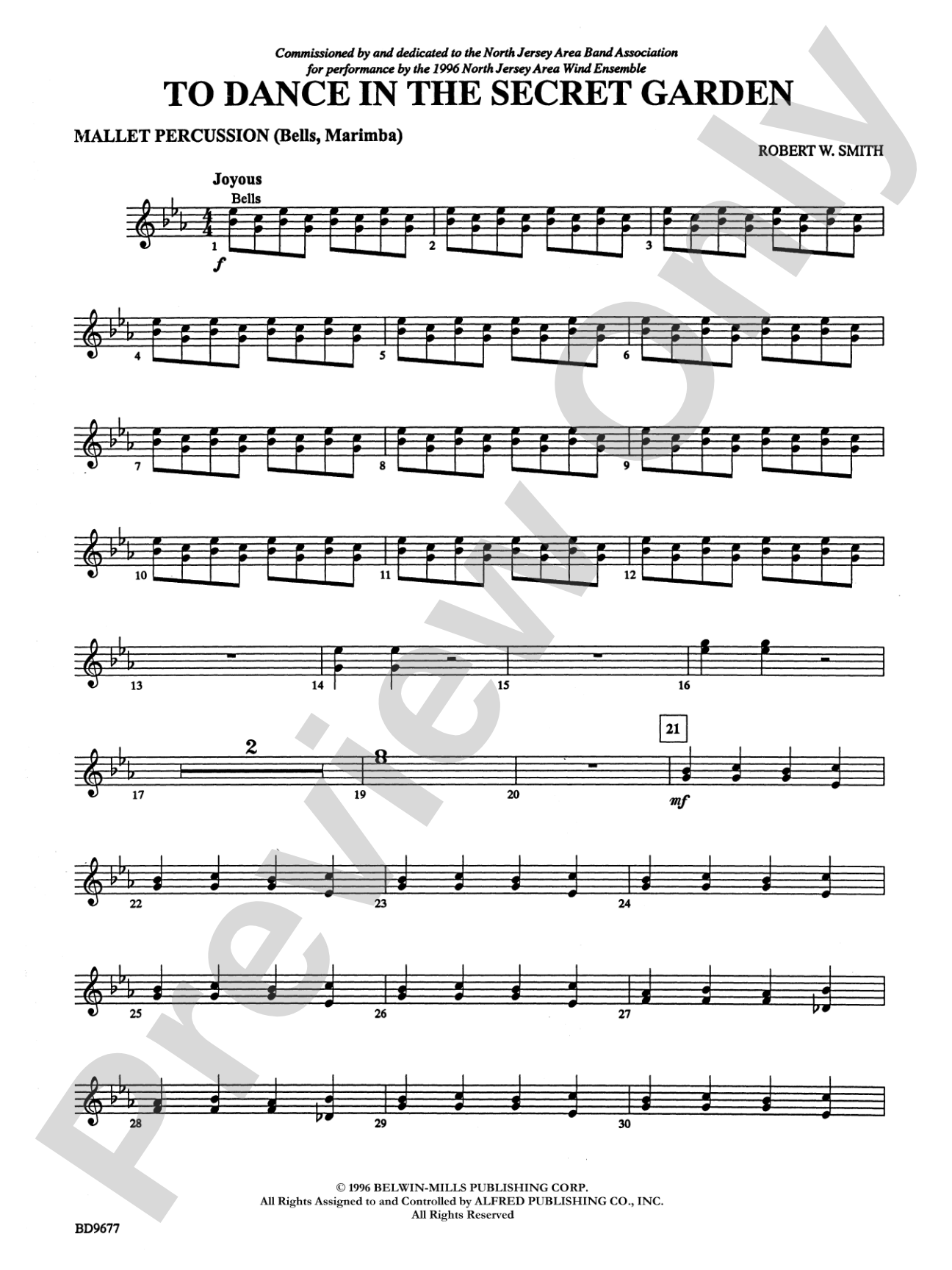

To Dance in the Secret Garden: Mallets
By Robert W. Smith
Grade: 3 (Medium Easy)
Item: 00-PC-0002042_M1
$3.00
Pickup currently not available
Description
From the pen of the renowned Robert W. Smith comes this work which includes all of his compositional trademarks: highly inventive percussion writing, stylistic solo creation, and tension and release, all with brilliant use of occasional dissonance sounding much more difficult than it plays. This is not for the faint of heart, but well within the grasp of a quality ensemble. Dynamic and highly dramatic! (5:56)


Don't just read it, hear it, play along with it, and watch your students grow with it. In MakeMusic Cloud, To Dance in the Secret Garden: Mallets comes alive with professional accompaniment, adjustable tempo, and built-in practice tools that turn solo practice into real progress.
Open in the Player
Jump straight in and assign it today.
Start Your Free Trial
Open this title and explore the full library in minutes.
Sample Audio
1
Audio File
--:--
0:00
0:00
Sample Video
No sample videos found.
Additional Details
Series:
Belwin Concert Band
Publisher:
Alfred Music
Page Count:
288
SKU:
00-PC-0002042_M1
More about this title
About the Composer: Robert W. Smith

Robert W. Smith stands among America's most recorded composers for concert band and orchestra, with more than 400 published works to his name. His education in music education from Troy State University and advanced study at the University of Miami prepared him for a career marked by both compositional innovation and extensive international conducting. His symphonies, including The Divine Comedy and The Odyssey, have secured places in the repertoires of ensembles across North America, Europe, Australia, and Asia.
Beyond the concert hall, Smith's music has appeared on major television broadcasts, from the opening of the Macy's Thanksgiving Day Parade to the Olympic Games, and has been performed at state ceremonies and landmark sporting events. His work as a clinician has taken him across the United States and to Canada, Japan, Australia, Italy, Austria, and the United Kingdom, where he has shaped the musical development of countless ensembles.
Why we love this
Smith delivers exactly what he promises: sophisticated compositional craft disguised as accessible writing. The percussion writing alone justifies programming this piece; it's inventive without being precious, giving your section genuine musical work rather than filler. This is the kind of score that sounds more complex than it reads, rewarding careful preparation while remaining within reach for a solid Grade 3 ensemble.
What to expect
Dynamic and dramatically alive, this piece moves through contrasting emotional landscapes with purpose and polish. The compositional voice is confident and theatrical, balancing moments of lyrical beauty with sharp, energized passages that showcase the full range of the band.
Who it's for
Grade 3 concert bands that have developed solid fundamentals and are ready for music with genuine stylistic demands. This work suits ensembles preparing for festival competition or a concert program featuring orchestral-level orchestration and narrative drive. Directors seeking pieces that challenge musicianship without inflating difficulty ratings will find this especially valuable.
How to get the most out of it
- Balance the solo writing prominently but do not let soloists overshadow the ensemble. Smith creates these passages as focal points within the larger tapestry, so ensure accompaniment texture supports rather than recedes.
- Shape the dynamic contrast deliberately. The tension-and-release architecture depends on clear arrival points and purposeful climax building; rushing either the growth or the settling undermines the dramatic arc.
- Treat the occasional dissonances as intentional color, not errors. Maintain confidence in these moments so students hear them as compositional choices that enhance the musical narrative.
How to use it
Position this as a centerpiece on a concert featuring works of substantial musical weight. Its five-minute-plus duration and dramatic range make it an ideal anchor for a program built around concert band literature with orchestral sensibilities. The piece also excels in festival settings where judges recognize the sophistication underlying the approachable instrumentation.
Skills your students will build
- Balancing exposed solo lines with ensemble texture
- Navigating dynamic contrast and dramatic pacing
- Executing inventive percussion parts with rhythmic precision
- Interpreting chromatic and dissonant harmony as expressive choice
- Building ensemble discipline across a five-plus minute arc