
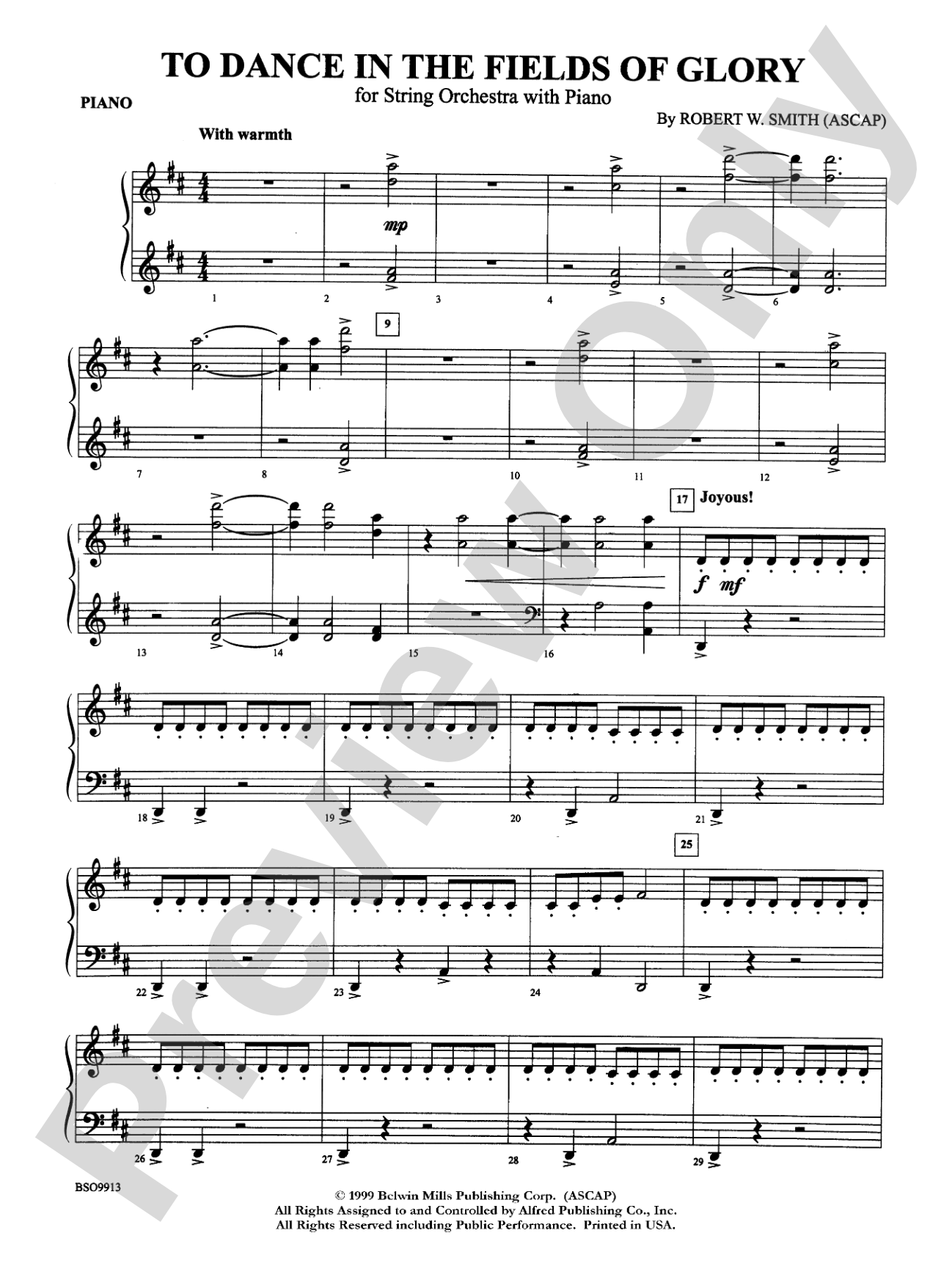

To Dance in the Fields of Glory: Piano Accompaniment
By Robert W. Smith
Grade: 1
Item: 00-PC-0002265_K
$5.99
Pickup currently not available
Description
Inspired by the composer's visit to a war memorial on a day when children were playing in a nearby field, this remarkable new work begins with a simple and reflective hymn that gives way to a youthful and exuberant celebration. The contrasts of war and children playing in a peaceful world speak loudly as a tribute to those men and women who gave the ultimate sacrifice in times of strife. (2:00) This title is available in MakeMusic Cloud.


Don't just read it, hear it, play along with it, and watch your students grow with it. In MakeMusic Cloud, To Dance in the Fields of Glory: Piano Accompaniment comes alive with professional accompaniment, adjustable tempo, and built-in practice tools that turn solo practice into real progress.
Open in the Player
Jump straight in and assign it today.
Start Your Free Trial
Open this title and explore the full library in minutes.
Sample Audio
1
Audio File
--:--
0:00
0:00
Sample Video
No sample videos found.
Additional Details
Series:
Belwin Beginning String Orchestra
Publisher:
Alfred Music
Page Count:
76
SKU:
00-PC-0002265_K
More about this title
About the Composer: Robert W. Smith

Robert W. Smith has established himself as one of America's most frequently performed composers, with over 400 works in circulation across concert bands and orchestras worldwide. His education at Troy State University (AL) and the University of Miami (FL) grounded him in both pedagogy and composition, a foundation evident in his ability to write for ensembles at every developmental level.
Smith's catalog ranges from substantial symphonic works like The Divine Comedy and The Odyssey to the accessible, effective pieces that have become staples in developing programs. His work has appeared in high-profile contexts from Olympic ceremonies to national television broadcasts, yet he has never lost sight of the importance of writing music that serves students and teachers. As a conductor and clinician, he has worked across North America, Europe, Asia, and Australia, bringing his compositional philosophy directly to the musicians who perform his music.
Why we love this
This piece accomplishes something Grade 1 repertoire rarely manages: it sustains genuine emotional weight without technical complexity. The progression from hymnic reflection into spirited celebration gives directors a clear narrative arc to shape with young players, and the underlying patriotic sincerity feels earned rather than imposed. It's the kind of work that reminds beginners why they wanted to play strings in the first place.
What to expect
The piece opens with quiet reverence, the kind of stillness that focuses a room of young musicians. Then it breaks open into something joyful and alive, capturing the specific beauty of resilience and renewal. There's no pretense here, just straightforward human feeling expressed through simple, honest string writing.
Who it's for
Beginning string orchestras looking for repertoire that carries real meaning without demanding advanced technique. This works equally well for a March concert or a patriotic celebration, making it valuable programming across the calendar.
How to get the most out of it
- Shape the opening hymn with long, connected phrases. Young string players often rush during quiet passages, so establish a steady pulse that feels inevitable rather than dragging.
- Balance the textural shift into the celebratory section by letting it grow from within rather than pushing sudden dynamics. The contrast should feel organic to the narrative.
- Record the opening section separately with your group to hear how the phrasing lands. Often what feels slow in the room sounds measured and dignified on playback.
- Give your principal players (especially first violin and first cello) a moment to prepare for the reflective opening. Beginning orchestra often responds well when the lead voices are confident and centered.
How to use it
This is natural programming for 4th of July observances or Memorial Day concerts, but it also works as a spring concert opener that sets a thoughtful tone before lighter repertoire. At two minutes, it pairs beautifully with other Grade 1 works, allowing you to build a substantive program without requiring your ensemble to manage pieces beyond their reach.
Skills your students will build
- Sustaining long, lyrical phrases without rushing
- Balancing expression with technical accuracy at a beginner level
- Responding to textural and dynamic changes that reflect programmatic content
- Tuning in sustained, unison passages where intonation is exposed
- Controlling bow pressure and speed to shape a narrative arc