
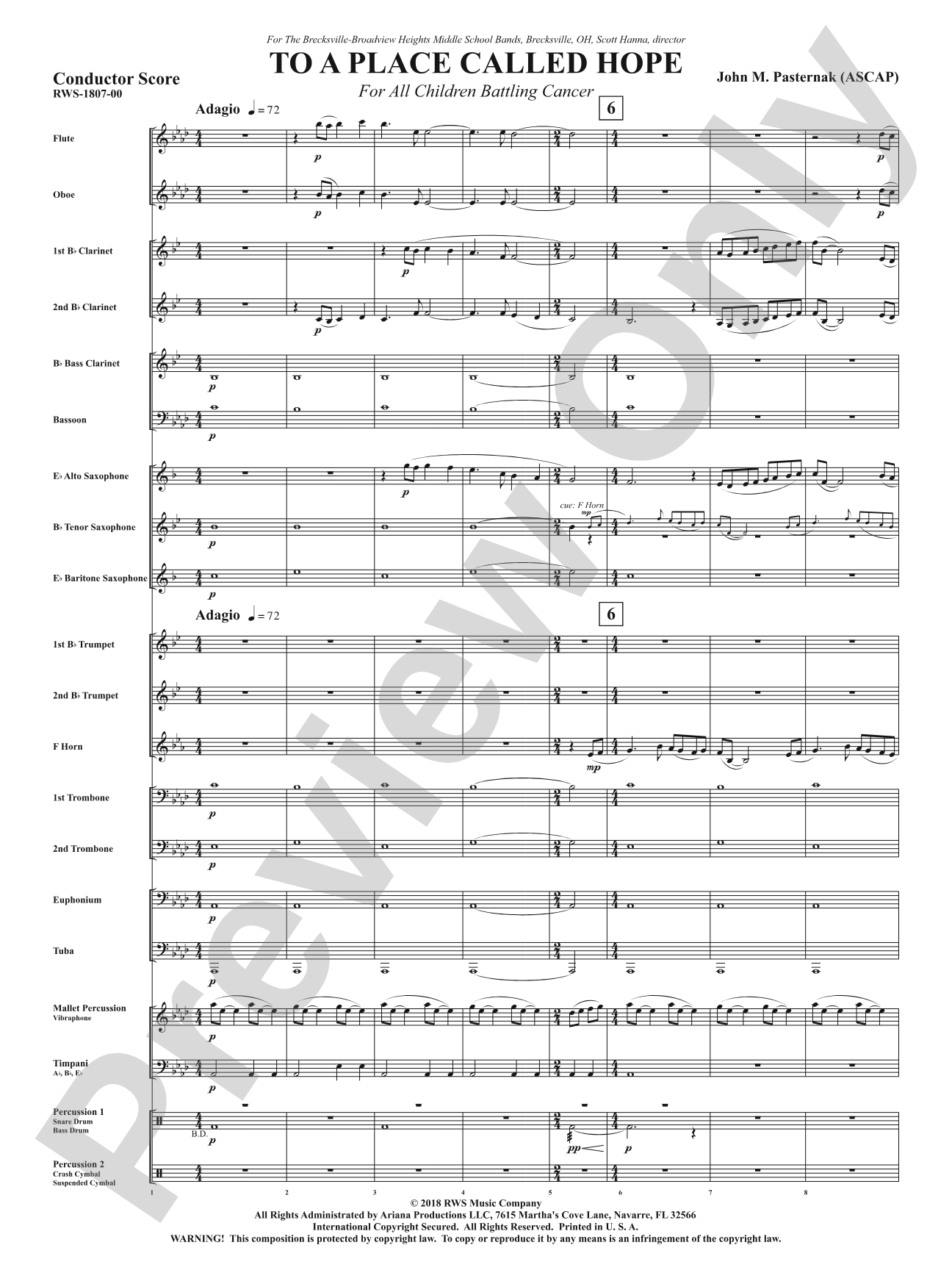
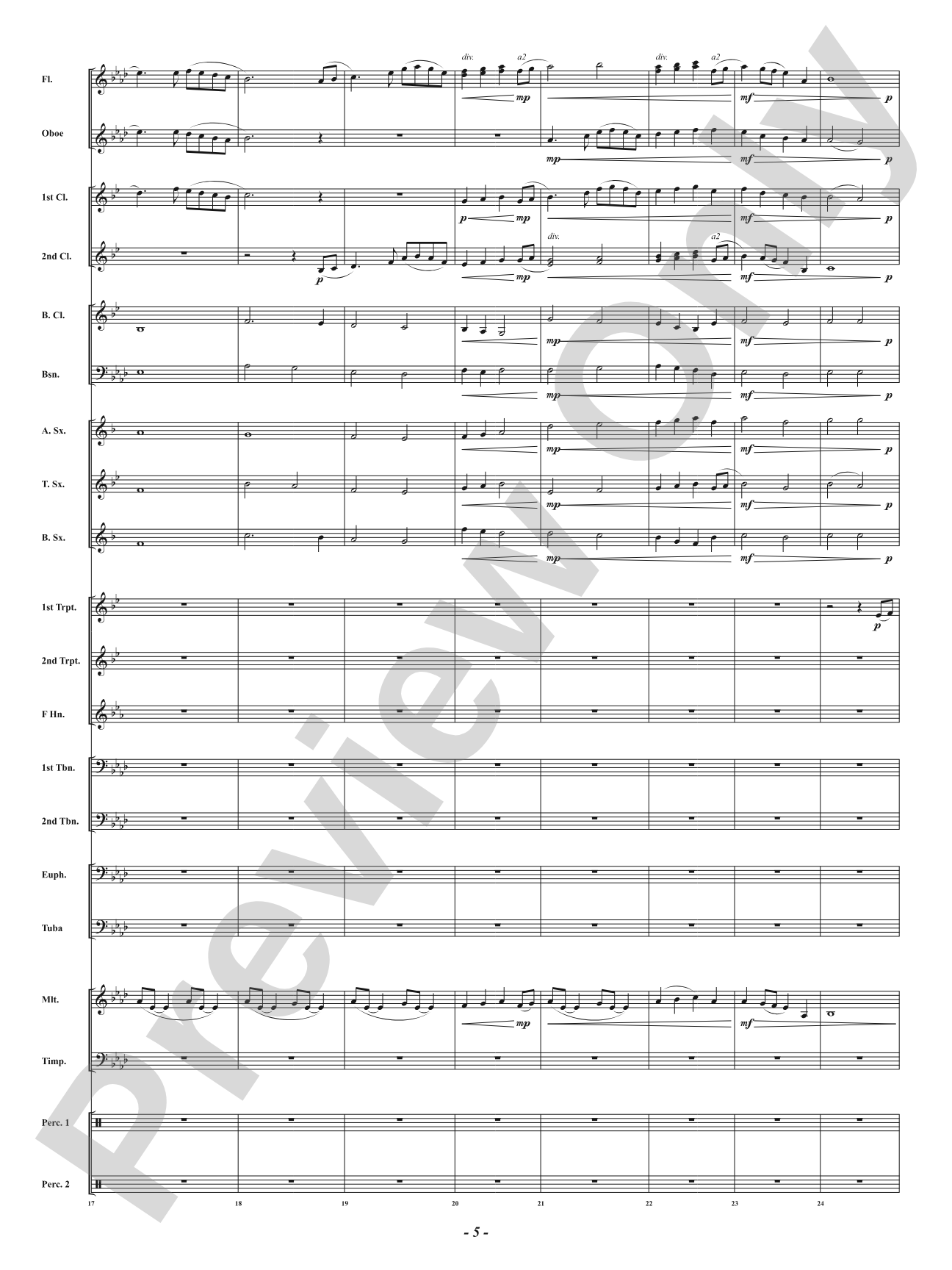
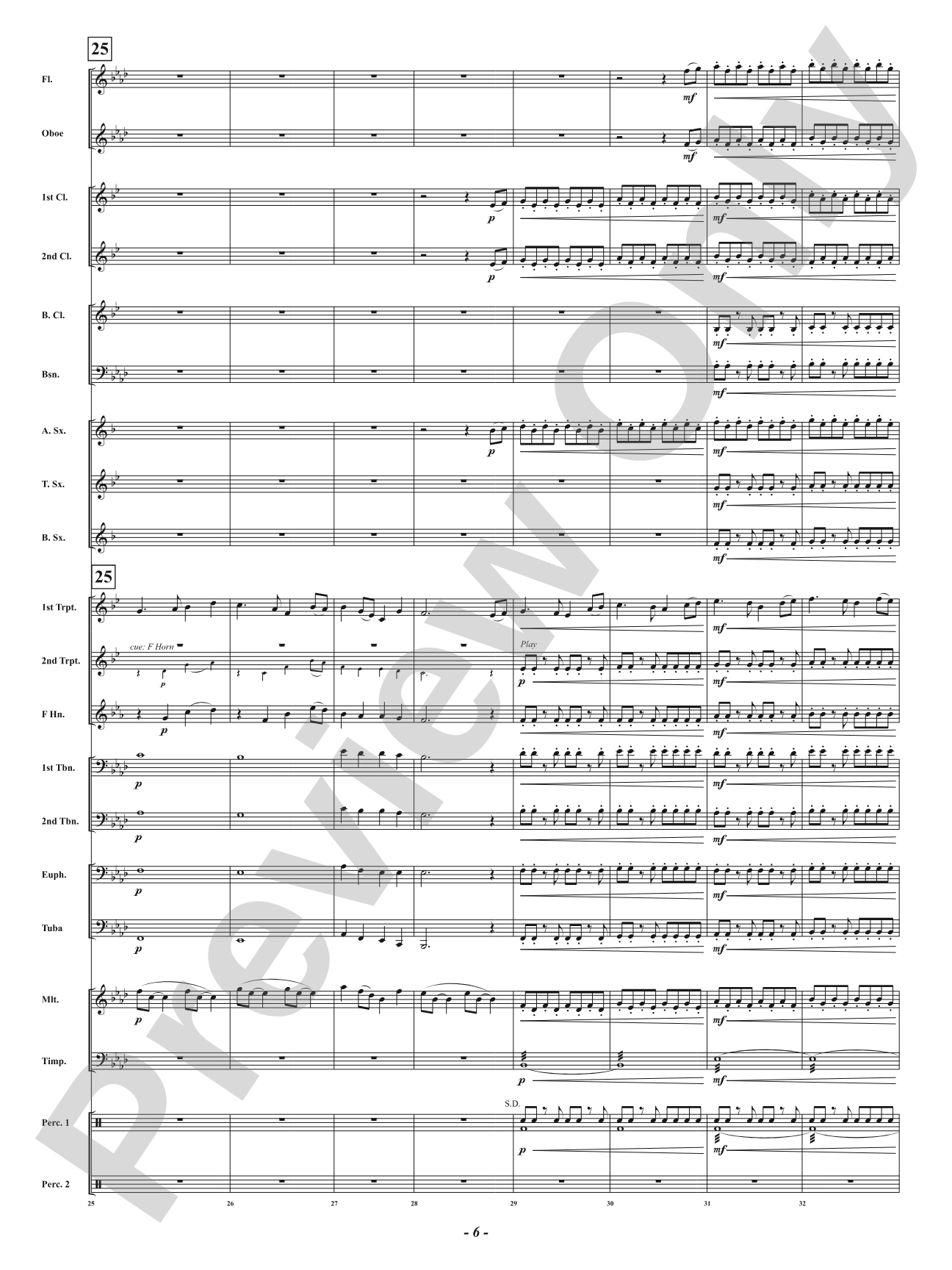
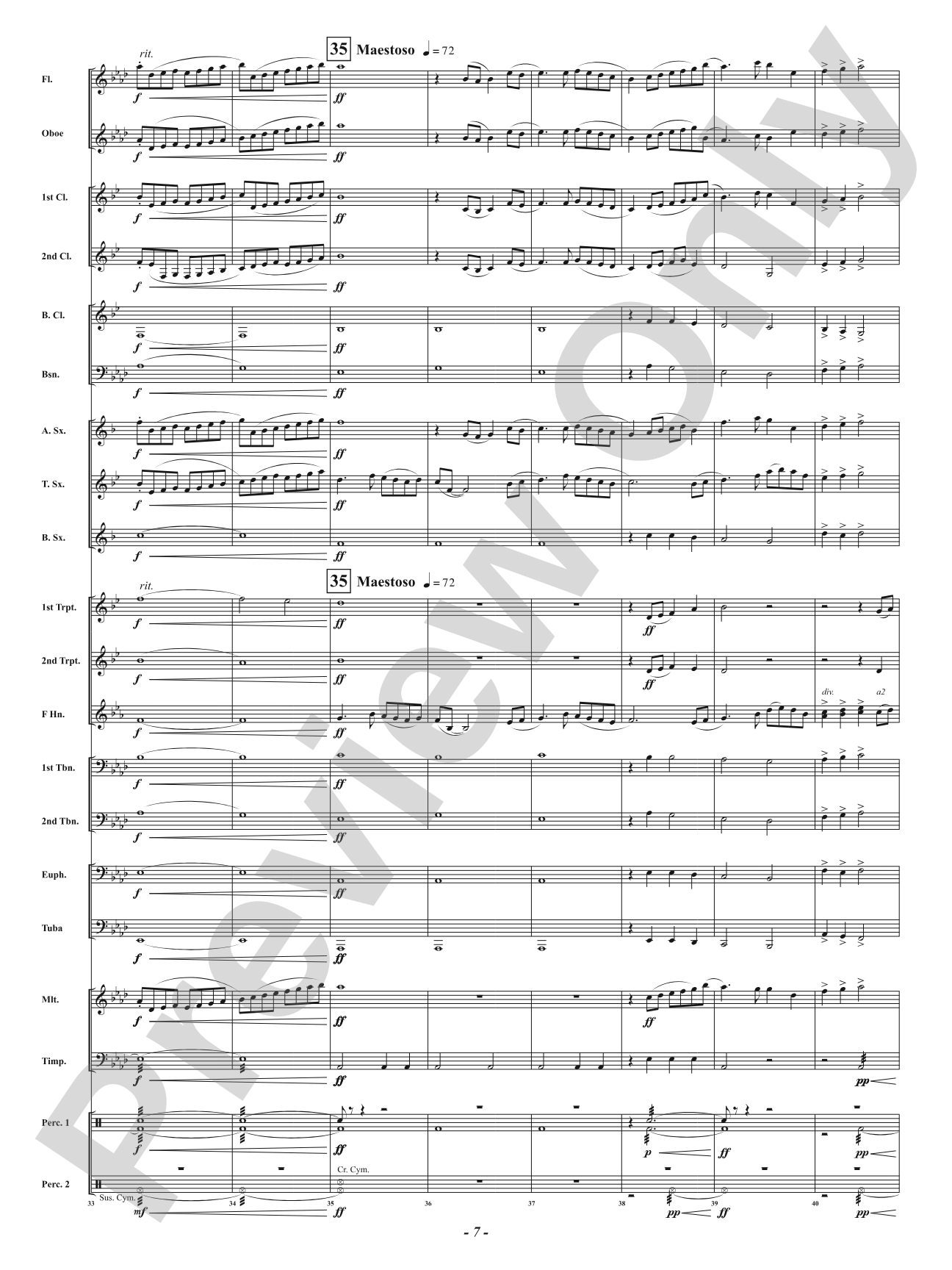
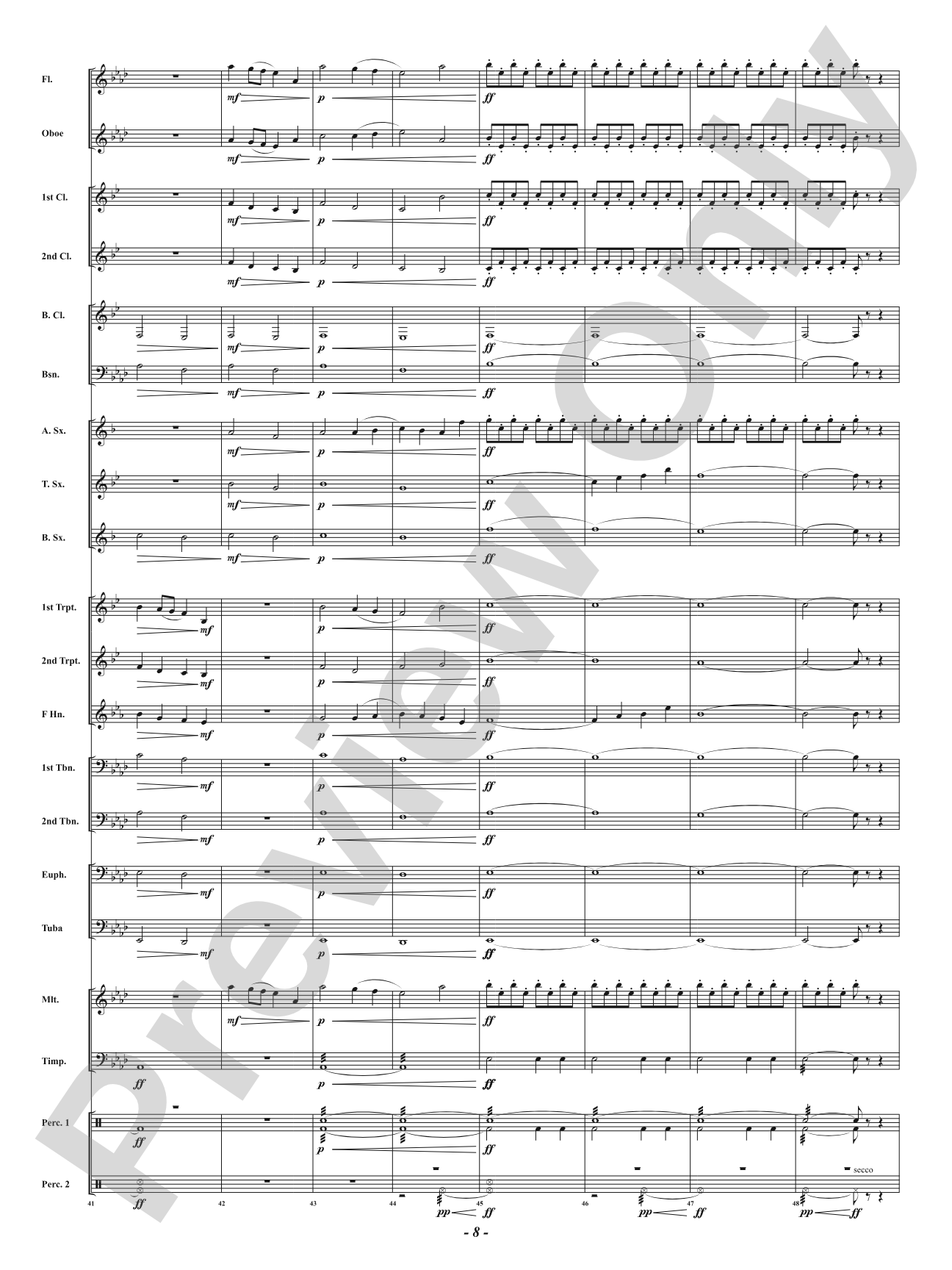
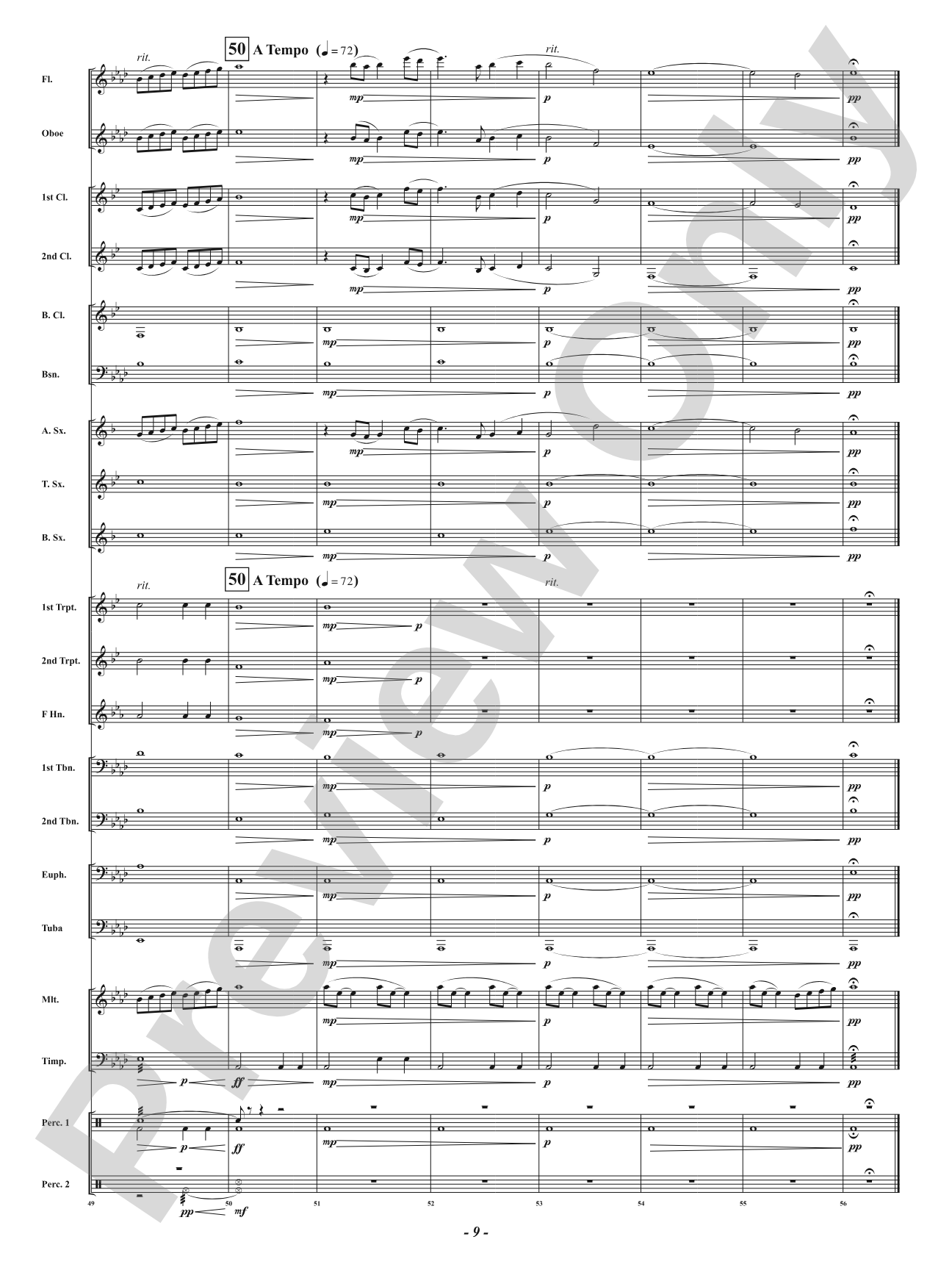




To a Place Called Hope - For All Children Battling Cancer: Concert Band Conductor Score & Parts
For All Children Battling Cancer
By John M. Pasternak
Grade: 3
Item: 98-PK-RWS1807
$80.00
Pickup currently not available
Buy Extra Parts (Digital PDF Download)
Parts Added to Cart!
Description
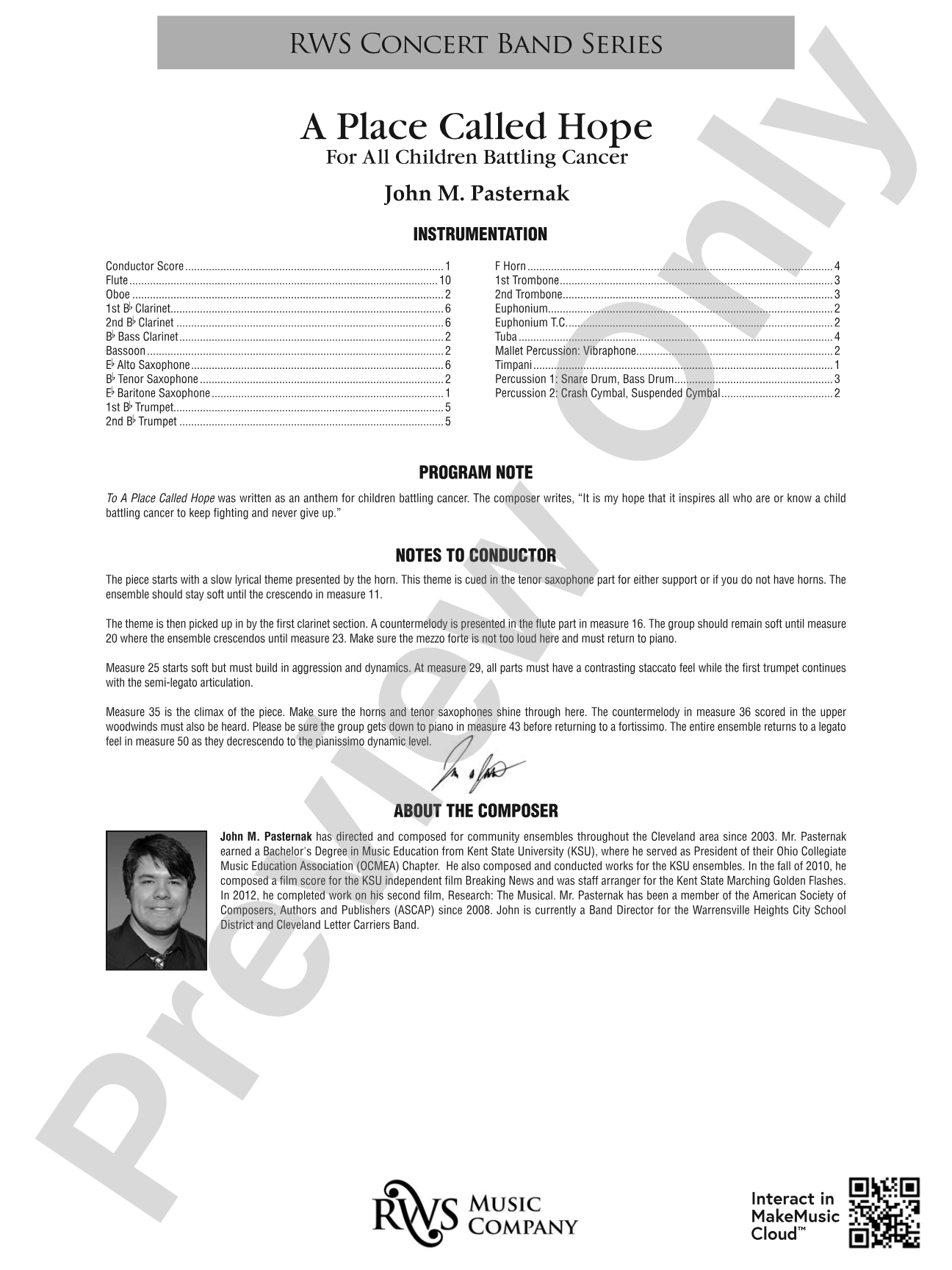
"To A Place Called Hope" was written as an anthem for children battling cancer. A powerful work that is accessible to most concert bands, this is an excellent choice for concert or festival. Beautiful and poignant, John M. Pasternak's lyrical writing will bring hope to families and communities whose lives are touched by this this disease.
Original Item#: RWS-1807-00


Original Item#: RWS-1807-00
To a Place Called Hope - For All Children Battling Cancer: Concert Band Conductor Score & Parts isn't in MakeMusic Cloud just yet...but it could be. Let us know you'd like to see it, and you'll help shape what comes next. In the meantime, start a free trial and dive into thousands of interactive titles your students can play along with today.
Request This Title
Tell us you want it.
Start Your Free Trial
Explore everything that's ready to play right now.
Sample Audio
1
Audio File
--:--
0:00
0:00
Sample Video
No sample videos found.
Additional Details
Series:
RWS - Concert Band
Publisher:
RWS Music Company
SKU:
98-PK-RWS1807
More about this title
About the Composer: John M. Pasternak
John M. Pasternak is a composer whose work centers on meaningful, accessible music for young musicians. His compositions balance technical clarity with emotional depth, creating pieces that engage both players and audiences.
Why we love this
This piece serves a genuine purpose beyond the concert hall. Pasternak writes with real lyricism at Grade 3, so your band sounds mature and expressive without requiring advanced technical demands. Programming it creates a shared moment of connection and meaning for everyone in the room.
What to expect
The piece unfolds with quiet dignity and warmth. Pasternak's orchestration creates an intimate sound that builds gradually, offering comfort and quiet strength rather than bombast. The overall effect is hopeful and grounded.
Who it's for
This work fits Grade 3 concert bands seeking repertoire with genuine emotional substance. It's equally suitable for school concerts, festivals, or benefit performances where the message and music matter equally.
How to get the most out of it
- Shape the phrases generously. Pasternak's melodic lines ask for flowing, singing lines throughout; resist the urge to mechanically mark time.
- Balance the parts carefully so secondary voices support rather than overshadow the melody. Grade 3 bands often play too loudly in harmony parts.
- Use dynamic contrast to build emotional arc. The piece gains power through intentional dynamic shaping, not volume alone.
How to use it
Consider programming this as a standalone feature piece or as part of a thematic concert. The emotional weight makes it effective as a program centerpiece or closing selection. It also pairs well with other lyrical Grade 3 works if you're building a concert around expressive playing.
Skills your students will build
- Sustained melodic phrasing and musical line control
- Ensemble balance between primary and supporting voices
- Dynamic shaping as a tool for emotional expression
- Playing with purpose and awareness of music beyond technical execution