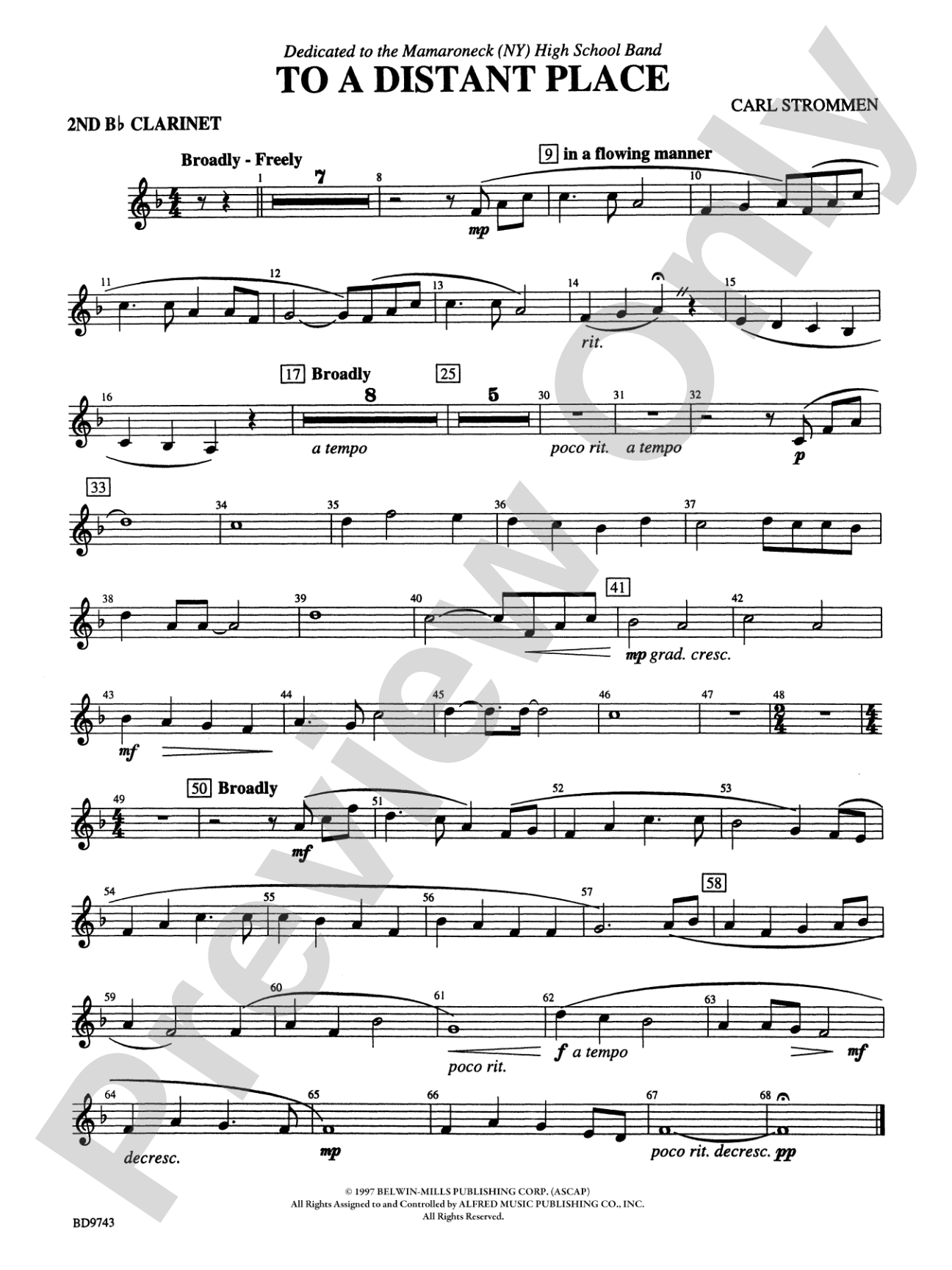
To a Distant Place: 2nd B-flat Clarinet Sheet Music Preview

To a Distant Place: 2nd B-flat Clarinet

By Carl Strommen

Grade: 3 (Medium Easy)

Item: 00-PC-0017530_C2

Digital Download
$3.00
Description
From the opening flute statement, based on a traditional folk melody, this gorgeous tone poem ebbs and flows as does life itself. Showing superb musicality, the intertwining lines blend into a wonderfully homogeneous total effect. The teaching opportunities within are limitless, and the sheer beauty of the work will enhance your concert as well as your contest appearances. Sophisticated and gracious! (4:16)

Don't just read it, hear it, play along with it, and watch your students grow with it. In MakeMusic Cloud, To a Distant Place: 2nd B-flat Clarinet comes alive with professional accompaniment, adjustable tempo, and built-in practice tools that turn solo practice into real progress.

Sample Audio
0:00
0:00
Sample Video
Additional Details
Series: Belwin Concert Band
Publisher: Alfred Music
Page Count: 106
SKU: 00-PC-0017530_C2

More about this title

About the Composer: Carl Strommen

Carl Strommen

Carl Strommen's output spans concert band, orchestra, jazz ensemble, and choral literature, establishing him as one of the most widely performed composers and arrangers of our time. His works appear regularly in concert halls, on television, and in film; he maintains an active schedule as both a clinician and commissioned composer, earning him the ASCAP Standard Writers Award annually.

A graduate of the City College of New York, Strommen has remained connected to higher education as an adjunct professor of orchestration and composition at C.W. Post Campus of Long Island University in Brookville, New York. He splits his time between Long Island and the Colorado Front Range with his family.

Why we love this

Strommen crafts a piece that genuinely rewards ensemble and audience alike. The opening folk melody provides immediate accessibility, yet the intertwining harmonic lines demand real musicianship from your players. Contest judges and concert audiences respond equally well to music this elegant, which means you're not choosing between artistic merit and competitive success.

What to expect

A reflective journey that unfolds naturally, like watching light shift across a landscape. The traditional melody anchors the work emotionally, while the flowing harmonic accompaniment suggests movement and change. Sophisticated without being austere, the overall effect is graceful and deeply musical.

Who it's for

Directors programming for concert band at the Grade 3 level who want music that satisfies both adjudicators and listeners without requiring virtuosic performance. The piece rewards solid fundamentals and musical maturity from younger or developing ensembles.

How to get the most out of it

  • Balance the opening flute statement so it sings above the ensemble but feels supported rather than isolated; the folk melody sets the piece's expressive foundation.
  • Shape the ebb and flow through subtle dynamic shaping within phrases rather than dramatic contrasts. This piece breathes like singing, not shouting.
  • Give your woodwind sections time to blend before adding brass. The homogeneous texture Strommen achieves depends on individual voices listening across the section.
  • Resist over-conducting the emotional arc. Trust the composition to guide your players; excessive gesturing can disrupt the gracious quality of the writing.

How to use it

This works beautifully as a centerpiece on a concert program, providing an emotional anchor between more rhythmically driven pieces. It also prepares students for contest settings where musical sophistication and tonal blend are valued as much as technical precision. Consider it a concert or festival piece that teaches what it means to play expressively as an ensemble.

Skills your students will build

  • Balancing melody and accompaniment across the full ensemble
  • Sustaining long lyrical phrases without losing focus or momentum
  • Blending harmonic textures and listening for tonal unification
  • Shaping music through dynamic and expressive control rather than technical display
  • Interpreting a traditional melody with stylistic consistency and grace

You May Also Like