
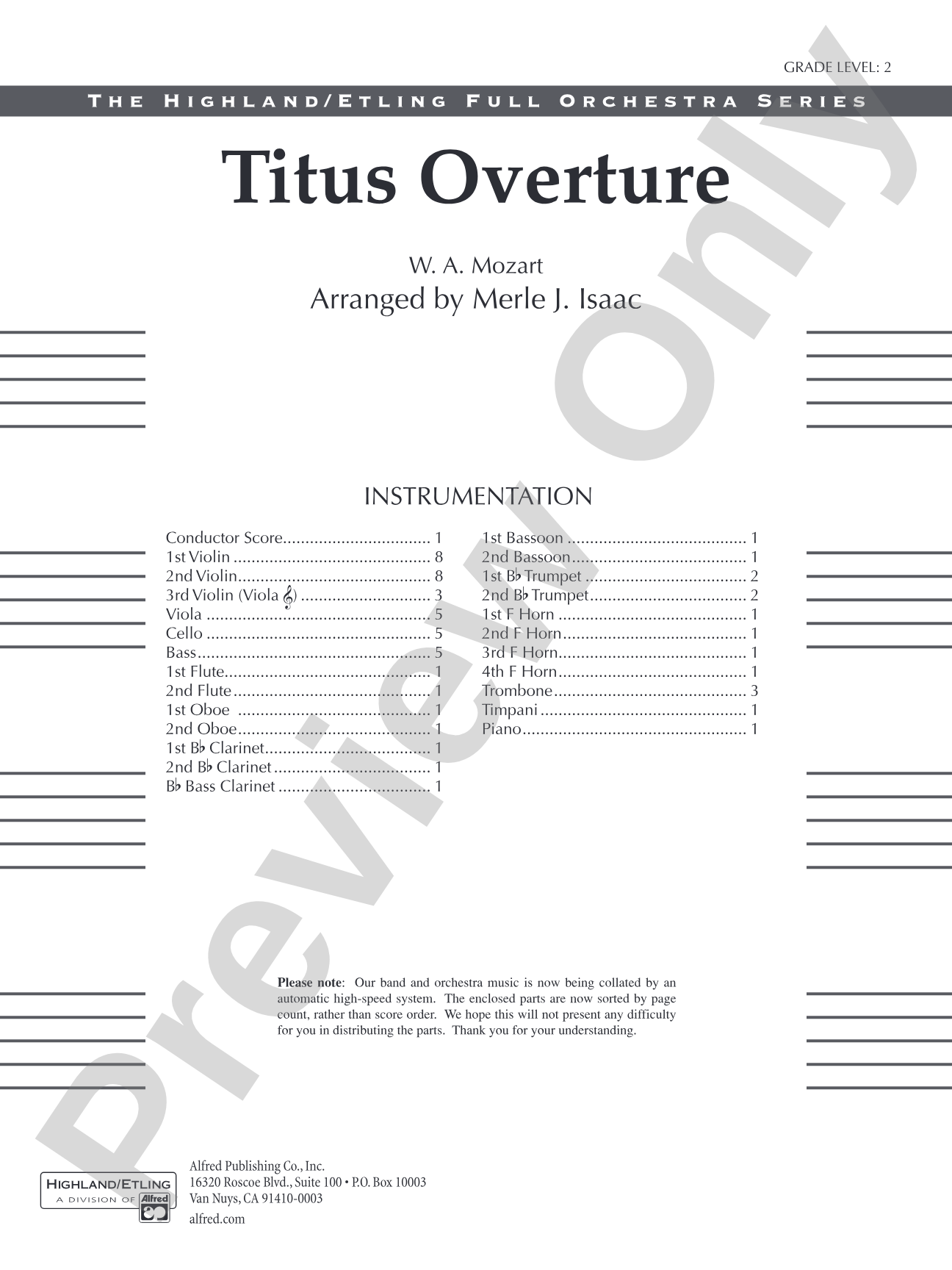
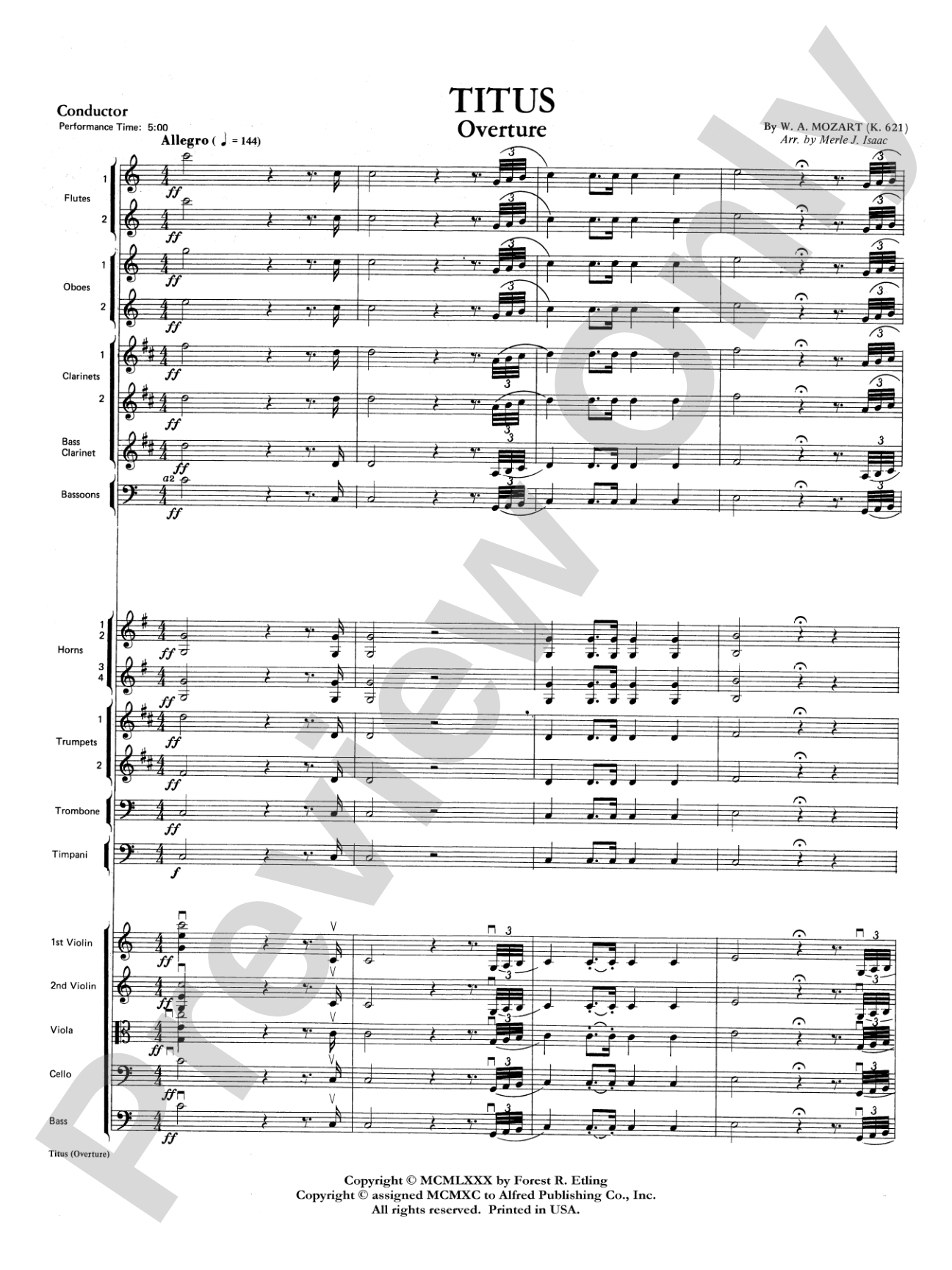
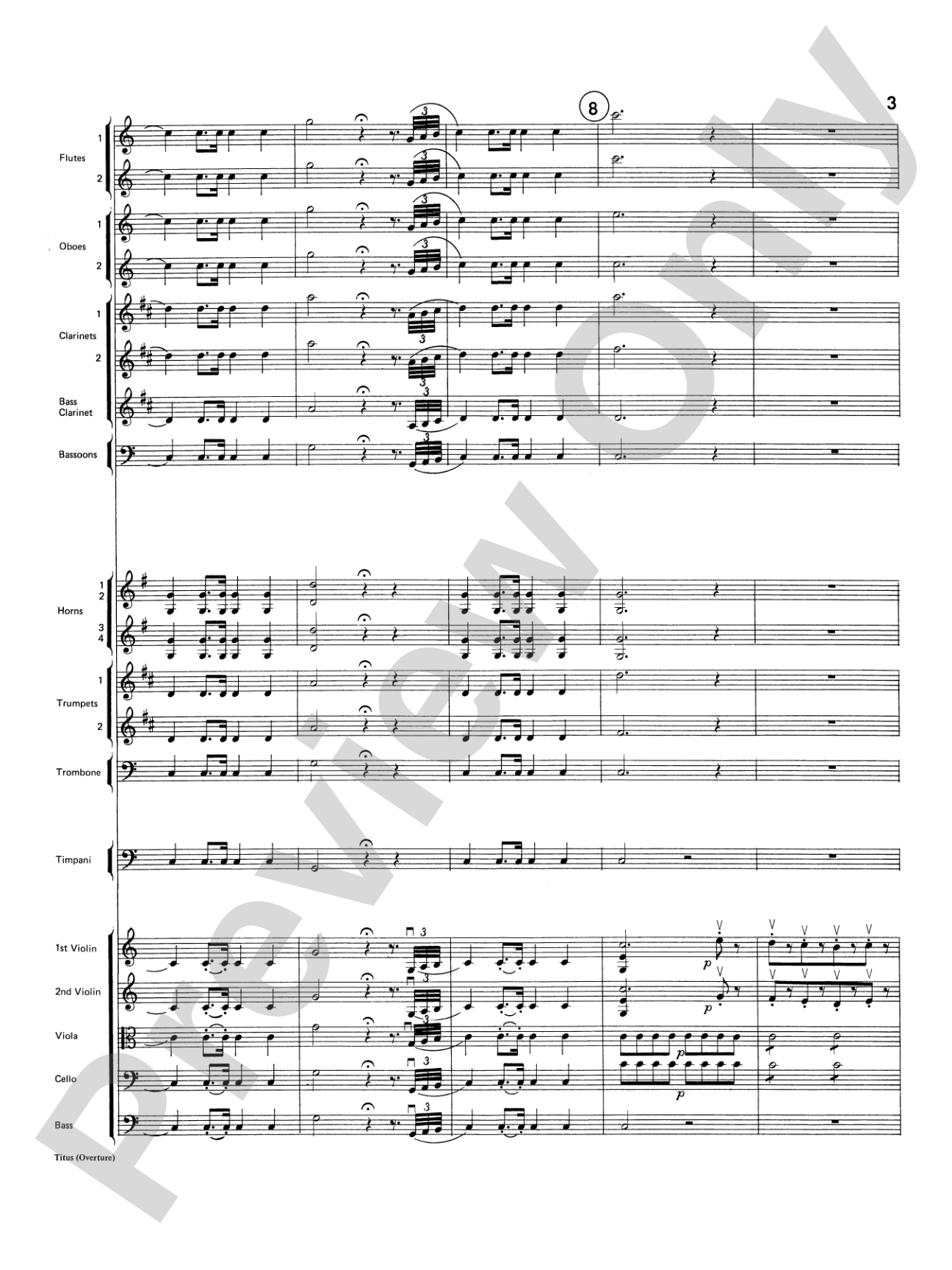
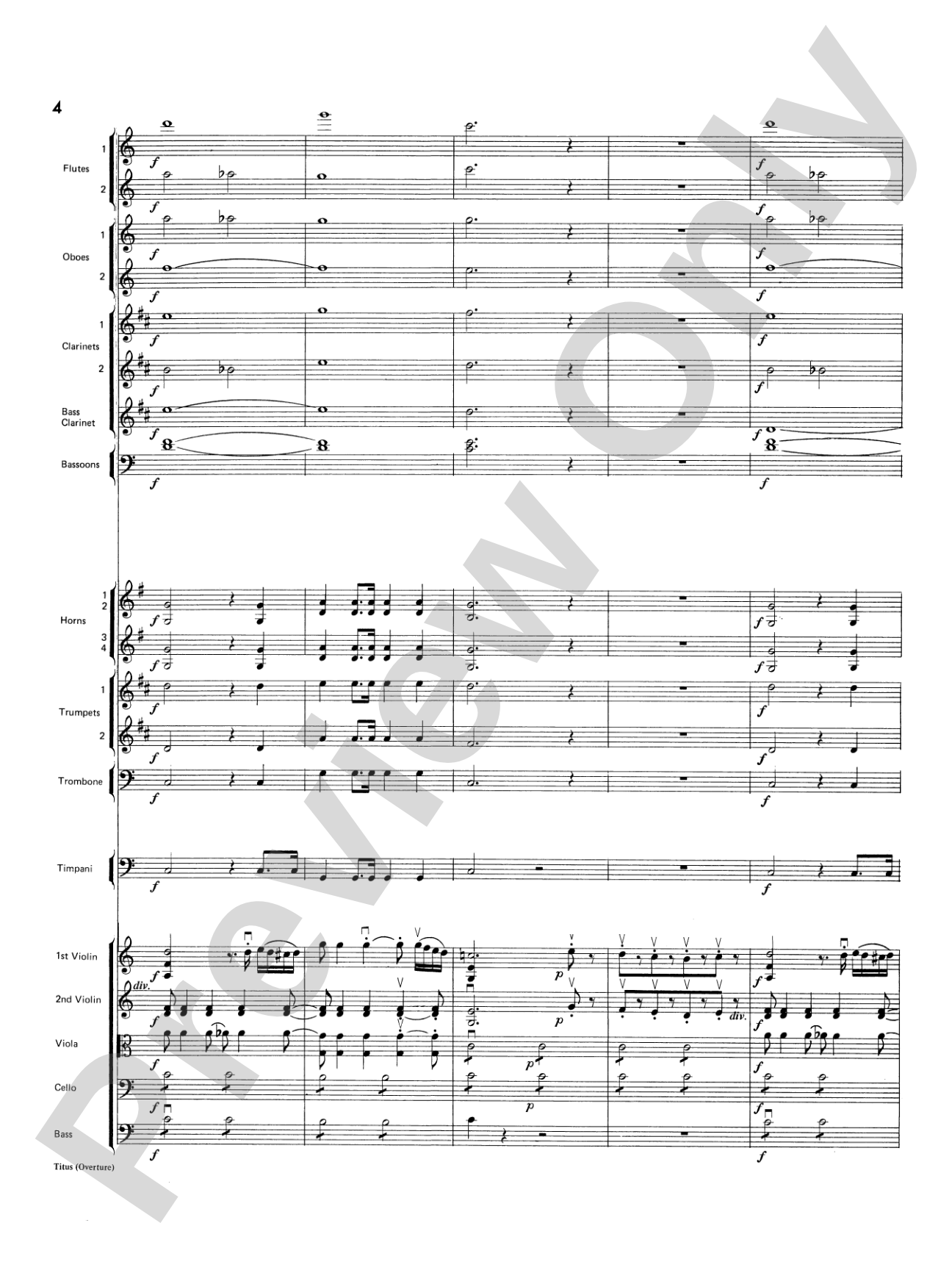
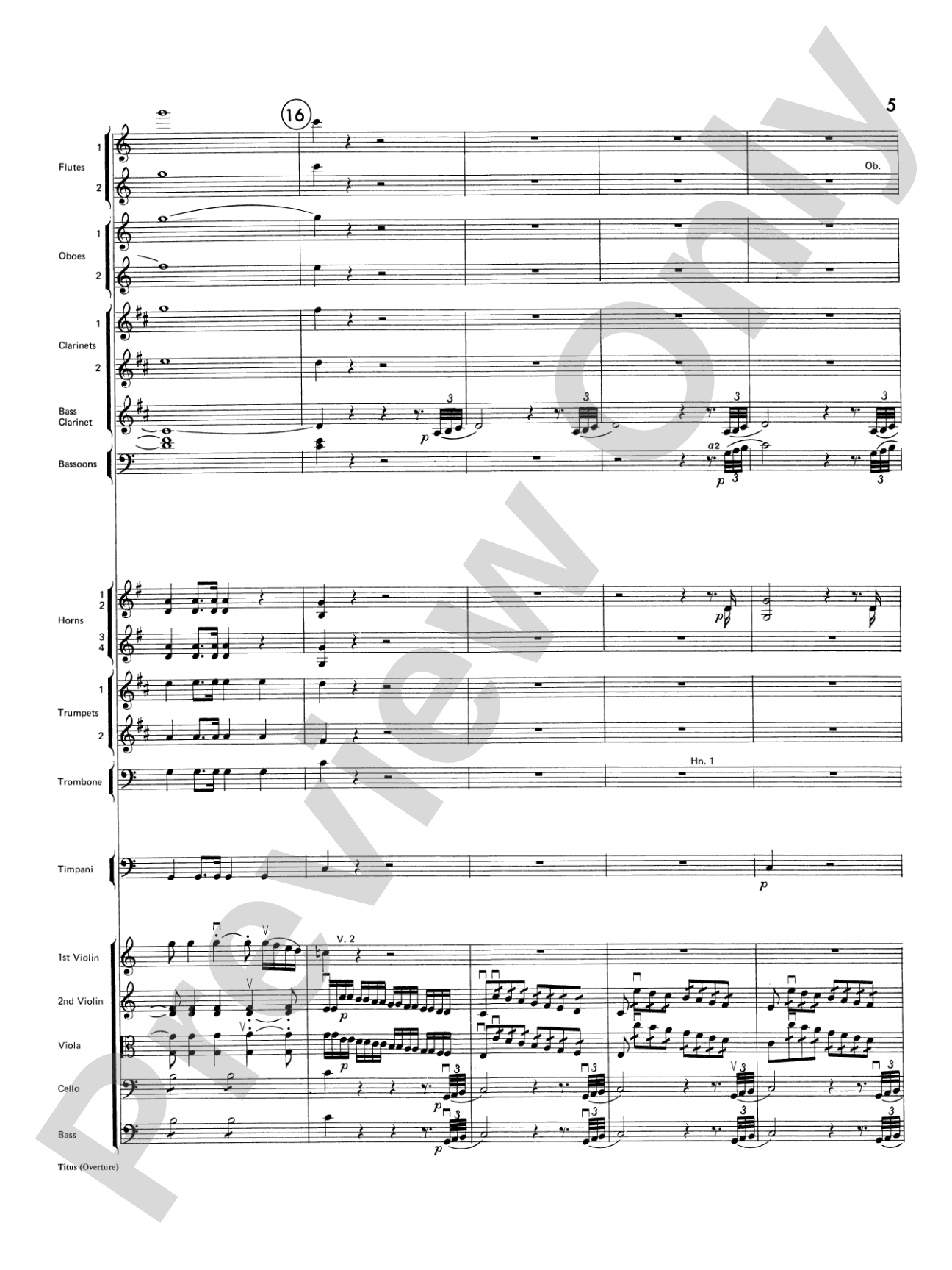
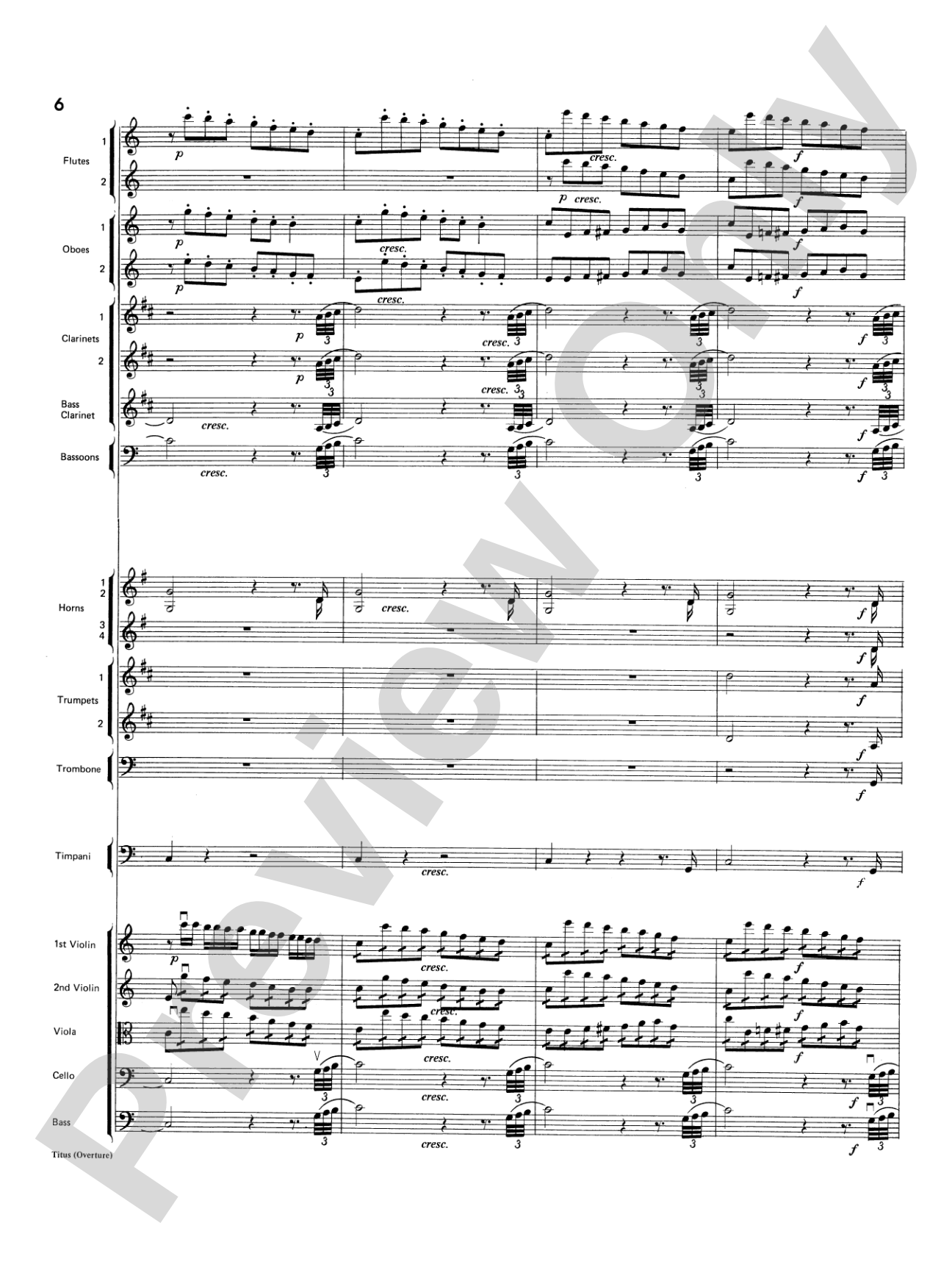
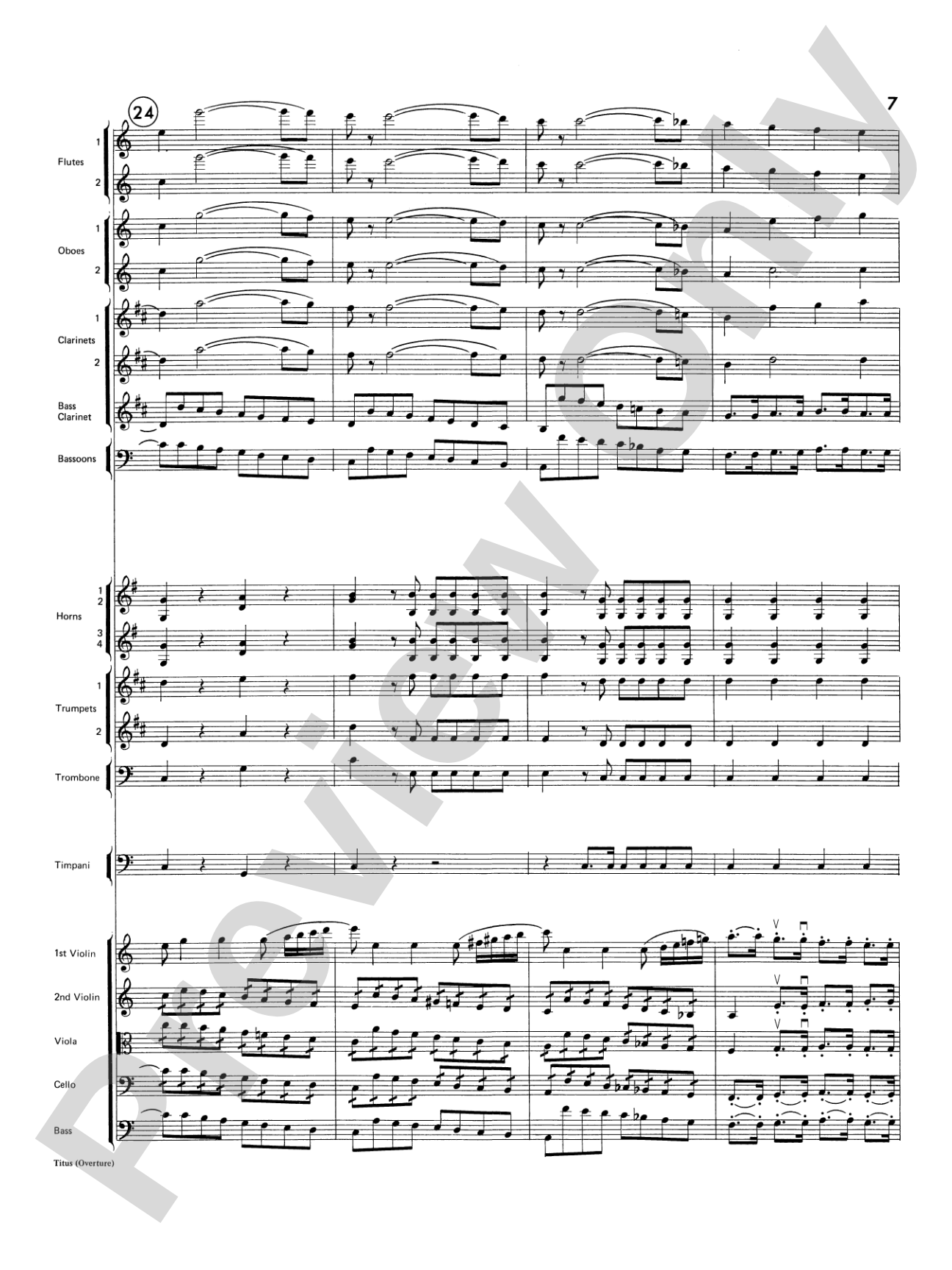
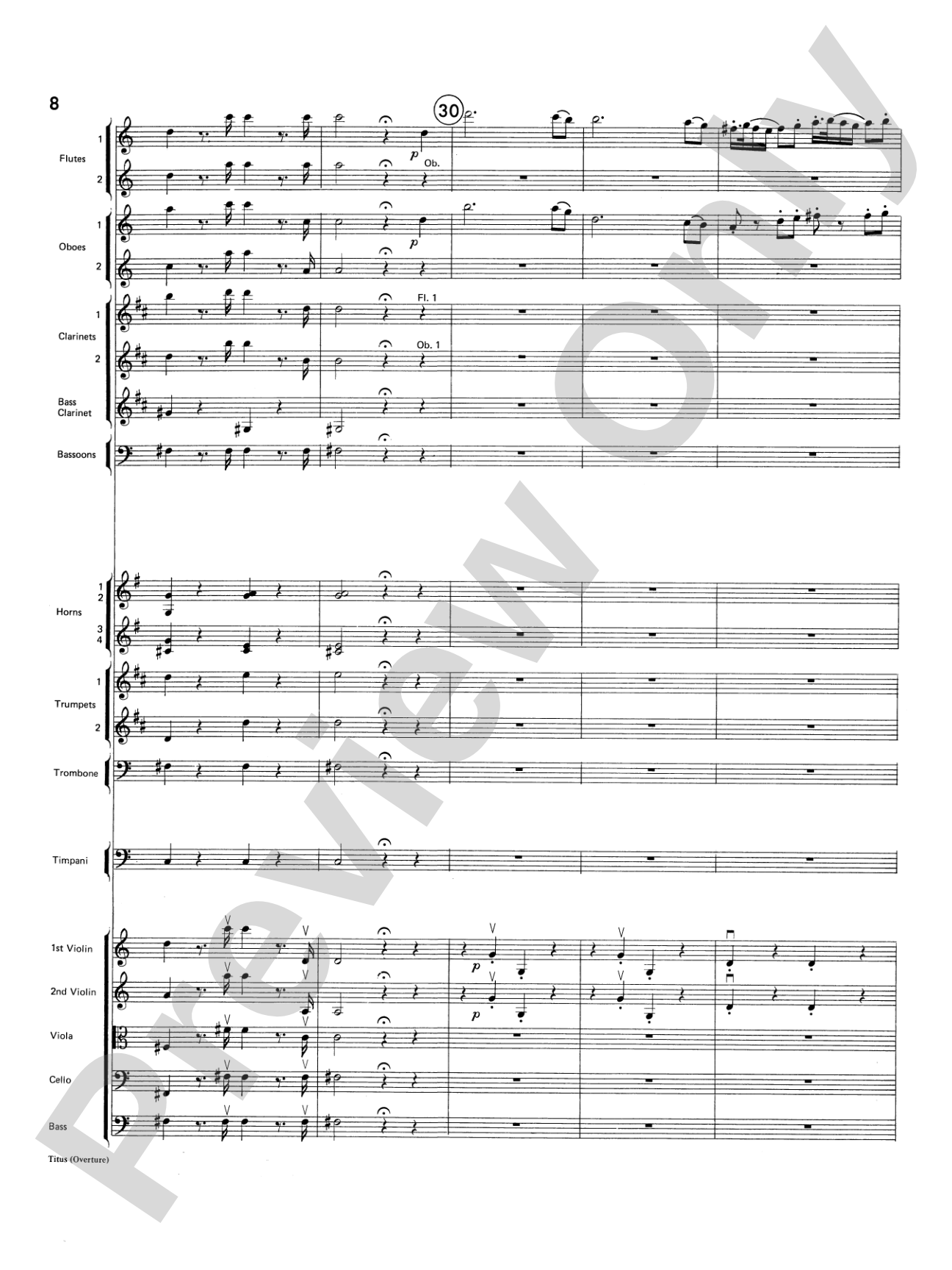
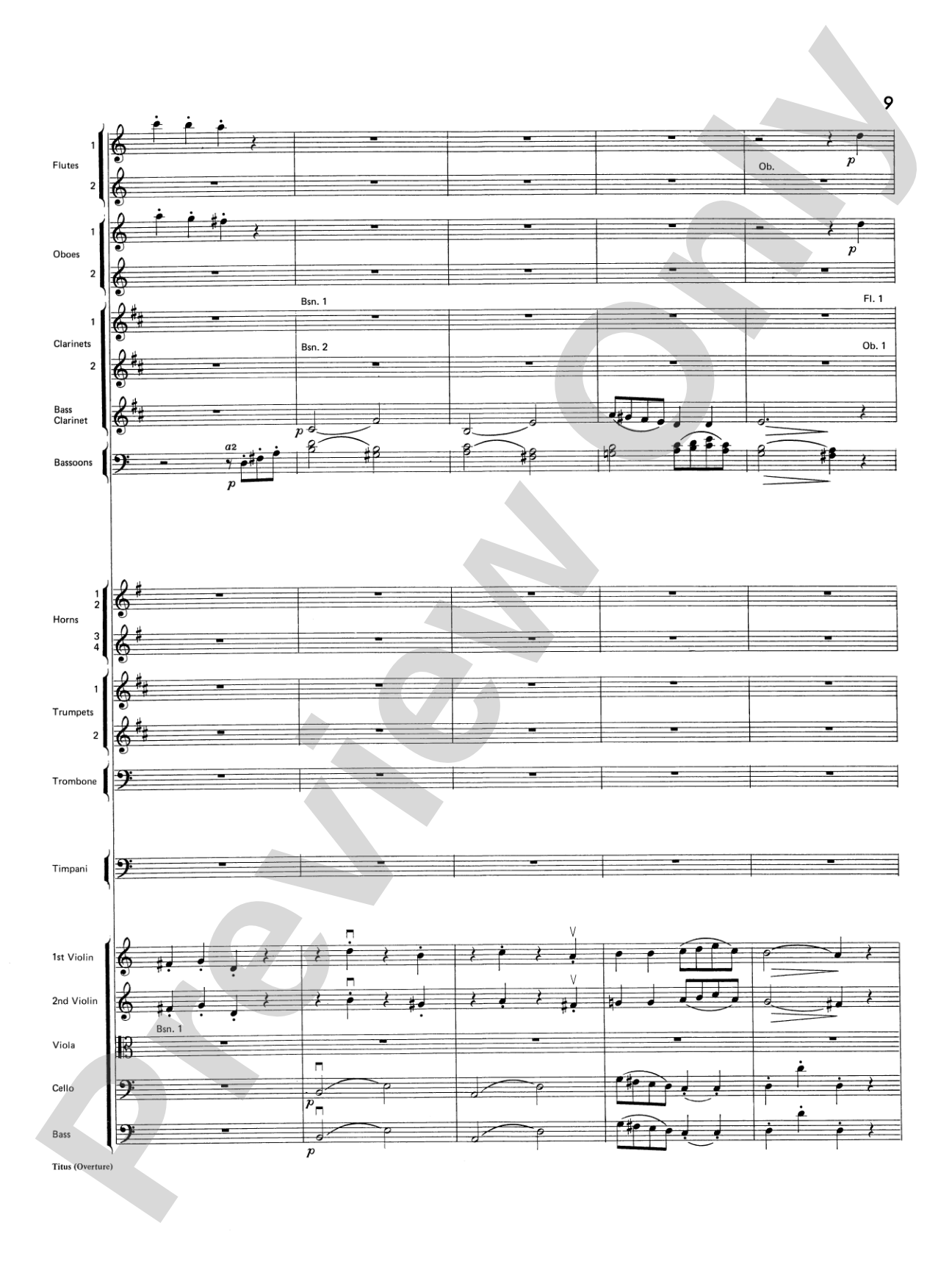
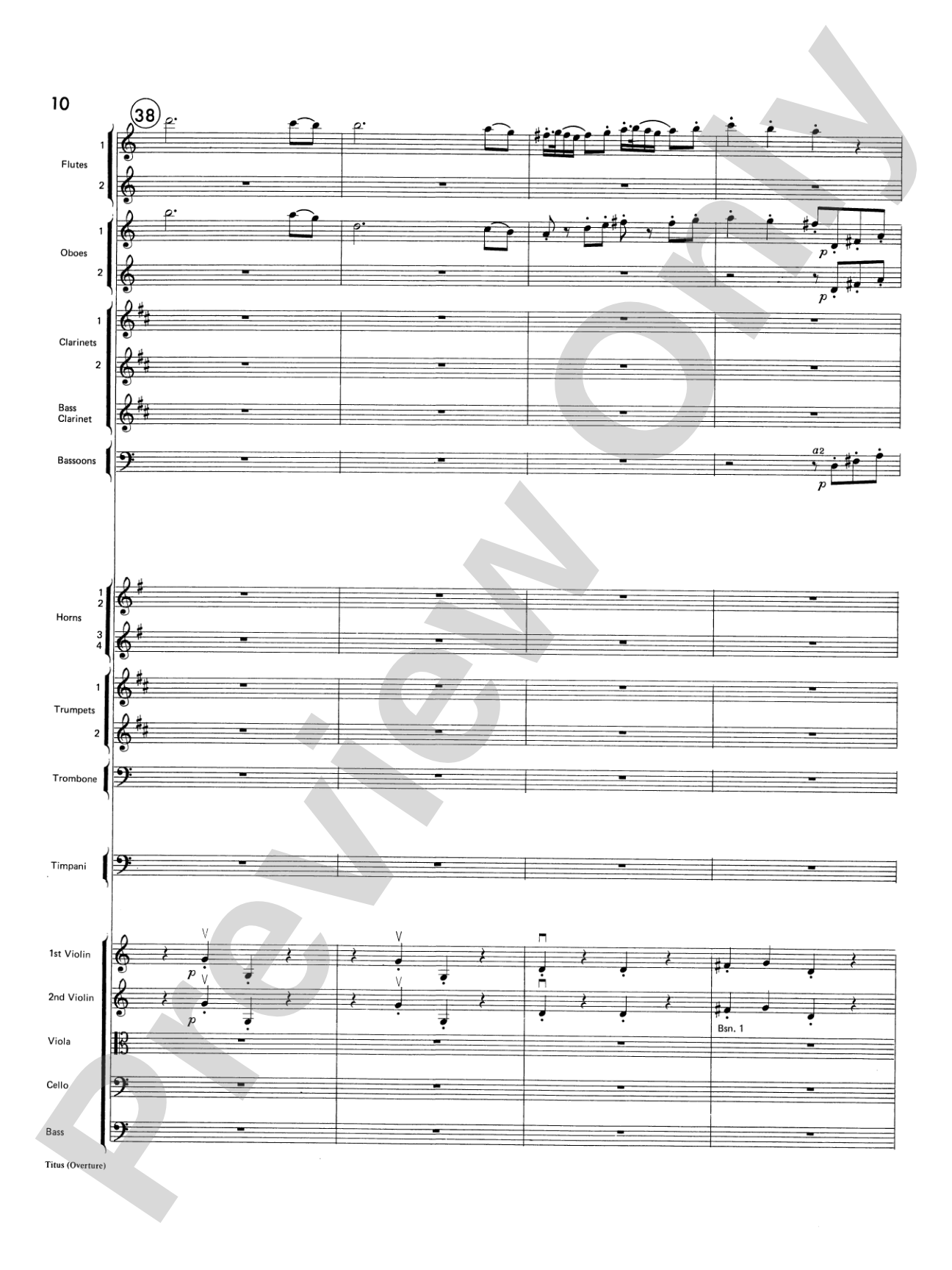
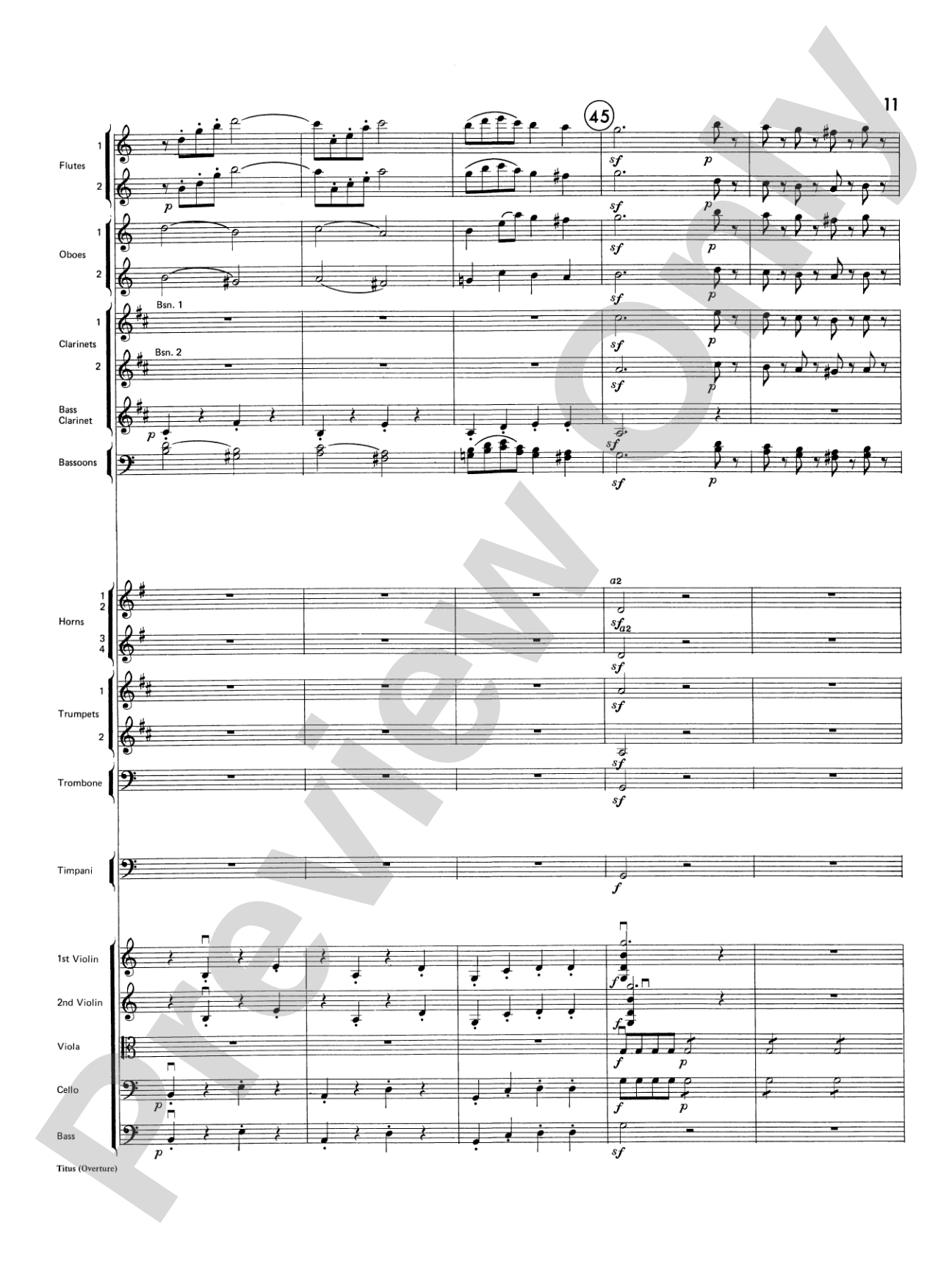
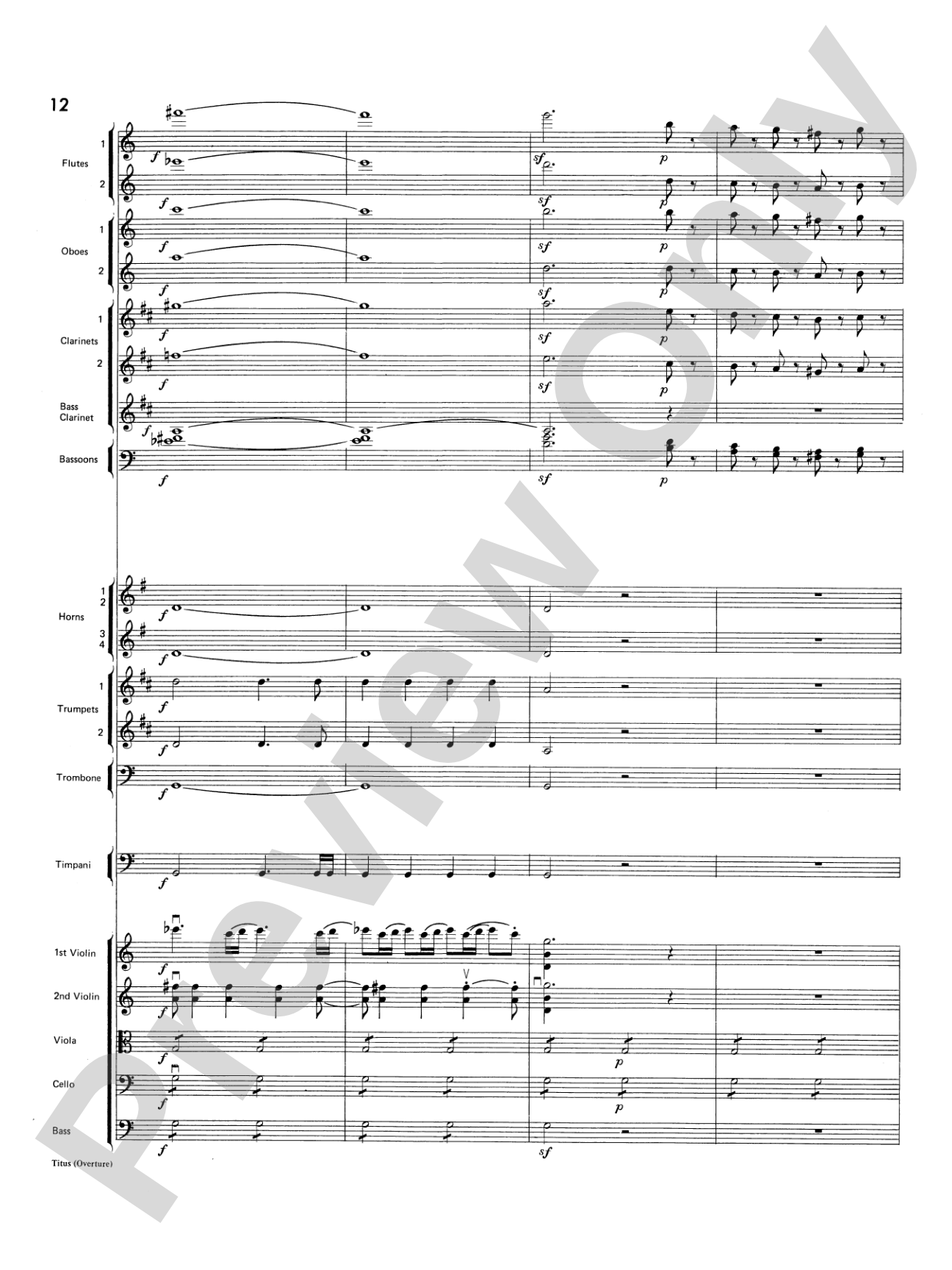
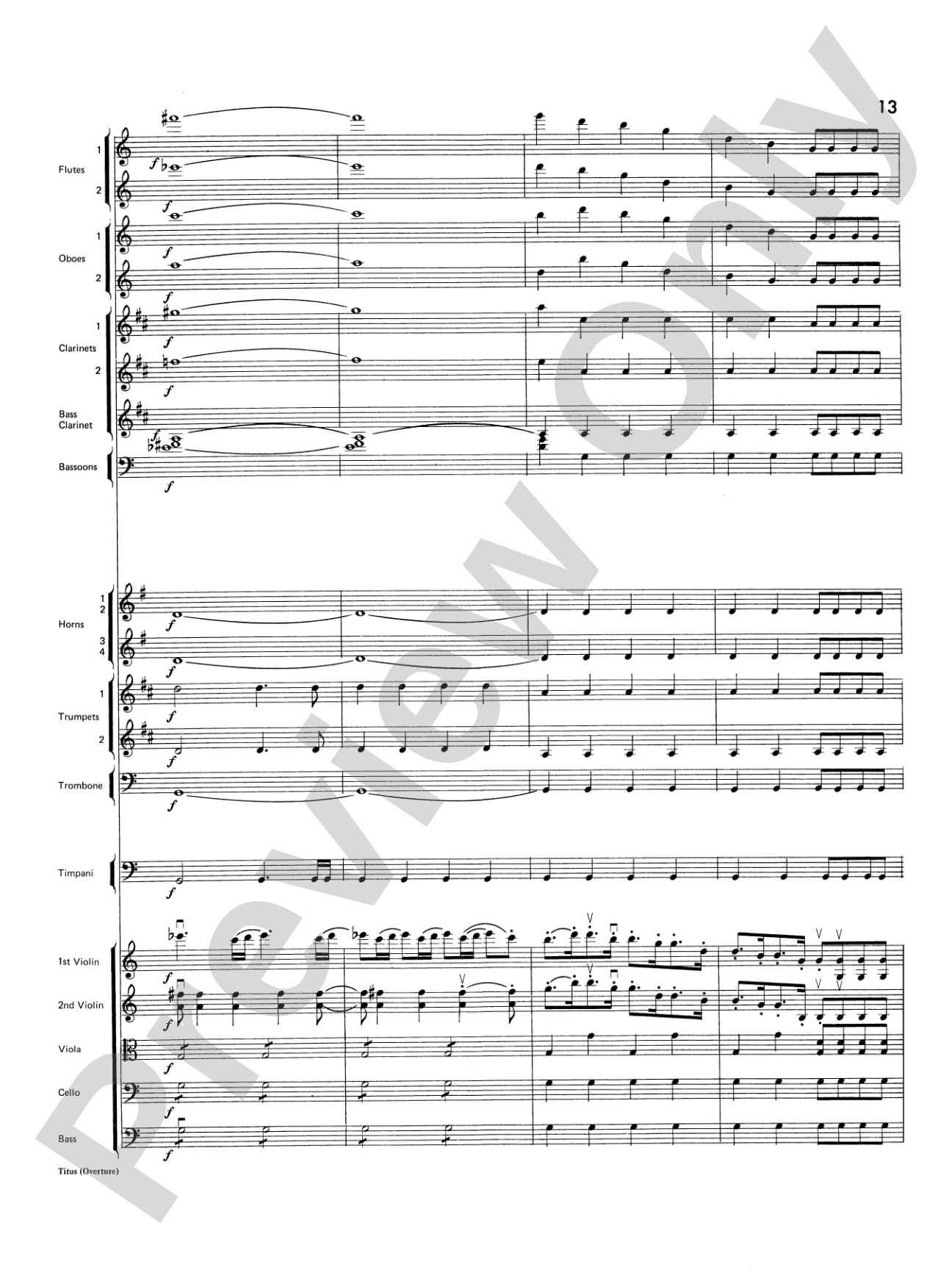
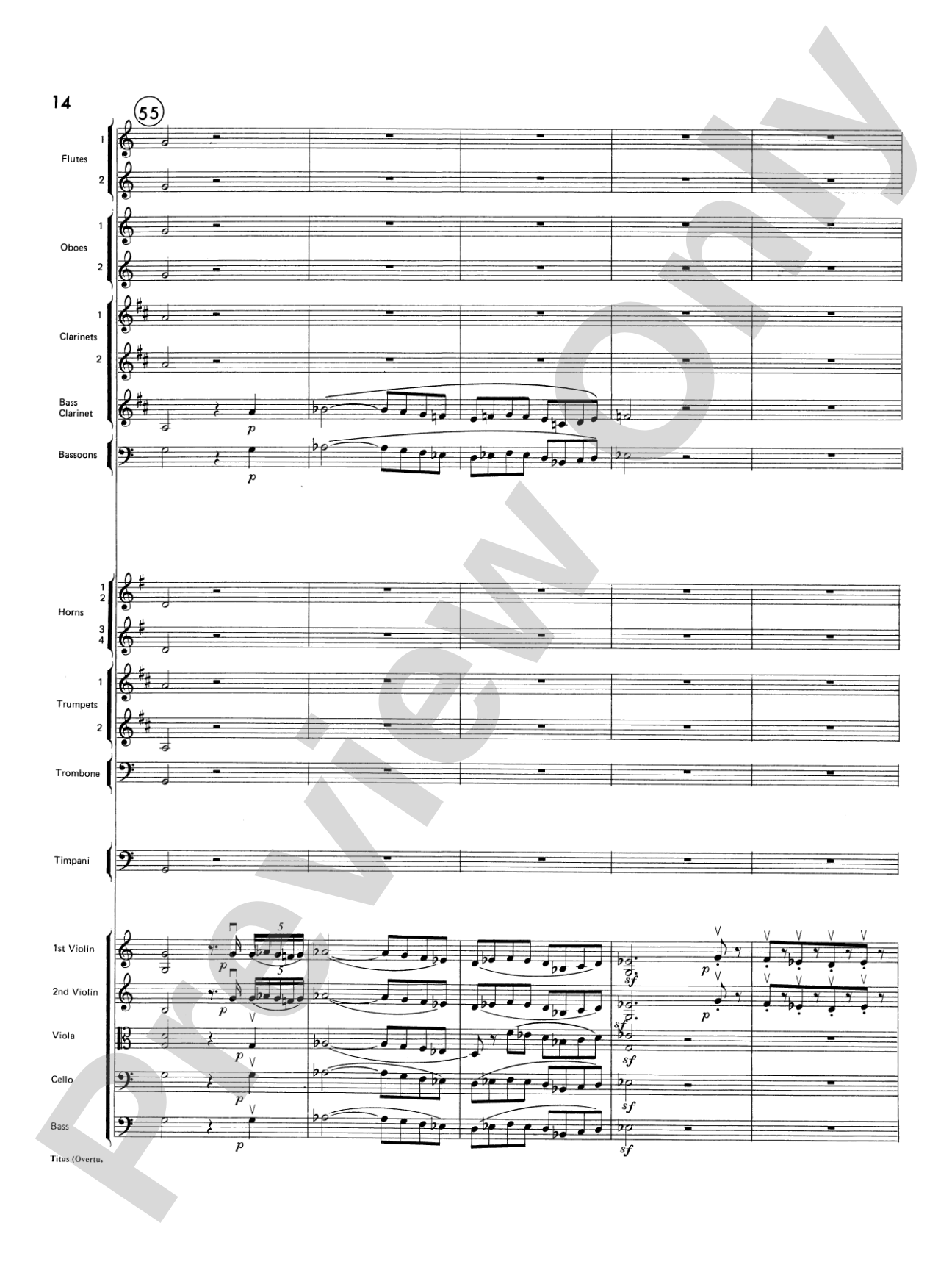
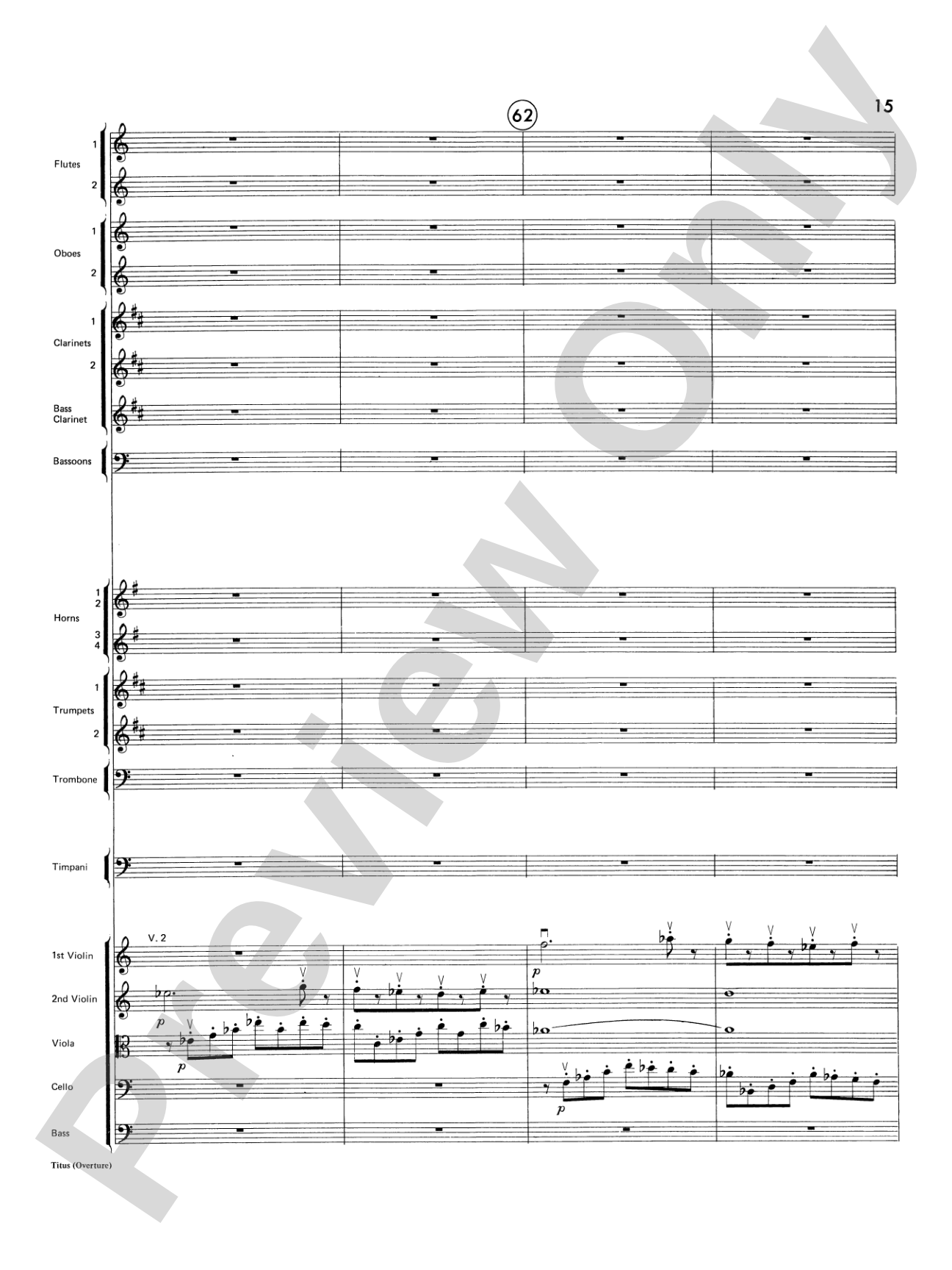
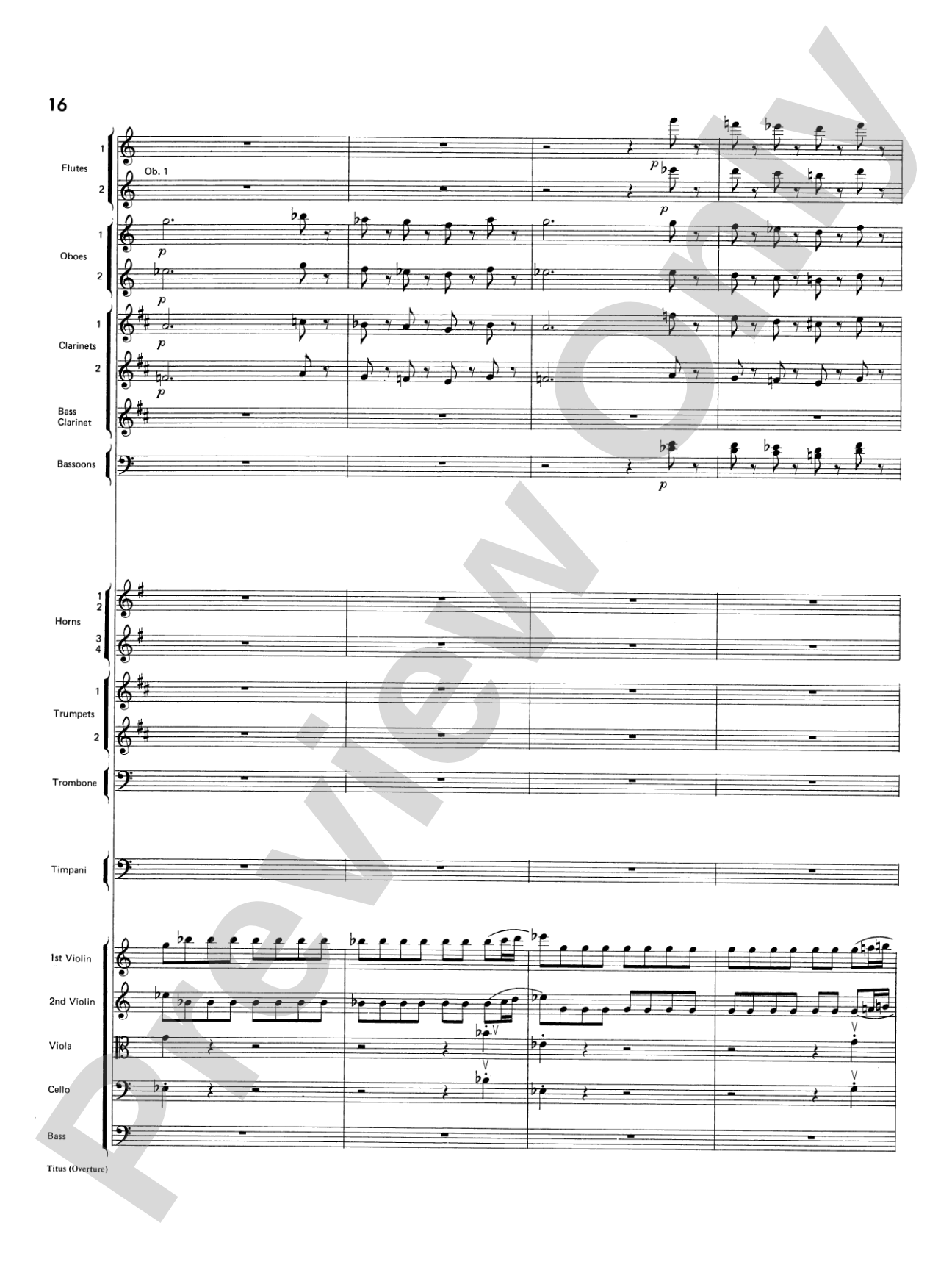
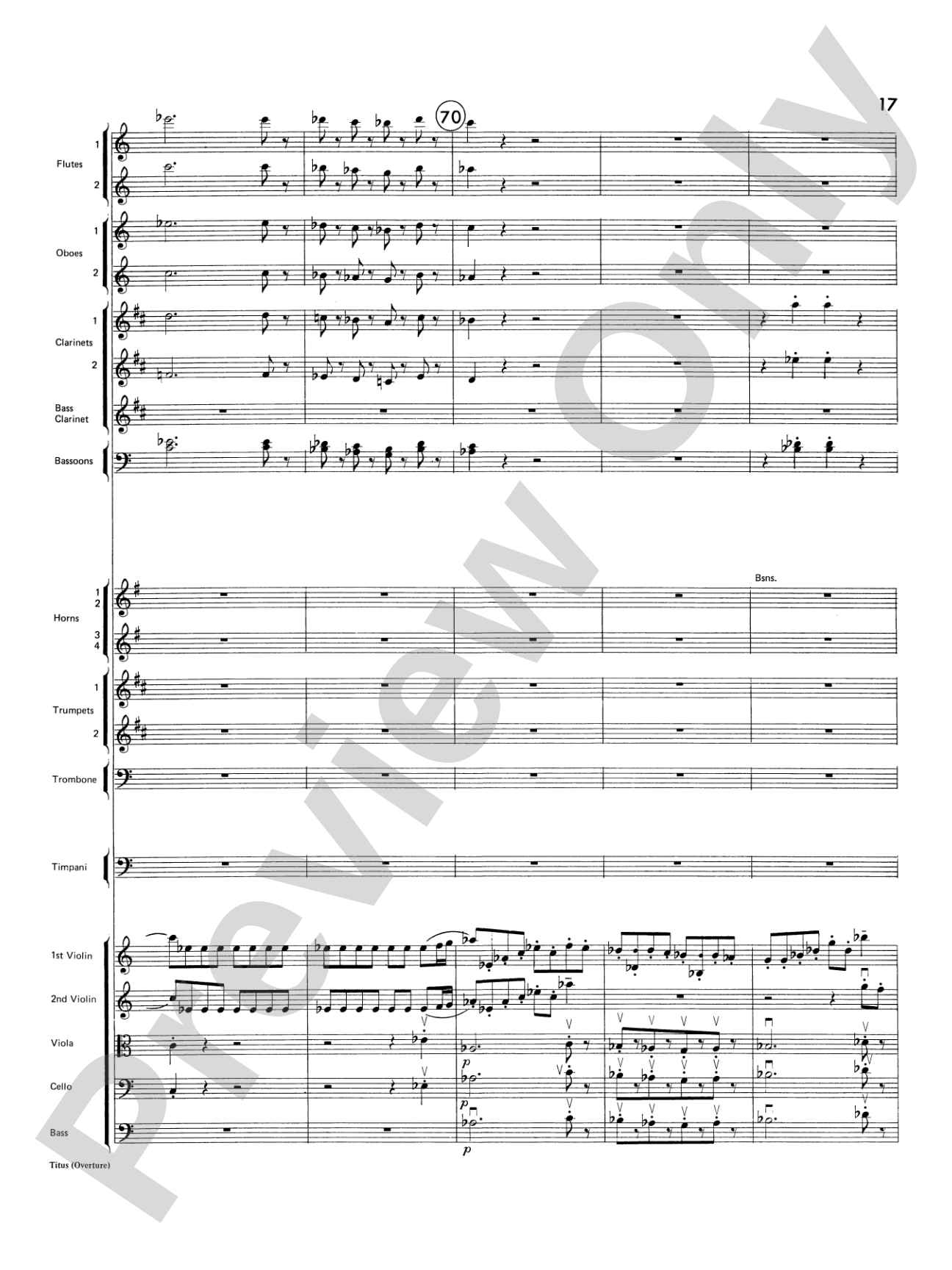
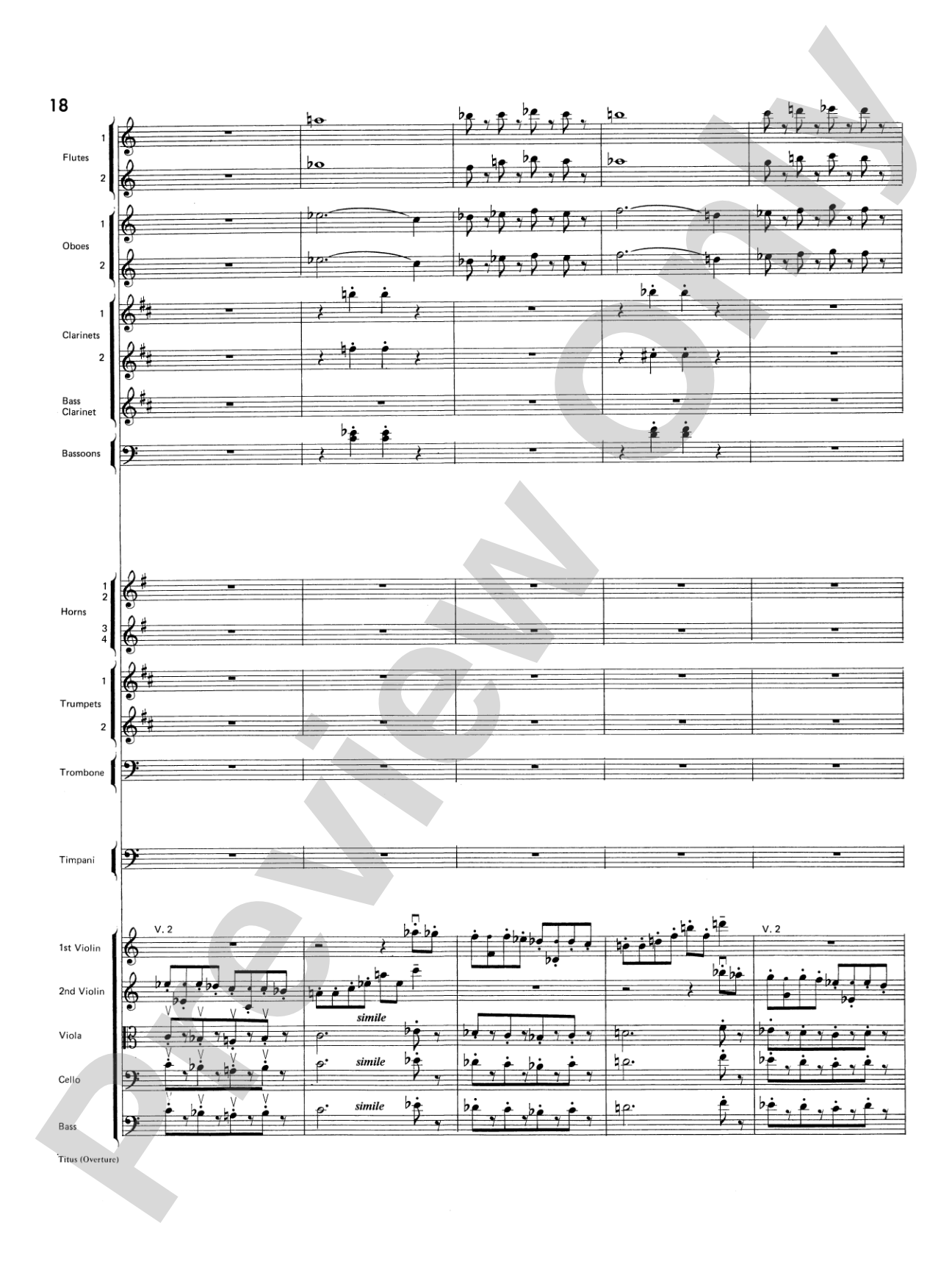
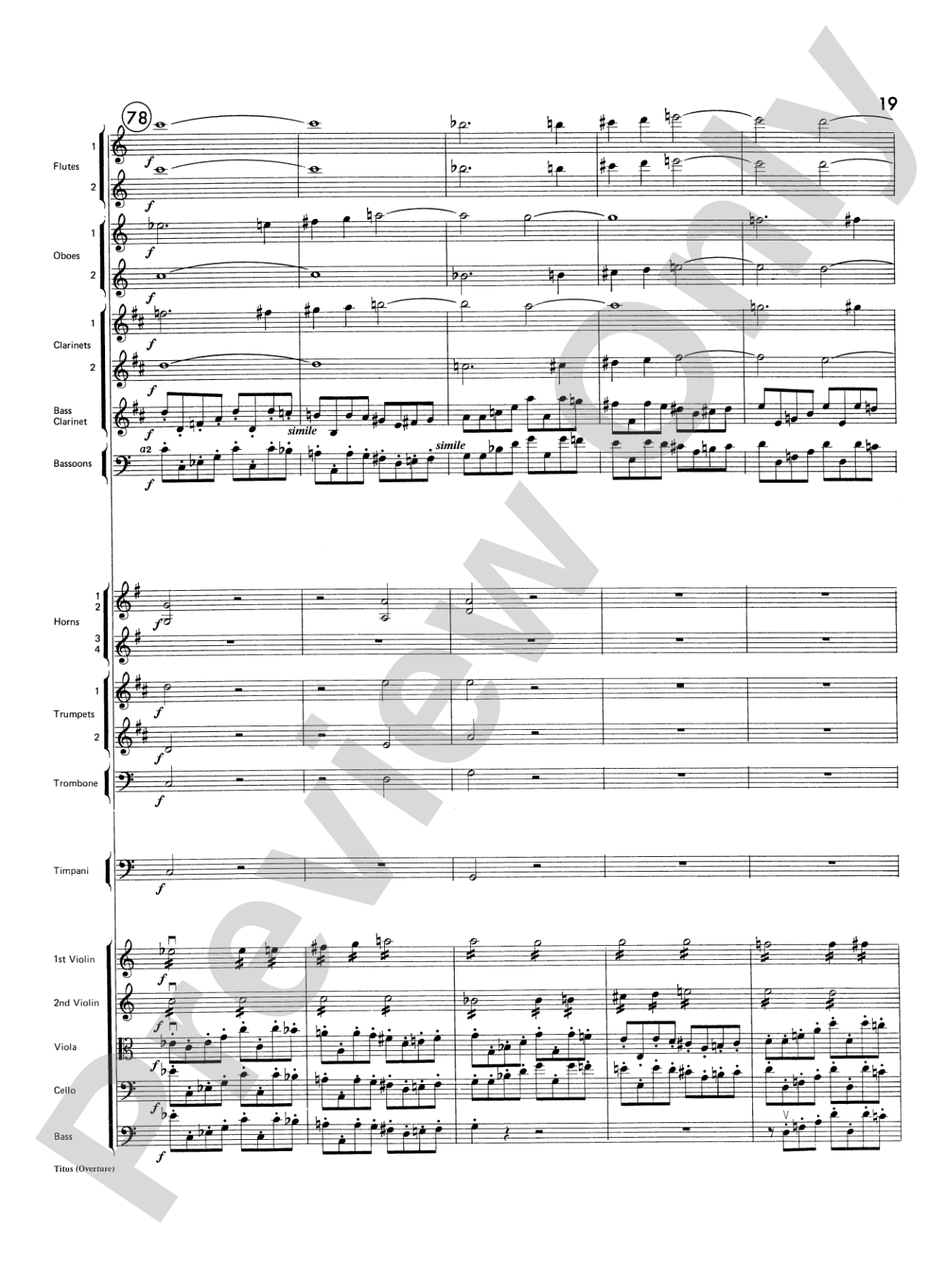
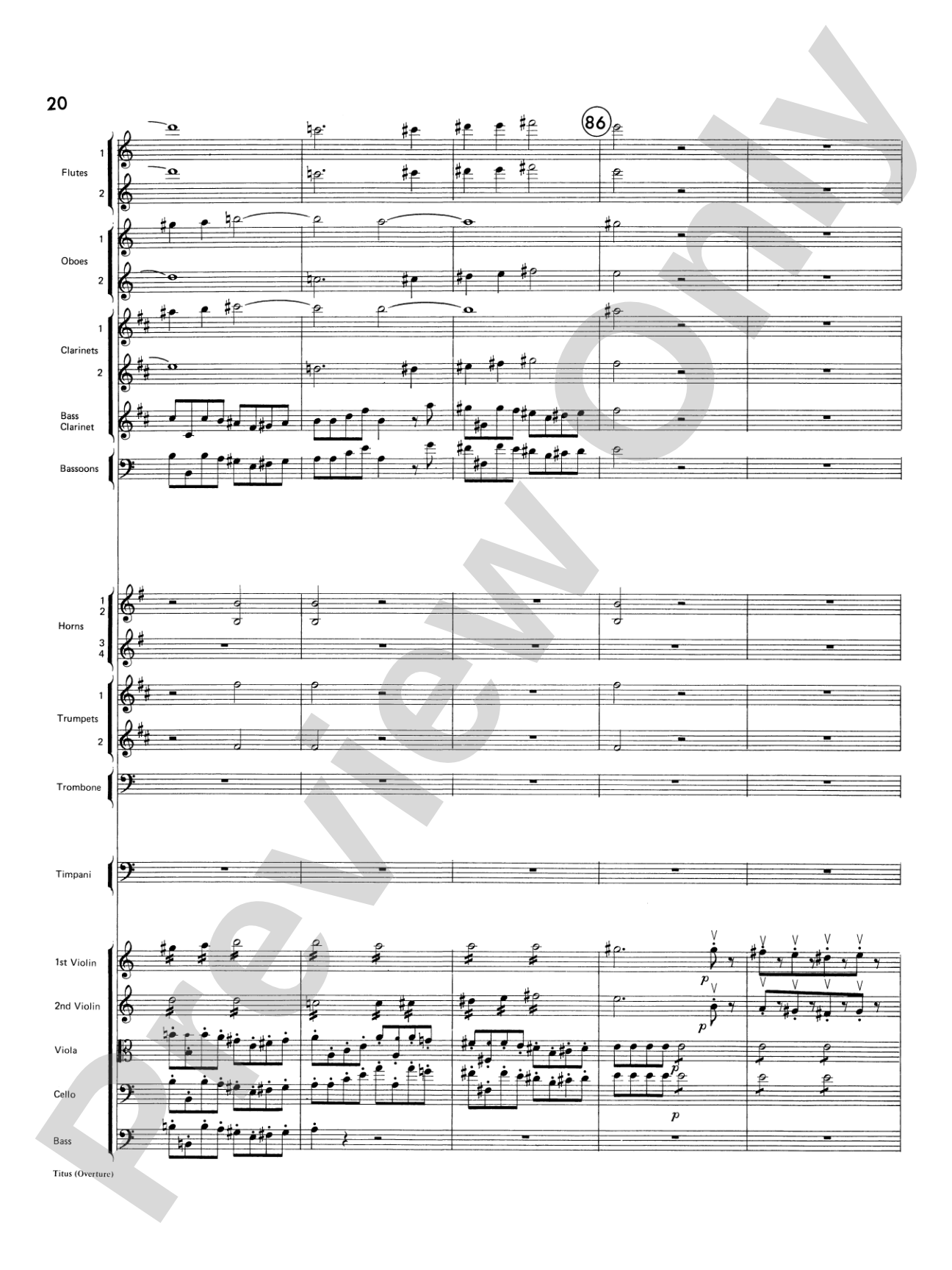
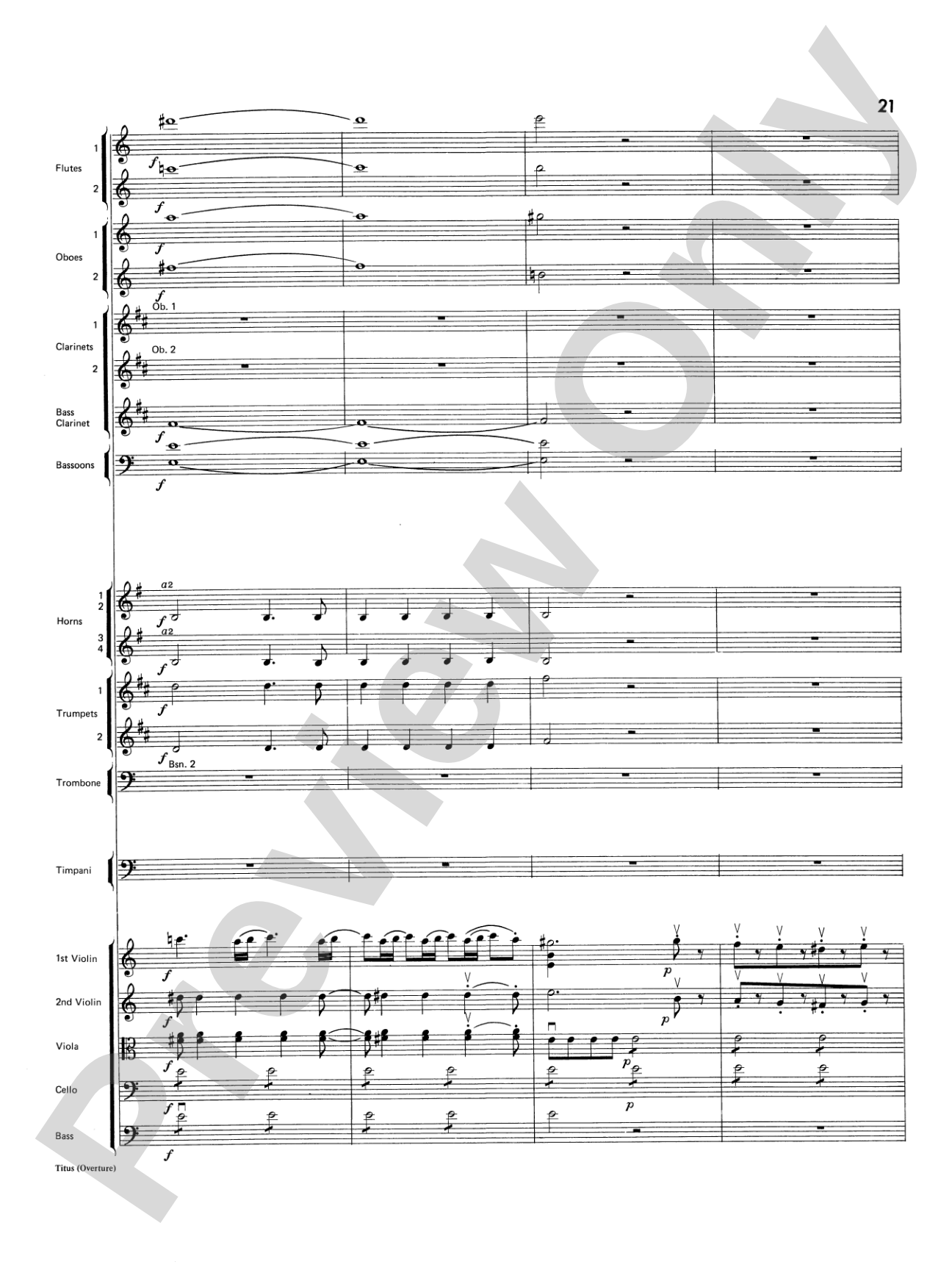
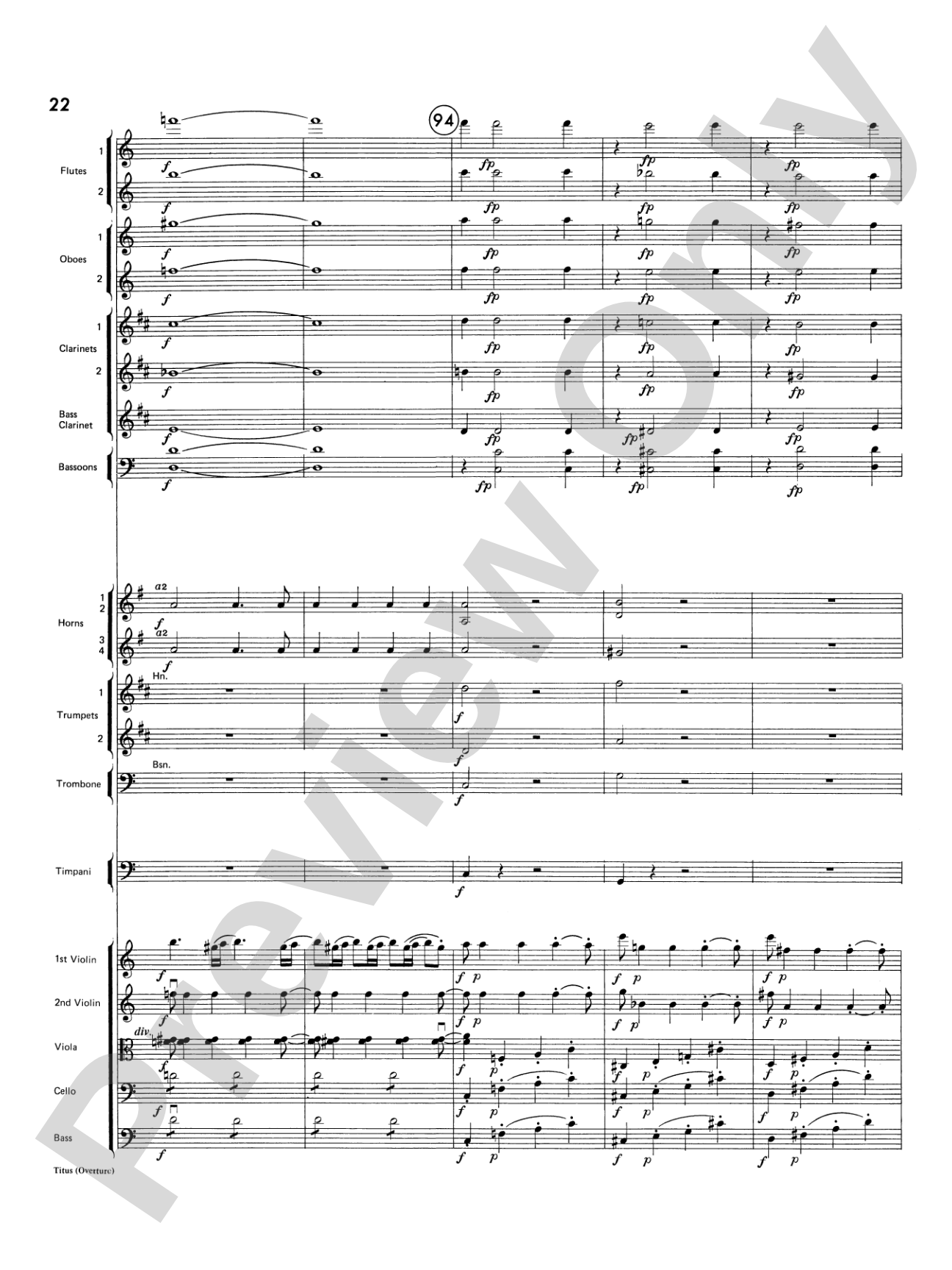
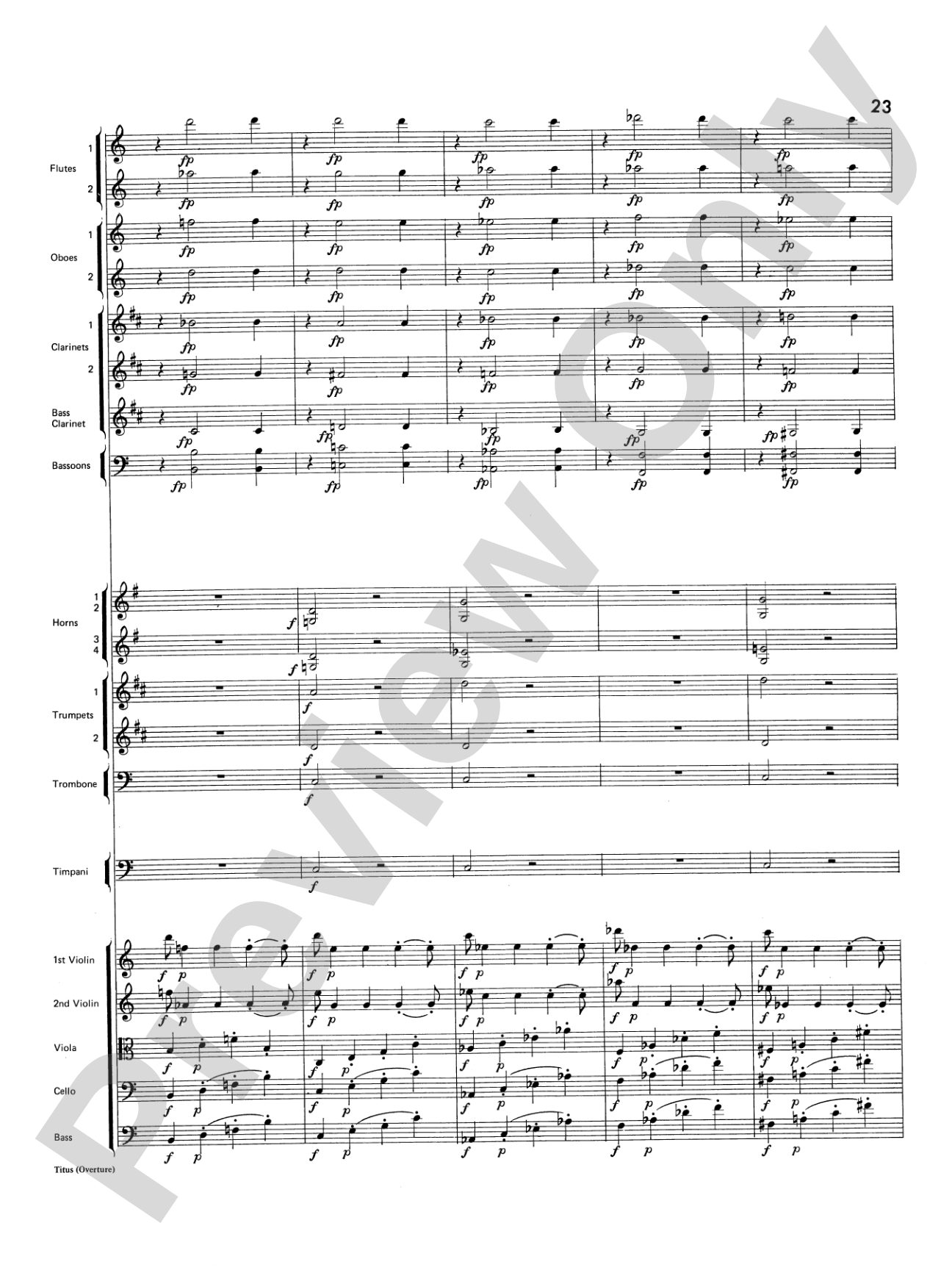
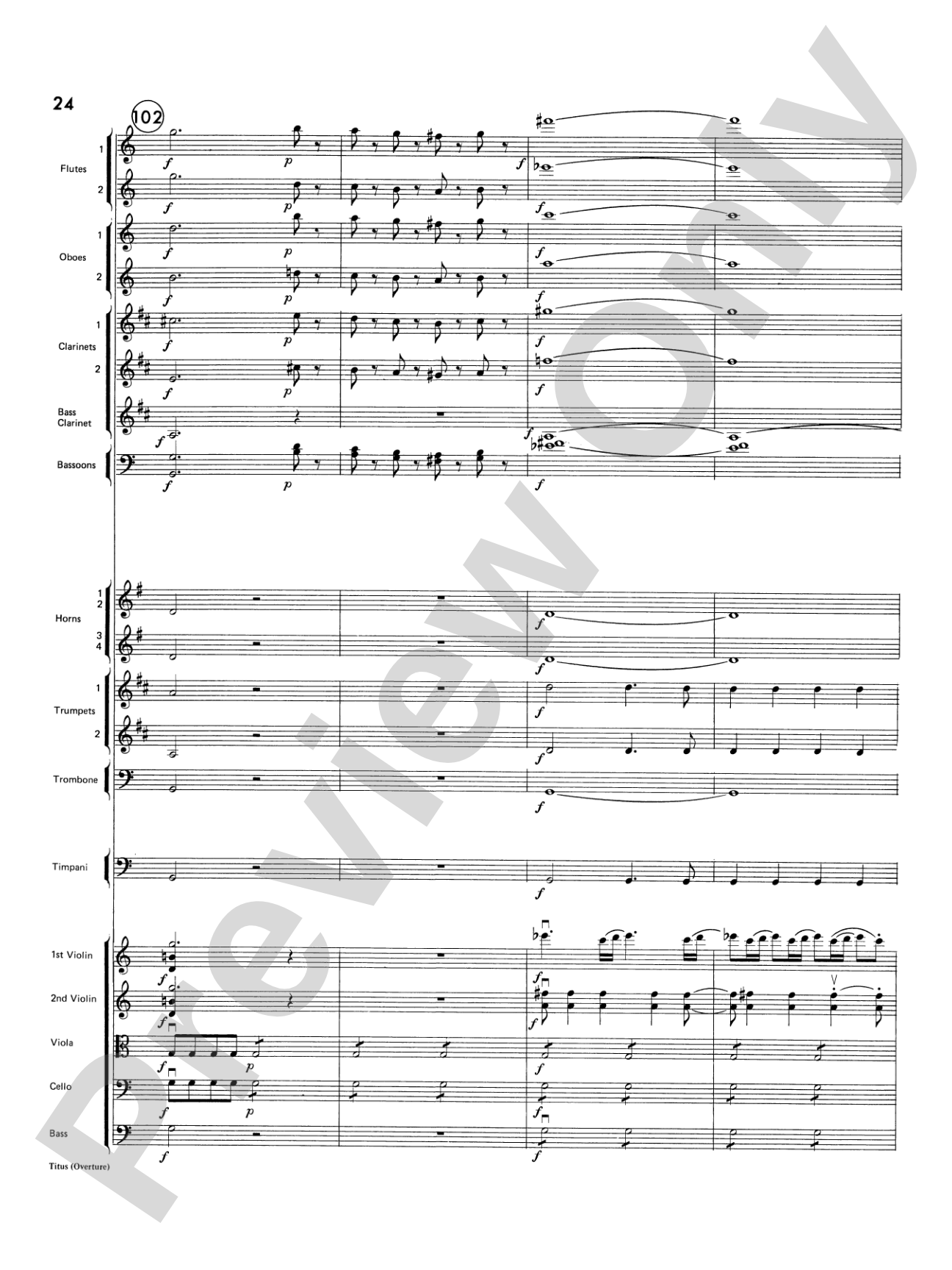
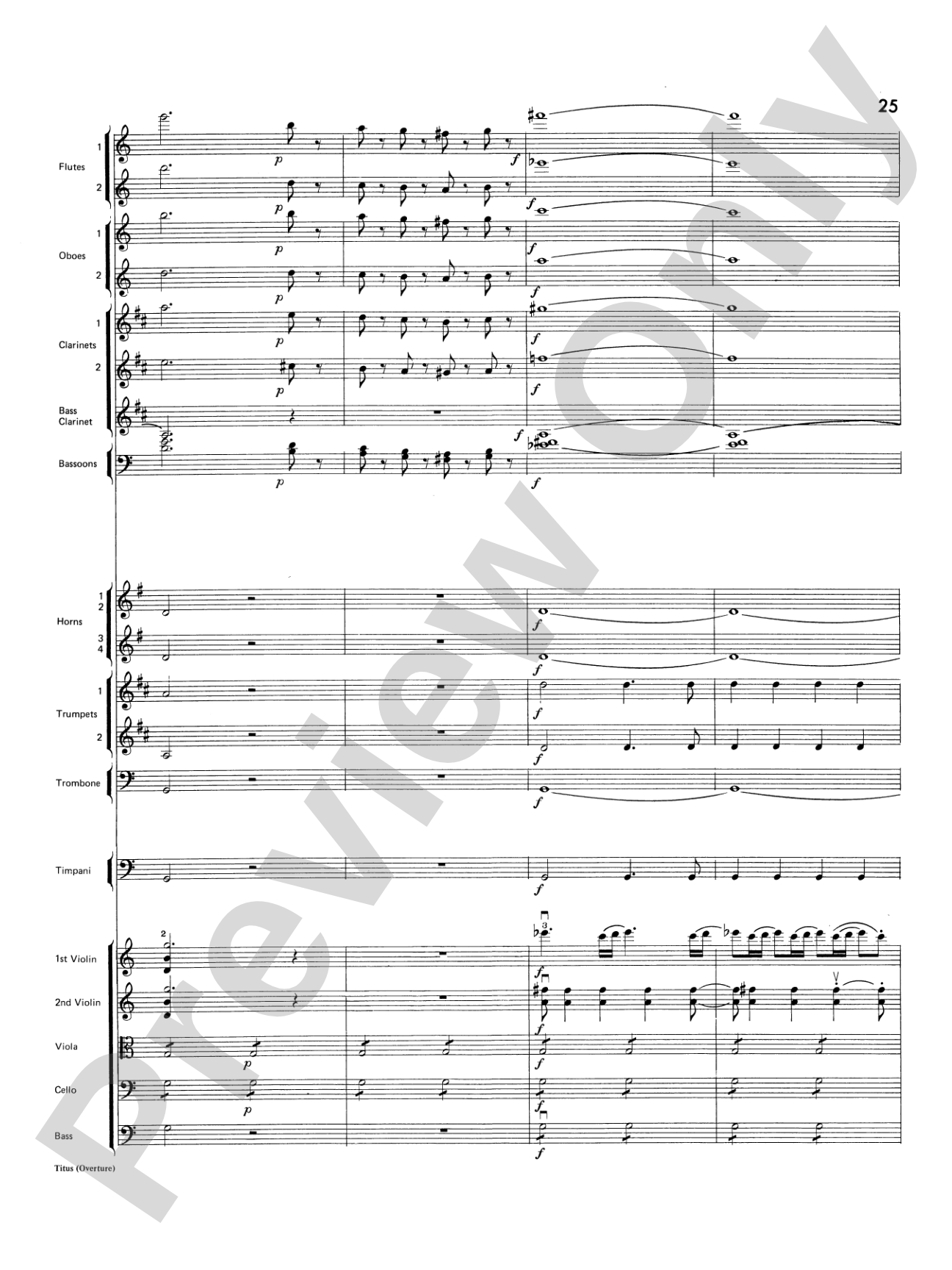
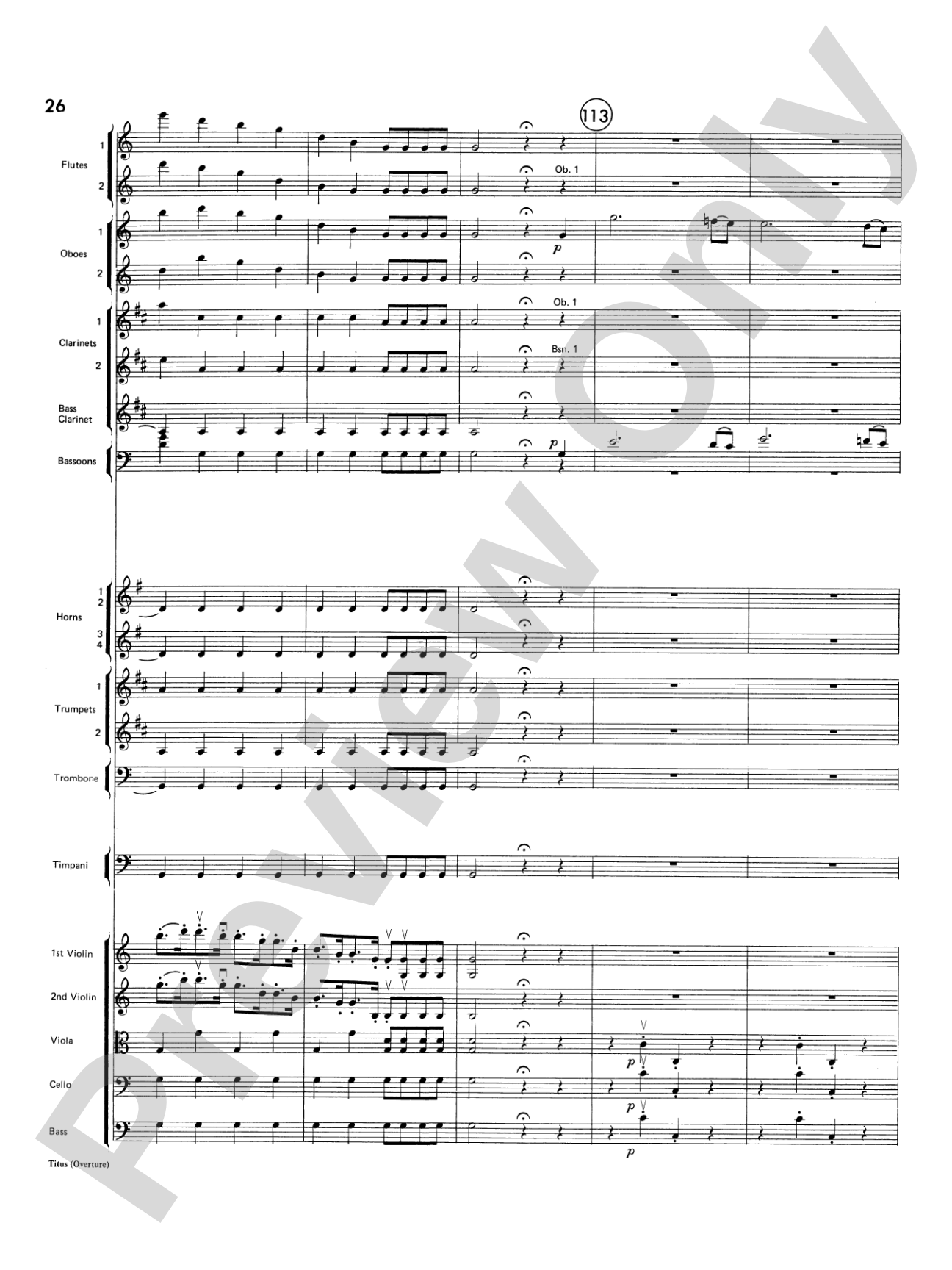
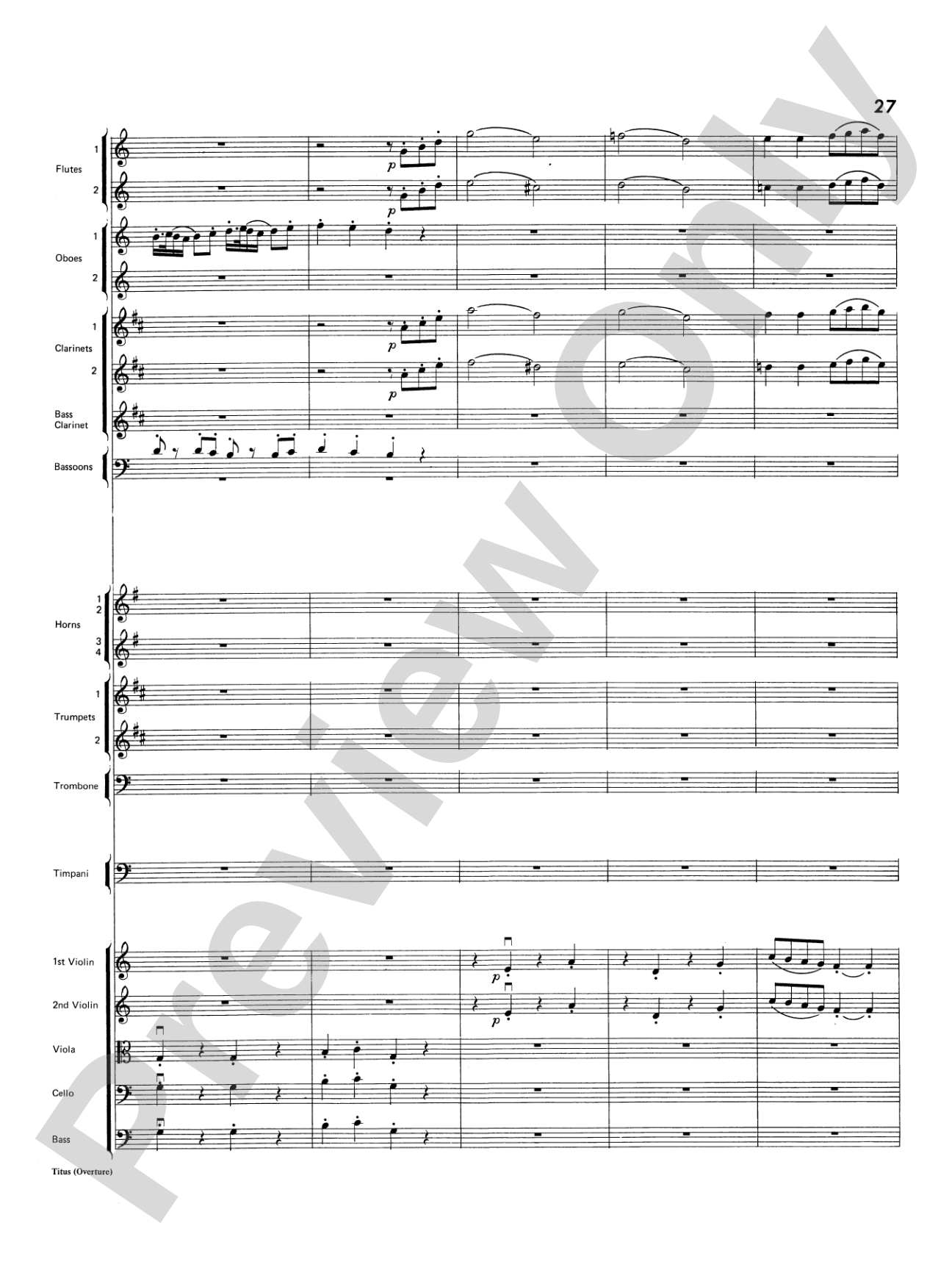
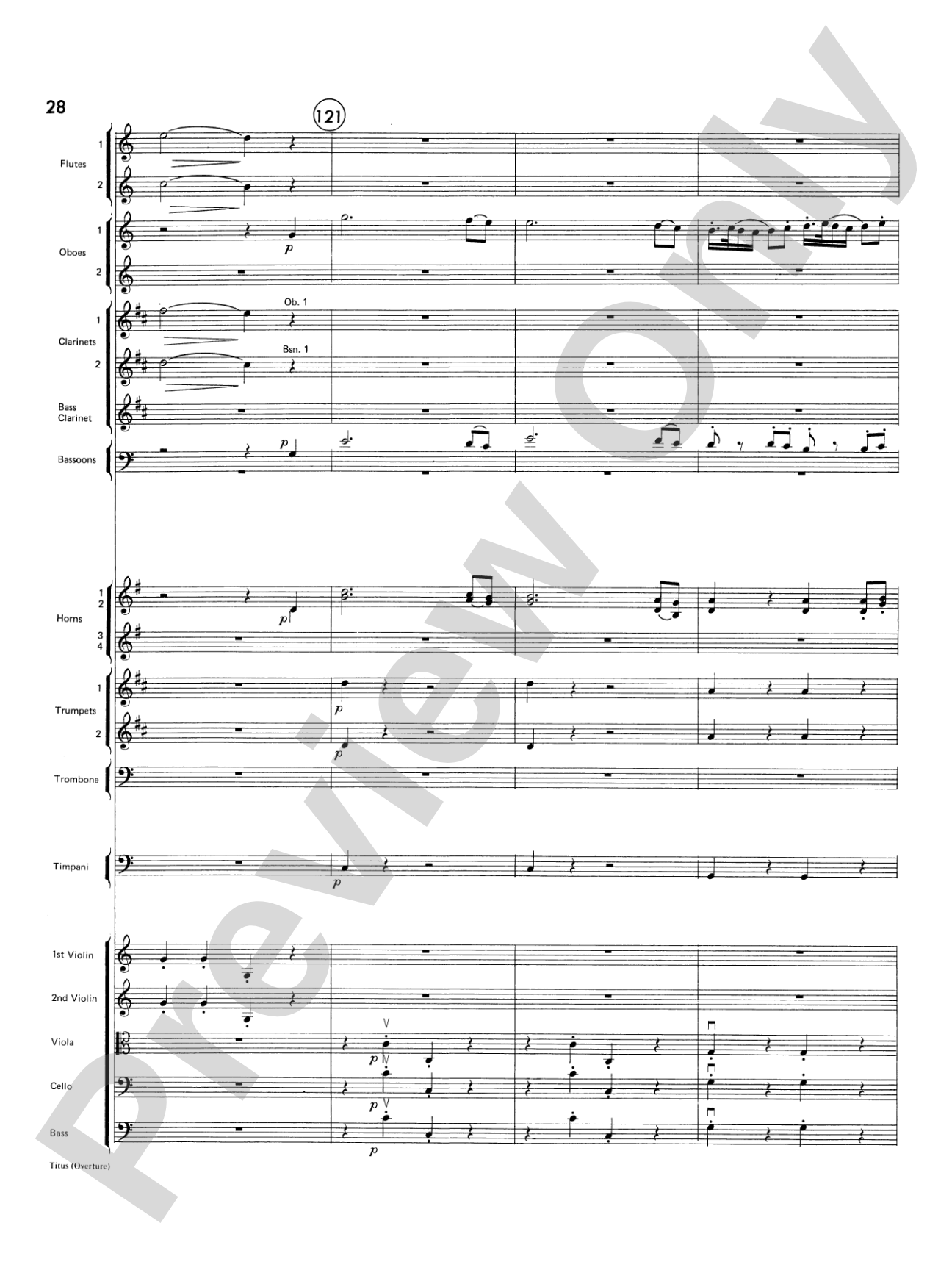
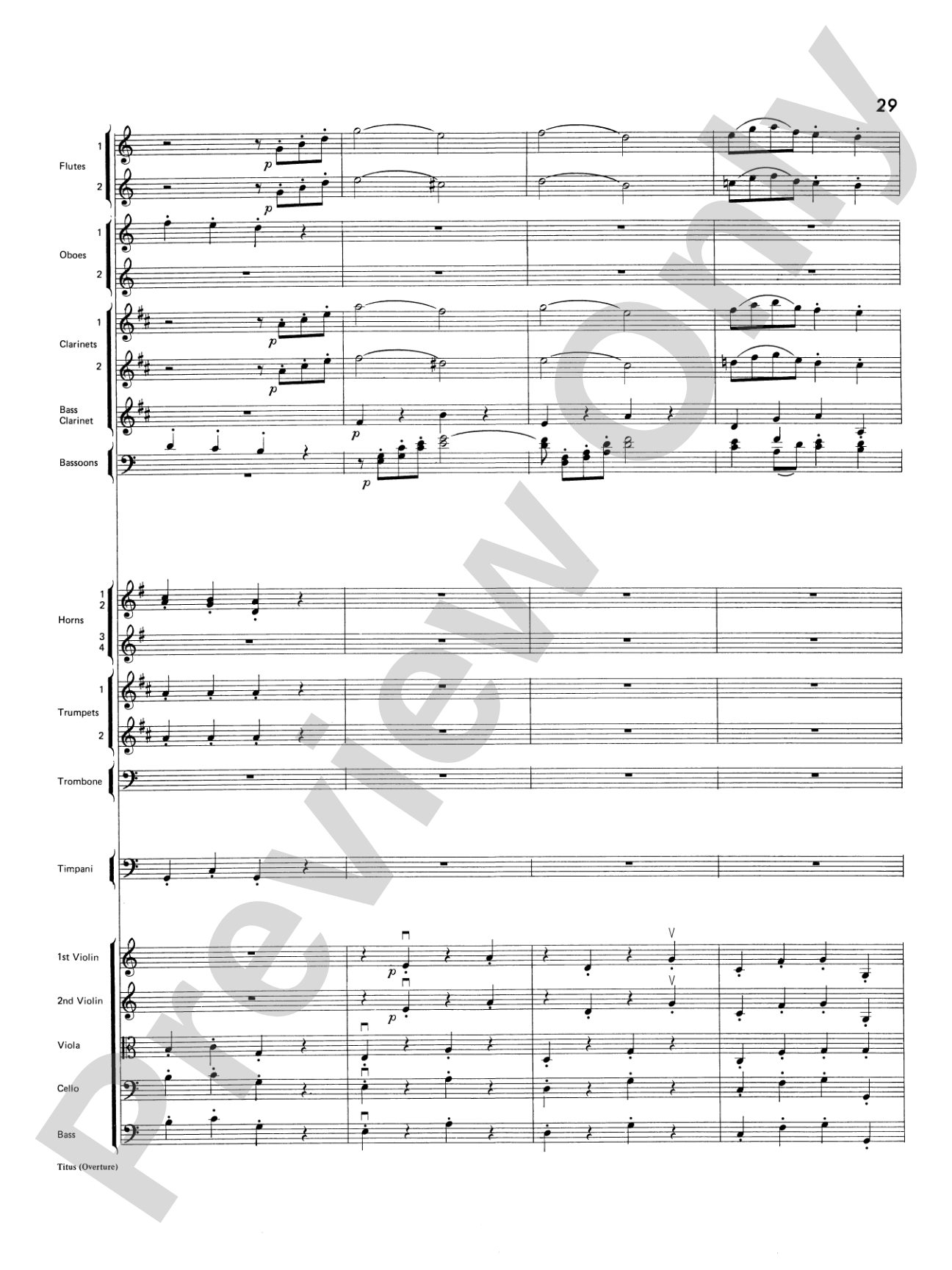
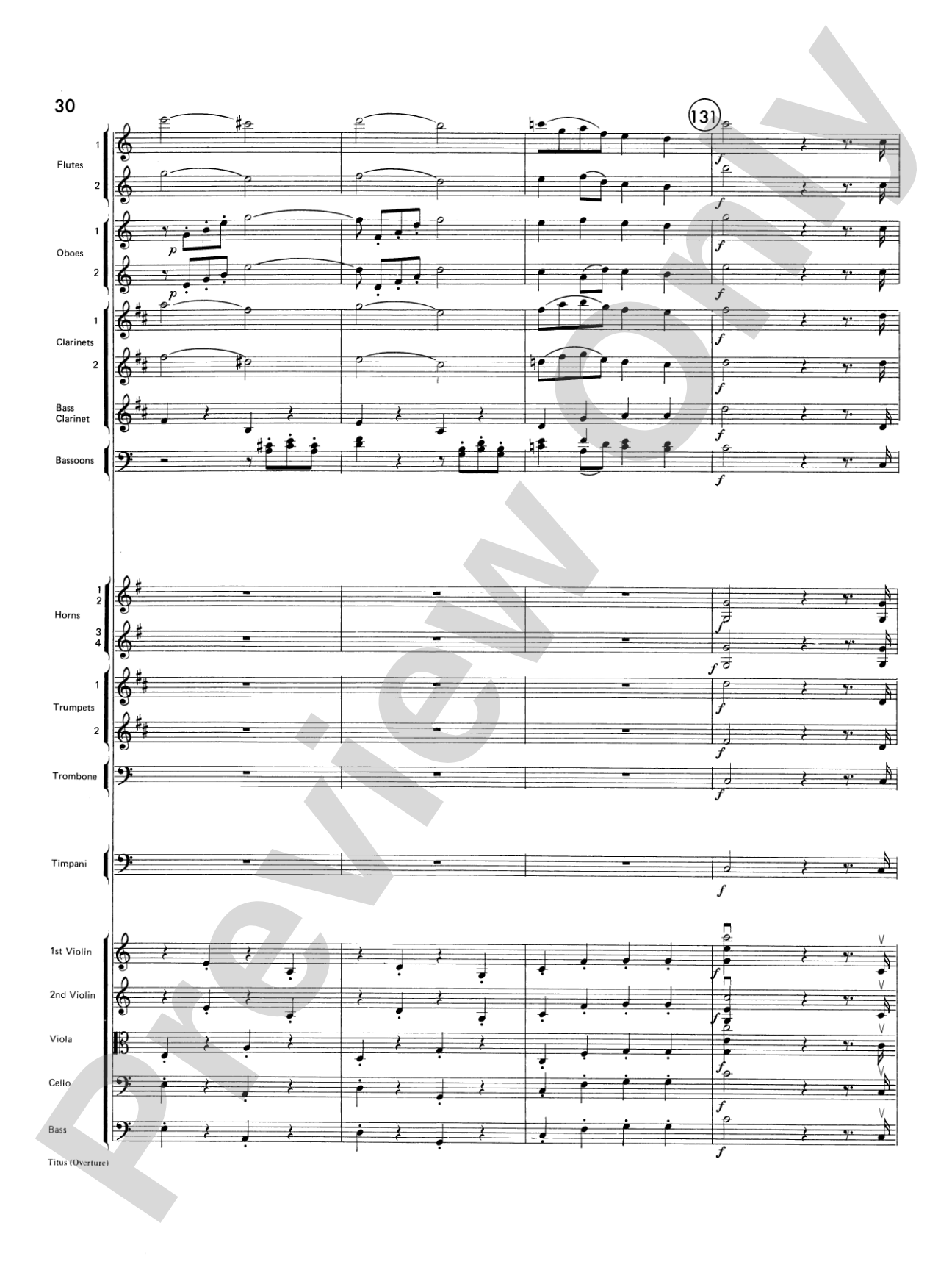
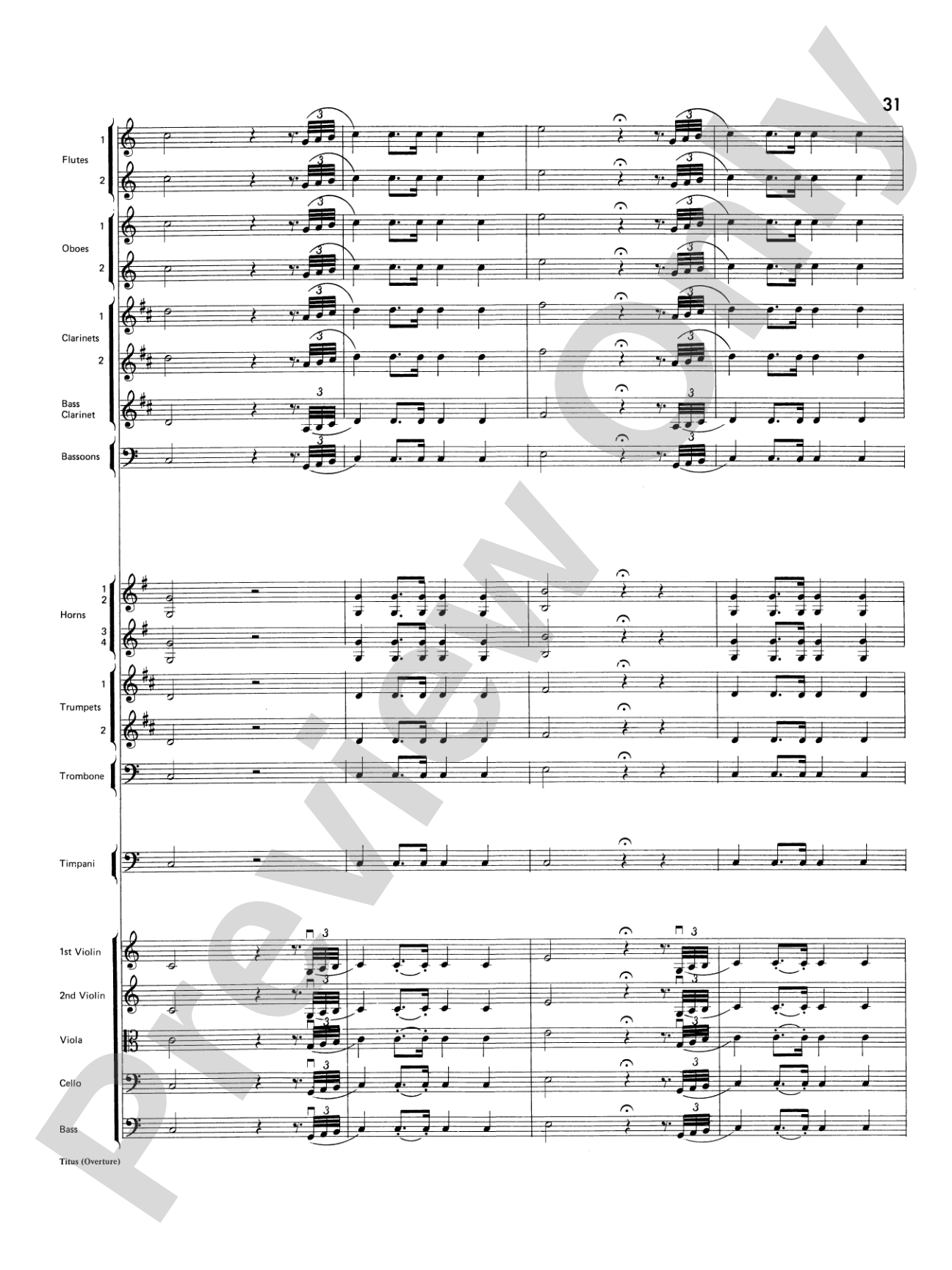
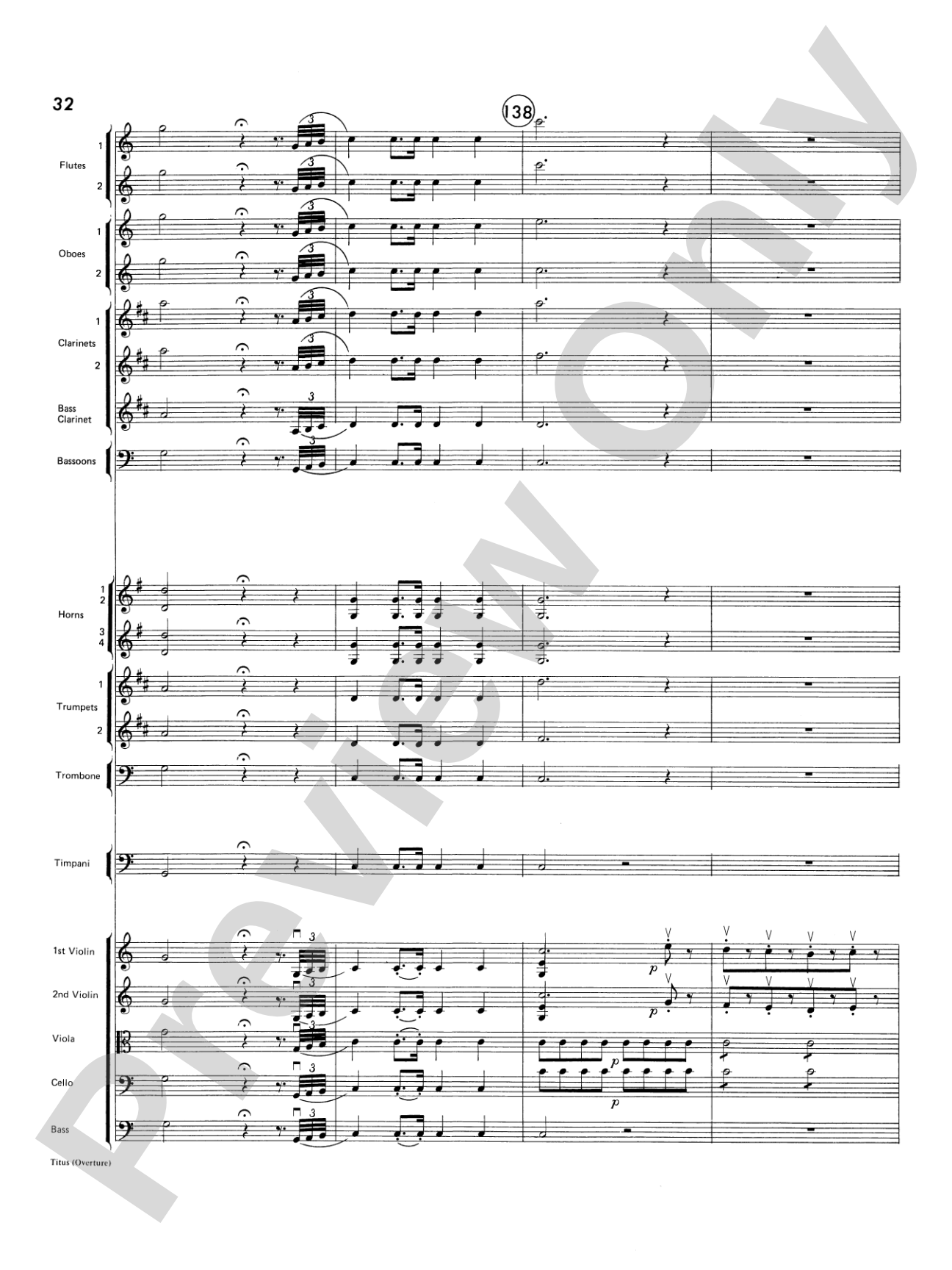
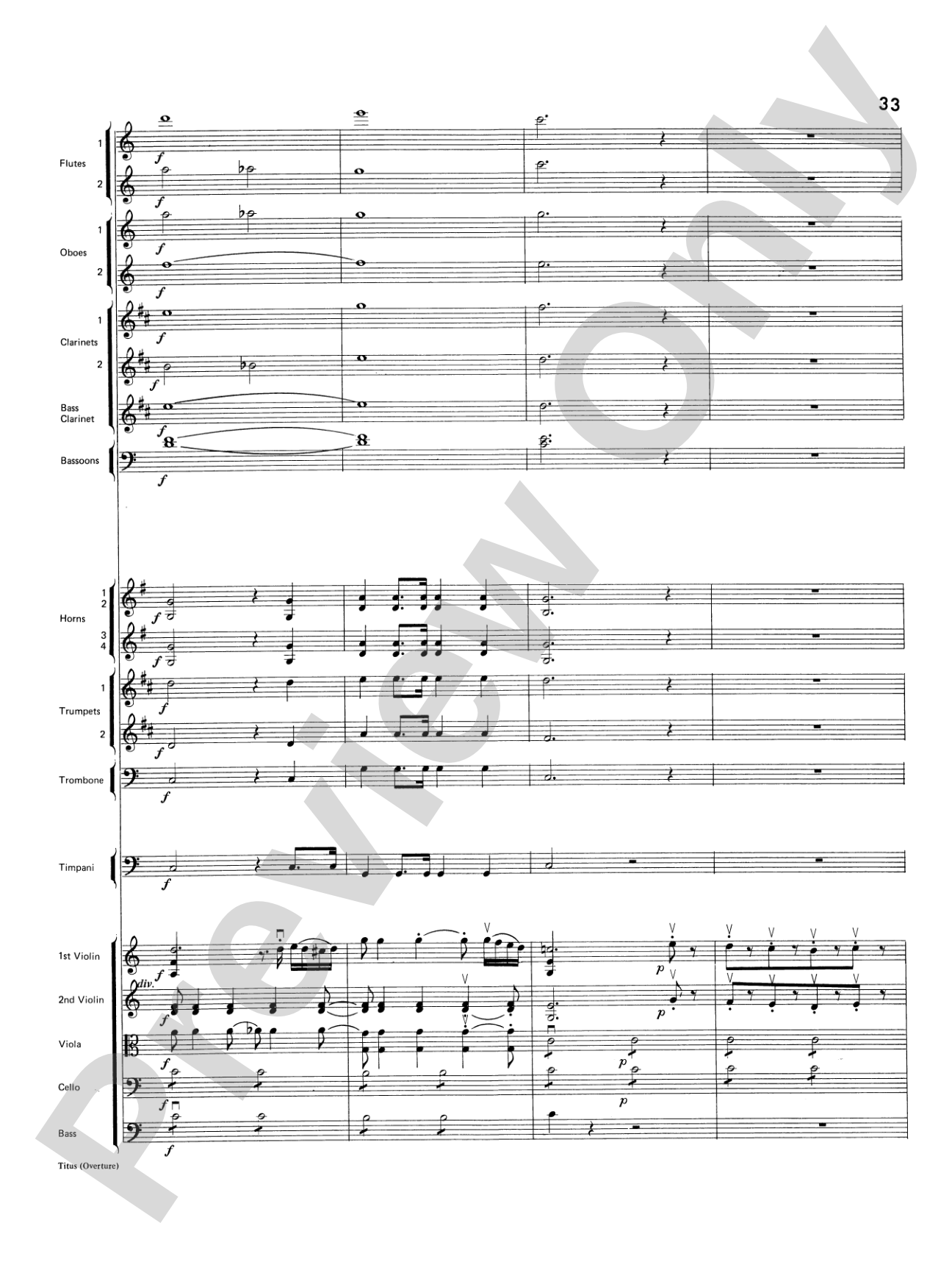
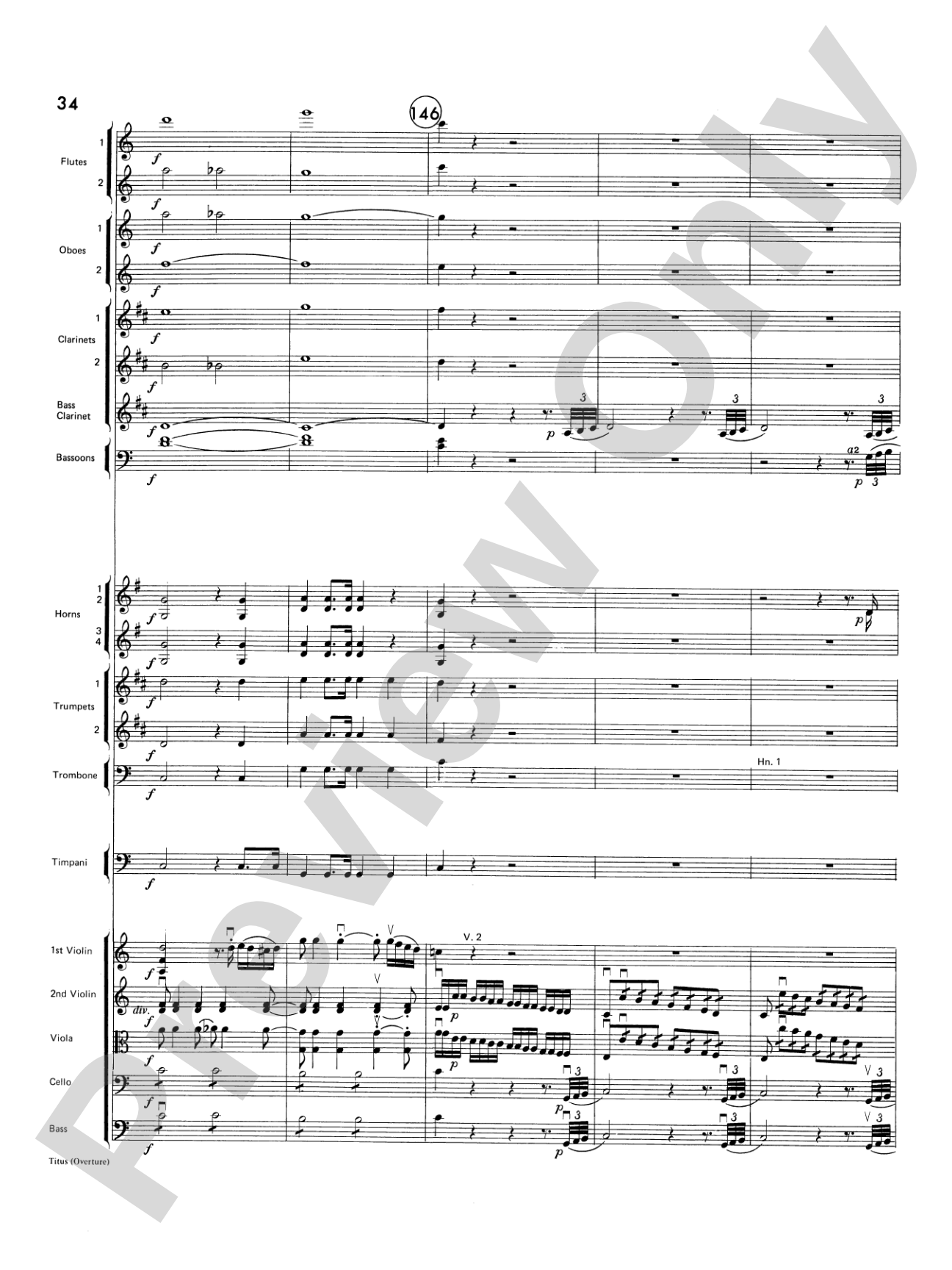
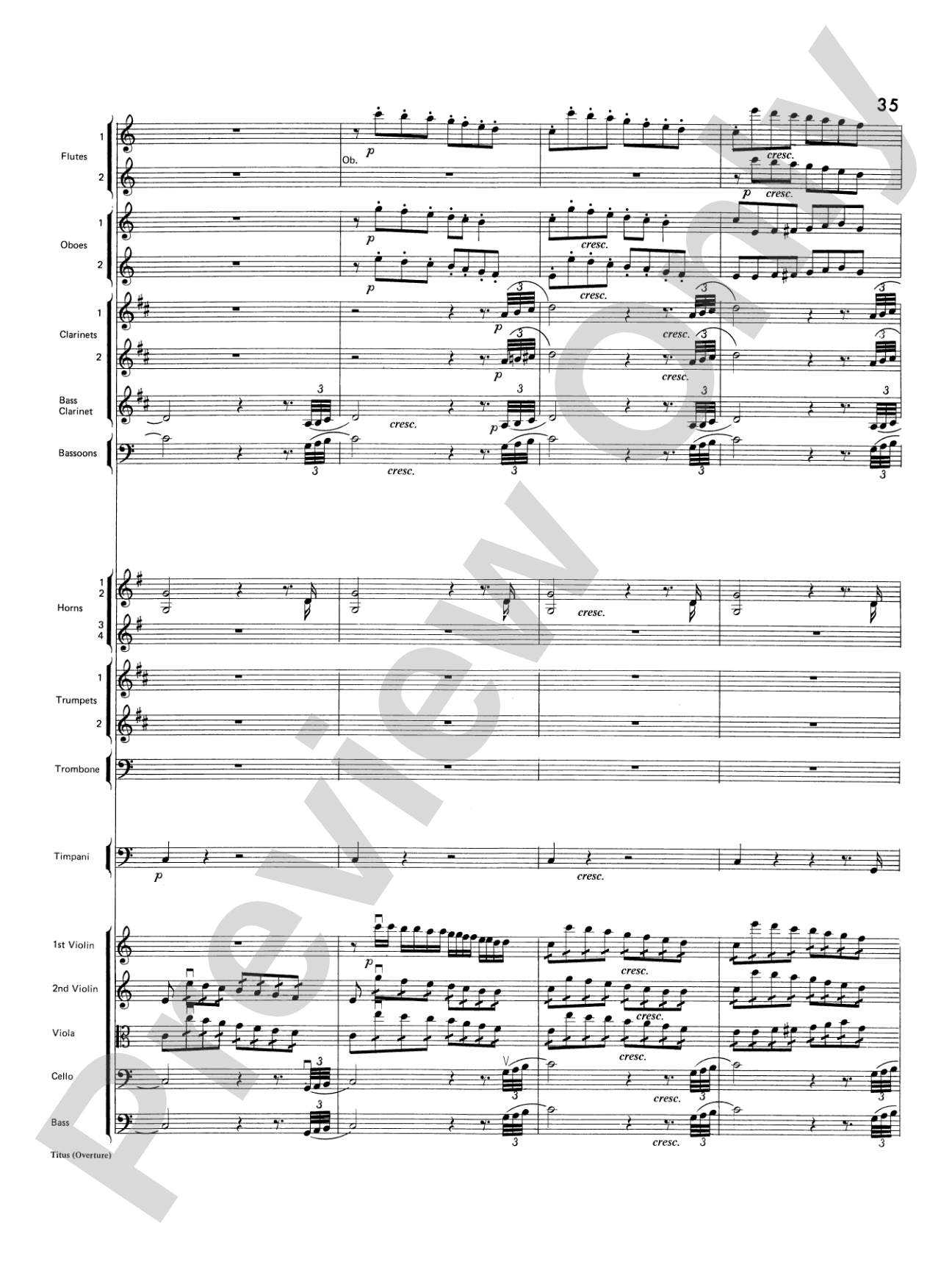
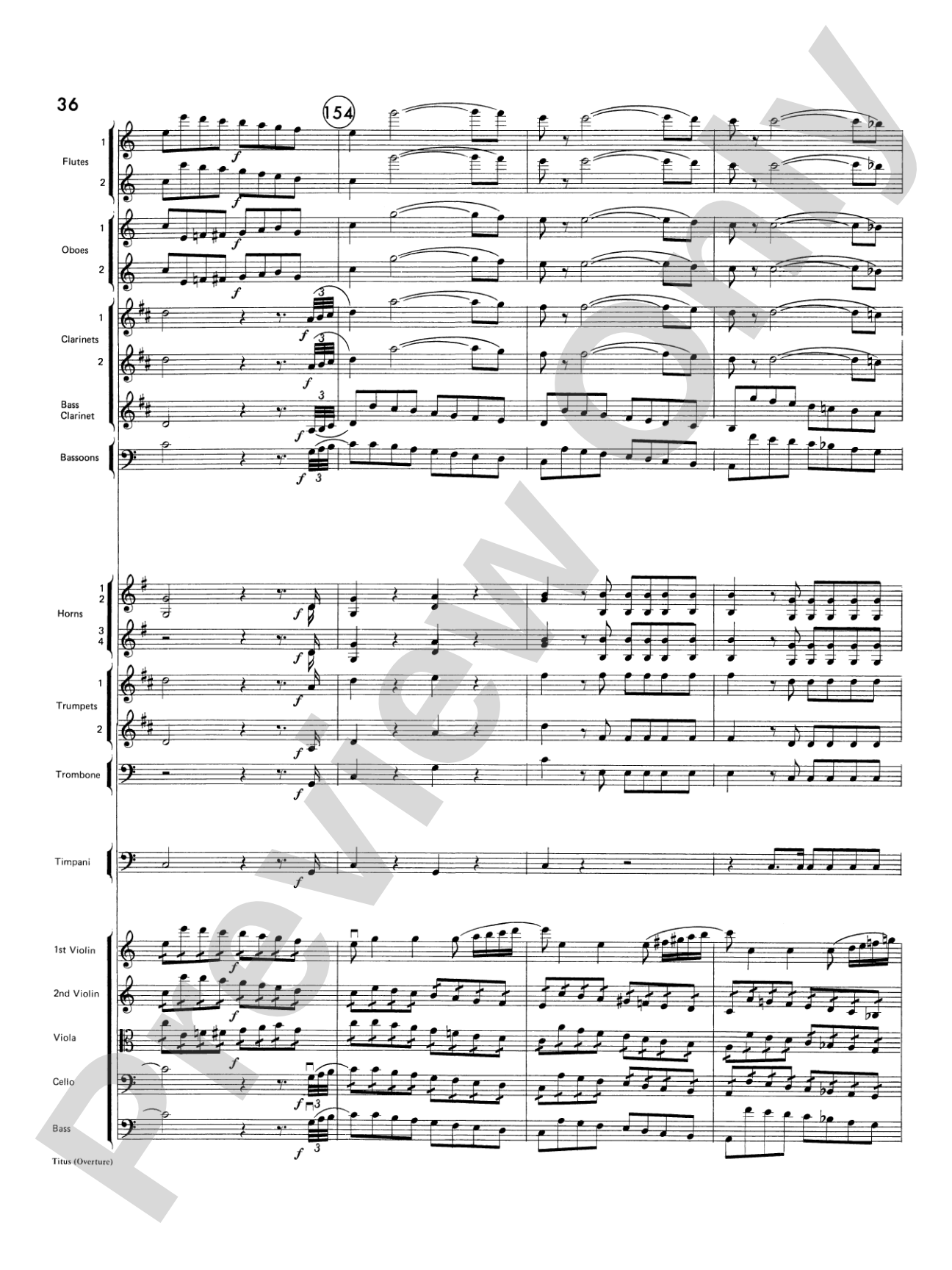
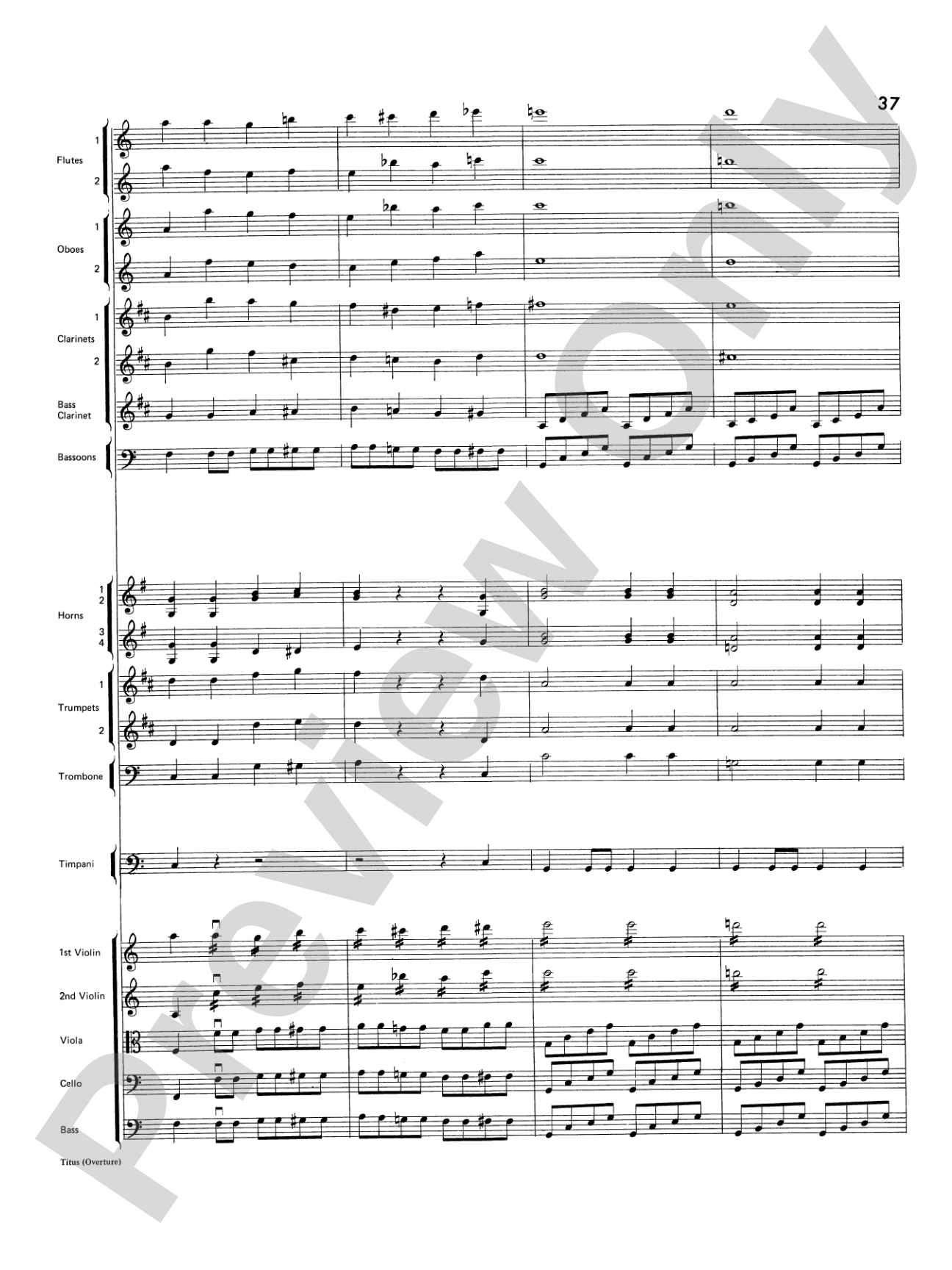
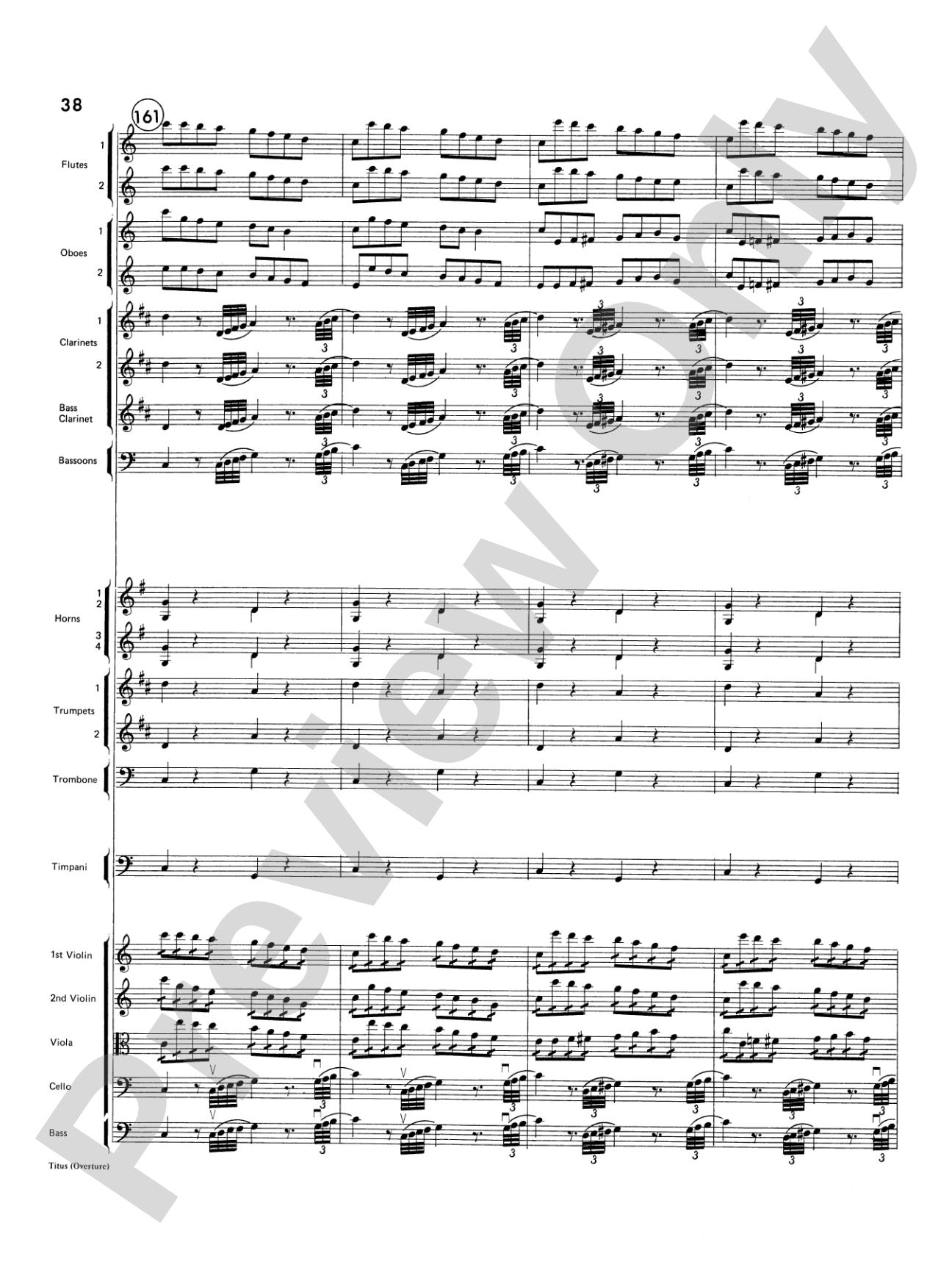
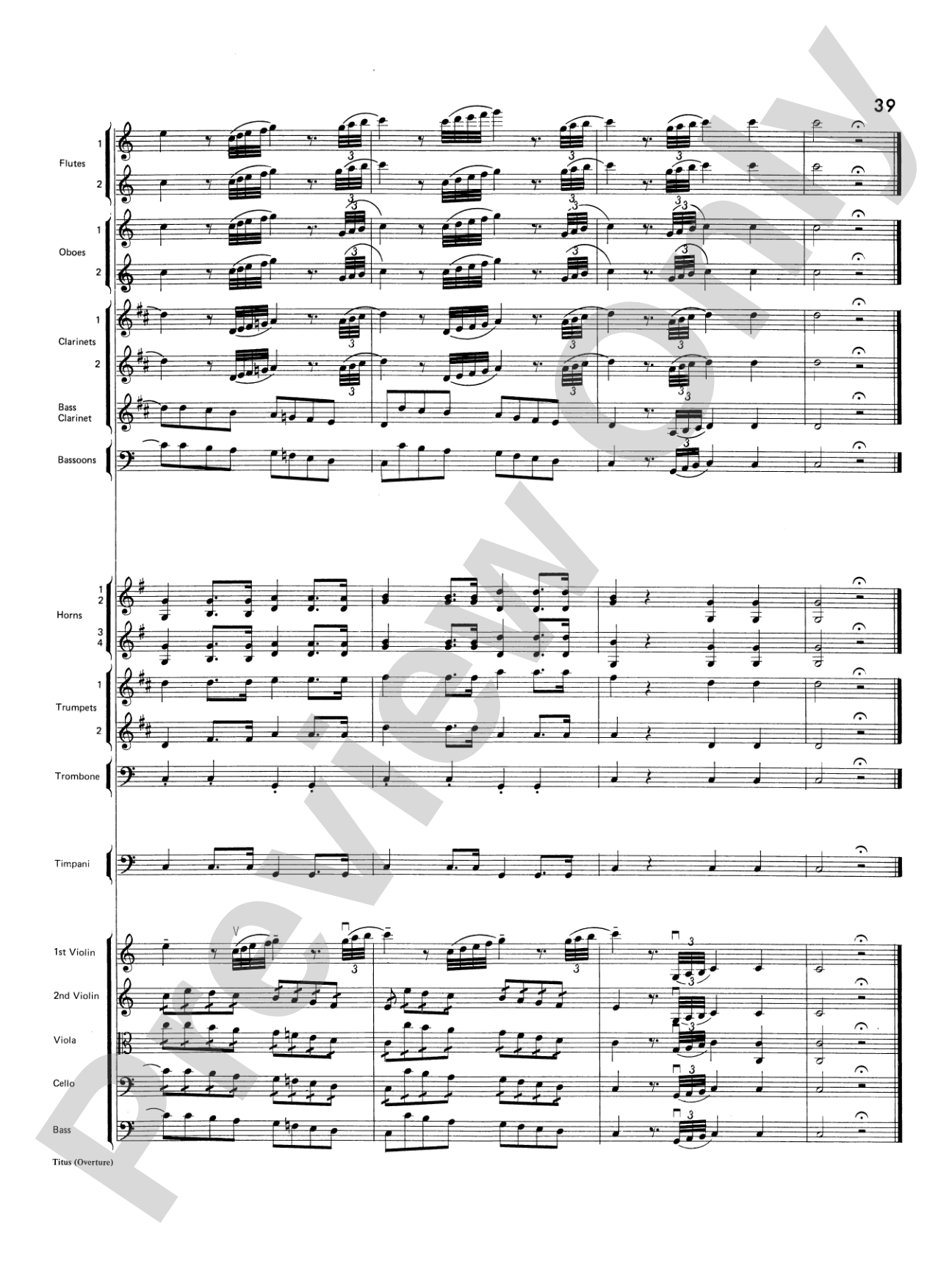


Titus Overture: Score
By Wolfgang Amadeus Mozart / arr. Merle J. Isaac
Grade: 2
Item: 00-PR-0000048
$7.00
Pickup currently not available
Description


Don't just read it, hear it, play along with it, and watch your students grow with it. In MakeMusic Cloud, Titus Overture: Score comes alive with professional accompaniment, adjustable tempo, and built-in practice tools that turn solo practice into real progress.
Open in the Player
Jump straight in and assign it today.
Start Your Free Trial
Open this title and explore the full library in minutes.
Sample Audio
No sample audio found.
Sample Video
No sample videos found.
Additional Details
Series:
Highland/Etling Full Orchestra
Publisher:
Alfred Music
Page Count:
228
SKU:
00-PR-0000048
More about this title
About the Composer: Wolfgang Amadeus Mozart
Wolfgang Amadeus Mozart (1756-1791) composed over 600 works across every major genre during his brief life, establishing himself as one of the most influential figures in Western music. His ability to write with crystalline clarity, emotional depth, and structural sophistication made him a model for generations of composers and remains central to orchestral education today.
Why we love this
Mozart's overtures are orchestral masterpieces that teach ensemble fundamentals without sacrificing musical substance. Merle Isaac's Grade 2 arrangement opens this opera overture to younger orchestras while preserving the harmonic sophistication and character that make it worth conducting.
What to expect
Energetic and ceremonial. The overture carries the elegance of the Classical era with bright orchestration, clear melodic lines, and forward momentum that keeps audiences engaged from the first measure.
Who it's for
Conductors building orchestras at the middle school level or working with developing high school ensembles who need substantial repertoire with musical credibility. This arrangement allows younger players to engage with a recognized operatic masterpiece while building technical fluency.
How to get the most out of it
- Balance the inner voices carefully; Mozart's orchestration often carries important material in violas and second violins that younger players tend to underplay.
- Establish a steady conductor's pulse early in rehearsal. The ensemble will lock together more reliably if everyone tracks your beat rather than following each other.
- Shape dynamic changes as shape rather than sudden shifts. Mozart's crescendos and diminuendos work best when they feel organic to the phrase.
- Mark prominent solo entries in parts so players know when their material becomes audible to the audience.
How to use it
Program this as a concert opener to establish an evening's character, or pair it with lighter contemporary works to frame a mixed-repertoire concert. The overture's recognizable energy and accessible Grade 2 instrumentation make it ideal for spring festivals or early-season showcase concerts where you want to demonstrate ensemble musicality.
Skills your students will build
- Balancing melody and accompaniment in a multi-voice texture
- Reading Classical-era phrasing and articulation conventions
- Maintaining ensemble precision during tempo changes
- Identifying and executing dynamic shapes that support harmonic movement
- Coordinating independent section entries across the orchestra