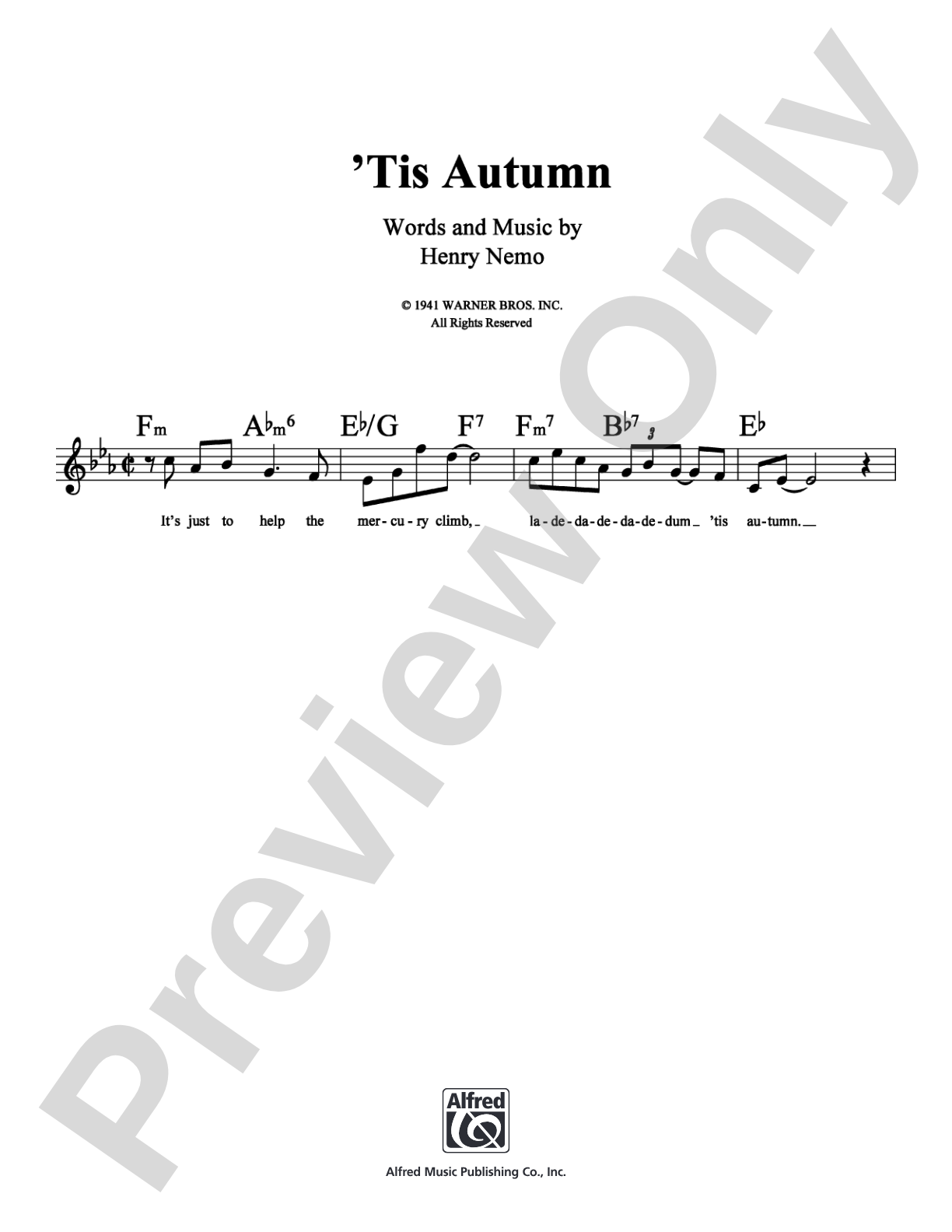
Tis Autumn: Lead Sheet Digital Sheet Music

Tis Autumn: Lead Sheet Digital Sheet Music

Henry Nemo, Woody Herman, Les Raymond Brown

Item: 00-PS-0008557

Digital Download
$1.99
Description

Tis Autumn: Lead Sheet Digital Sheet Music isn't in MakeMusic Cloud just yet...but it could be. Let us know you'd like to see it, and you'll help shape what comes next. In the meantime, start a free trial and dive into thousands of interactive titles your students can play along with today.

Sample Audio
No sample audio found.
Sample Video
Additional Details
SKU: 00-PS-0008557

More about this title

About the Artist: Woody Herman

Woody Herman (1913-1987) was a clarinetist, saxophonist, and bandleader whose orchestras defined the swing era and beyond. His ensembles, known as the Herds, were proving grounds for some of jazz's most innovative arrangers and soloists, and Herman's ability to blend commercial appeal with musical sophistication made him one of the few big band leaders whose music remained vital across multiple decades.

Herman's leadership style emphasized repertoire that challenged musicians while remaining accessible to dancers and general audiences. His interpretations of standards and original compositions shaped how subsequent jazz educators approached both composition and ensemble balance.

Why we love this

Tis Autumn captures the harmonic sophistication and swinging sensibility that made Herman's orchestra arrangements so teachable. The tune's clear structure and accessible melody make it ideal for students learning to navigate jazz changes while the arrangement history behind it offers rich context for discussing how different voices in a big band interpret the same standard.

What to expect

Tis Autumn settles into a warm, introspective space that lives up to its title. The melody unfolds with the patient elegance of a slow walk through golden afternoon light, supported by harmonies that shift color without unsettling the mood.

Who it's for

Jazz musicians at the intermediate level and above who are building their standards repertoire and want to understand how a major bandleader interpreted a tune. It's equally valuable for jazz educators assembling listening examples and studying arrangements that balance sophistication with playability.

How to get the most out of it

  • Map the chord progression and listen to multiple recordings before you sight-read; understanding the harmonic movement will anchor your comping or solo choices.
  • Pay attention to how the written melody interacts with the harmony; jazz lead sheets often omit subtle voice leading that becomes clear when you hear the tune in context.
  • If accompanying an improviser, lock into the groove early and use the changes as a road map rather than a strict harmonic cage.

How to use it

Use this as a reference point when teaching jazz standards to small ensembles or combos. It works well alongside other autumn-themed or introspective jazz repertoire, and the lead sheet format makes it accessible for students preparing for jazz history discussions or solo transcription projects.

Skills your students will build

  • Reading and interpreting jazz chord symbols and seventh chords
  • Understanding song form and harmonic phrasing in jazz standards
  • Recognizing how melody and harmony interact in swing-era compositions
  • Building fluency with changes for improvisation and accompaniment

You May Also Like