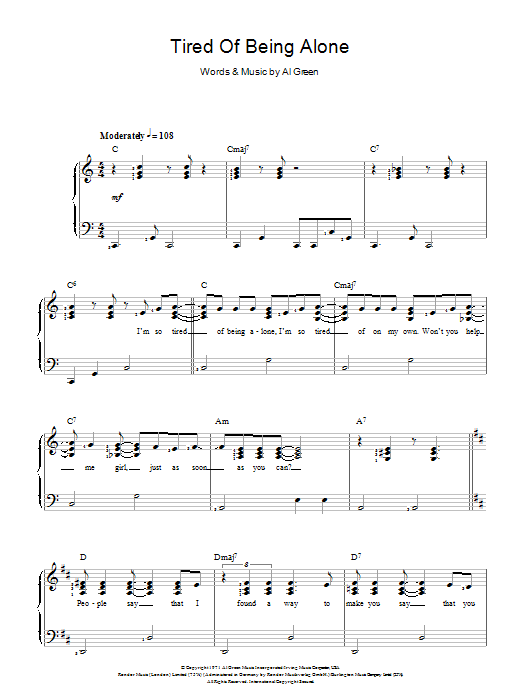
Tired Of Being Alone Sheet Music Preview

Tired Of Being Alone: Piano Vocal

As performed by Al Green

Item: 35-DS00198658

Digital Download
$5.99
Description

Tired Of Being Alone: Piano Vocal isn't in MakeMusic Cloud just yet...but it could be. Let us know you'd like to see it, and you'll help shape what comes next. In the meantime, start a free trial and dive into thousands of interactive titles your students can play along with today.

Sample Audio
No sample audio found.
Sample Video
Additional Details
Publisher: Hal Leonard
Page Count: 3
SKU: 35-DS00198658

More about this title

About the Artist: Al Green

Al Green stands as one of soul music's most influential vocalists and songwriters, defining the sound of 1970s R&B with his silky tenor and emotionally direct interpretations. His work at Hi Records in Memphis produced a string of classics that blended soul, pop, and blues sensibilities, earning him induction into the Rock and Roll Hall of Fame and establishing him as a touchstone for understanding modern soul singing.

Why we love this

This song gives singers a masterclass in restraint and phrasing. Green's signature approach to this track rewards precise control of dynamics and space, making it an ideal choice for vocalists who need to learn that vulnerability reads louder than volume. The piano part sits perfectly for singers to hear themselves without fighting an overstuffed arrangement.

What to expect

A late-night conversation set to music. The vocal line unfolds with the patient, unhurried quality of someone speaking from genuine feeling rather than performing for an audience. The piano surrounds it all with warm harmonies and gentle movement, creating an intimate sonic space.

Who it's for

Singers developing maturity in ballad interpretation and pianists wanting repertoire that showcases both accompaniment skills and solo texture. This song works equally well for jazz vocalists, soul singers, and classical singers expanding into American music.

How to get the most out of it

  • Let the piano establish the harmonic and rhythmic foundation first; the vocal should sit on top of it with conversational ease rather than pushing against the groove.
  • Pay close attention to where Green breathes in the original recording; those pauses are structural, not incidental, and they shape the emotional arc.
  • Shape the dynamic arc across the full three pages rather than maintaining a static volume; this allows the song to build emotional weight naturally.
  • Explore the space between vocal phrases as part of the arrangement; silence is as expressive as the sung material here.

How to use it

Include this in a concert exploring soul and R&B standards, pairing it with other Green compositions or similar works by his contemporaries. It also serves well as a bridge piece between classical and contemporary styles for recitals featuring genre diversity.

Skills your students will build

  • Phrasing within a bluesy harmonic framework
  • Dynamic control in intimate, slower tempos
  • Reading and interpreting jazz chords on the piano
  • Vocal breath placement for maximum expression
  • Call and response between voice and piano accompaniment

You May Also Like