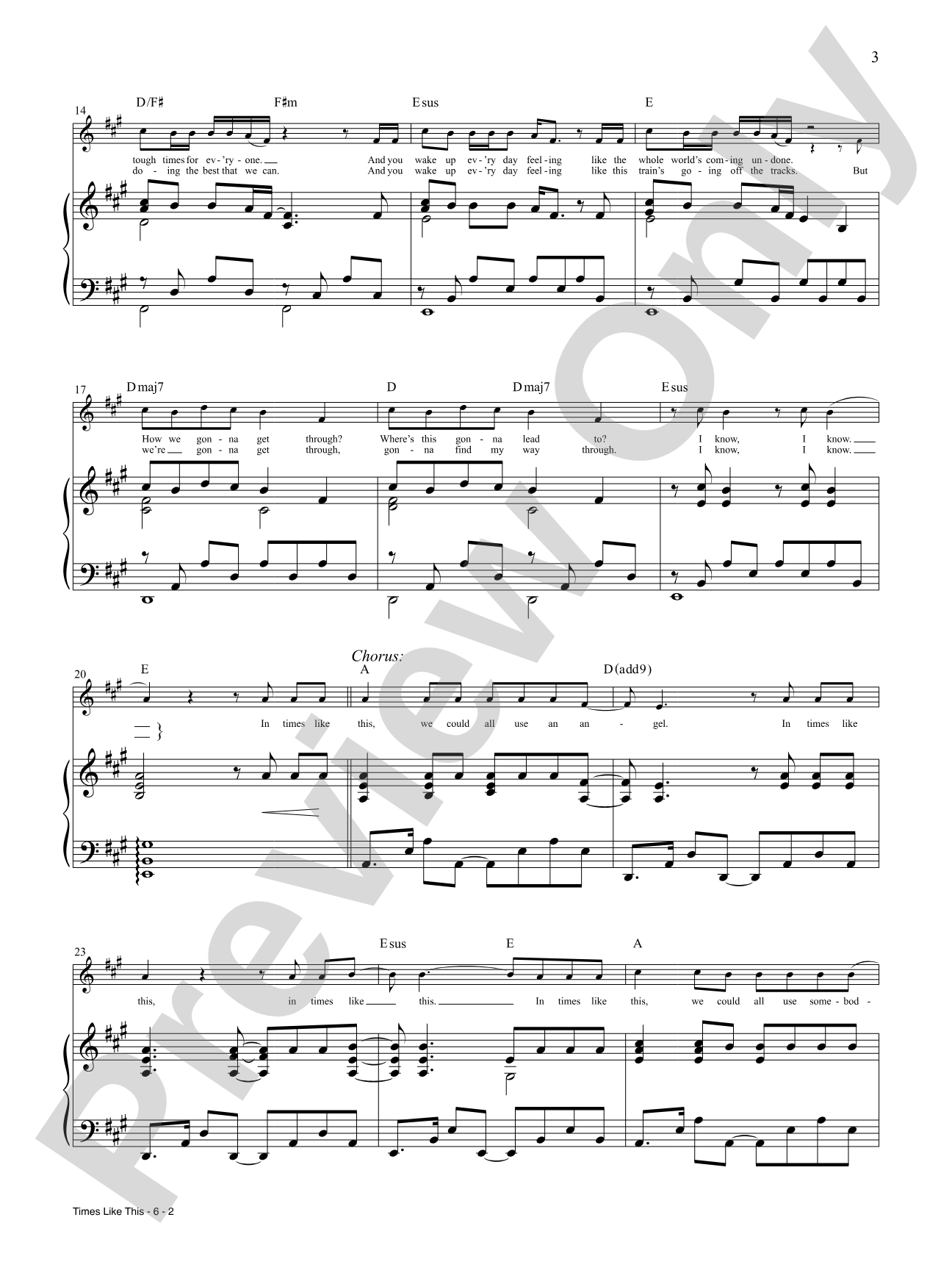
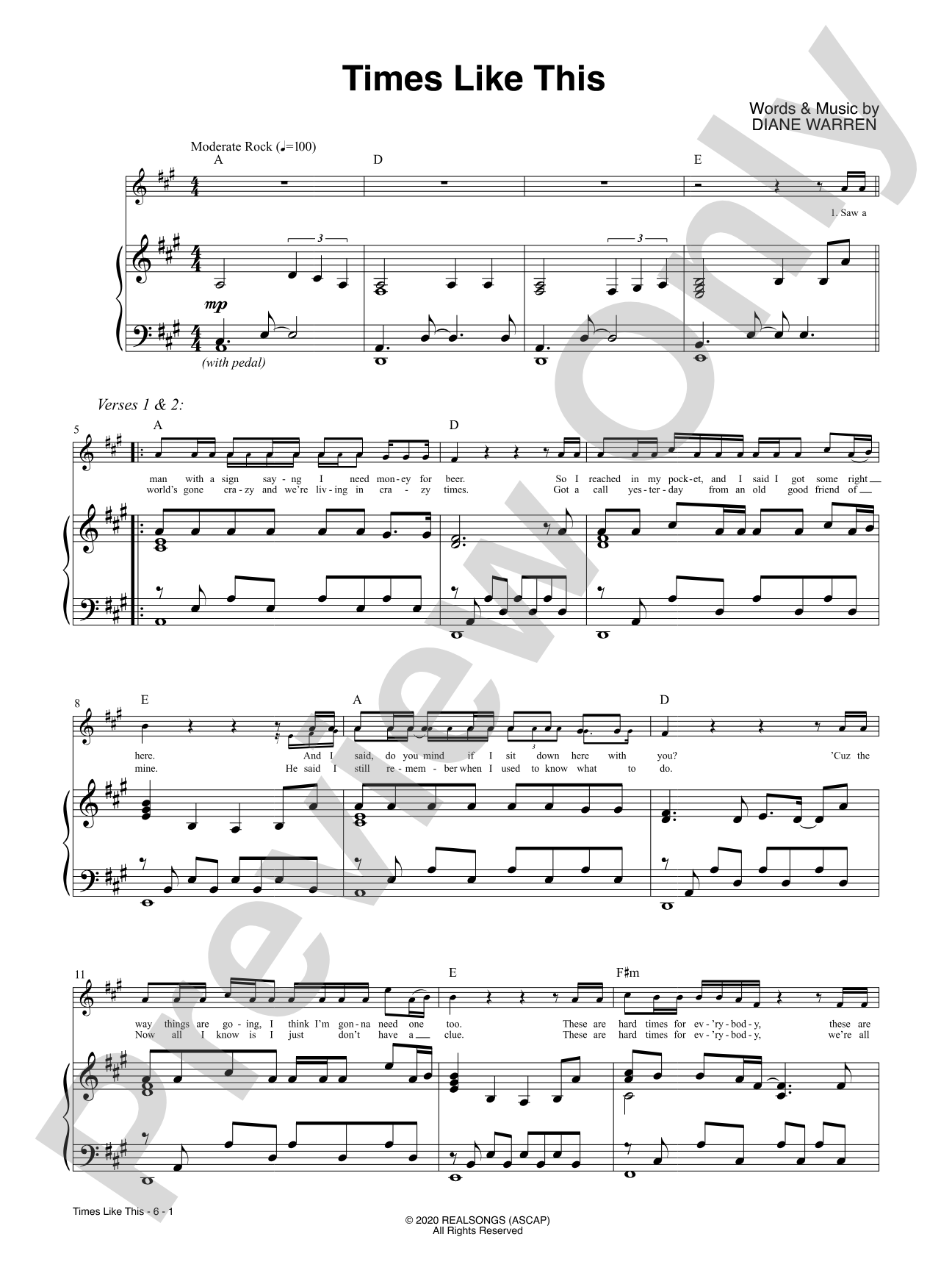
Times Like This Sheet Music Preview

Times Like This: Piano/Vocal

By Diane Warren

Item: 00-PS-0016242

Digital Download
$4.50
Description
The first single, featuring Darius Rucker, from Diane Warren's much anticipated new album Diane Warren: The Cave Sessions Vol. 1, arranged for piano and vocal.

Times Like This: Piano/Vocal isn't in MakeMusic Cloud just yet...but it could be. Let us know you'd like to see it, and you'll help shape what comes next. In the meantime, start a free trial and dive into thousands of interactive titles your students can play along with today.

Sample Audio
No sample audio found.
Sample Video
Additional Details
Publisher: Alfred Music
Page Count: 8
SKU: 00-PS-0016242

More about this title

About the Composer: Diane Warren

Diane Warren is one of the most prolific songwriters in contemporary music, with a catalog spanning four decades of hits across pop, rock, country, and film. Her work has earned multiple Grammy nominations and Academy Award recognition, and she has written songs recorded by artists from Cher to The Chicks to Lady Gaga. Warren's songwriting centers on emotional clarity and memorable melodic hooks, qualities that define her approach whether writing for radio or for film.

The Cave Sessions represents Warren's recent pivot toward creating and producing her own album material, bringing her distinctive sensibility as both composer and curator. This project showcases her ability to craft contemporary pop-rock that balances accessibility with genuine lyrical depth.

Why we love this

Warren's melodic writing is direct and singable, making this single accessible for student vocalists while maintaining the emotional weight that made it a radio single. The piano arrangement sits comfortably under the voice without overshadowing it, allowing singers to focus on phrasing and connection to the lyric. Programming a contemporary pop-rock song by a songwriter of Warren's stature gives students exposure to current commercial songwriting craft.

What to expect

The song captures a moment of intimate reflection grounded in contemporary production sensibilities. Warren's piano-vocal writing keeps the arrangement spare and focused, allowing the lyric and melody to carry weight without instrumental clutter. There's a warmth in the harmonic language that suggests vulnerability met with quiet determination.

Who it's for

Student singers and advanced high school vocalists preparing audition material, solo recitals, or concert performances. Piano students can use this as a vehicle for accompanying skills while working with a contemporary song by a professional composer. The piece also works well for music theory students analyzing songwriting structure in commercial pop-rock contexts.

How to get the most out of it

  • Establish the tempo and groove with confidence in the piano introduction. Warren's arrangements rely on rhythmic pocket and forward momentum to land emotionally.
  • Shape the vocal line by identifying the emotional arc within each phrase rather than treating melody as a series of notes. This song builds from introspection toward conviction.
  • Pay attention to any syncopation between vocal line and piano accompaniment. Slight rhythmic tension can enhance the conversational quality of the lyric.
  • Use dynamic contrast in the piano to support the vocal narrative. Pull back on verses to create intimacy; build through pre-chorus sections.

How to use it

Include this in a recital program featuring contemporary songwriters or as a solo number in a pop-influenced concert context. It pairs naturally with other modern commercial songs and offers a bridge between classical recital literature and current musical practice. The piece also works in chamber or salon settings where singer-pianist collaborations are featured.

Skills your students will build

  • Interpreting contemporary pop-rock vocal phrasing and dynamics
  • Accompanying skills with rhythmic accuracy and sensitivity to the vocal line
  • Understanding how professional songwriters structure emotional arcs within a song
  • Balancing technical accuracy with expressive storytelling in commercial music contexts

You May Also Like