
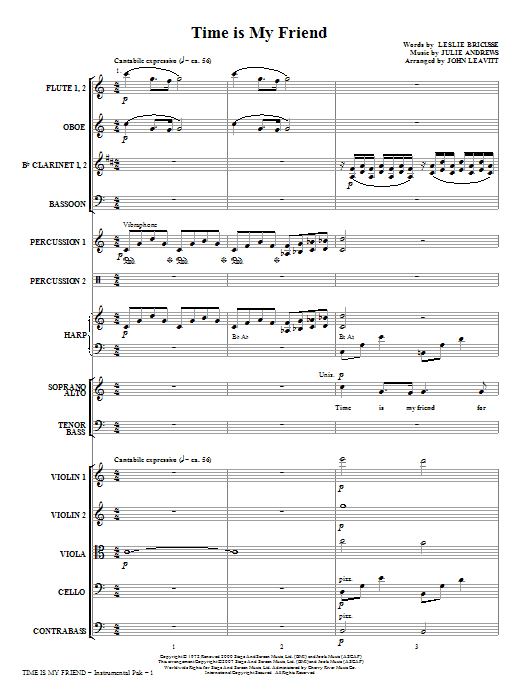

Time Is My Friend: Choral Instrumental Pak
By Julie Andrews / By Leslie Bricusse / Arranged by John Leavitt
Item: 35-PK00086498
$60.00
Pickup currently not available
Buy Extra Parts (Digital PDF Download)
Parts Added to Cart!
Description
This beautiful ballad by Broadway treasures Julie Andrews and Leslie Bricusse expresses a heartfelt message that is ideal for choral groups at graduation or any concert occasion. "Time is my friend for every time we meet, the time we spend is tender and sweet." Duration: ca. 2:15.


Time Is My Friend: Choral Instrumental Pak isn't in MakeMusic Cloud just yet...but it could be. Let us know you'd like to see it, and you'll help shape what comes next. In the meantime, start a free trial and dive into thousands of interactive titles your students can play along with today.
Request This Title
Tell us you want it.
Start Your Free Trial
Explore everything that's ready to play right now.
Sample Audio
No sample audio found.
Sample Video
No sample videos found.
Additional Details
Publisher:
Hal Leonard
SKU:
35-PK00086498
More about this title
About the Composer: Julie Andrews
Julie Andrews became a household name through her iconic roles in musical theater and film, bringing sophistication and warmth to some of the most beloved songs in American entertainment. Her songwriting partnership with Leslie Bricusse produced material that balances theatrical grandeur with genuine emotional intimacy, making her work a natural fit for choral arrangements that demand both technical polish and heartfelt delivery.
Why we love this
John Leavitt's arrangement captures the lyrical simplicity of Andrews and Bricusse's melody while giving chamber choirs room to breathe and shine. The piece manages to feel both sophisticated and accessible, which means your singers can focus on the emotional arc rather than navigating complexity. At just over two minutes, it fits naturally into any concert without dominating the program, yet it leaves a lasting impression.
What to expect
Quiet reflection wrapped in Broadway warmth. The melody moves with a gentle inevitability, never rushing, letting you settle into the comfort of the repeated text and the harmony that supports it. There's a bittersweet quality here, the kind that resonates when you're acknowledging both endings and the value of time shared together.
Who it's for
Chamber choirs looking for repertoire that pairs emotional maturity with vocal accessibility. This works beautifully for groups that want to program something meaningful at graduation or end-of-year concerts without requiring soloistic virtuosity from their singers.
How to get the most out of it
- Treat the lyrics as spoken conversation first. The melody exists to support the tenderness of the text, so clarity of diction matters more than volume.
- Shape the phrase contours gently. Rather than pushing into crescendos, let the natural rise and fall of each phrase emerge through careful attention to vowel quality.
- Balance the accompaniment so the instrumental parts never overshadow the vocal lines. The instruments are there to frame the singers, not fill every space.
- Build your final cadence with restraint. Resist the urge to oversell the ending; let it settle quietly, as if the singers are finishing a private conversation.
How to use it
Place this late in your concert, after you've built some energy. It serves as a moment of collective pause and sincerity. The piece works particularly well as a closing number for graduation events, or as a bridge between more energetic repertoire and a grand finale.
Skills your students will build
- Singing with emotional restraint and nuance in a ballad idiom
- Blending voice parts while maintaining lyrical independence
- Coordinate chamber voicing with instrumental accompaniment
- Sustaining long lines with consistent breath support and phrasing