Time After Time (arr. Hans Kaldeway) Sheet Music Preview

Time After Time (arr. Hans Kaldeway): SAB Choral Octavo

As performed by Cyndi Lauper / Arranged by Hans Kaldeway

Item: 35-DS00487354

Digital Download
$2.99
Description

Time After Time (arr. Hans Kaldeway): SAB Choral Octavo isn't in MakeMusic Cloud just yet...but it could be. Let us know you'd like to see it, and you'll help shape what comes next. In the meantime, start a free trial and dive into thousands of interactive titles your students can play along with today.

Sample Audio
No sample audio found.
Sample Video
Additional Details
Publisher: Hal Leonard
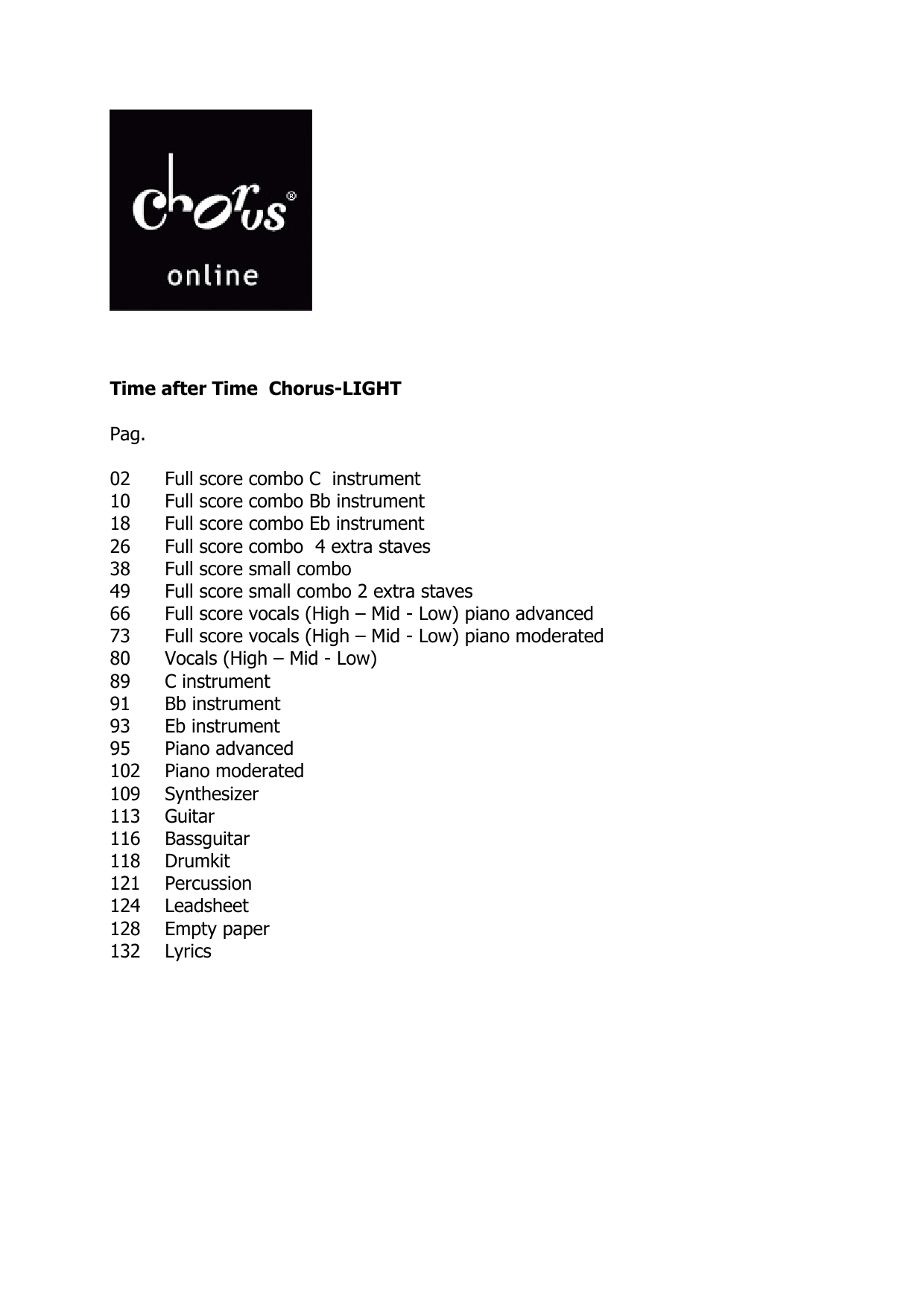
Page Count: 132
SKU: 35-DS00487354

More about this title

About the Artist: Cyndi Lauper

Cyndi Lauper rose to prominence in the 1980s with a distinctive vocal style and fearless approach to pop songwriting. Her work spans decades of chart success and has demonstrated remarkable staying power across generations of listeners. As both a vocalist and songwriter, Lauper has influenced how pop music addresses emotional authenticity and personal expression.

Why we love this

Kaldeway's arrangement captures the emotional core of this iconic ballad while making it accessible for developing three-part choirs. The songwriting's inherent singability translates beautifully to SAB voicing, and the arrangement respects the original melody that audiences already love. Programming a contemporary pop standard like this one gives singers immediate connection to the material and reminds audiences that great songwriting knows no genre boundaries.

What to expect

The piece carries the wistful, searching quality of the original composition. A tender emotional landscape emerges from the uncomplicated harmonies and supported melody line, creating space for singers to invest in honest expression without technical distraction.

Who it's for

This arrangement works for mixed choirs at community, educational, and church settings where singers have some fundamental choral training but don't require advanced harmonic complexity. SAB voicing makes it approachable for groups transitioning from unison or two-part singing into three-part textures. It's equally valuable for auditioned ensembles seeking contemporary material that feels genuinely singable.

How to get the most out of it

  • Balance the vocal lines so the top voice carries the primary melody without overwhelming the supporting harmonies; SAB divisi often requires deliberate attention to blend rather than assuming higher voices automatically project forward.
  • The accompaniment track sets a specific emotional temperature for the piece. Use it in rehearsal to establish the pace and weight of the ballad, then gradually reduce dependence on it so singers develop ownership of the phrasing.
  • Pay attention to breath placement across all three parts, since sustained passages in pop arrangements can feel awkward if singers breathe in unison when they shouldn't. Mark strategic individual breaths rather than enforcing ensemble uniformity.
  • Encourage singers to listen for the song's essential emotional arc rather than treating phrases as separate musical objects; continuity of line matters more in this style than precise rhythmic uniformity.

How to use it

This sits naturally in a concert exploring contemporary songwriting or a program mixing pop standards with other genre material. Its familiarity to audiences of varying ages makes it an excellent choice for community engagement concerts or programs designed to showcase your singers' interpretive maturity. The ballad pacing and reflective character also work well as a second or third piece in a program that needs breathing room between higher-energy selections.

Skills your students will build

  • Sustaining legit vocal tone across extended phrases in a contemporary style
  • Balancing independent melodic lines while maintaining harmonic cohesion
  • Responding to emotional subtext and lyrical meaning as interpretive guides
  • Reading straightforward SAB voicing and understanding functional harmony in pop contexts
  • Phrasing in non-classical vocal traditions where rubato and textual emphasis drive musical shape

You May Also Like