Time After Time Sheet Music Preview

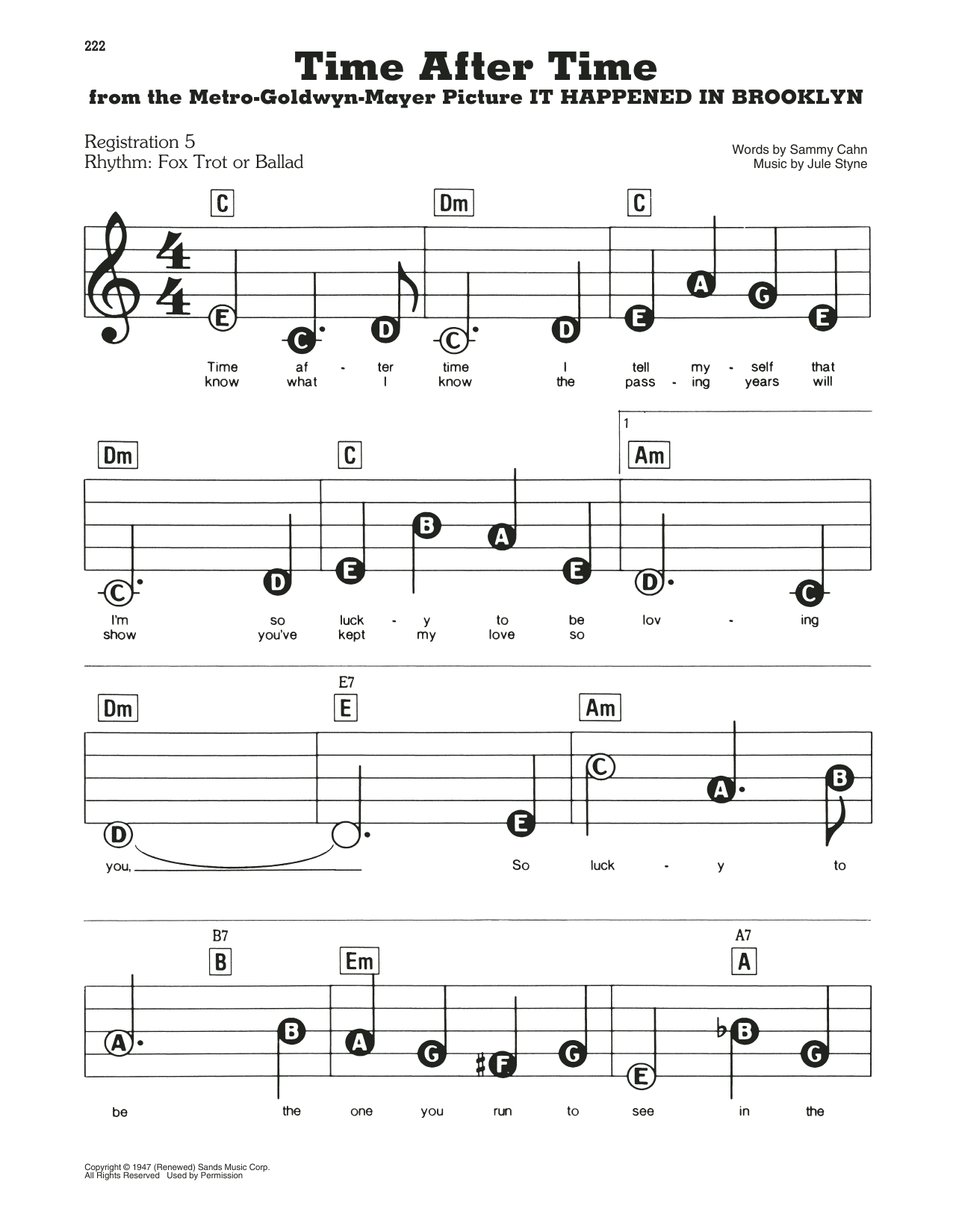
Time After Time: E-Z Play Today

As performed by Frank Sinatra

Item: 35-DS00447949

Digital Download
$4.99

One moment…

Description

Time After Time: E-Z Play Today isn't in MakeMusic Cloud just yet...but it could be. Let us know you'd like to see it, and you'll help shape what comes next. In the meantime, start a free trial and dive into thousands of interactive titles your students can play along with today.

Sample Audio
No sample audio found.
Sample Video
Additional Details
Publisher: Hal Leonard
Page Count: 2
SKU: 35-DS00447949

More about this title

About the Artist: Frank Sinatra

Frank Sinatra stands as one of the most influential vocalists in American music history, with a career spanning over five decades. His impeccable phrasing, interpretive depth, and mastery of the Great American Songbook made him an essential reference point for generations of musicians. For piano students and teachers, Sinatra's recordings offer masterclasses in how melody, harmony, and rhythm work together to create emotional impact.

Why we love this

This arrangement captures one of Sinatra's most elegant standards in a form that invites pianists to explore his interpretive sensibility firsthand. The two-page format makes it accessible without sacrificing the harmonic sophistication that defines the song, giving students a genuine window into mid-century jazz piano accompaniment and vocal styling.

What to expect

Nostalgic yet timeless, tender without sentimentality. The harmonies sit warmly under the melody, creating space for either reflective soloing or accompanying a vocalist with genuine intimacy.

Who it's for

Pianists with intermediate technique who are ready to move beyond pop or classical repertoire into jazz standards. This works equally well for students learning to accompany singers or those developing their own interpretive voice within the songbook tradition.

How to get the most out of it

  • Study Sinatra's original recording closely before diving into the written notes; his rhythmic phrasing often sits just ahead of or behind the beat in ways that transform the melody.
  • Allow space in the left hand comping to breathe with the vocal line rather than filling every moment with harmony.
  • Pay attention to dynamic shape across the full two pages; the arc builds subtly, so resist the urge to start too loudly.

How to use it

Pair this with other Sinatra standards to build a complete songbook unit, or use it as a bridge piece between classical technique study and jazz exploration. It also works beautifully in vocal coaching sessions or as background material for understanding mid-century American musical taste.

Skills your students will build

  • Reading and voicing jazz seventh chords and extended harmonies
  • Comping techniques that support rather than overshadow a melody line
  • Interpreting rubato and flexible phrasing within a harmonic framework
  • Understanding the relationship between vocal melody and piano accompaniment in standards

You May Also Like