Time After Time Sheet Music Preview

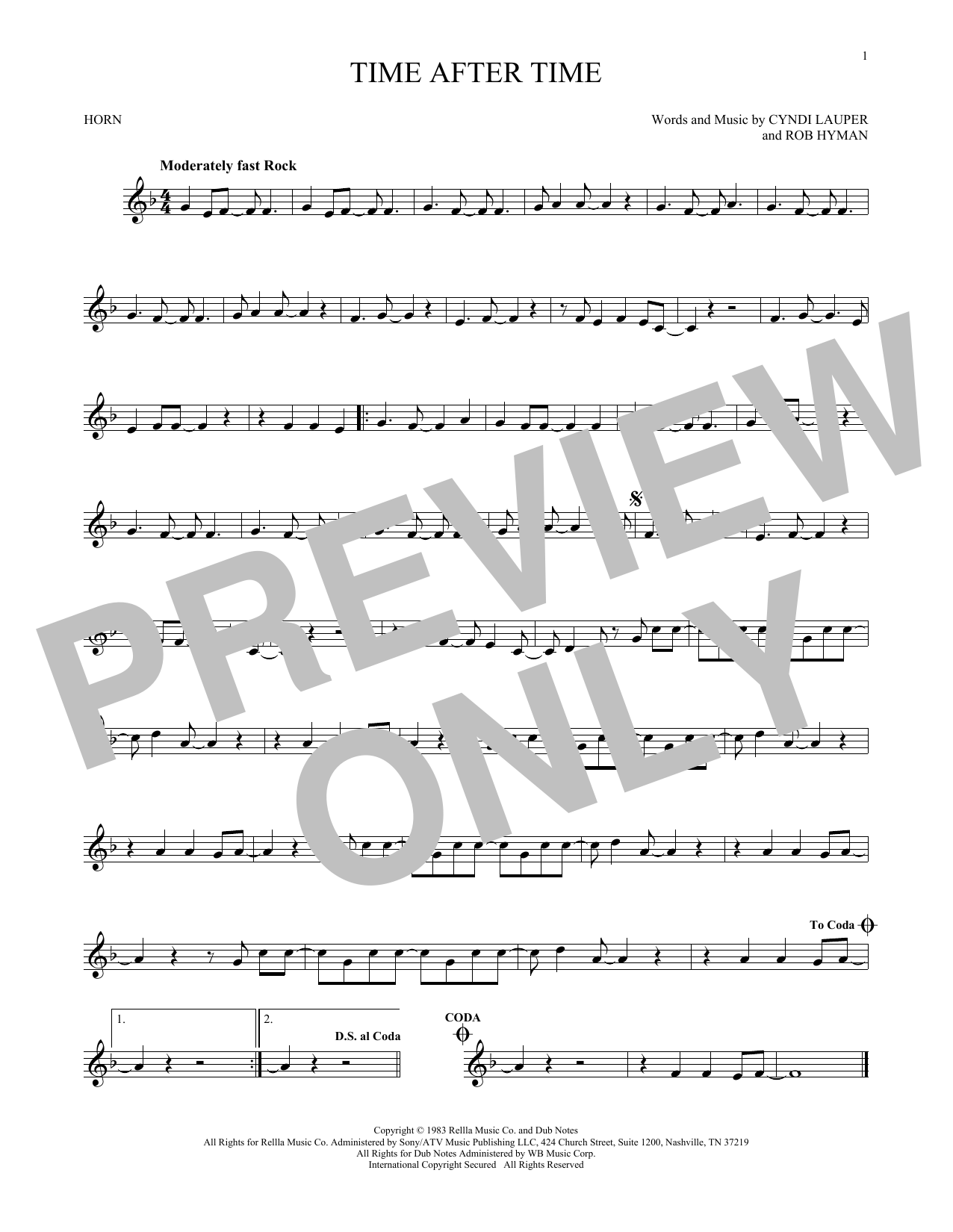
Time After Time: French Horn Solo

As performed by Cyndi Lauper / As performed by Inoj / As performed by Javier Colon

Item: 35-DS00329256

Digital Download
$4.99
Description

Discover MakeMusic Cloud: thousands of interactive titles your students can play along with today.

Sample Audio
No sample audio found.
Sample Video
Additional Details
Publisher: Hal Leonard
Page Count: 1
SKU: 35-DS00329256

More about this title

About the Artist: Cyndi Lauper

Cyndi Lauper emerged as one of pop music's most distinctive voices in the 1980s, bringing theatrical flair and emotional authenticity to songs that dominated radio and MTV. Her ability to write or interpret material with genuine vulnerability made her a songwriter and performer who understood how to craft moments of real connection within a pop framework.

For horn players, Lauper's catalog offers something often missing from classical training: the chance to inhabit a pop idiom with the same interpretive depth they'd apply to art song or chamber music. Time After Time exemplifies how a strong melodic line can transcend genre when played with attention to phrasing and emotional shape.

Why we love this

This arrangement captures the song's signature emotional arch without oversimplifying it. The melody sits naturally for horn, giving students the chance to work on legit singing quality while engaging with a tune that resonates culturally with audiences of all ages. It's the kind of piece that reminds young musicians why they practice tone in the first place.

What to expect

Time After Time is a ballad suffused with tenderness and quiet certainty. The melody unfolds with a sense of inevitability, never rushing, resting on the particular beauty of each phrase. There's a gentle optimism woven through minor key passages, a feeling of holding onto something precious even in moments of doubt.

Who it's for

This solo works well for intermediate to advanced horn students who are ready to carry a complete piece without accompanying voices or heavy textural support. It's equally valuable for teachers seeking repertoire that bridges classical technique with popular music contexts, and for performers building recital programs that speak to contemporary audiences.

How to get the most out of it

  • Shape the opening phrase generously; this song depends on breath and line rather than technical display. Plan your breathing to support longer phrases without interrupting the emotional arc.
  • Balance your vibrato carefully if you choose to use it. A little warmth serves the ballad character, but excessive vibrato will obscure the clarity of Lauper's original melody.
  • Listen closely to how recorded versions handle the bridge. Find a moment where the horn can swell slightly to mirror the peak of emotional intensity before settling back into the final verse.
  • Use the relative simplicity of the single page to your advantage by focusing entirely on interpretation. Every note is exposed, so clarity of tone and consistency of articulation matter tremendously.

How to use it

Include this as a solo feature on a concert devoted to popular music crossovers, or pair it with art song settings of poetry to explore how melody functions across genres. It also works beautifully as an encore or as a bridge between a classical set and a lighter second half. Advanced middle school or high school students often connect deeply with this piece when it's given proper rehearsal and performance context.

Skills your students will build

  • Sustaining long, shaped phrases on a single breath
  • Controlling vibrato for stylistic effect
  • Interpreting pop melody with classical technique
  • Balancing technical precision with emotional communication
  • Adapting articulation to a contemporary idiom

You May Also Like