
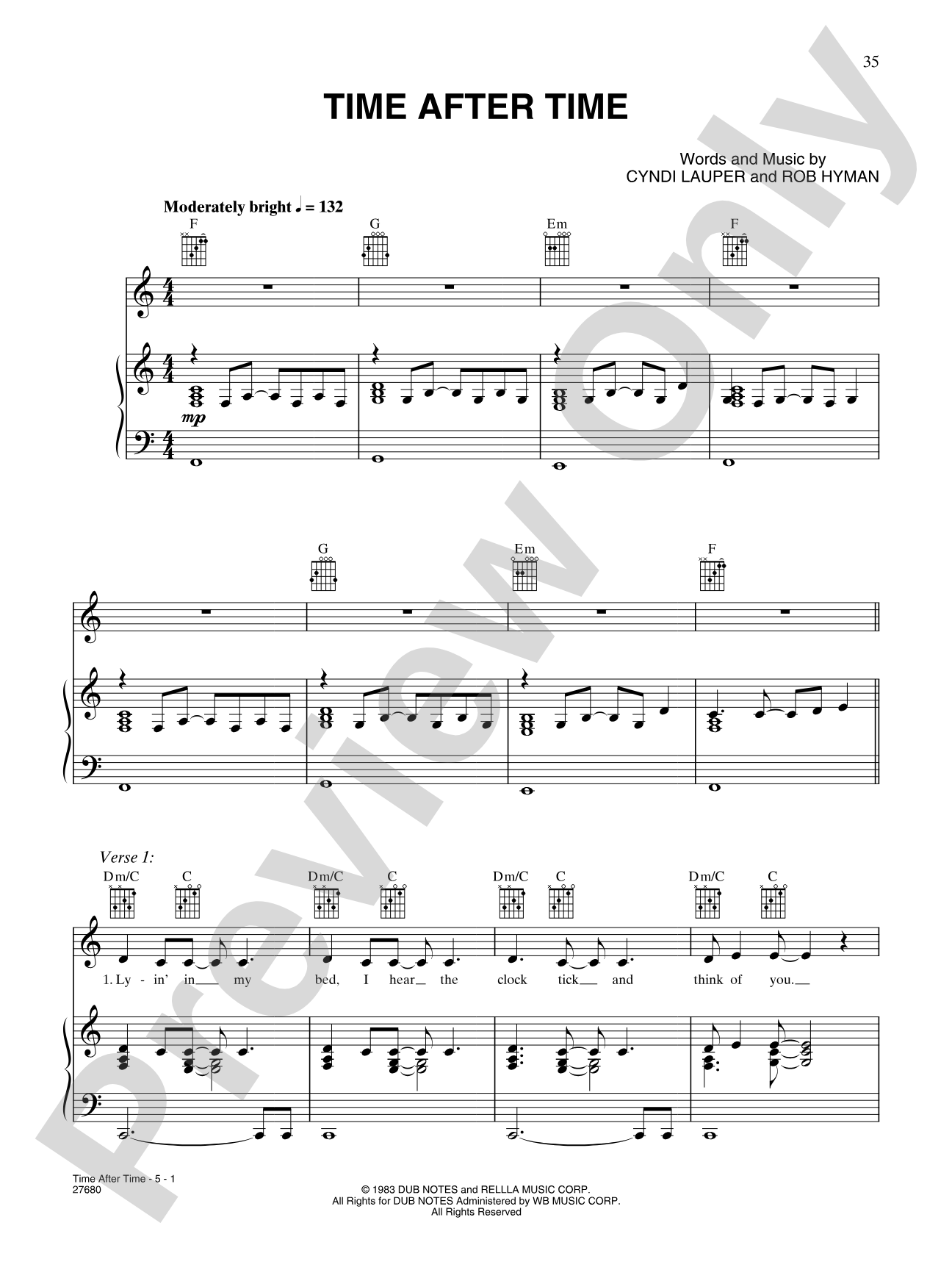

Time After Time: Piano/Vocal/Chords
A Sheet Music Compendium
Item: 00-PSP-000212
$4.99
One moment…
Related Items
Against All Odds (Take A Look At Me Now): Piano/Vocal/Chords |
$4.99
|
View |
Description
Flash back to the '80s with more than 50 classic hits from the "totally awesome" era! Each song in this massive collection earned the distinction of a No. 1 spot on the Billboard Hot 100. Music makers of all ages will discover a lifetime of enjoyment among the more than 300 pages of sheet music in this songbook. Titles: Africa * Against All Odds * Always * Arthur's Theme (The Best That You Can Do) * At This Moment * Beat It * Bette Davis Eyes * Billie Jean * Careless Whisper * Celebration * Centerfold * Come on Eileen * Crazy for You * Endless Love * Every Breath You Take * Everytime You Go Away * Eye of the Tiger * Father Figure * Flashdance . . . What a Feeling * Glory of Love (Theme from The Karate Kid Part II) * Greatest Love of All * Hard to Say I'm Sorry * Heaven Is a Place on Earth * Hold on to the Nights * I Just Can't Stop Loving You * I Want to Know What Love Is * If You Don't Know Me by Now * Islands in the Stream * Jump * Kiss on My List * Livin' on a Prayer * Man in the Mirror * Morning Train (Nine to Five) * Nothing's Gonna Stop Us Now * On My Own * Open Your Heart * Right Here Waiting * Roll with It * Sweet Child O' Mine * Take My Breath Away (Love Theme from Top Gun) * That's What Friends Are For * Time After Time * (I've Had) The Time of My Life * Up Where We Belong * Upside Down * Wake Me Up Before You Go-Go * We Are the World * What's Love Got to Do with It * The Wind Beneath My Wings * With or Without You * Woman in Love.


Time After Time: Piano/Vocal/Chords isn't in MakeMusic Cloud just yet...but it could be. Let us know you'd like to see it, and you'll help shape what comes next. In the meantime, start a free trial and dive into thousands of interactive titles your students can play along with today.
Request This Title
Tell us you want it.
Start Your Free Trial
Explore everything that's ready to play right now.
Sample Audio
No sample audio found.
Sample Video
No sample videos found.
Additional Details
Series:
Billboard Magazine
Publisher:
Alfred Music
Page Count:
304
SKU:
00-PSP-000212
More about this title
About the Composer: Rob Hyman
Rob Hyman is a keyboardist, singer, and songwriter best known for his work with the new wave band The Hooters, where he co-wrote some of the group's biggest hits. His contributions to '80s pop and rock music shaped the sound of an era, blending synthesizer-driven arrangements with memorable melodies and hooks that defined radio hits of the decade.
As a composer and arranger, Hyman has deep roots in understanding what makes popular songs work across different instrumental and vocal settings. His work here curating and arranging these Billboard chart-toppers reflects his intimate knowledge of the songs that defined a generation.
Why we love this
This collection captures a generation of songwriting at its peak, with melodies that linger and chord progressions that feel both accessible and satisfying to play. Every title here earned its chart position through genuine musicality, making this an ideal resource for pianists and guitarists who want to build repertoire from songs their students actually recognize and love. The sheer breadth means you'll find something for every skill level and mood within a single book.
What to expect
Opening this book is like stepping into a time capsule of pure pop and rock energy. You'll encounter everything from soaring power ballads ('The Greatest Love of All') to driving rock anthems ('Eye of the Tiger') to intimate moments ('Time After Time'), all arranged with the clarity needed to shine in a solo performance or ensemble setting. The '80s aesthetic runs through every page: bright, confident, and unafraid of big emotions.
Who it's for
Pianists and keyboardists who want contemporary repertoire packed with hit songs, as well as singers preparing for recitals, auditions, or casual performances with a backing musician. Guitar players will find standard chord symbols throughout, making this workable for anyone accompanying from these charts.
How to get the most out of it
- Study the chord symbols carefully before diving into the vocal melody; many of these arrangements rely on simple but effective harmonic movement that anchors the arrangement.
- Pay attention to the rhythmic pocket of each song. '80s production emphasized groove and syncopation, so locking into the pulse matters as much as hitting the right notes.
- Adjust your comping (chord voicing and rhythm) based on whether you're accompanying a singer, playing solo, or working with a guitarist. The same charts work across all three contexts with thoughtful interpretation.
- Use a light touch with the sustain pedal on slower, ballad-style tracks like 'Careless Whisper' and 'Against All Odds' to keep harmonic clarity without muddiness.
How to use it
Use this as your go-to resource for pop and rock solo repertoire auditions, student recitals, or casual concert programming that demands audience recognition and enthusiasm. These songs also work beautifully in themed concerts celebrating a specific decade or exploring the evolution of rock and pop. Many titles pair well with contemporary classical or theater repertoire for students seeking stylistic variety in a single recital.
Skills your students will build
- Reading and interpreting chord symbols across multiple voicings and registers
- Balancing a singer's melody with accompaniment while maintaining rhythmic clarity
- Identifying and playing in '80s-era rhythmic and harmonic styles (syncopation, suspended chords, pop grooves)
- Transposing arrangements to suit a vocalist's range and comfort
- Adapting single arrangements to work across piano, keyboard, and guitar contexts