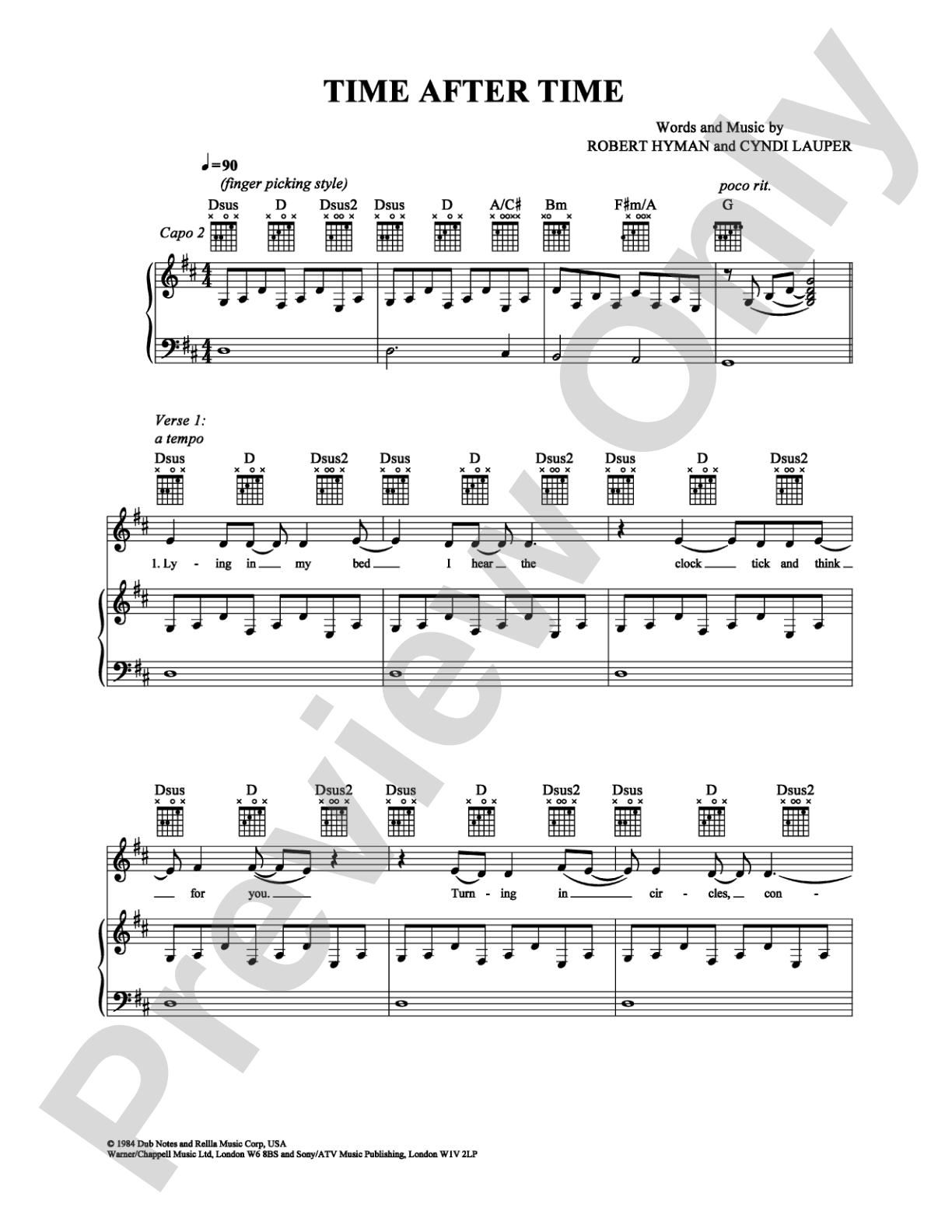
Time After Time: Piano/Vocal/Chords Digital Sheet Music

Time After Time: Piano/Vocal/Chords Digital Sheet Music

Cyndi Lauper, Eva Cassidy, Robert Hyman

Item: 00-PS-0002595

Digital Download
$3.99
Description

Time After Time: Piano/Vocal/Chords Digital Sheet Music isn't in MakeMusic Cloud just yet...but it could be. Let us know you'd like to see it, and you'll help shape what comes next. In the meantime, start a free trial and dive into thousands of interactive titles your students can play along with today.

Sample Audio
No sample audio found.
Sample Video
Additional Details
SKU: 00-PS-0002595

More about this title

About the Artist: Eva Cassidy

Eva Cassidy (1963, 1996) was a Washington, D.C.-based vocalist whose interpretations of jazz, blues, folk, and pop standards became her signature. Working largely outside the mainstream industry during her lifetime, she built a devoted local following through her ability to strip songs down to their emotional core, accompanying herself on guitar in intimate settings. Her gift lay in reimagining familiar material with such vulnerability and restraint that each performance felt like a private conversation.

Why we love this

Cassidy's version of "Time After Time" strips away production excess to focus on vocal vulnerability and lyrical clarity. The piano arrangement provides enough harmonic support for singers to explore phrasing and dynamics without competing with busy instrumentation, making it ideal for teaching interpretation and emotional storytelling through song.

What to expect

Intimate and reflective, with the sense of someone sharing a personal memory rather than performing for an audience. The piano's supportive role creates space for vulnerability, allowing the lyrical content about time and constancy to resonate without melodrama.

Who it's for

This arrangement serves singers developing interpretive maturity and pianists who accompany vocalists. It also works for voice students building comfort with standards and understanding how to color a familiar melody through phrasing and restraint rather than technical display.

How to get the most out of it

  • Allow space in the melody line; Cassidy's approach favors silence and restraint over filling every beat. Let the piano breathe between vocal phrases.
  • Attend to the lyrics as emotional narrative rather than simply technical delivery. Each verse builds emotional specificity, so shape dynamics and vibrato to reflect that arc.
  • Balance the vocal line against the piano voicings. The chord changes are sophisticated enough to carry harmonic interest, so the voice doesn't need to overpower them.
  • Experiment with rubato in the verses while keeping time relative to the piano's rhythmic foundation. This creates intimacy without losing structural coherence.

How to use it

Program this as a solo recital piece that demonstrates maturity and emotional depth, or pair it with other standards-based repertoire in a cabaret-style concert format. It also works well as a model for students learning how to approach contemporary interpretations of well-known material.

Skills your students will build

  • Phrasing and breath placement in lyrical melody
  • Interpreting lyrical content through dynamic shaping
  • Accompanying singers with harmonic sophistication while maintaining textural balance
  • Managing rubato against a steady harmonic foundation
  • Understanding interpretive choice as distinct from technical accuracy

You May Also Like