
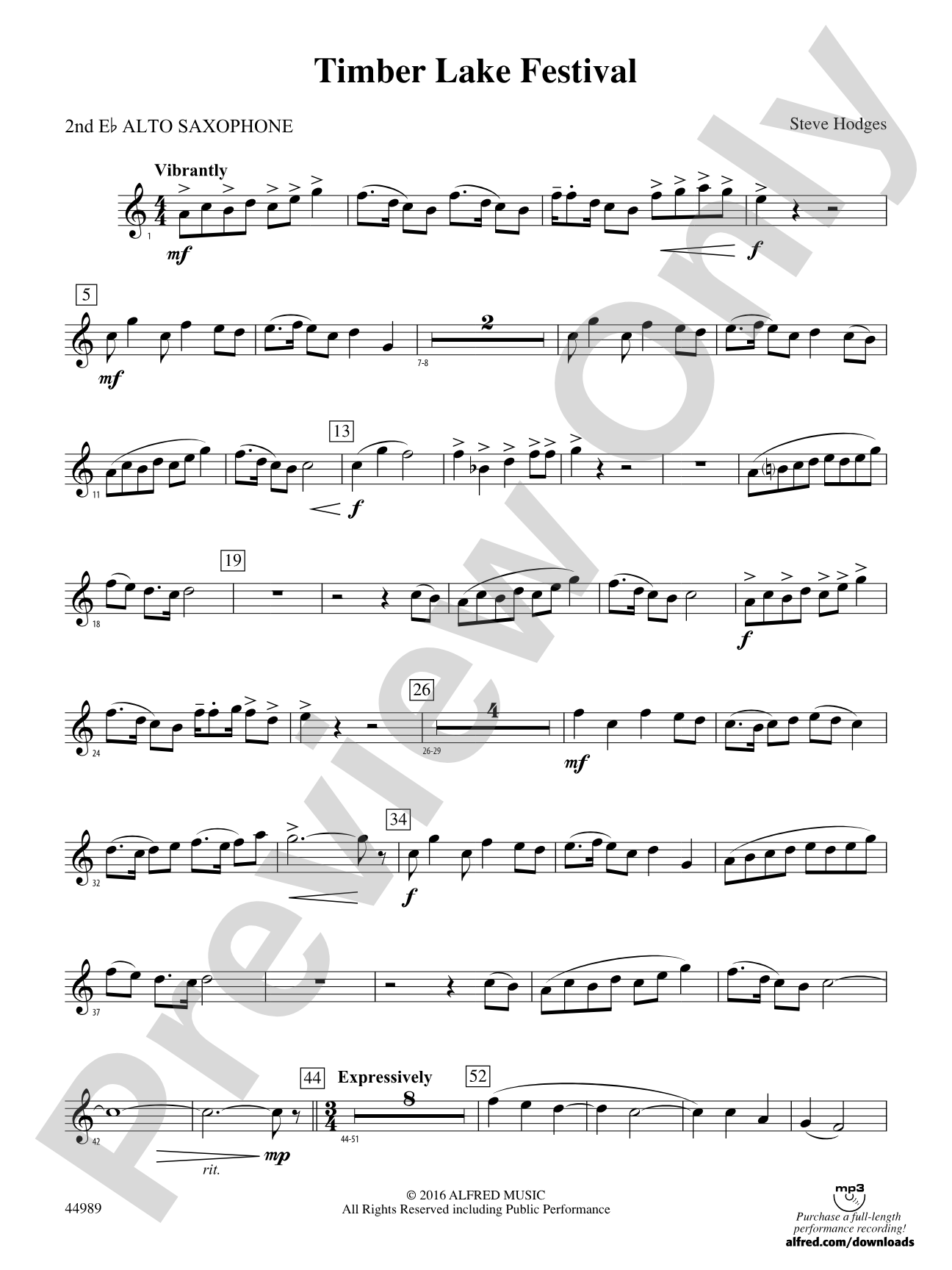

Timber Lake Festival: 2nd E-flat Alto Saxophone
By Steve Hodges
Grade: 2 (Medium Easy)
Item: 00-PC-0017454_AX2
$3.00
Pickup currently not available
Description
The excitement of the great outdoors is depicted in this overture-style piece. With active melodies and strong rhythms, the energy is contagious. An expressive lyrical section provides an effective contrast featuring a beautiful clarinet melody building to a statement by the full ensemble. The energy returns leading to a vibrant finish! (3:30)


Don't just read it, hear it, play along with it, and watch your students grow with it. In MakeMusic Cloud, Timber Lake Festival: 2nd E-flat Alto Saxophone comes alive with professional accompaniment, adjustable tempo, and built-in practice tools that turn solo practice into real progress.
Open in the Player
Jump straight in and assign it today.
Start Your Free Trial
Open this title and explore the full library in minutes.
Sample Audio
1
Audio File
--:--
0:00
0:00
Sample Video
Additional Details
Series:
Young Symphonic
Publisher:
Alfred Music
Page Count:
252
SKU:
00-PC-0017454_AX2
More about this title
About the Composer: Steve Hodges

Steve Hodges brings four decades of public school band direction into his compositional voice. After earning degrees from Western Oregon University and Central Washington University, he spent his career developing young musicians across all levels, and that deep classroom experience informs every piece he writes. Since 1986, he has published over 120 concert band compositions with Alfred Music, plus choral arrangements with Staff Music and Shawnee Press.
Hodges' music has traveled far beyond his Oregon home, programmed at festivals and state conventions across multiple countries and commissioned by honor bands and schools throughout North America. His work has also reached national audiences through TBS and ESPN broadcast networks. A member of ASCAP, he continues to find joy in hearing his grandchildren perform his compositions in their own school bands.
Why we love this
Hodges knows what makes a Grade 2 band sound confident and accomplished. The overture structure gives you a recognizable dramatic arc that energizes players without overwhelming them, and that expressive middle section with the clarinet solo offers a genuine moment of beauty that audiences remember. It programs beautifully alongside heavier works because it stands on its own musically while staying accessible.
What to expect
You hear the crisp excitement of outdoor adventures in the opening and closing sections, with active melodies that propel forward naturally. The lyrical midsection shifts the mood entirely, offering a serene and expressive moment centered on a singing clarinet line that builds gradually to a full ensemble statement before the energy rushes back in.
Who it's for
Directors programming Grade 2 concert bands who need repertoire that sounds energetic and polished without excessive technical demands. This works for ensembles preparing for festivals or spring concerts where a compelling overture-style opener makes a strong impression.
How to get the most out of it
- Anchor the active rhythms in the opening through clear subdivision from the section leaders; this piece's forward momentum depends on that rhythmic precision even at this accessible level.
- The lyrical clarinet melody deserves space and time. Let it breathe in the middle section before the ensemble joins, which makes that full statement land with real impact.
- Shape the return to energy as a gradual acceleration rather than an abrupt tempo shift. This maintains musical logic and prevents the ending from feeling rushed.
How to use it
Open a concert with this piece to establish momentum and energy right away, or place it mid-program as a palate cleanser between heavier works. Its three-and-a-half-minute length makes it ideal for festival programming where you need impact without consuming significant time.
Skills your students will build
- Sustaining lyrical phrasing in the middle section against simple harmonic changes
- Maintaining rhythmic drive through active articulation patterns in the opening and closing sections
- Balancing solo clarity with supportive ensemble texture during the clarinet melody
- Managing dynamic contrast between the energetic outer sections and the expressive middle passage