
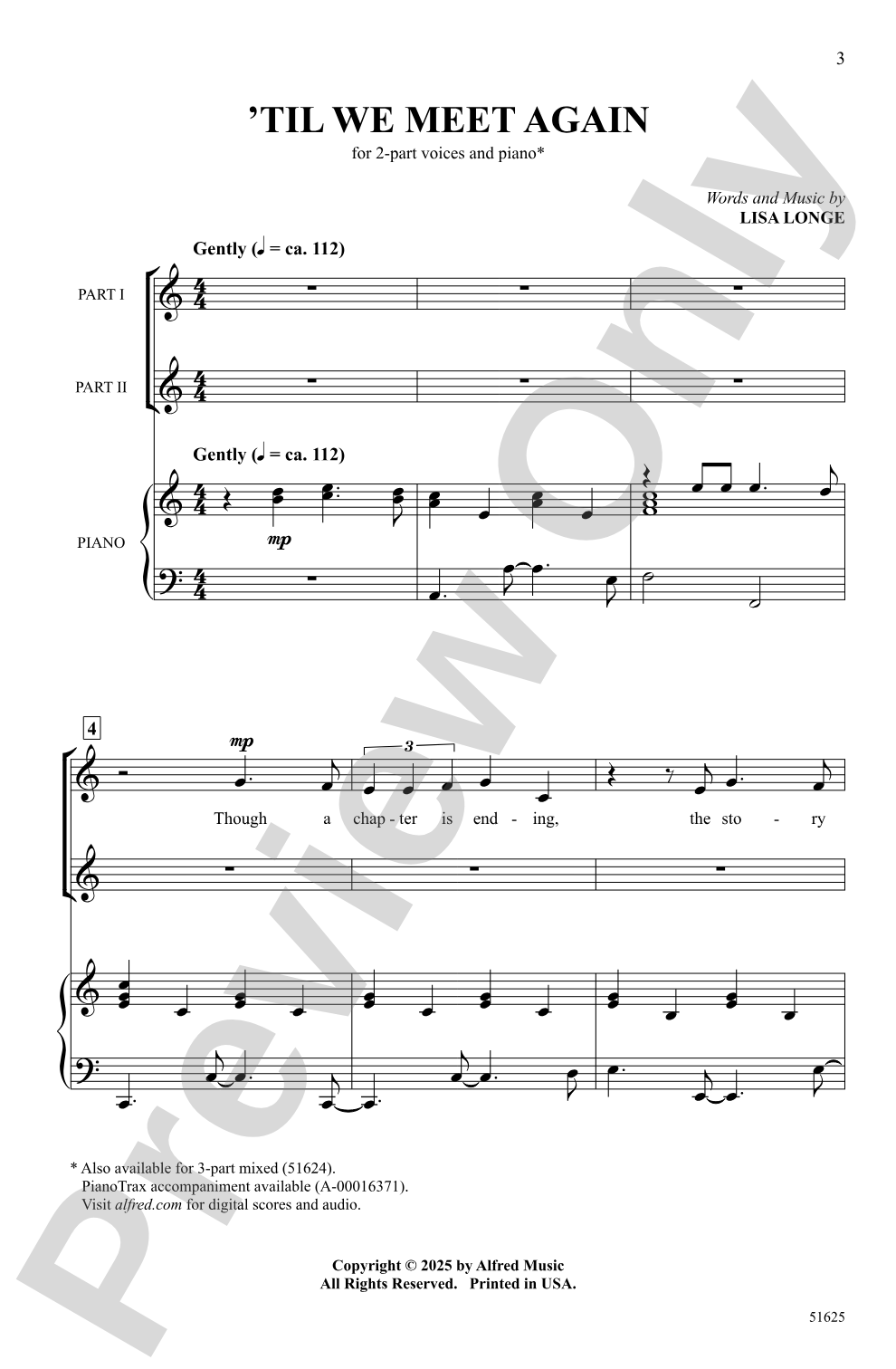

'Til We Meet Again: 2-Part Choral Octavo
Words and music by Lisa Longe
Item: 00-PO-0007578
$2.30
Minimum order quantity: 20 copies
Pickup currently not available
Description
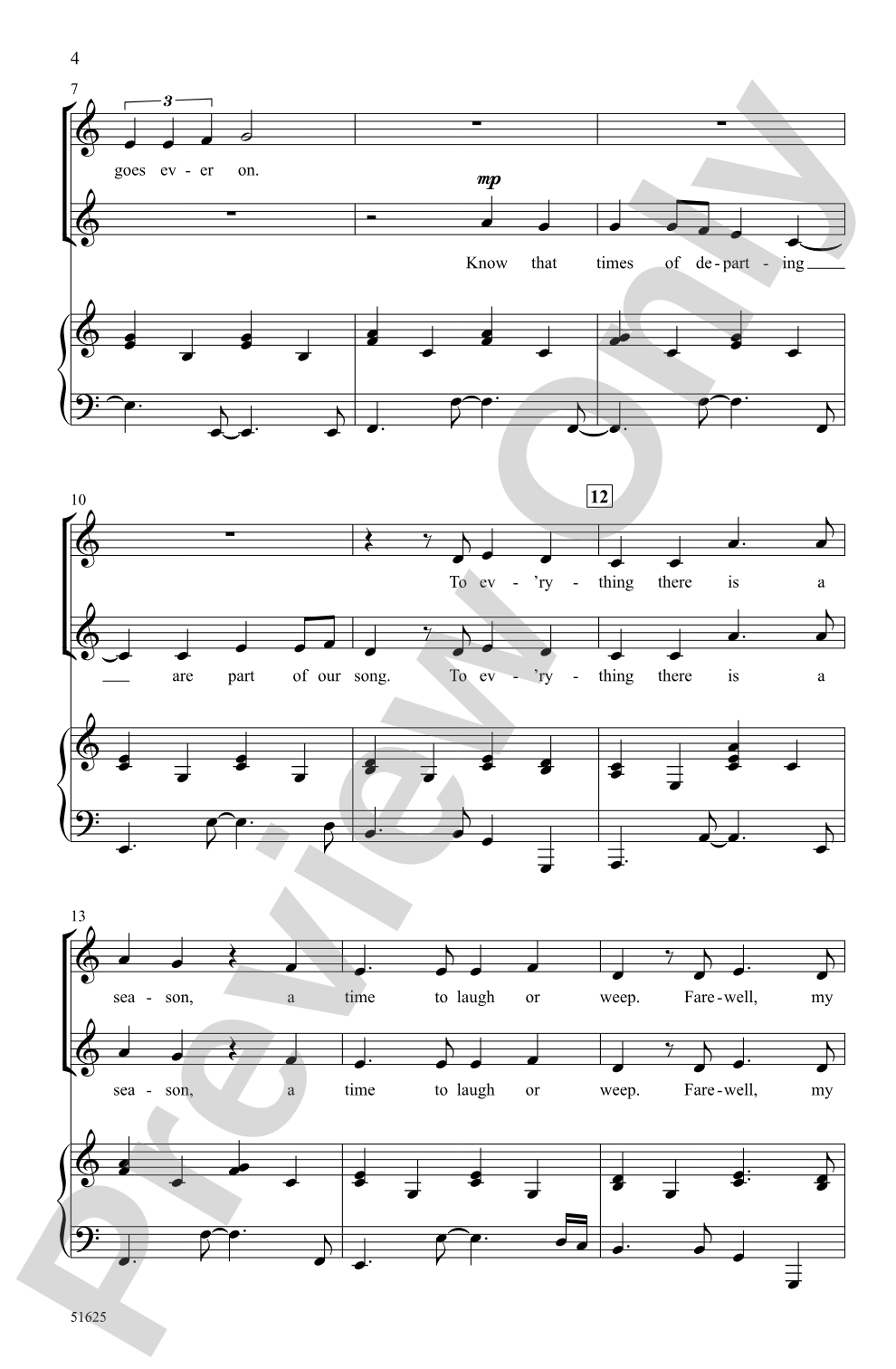
This gentle and heartfelt original by Lisa Longe is an ideal choice for graduation and moving-up celebrations. A flowing piano accompaniment supports a legato melody with lyrics that wish a friend well on life's next journey. Built with varied choral textures and sensible vocal ranges for all parts, this sweet send-off will create lasting memories.


Discover MakeMusic Cloud: thousands of interactive titles your students can play along with today.
Sample Audio
1
Audio File
--:--
0:00
0:00
Sample Video
Additional Details
Series:
Alfred Choral Designs
Publisher:
Alfred Music
Page Count:
12
SKU:
00-PO-0007578
More about this title
About the Composer: Lisa Longe

Lisa Longe teaches instrumental music in the Schenectady City Public Schools system and has shaped young musicians for over two decades. Her formal training spans the Crane School of Music at SUNY Potsdam, where she earned both bachelor's and master's degrees in music education, and Fordham University, where she pursued graduate study in Christian Spirituality.
Longe's deepest professional satisfaction comes from meeting students at their musical beginning, those first tentative breaths into an instrument, and witnessing their journey into confident musicians. She is equally devoted to choral accompaniment and conducting, believing that ensemble singing represents something irreplaceable in music education. Her compositions reflect this philosophy: they are written with genuine understanding of what young singers can accomplish and what will sustain their joy in making music together.
Why we love this
Longe understands the emotional weight of graduation moments because she witnesses them year after year in her own schools. This piece respects both the occasion and the singers, offering genuine melodic beauty without taxing young voices, and the varied textures keep ensemble singers engaged throughout rather than doubling parts mechanically.
What to expect
The piece unfolds with warmth and gentle sincerity. A flowing piano accompaniment cradles a legato melody that feels both contemporary and timeless, and the thoughtful lyrics about parting and moving forward create an atmosphere of reflection tinged with hope rather than melancholy.
Who it's for
This octavo is designed for middle school and high school choirs of mixed ability levels seeking a graduation-specific piece that honors the occasion without requiring advanced vocal technique or sight-reading skills. The 2-part voicing and sensible ranges make it accessible for smaller or younger ensembles while still providing the harmonic interest needed to hold singers' attention.
How to get the most out of it
- Shape the legato melody with subtle dynamic swells at phrase peaks; resist the urge to sing straight through at one level, as graduation songs benefit from gentle emotional contours.
- Allow the piano accompaniment space to breathe and support the vocal line without overwhelming it. A lighter touch in the opening measures sets an intimate tone before voices enter.
- Encourage singers to think of the text as a personal message to each individual in the audience, not a performance for them. This shifts the energy from "singing at" to "singing with."
How to use it
Position this as the final piece of your graduation concert, after celebrations and lighter moments have run their course. Its reflective character and farewell sentiment make it a powerful closer that gives families and students a moment of quiet connection before they leave the hall.
Skills your students will build
- Sustaining legato phrasing across longer melodic lines
- Singing in two-part harmony with balance between parts
- Responding to dynamic shape and emotional subtext in text
- Blending voices while maintaining individual line clarity