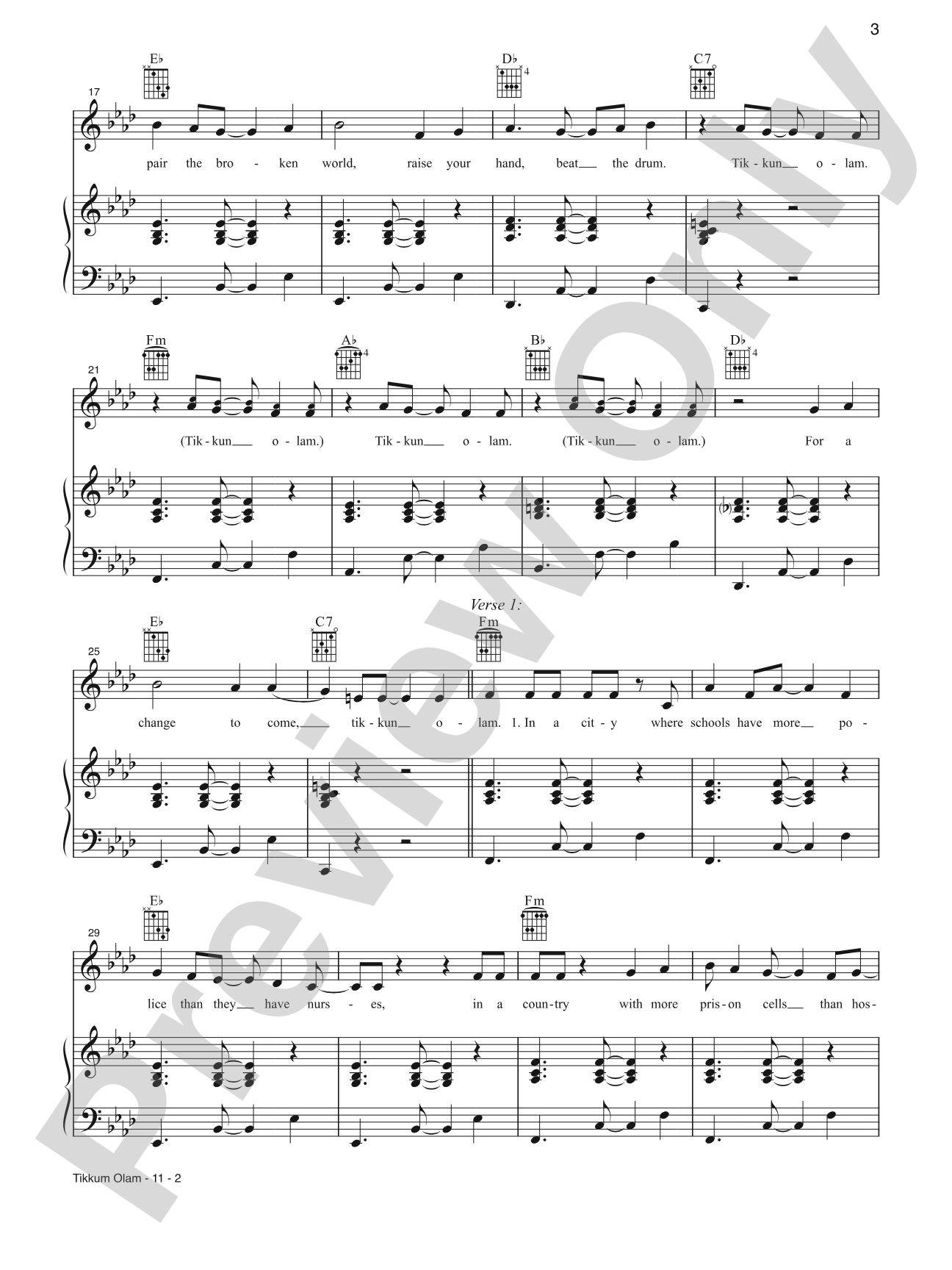
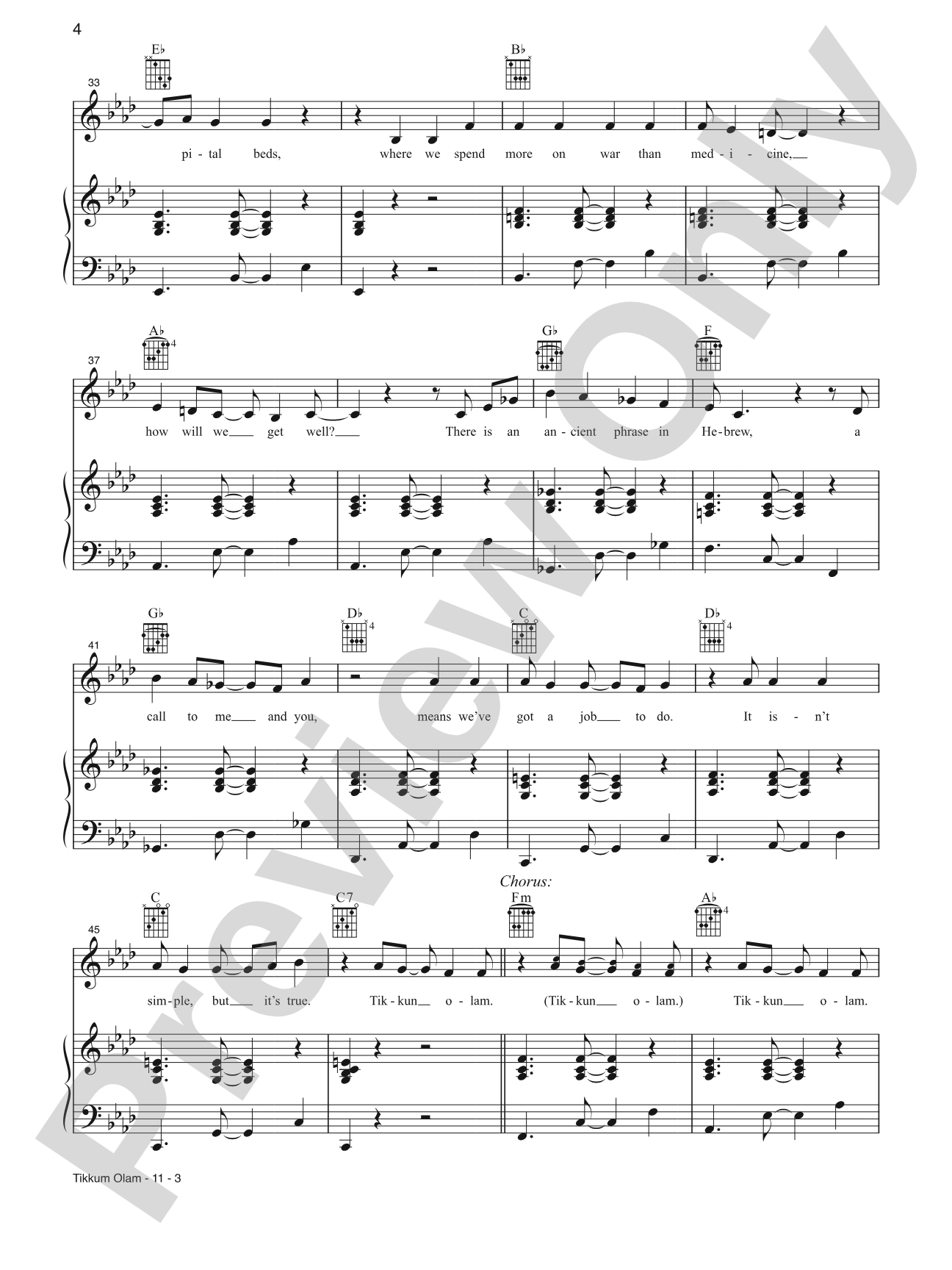
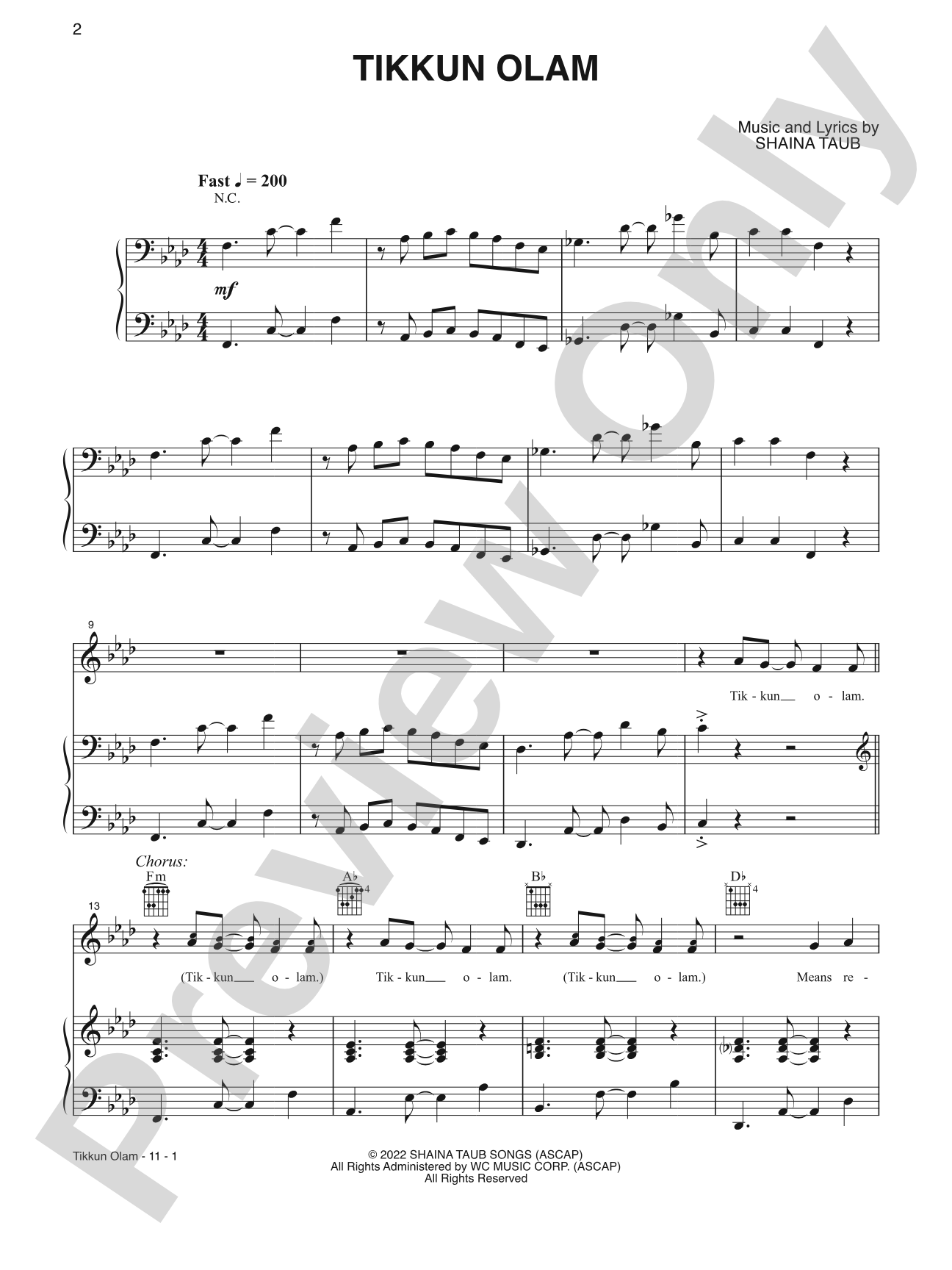
Tikkun Olam Sheet Music Preview

Tikkun Olam: Piano/Vocal

Shaina Taub

Item: 00-PS-0016706

Digital Download
$5.99

One moment…

Description
From Shaina Taub's album Songs of the Great Hill

Tikkun Olam: Piano/Vocal isn't in MakeMusic Cloud just yet...but it could be. Let us know you'd like to see it, and you'll help shape what comes next. In the meantime, start a free trial and dive into thousands of interactive titles your students can play along with today.

Sample Audio
No sample audio found.
Sample Video
Additional Details
SKU: 00-PS-0016706

More about this title

About the Composer: Shaina Taub

Shaina Taub is a composer and lyricist whose work spans musical theater, concert music, and art song. Her compositions blend sophisticated harmonic language with emotionally direct storytelling, drawing on folk traditions, contemporary classical techniques, and popular music idioms. She has composed for major theater productions and created concert works that explore themes of community, identity, and social responsibility.

Why we love this

Taub writes vocal lines that sit naturally in the voice while maintaining musical substance. The pairing of piano and voice here creates an intimate sound that works equally well in a recital hall or as part of a larger concert program, and the song's title reflects a commitment to meaningful artistic content.

What to expect

The piece carries a thoughtful, introspective quality shaped by both piano texture and vocal storytelling. There's directness in the emotional communication alongside musical sophistication, creating a piece that feels both accessible and substantive.

Who it's for

This song works for vocalists with some performance experience who want contemporary art song material with literary and social depth. It suits recital contexts, vocal master classes, and concert programming that values songs beyond the traditional art song canon.

How to get the most out of it

  • Explore the relationship between the vocal melody and piano accompaniment; they often dialogue rather than simply support, so balance them accordingly.
  • Pay attention to the lyrical content as a guide for phrasing and emotional intent; let the meaning shape your tempo choices and breath points.
  • Work with your accompanist to establish a cohesive sound; the piano part is compositionally essential, not decorative.

How to use it

Program this alongside other contemporary vocal works to create a concert focused on living composers, or pair it with art songs that explore themes of social consciousness and personal reflection. It also works well in vocal recitals that blend classical and contemporary repertoire.

Skills your students will build

  • Singing contemporary art song with sophisticated harmonic language
  • Collaborative listening with an accompanist
  • Connecting lyrical meaning to vocal interpretation
  • Performing works by living composers

You May Also Like