
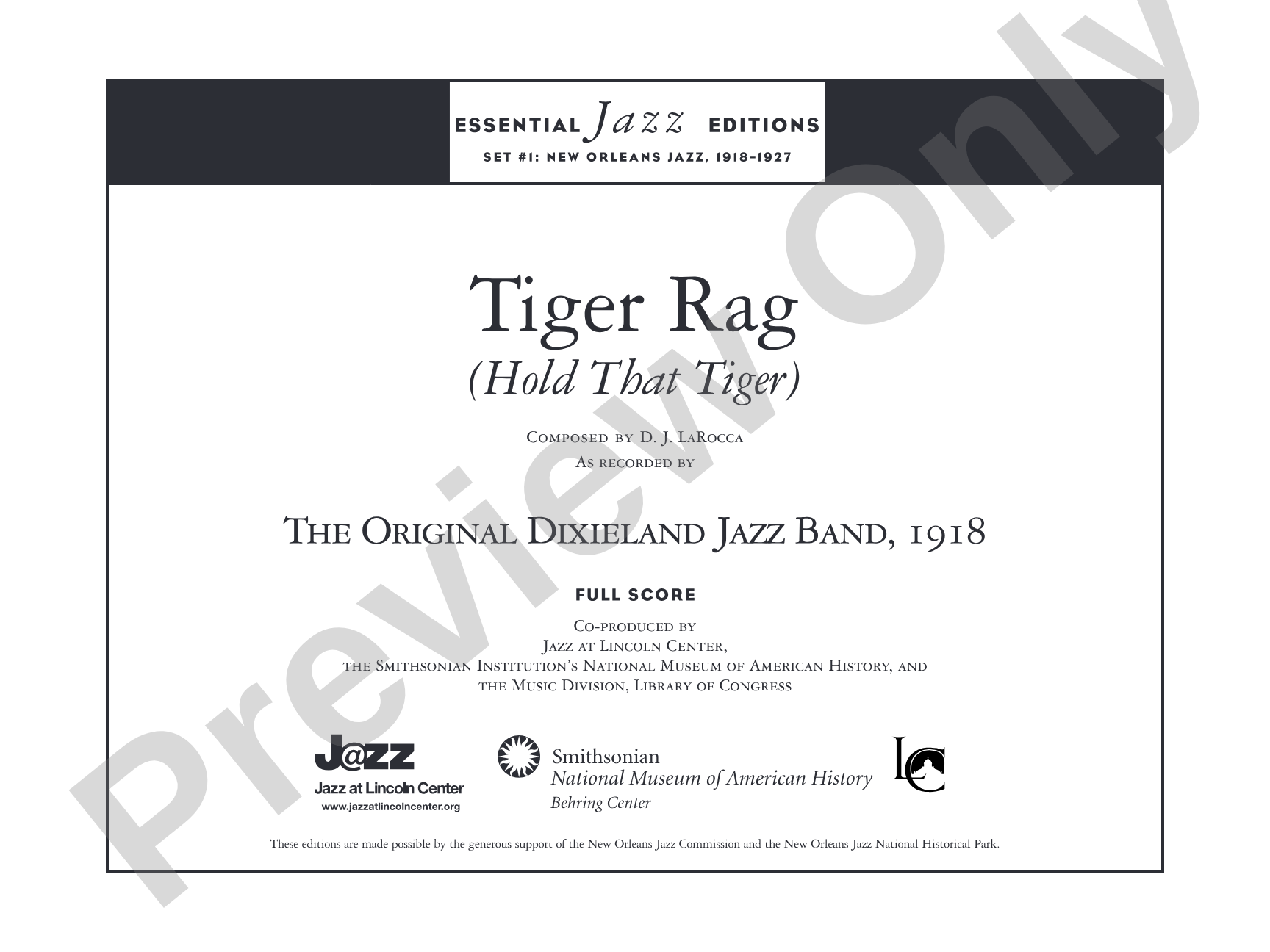
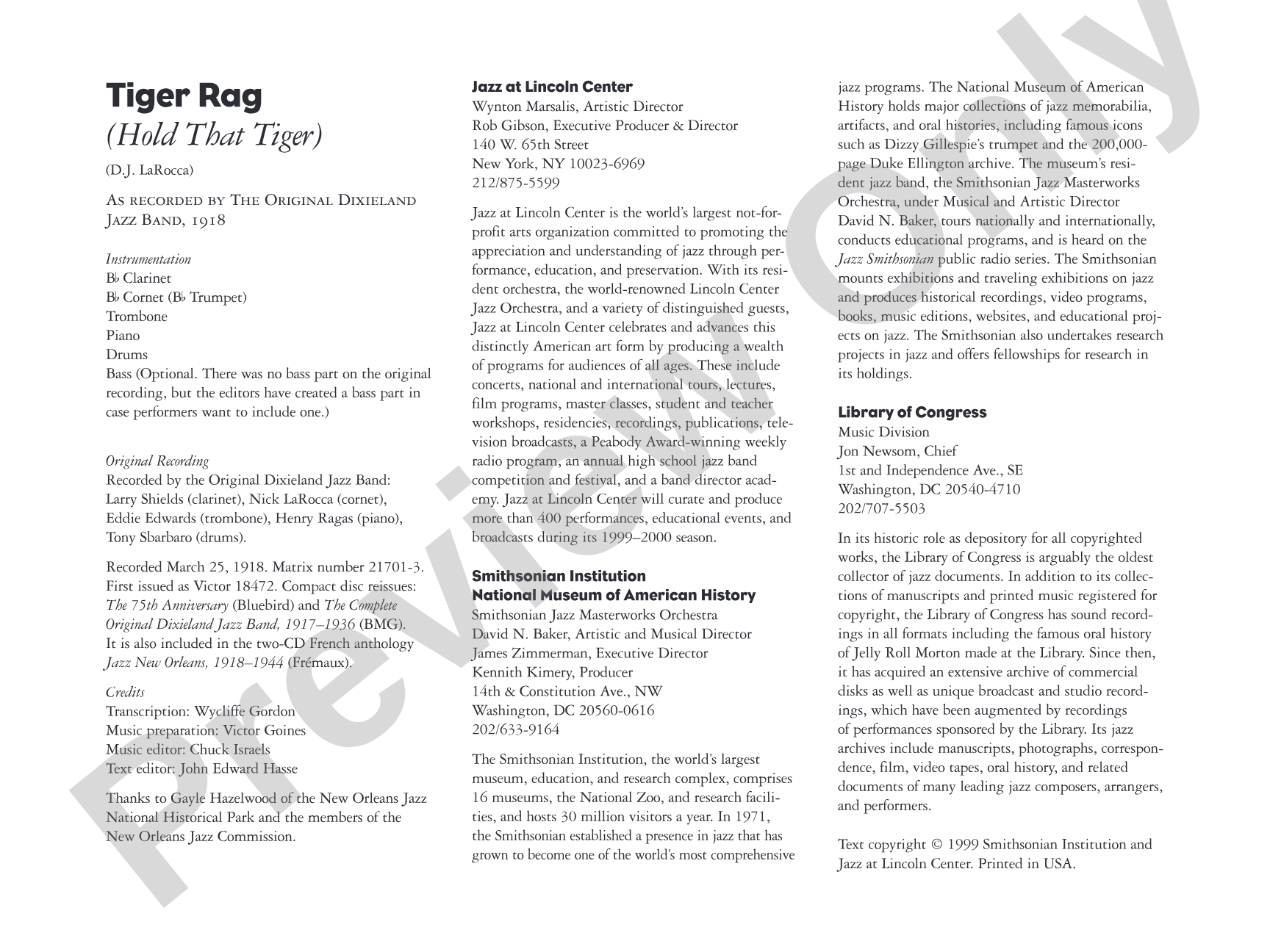
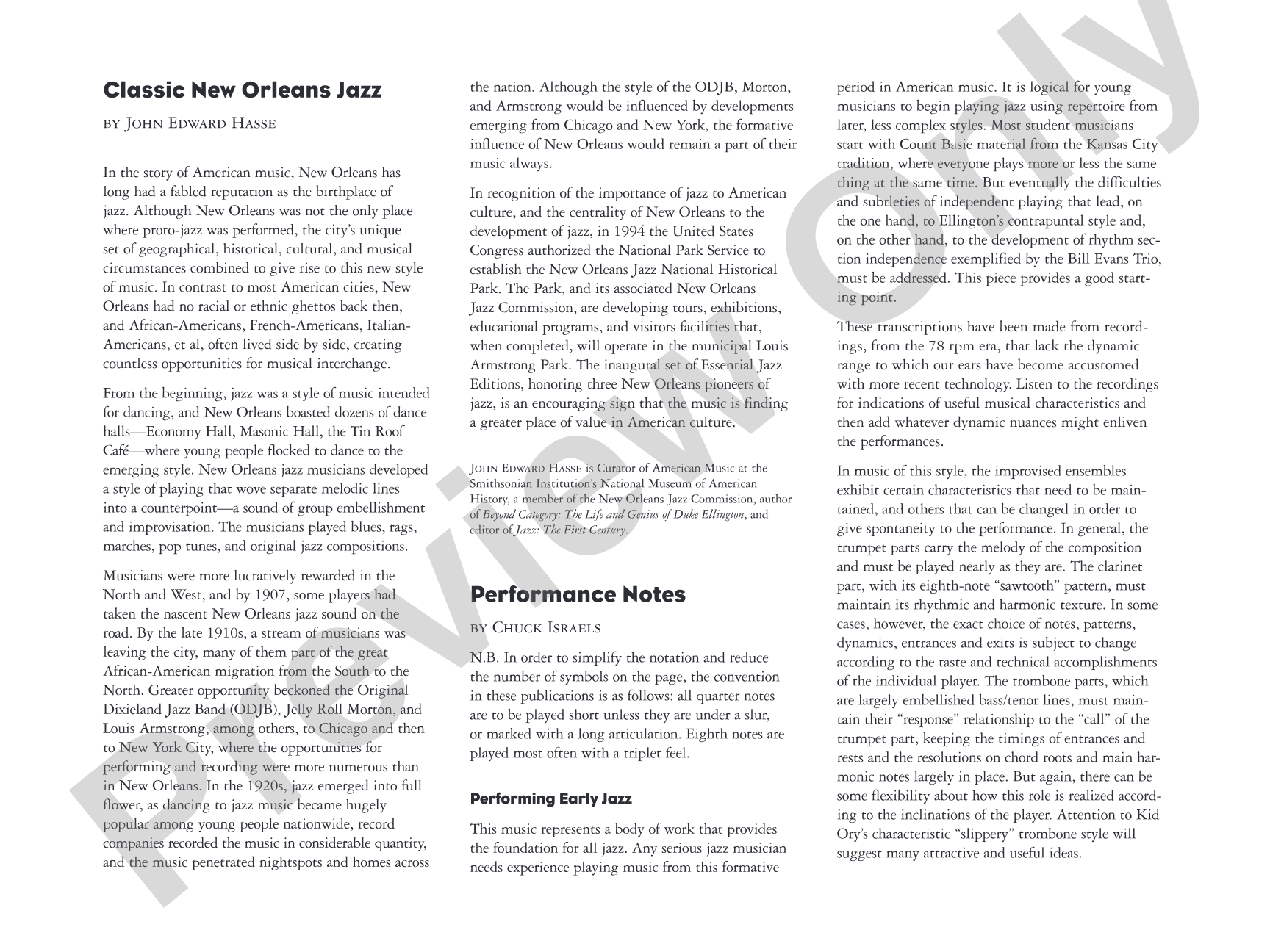
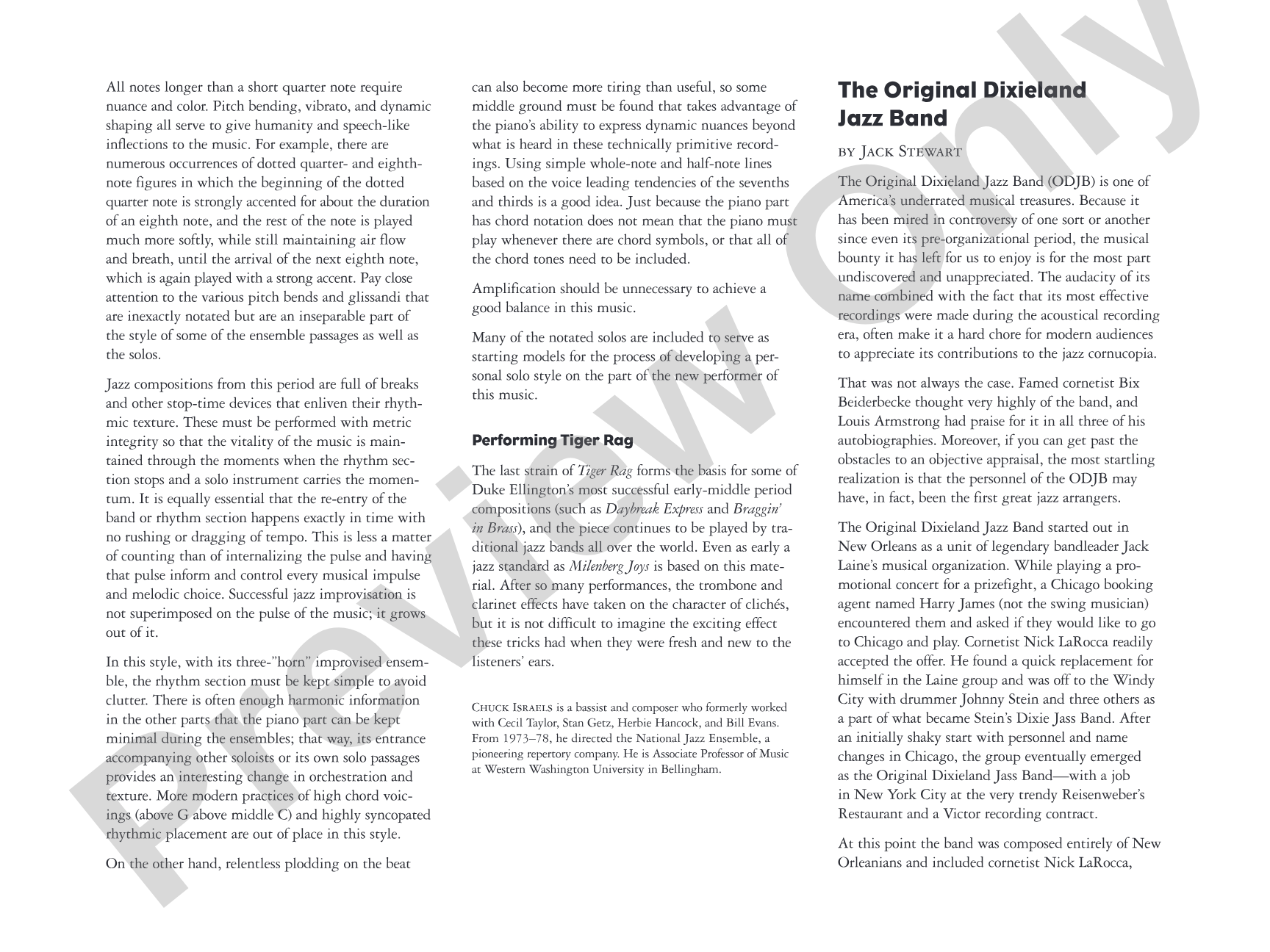
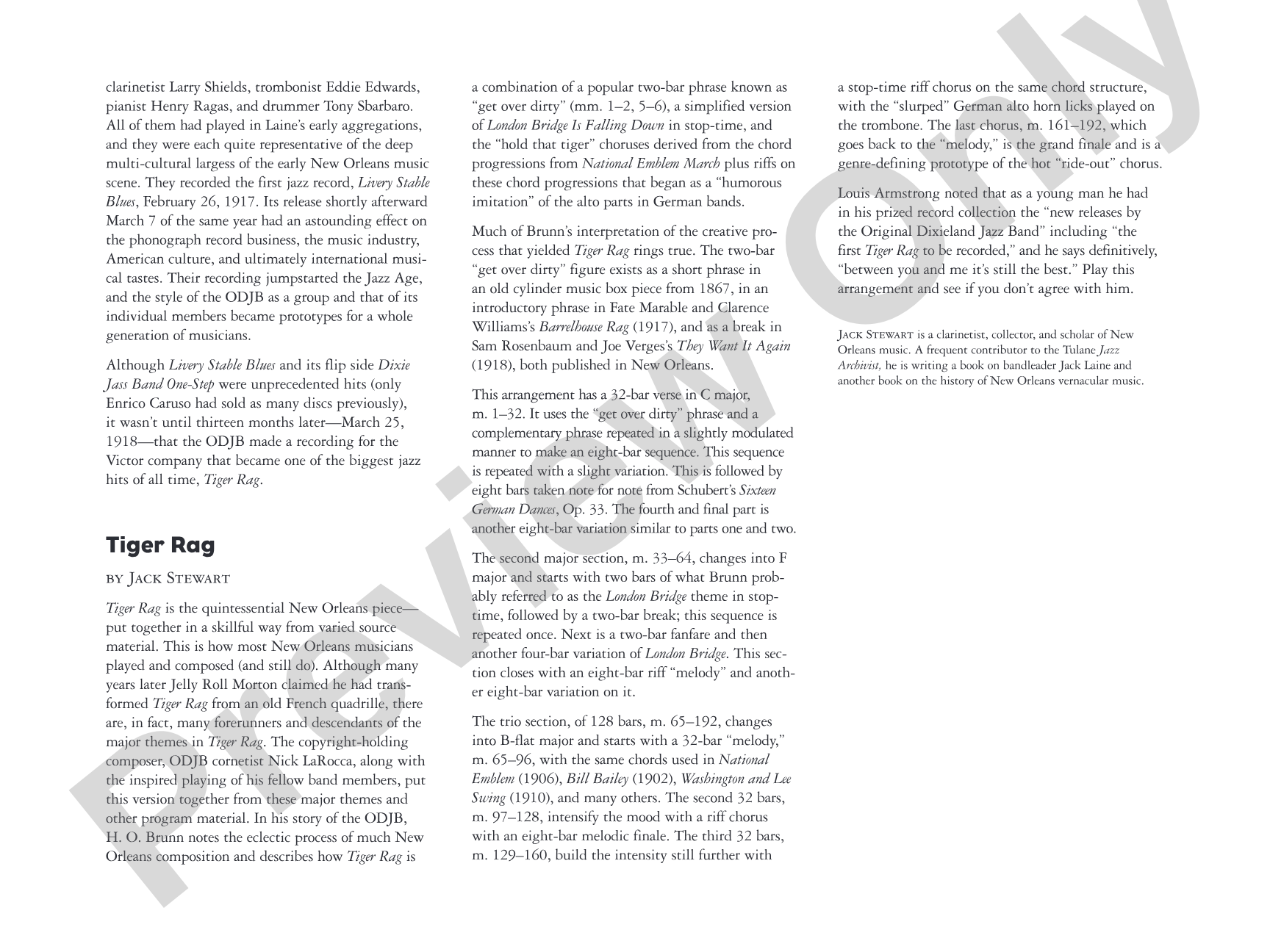
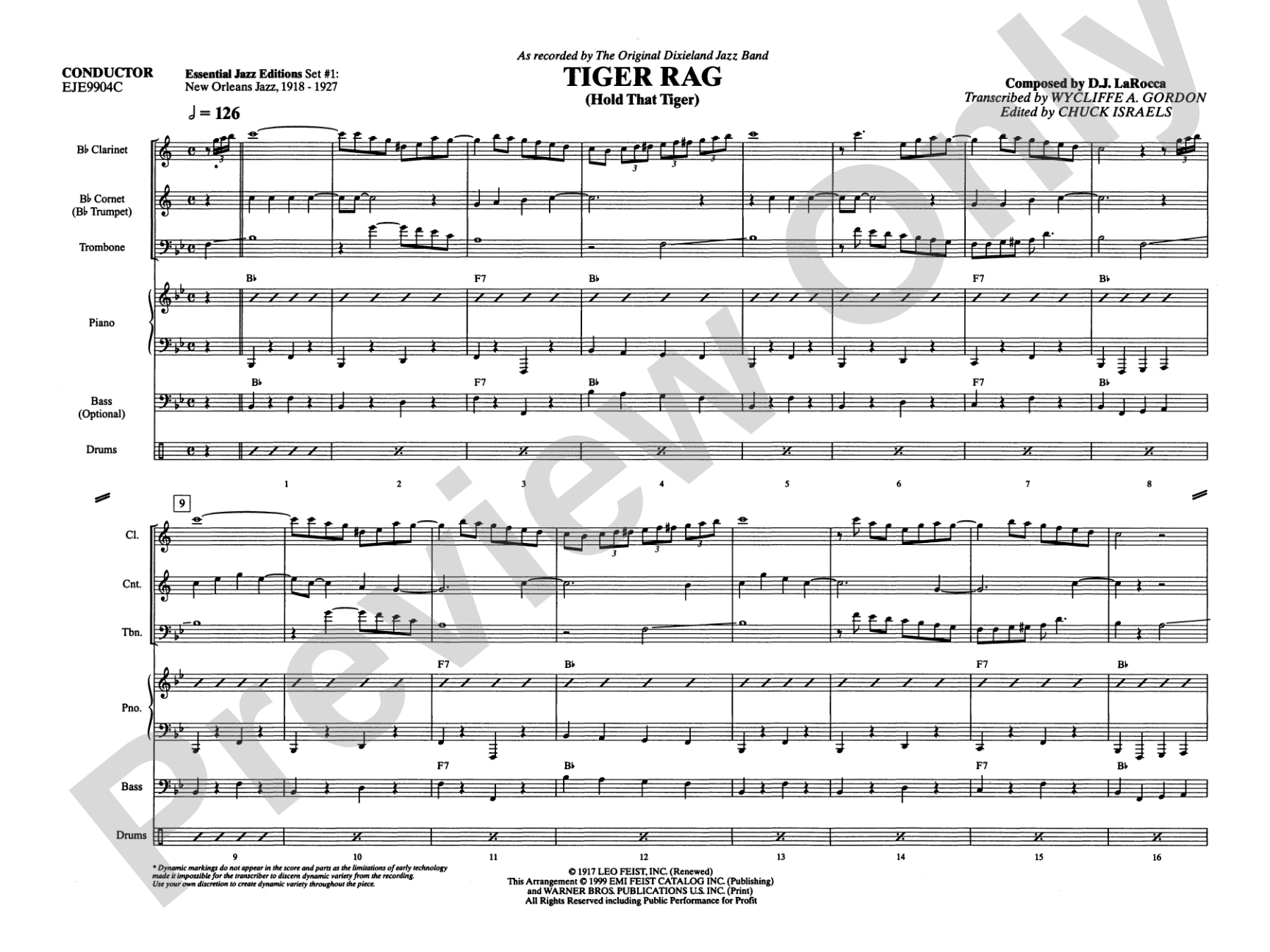
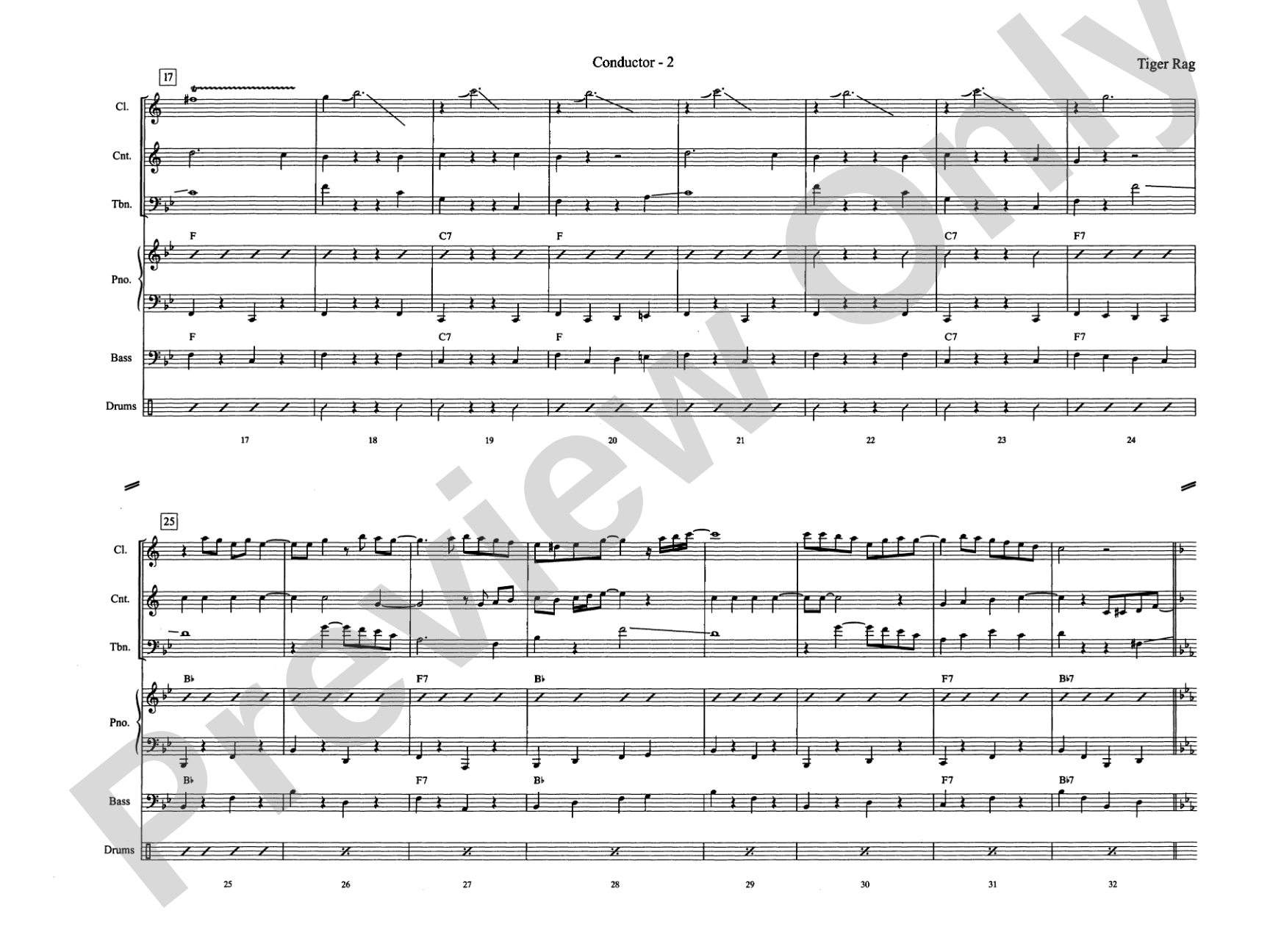
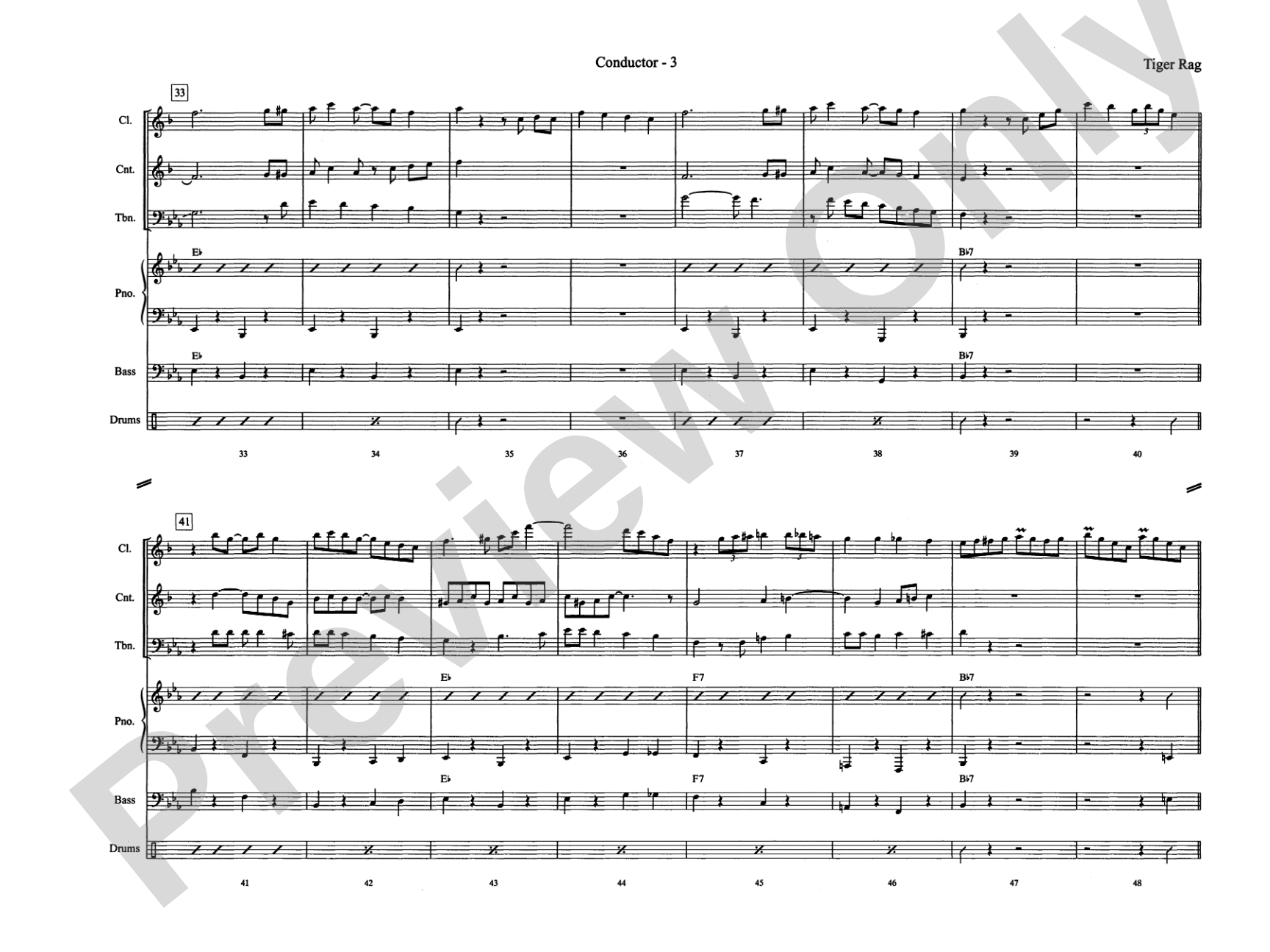
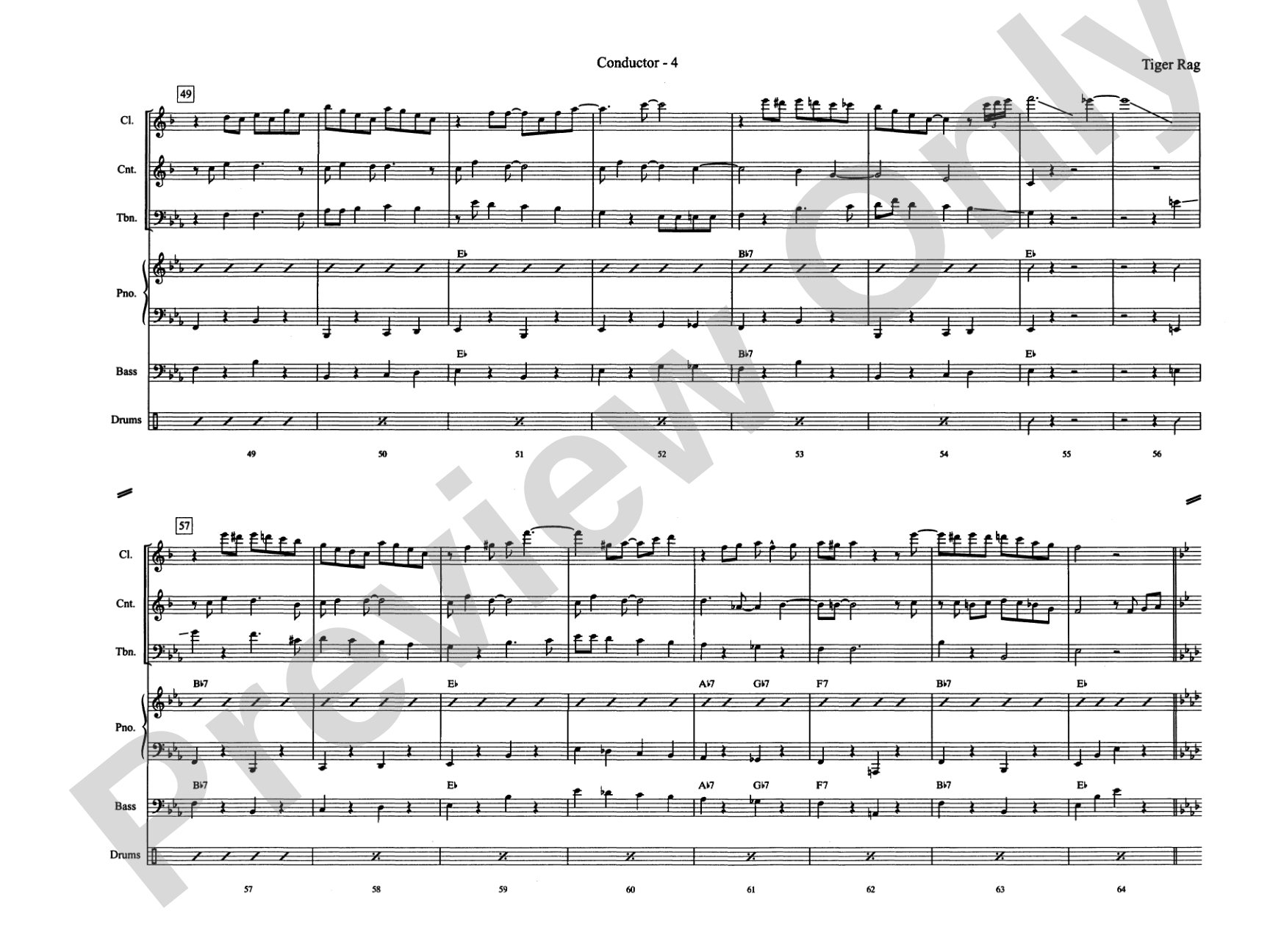
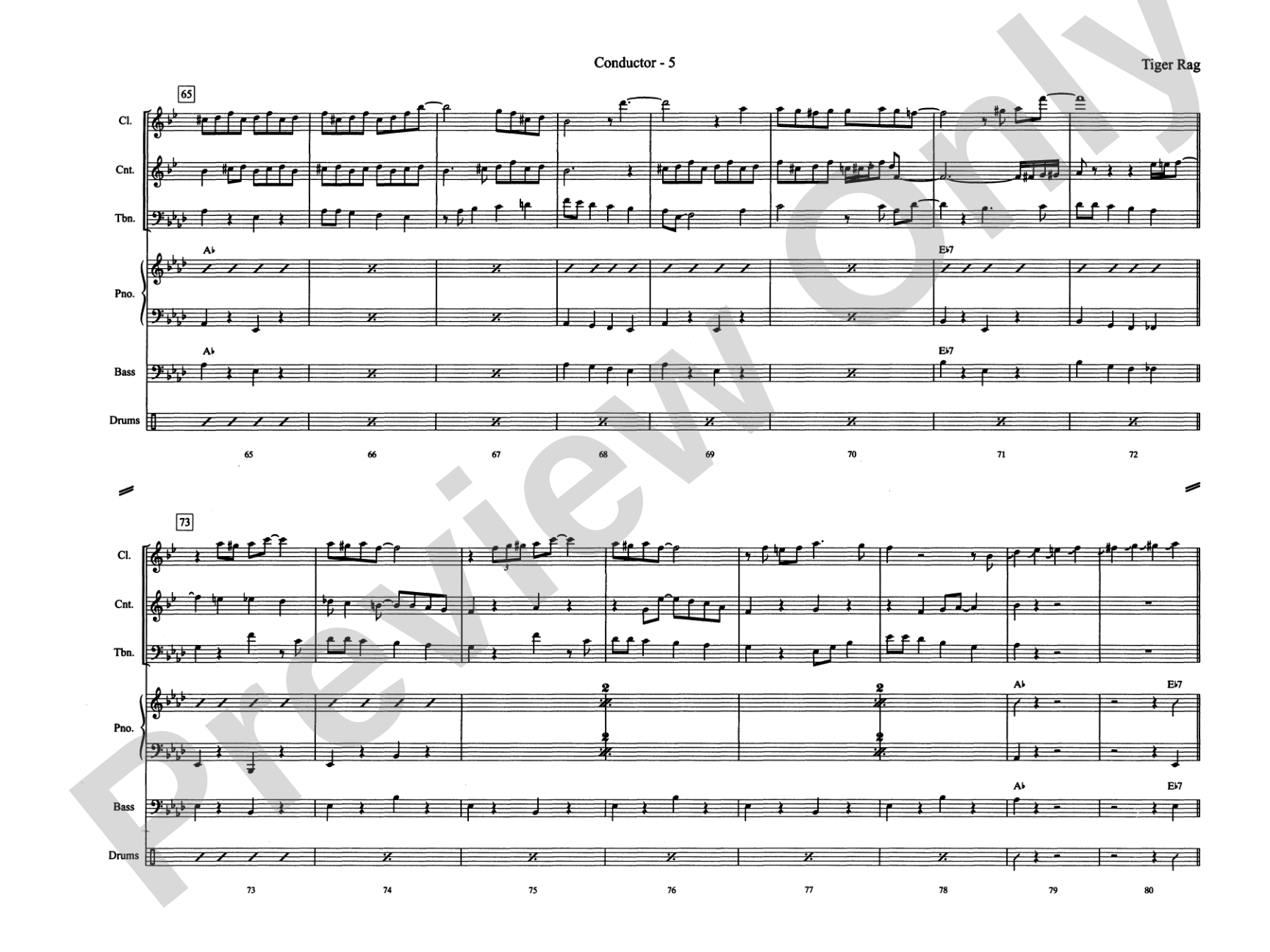
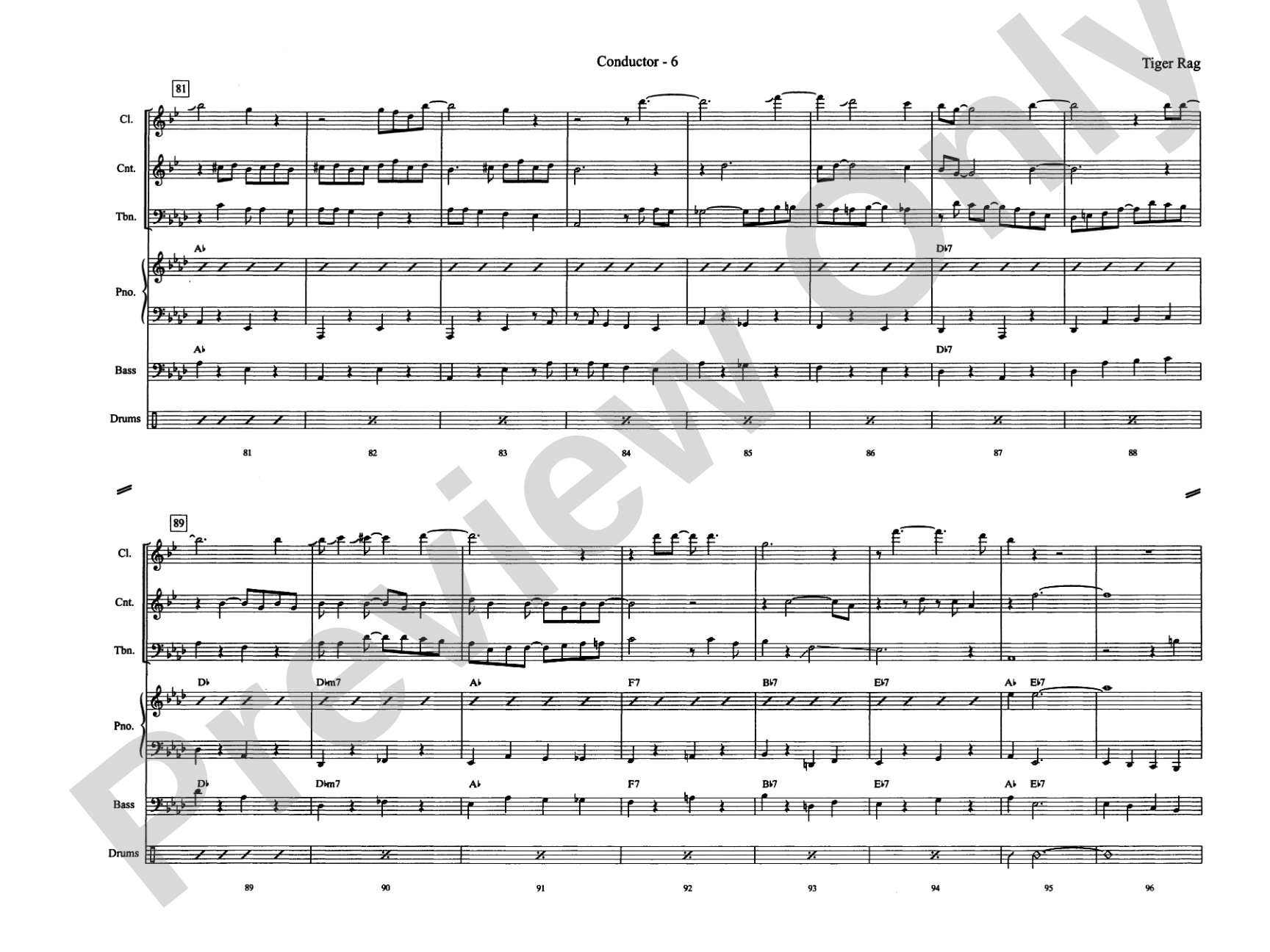
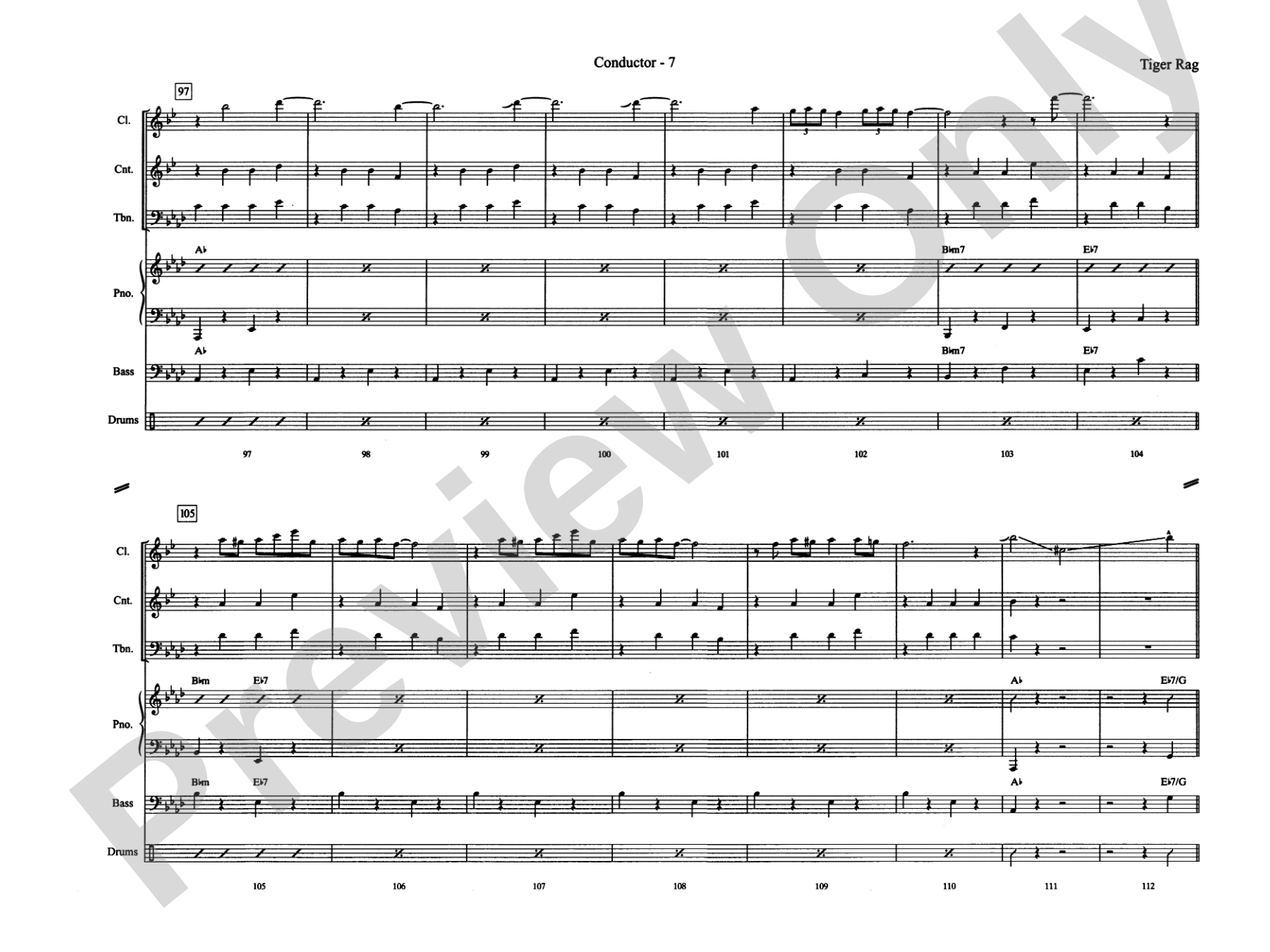
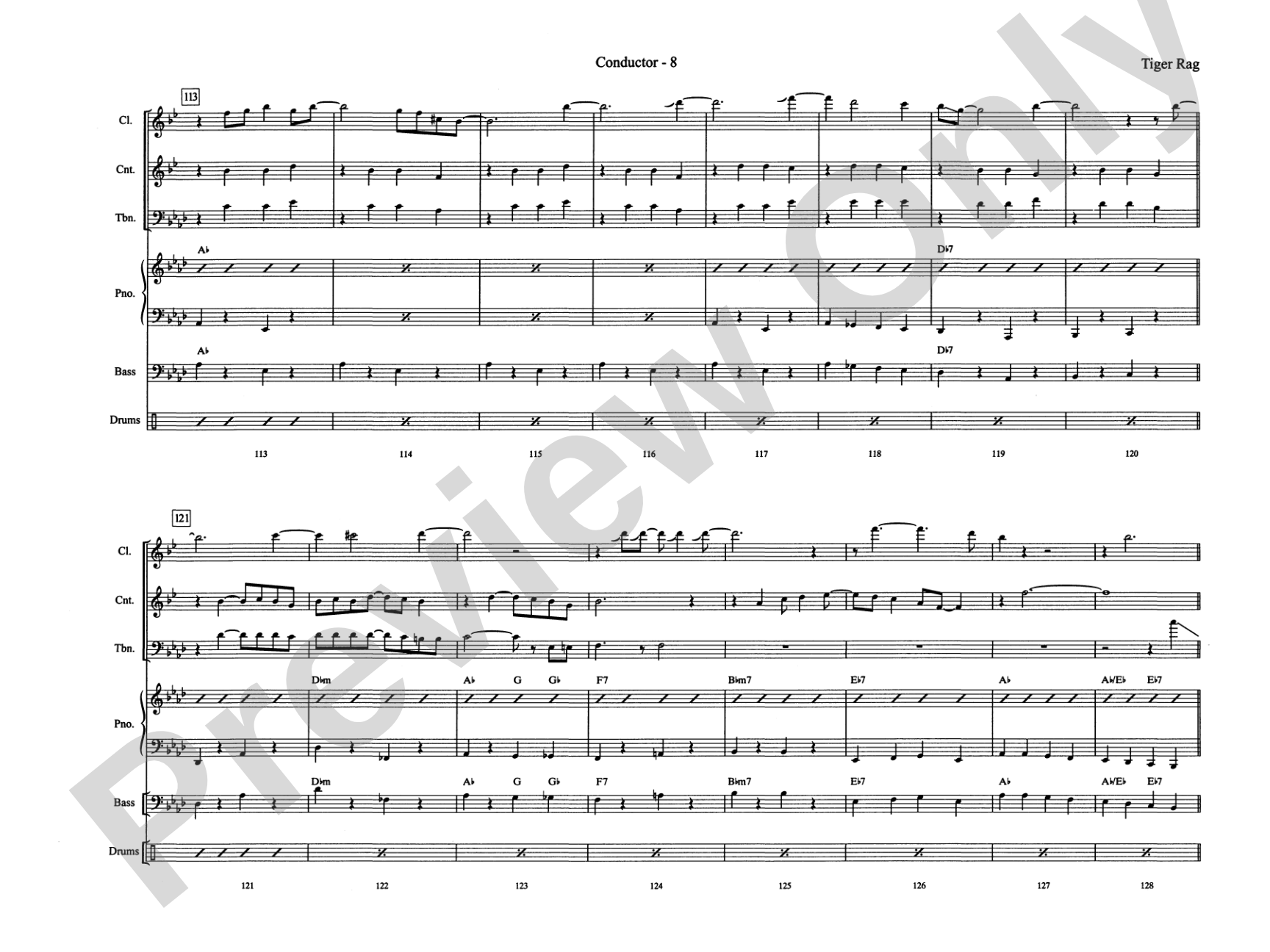
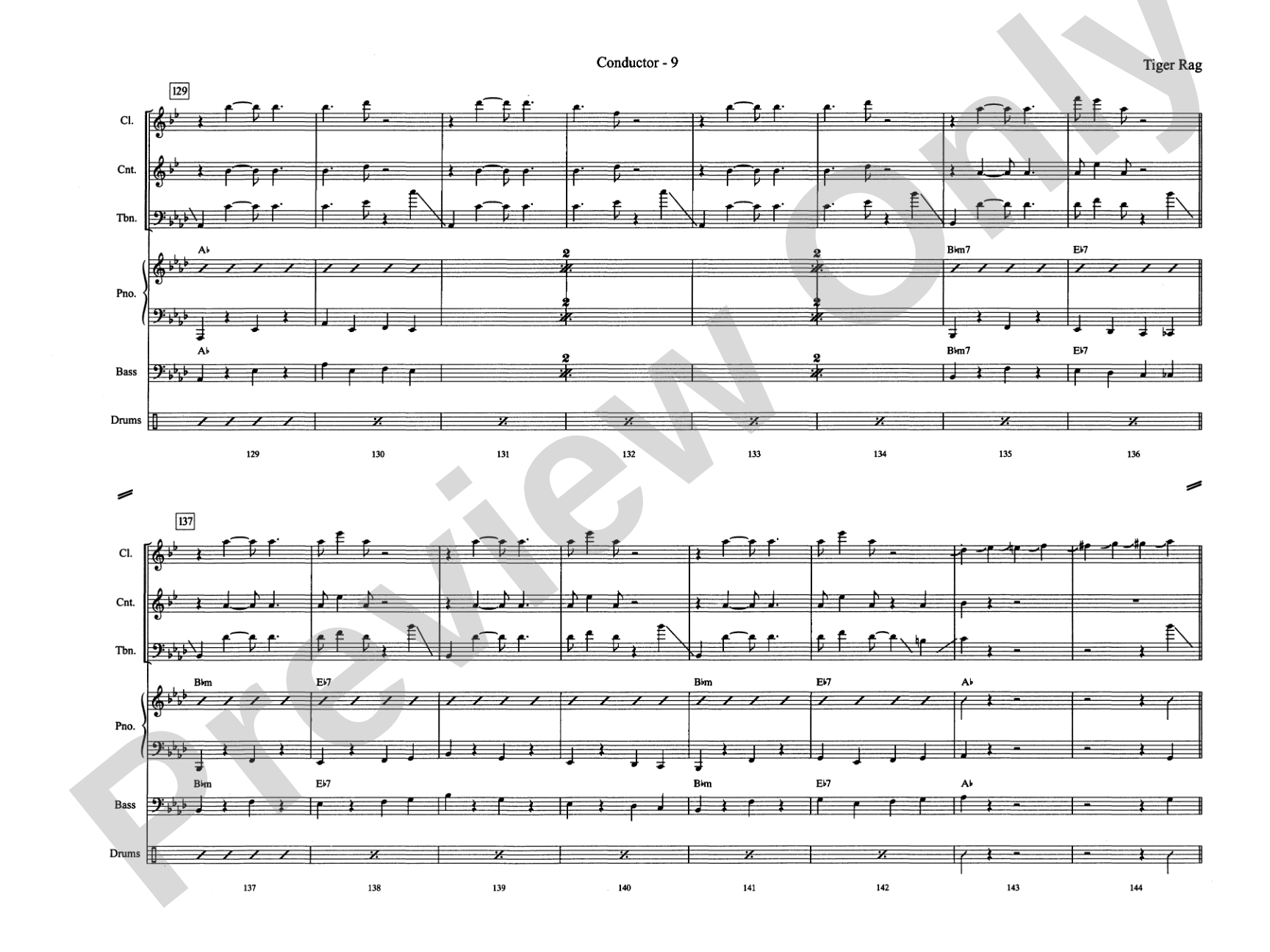
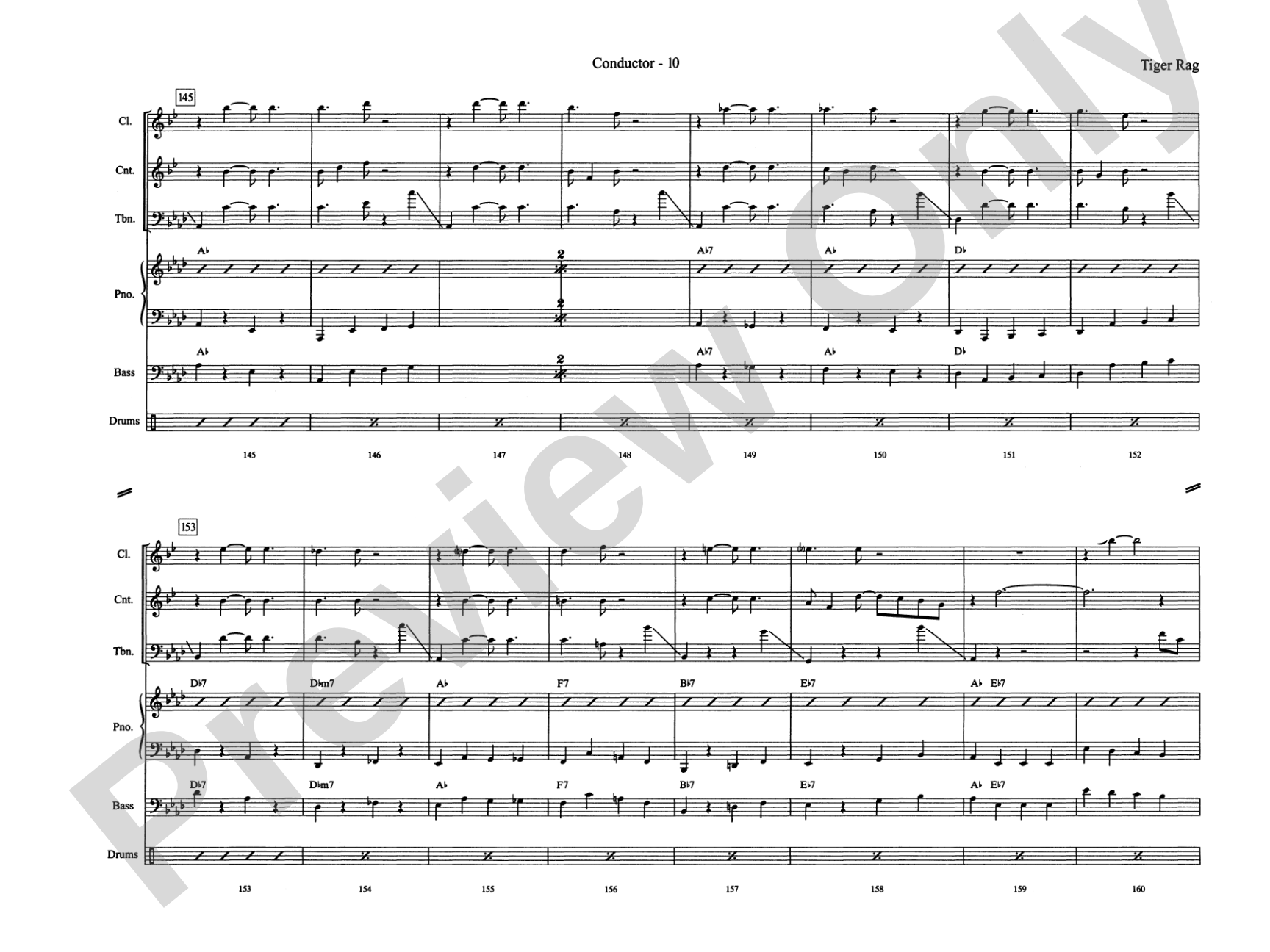
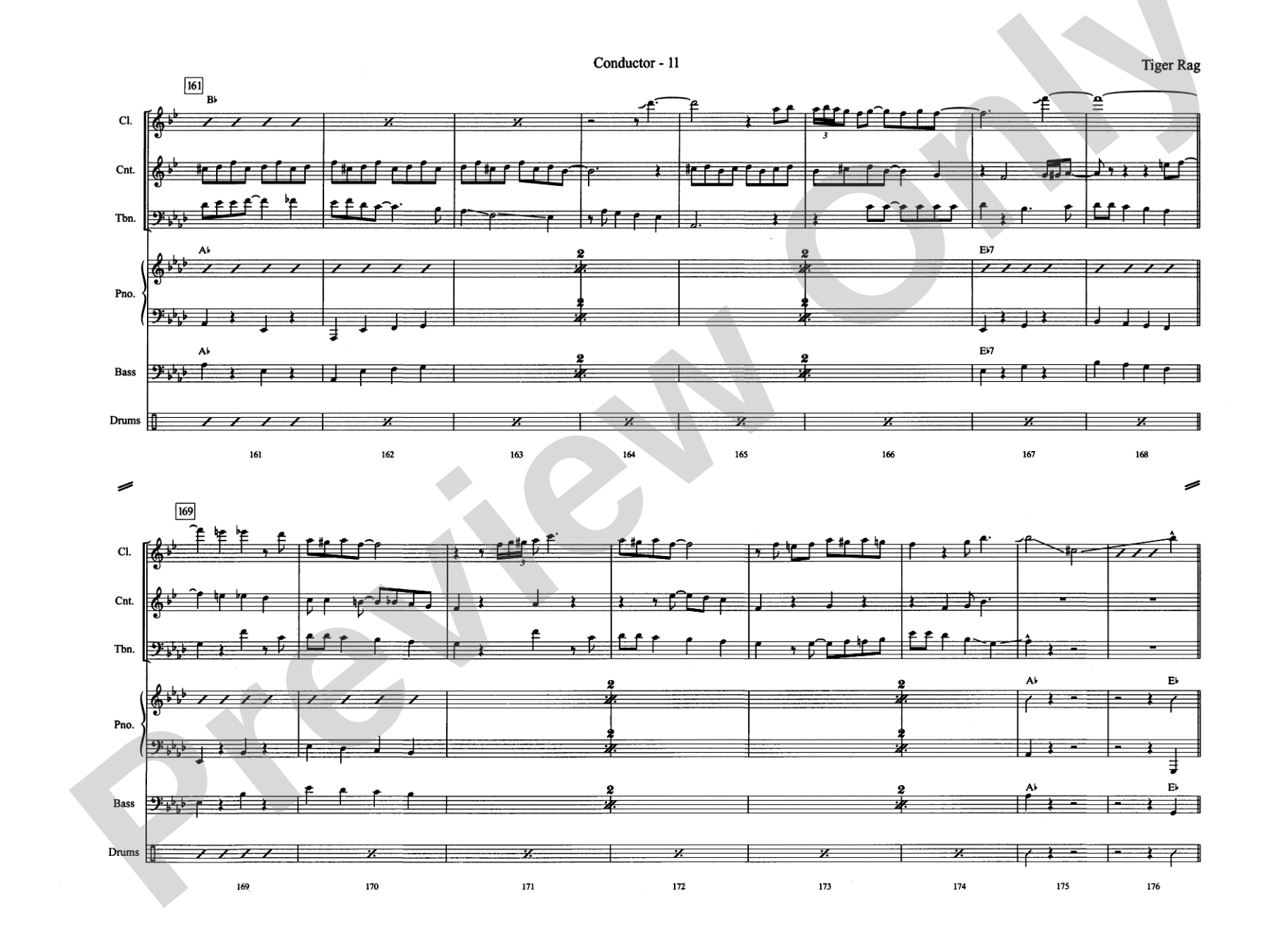
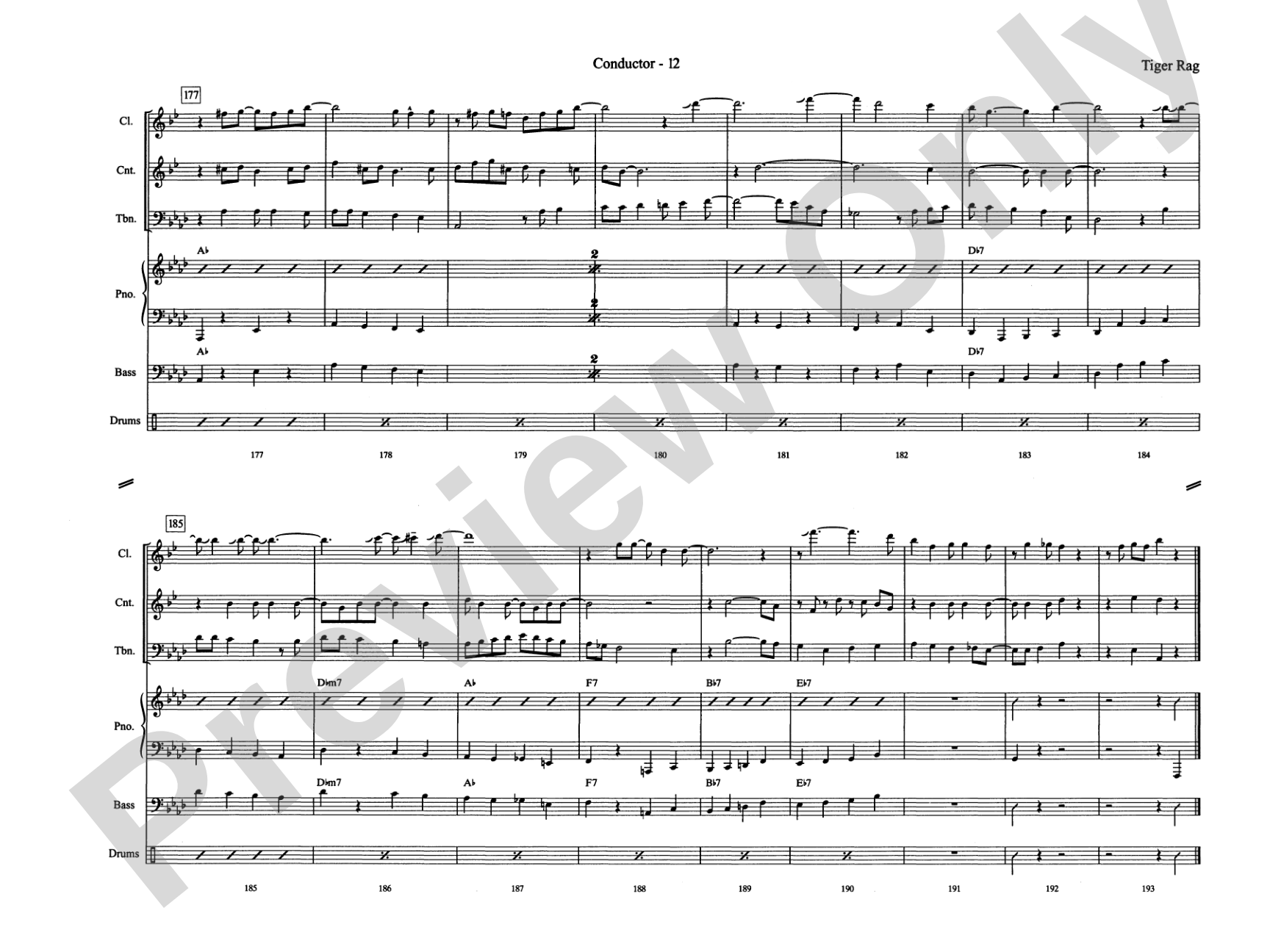



Tiger Rag (Hold That Tiger): Jazz Ensemble Conductor Score & Parts
By D. J. LaRocca
Grade: 3.5 (Medium)
Item: 00-PK-0004408

$35.00
One moment…
Description
From Essential Jazz Editions, Set #1: New Orleans Jazz, 1918-1927.


Don't just read it, hear it, play along with it, and watch your students grow with it. In MakeMusic Cloud, Tiger Rag (Hold That Tiger): Jazz Ensemble Conductor Score & Parts comes alive with professional accompaniment, adjustable tempo, and built-in practice tools that turn solo practice into real progress.
Open in the Player
Jump straight in and assign it today.
Start Your Free Trial
Open this title and explore the full library in minutes.
Sample Audio
No sample audio found.
Sample Video
No sample videos found.
Additional Details
Series:
Essential Jazz Editions (Jazz at Lincoln Center)
Publisher:
Alfred Music
Page Count:
28
SKU:
00-PK-0004408
More about this title
About the Composer: D. J. LaRocca
D. J. LaRocca composed Tiger Rag in 1918, capturing the raw energy and infectious rhythms of early New Orleans jazz. His work became one of the defining pieces of the jazz age, widely recorded and adapted across decades by musicians from Louis Armstrong to the modern era.
Why we love this
This Essential Jazz Editions arrangement strips away the accumulated arrangements and studio versions to get back to what made Tiger Rag so vital in 1918: relentless forward motion, clear ensemble voicing, and the kind of structural clarity that lets students hear exactly how early New Orleans jazz was constructed. At grade 3.5, it's accessible enough for developing ensembles but demanding enough to require real listening and rhythmic precision.
What to expect
Tiger Rag explodes with the joy and urgency of early jazz: bright, syncopated, utterly driven forward by the ensemble's collective energy. The piece feels both playful and propulsive, capturing a moment when improvisation and arrangement were still discovering each other in the streets and dance halls of New Orleans.
Who it's for
Jazz ensemble directors teaching students in grades 7-9 or adult community jazz groups who want essential jazz repertoire with proper historical grounding. This arrangement serves ensembles ready to move beyond simplified jazz tunes into pieces that shaped the tradition itself.
How to get the most out of it
- Keep the tempo steady and driving; this piece thrives on forward momentum rather than flexibility. The rhythm section should lock in first, then build outward.
- Articulate staccatos crisply without clipping the phrase. The bouncy character depends on separation with breath, not shortened note values.
- Balance the solo lines so they sit above the ensemble texture without dominating. Early jazz arrangements rely on transparency, not layering.
- Let the collective swing naturally; resist over-rehearsing the groove. Students should listen to historic recordings to hear how the original players approached the rhythm.
How to use it
Position this as a centerpiece for a program exploring jazz history, or pair it with other Essential Jazz Editions selections to create a focused set on New Orleans styles. It works equally well as a concert opener that immediately signals to the audience that they're hearing something authentic and alive.
Skills your students will build
- Articulating syncopated rhythms with precision and swing feel
- Reading ensemble parts within a collective texture
- Understanding early New Orleans jazz harmony and form
- Responding to the rhythm section with rhythmic independence and listening
- Balancing solo lines against ensemble accompaniment
- Listening to historic recordings as a rehearsal and interpretation tool