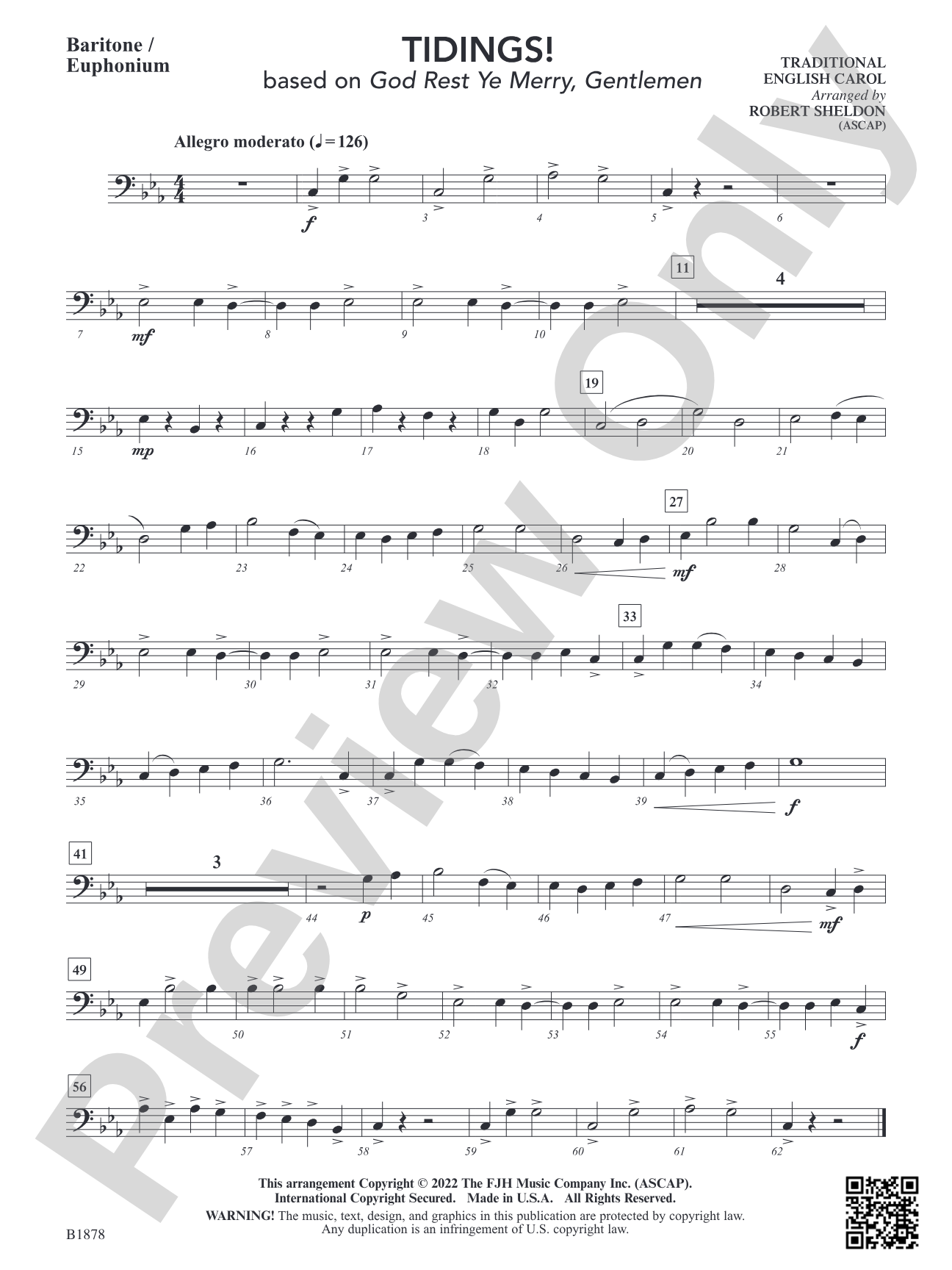
Tidings!: Baritone / Euphonium Sheet Music Preview

Tidings!: Baritone / Euphonium

By Robert Sheldon

Grade: 1

Item: 98-PC-DB1878_BBC1

Digital Download
$7.00
Description
This setting of the popular holiday classic God Rest Ye Merry, Gentlemen revisits the old English carol with modal interludes and a nod toward Elizabethan dance rhythms. Everyone gets a chance to play the melody, and this arrangement even incorporates a simple fugue to engage all players.

Don't just read it, hear it, play along with it, and watch your students grow with it. In MakeMusic Cloud, Tidings!: Baritone / Euphonium comes alive with professional accompaniment, adjustable tempo, and built-in practice tools that turn solo practice into real progress.

Sample Audio
0:00
0:00
Sample Video
Additional Details
Series: MOS Performance Series
Publisher: The FJH Music Company, Inc.
SKU: 98-PC-DB1878_BBC1

More about this title

About the Composer: Robert Sheldon

Robert Sheldon

Robert Sheldon stands among the most frequently performed composers writing for wind bands today. His works appear on contest and concert stages internationally, and he has conducted performances of his music in some of the world's most prestigious venues, including Carnegie Hall, the Kennedy Center, and the Sydney Opera House. A recipient of honors from the American School Band Directors Association, Phi Beta Mu, and ASCAP, Sheldon balances an active composing schedule with regular appearances as a guest conductor for All-State and Regional Honor Bands.

Beyond the concert hall, Sheldon shapes the next generation of musicians as lead author of Sound Innovations for Concert Band. His arrangement and composition work draws on deep knowledge of what band students can accomplish at each level, ensuring his music engages players while remaining accessible. He maintains a robust commissioning practice and has conducted clinics and presented at universities and state music education conferences across North America, Asia, Europe, and Australia.

Why we love this

This arrangement makes a crowded holiday repertoire feel fresh by layering modal interludes and Elizabethan dance rhythms beneath a melody everyone recognizes. Sheldon writes for Grade 1 bands with genuine sophistication: every section gets the tune, a fugue engages the full ensemble, and the harmonic color keeps audiences and players alike engaged throughout a familiar carol.

What to expect

A carol with scholarly curiosity and warmth. The piece honors the old English melody while surprising listeners with harmonic color and rhythmic texture that nod toward Renaissance music. It's festive without being saccharine, and celebratory without losing the carol's dignity.

Who it's for

Grade 1 concert bands ready to program something more sophisticated than a straight-ahead carol arrangement. This works for any holiday concert context, from school winter concerts to community band performances, and it's simple enough that younger or less experienced ensembles can sound polished.

How to get the most out of it

  • Balance the modal interludes carefully so they illuminate rather than cloud the main melody. These harmonic passages are brief but essential to the arrangement's character.
  • Address the Elizabethan dance rhythms with precision and lightness. These figures will feel stilted if they drag; crisp articulation and attention to pulse make them dance.
  • Give the fugue section breathing room. Each voice needs to enter clearly, so ensure parts are voiced so the inner lines don't disappear into the texture.

How to use it

Place this early in your holiday concert to establish a sophisticated tone while keeping the energy accessible. It pairs well with both traditional carols and contemporary holiday selections, and its brevity makes it ideal for opening a set or filling space between longer works.

Skills your students will build

  • Reading and performing modal harmony and non-functional chord progressions
  • Executing period-style dance rhythms with stylistic accuracy
  • Voice independence in fugal texture
  • Balancing melody and accompaniment across the full ensemble

You May Also Like