Tickletoe: 2nd B-flat Tenor Saxophone Sheet Music Preview

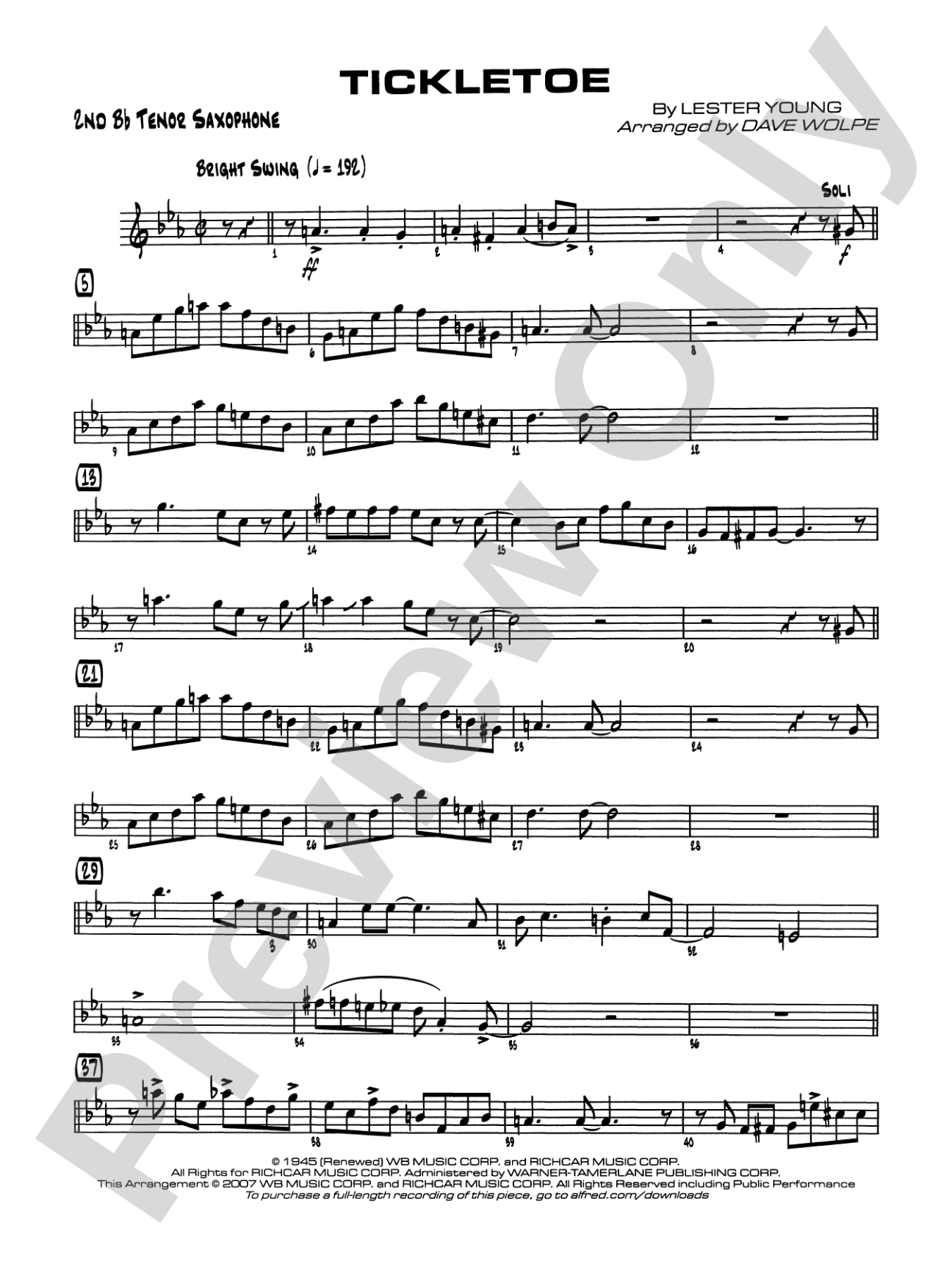
Tickletoe: 2nd B-flat Tenor Saxophone

By Lester Young / arr. Dave Wolpe

Grade: 4 (Medium Advanced / Difficult)

Item: 00-PC-0016673_TX2

Digital Download
$3.00
Description
Composed by Lester Young, arranged by Dave Wolpe, this swinger features the sax section. Plenty of sax soli, a tenor solo and the always wonderful Wolpe shout chorus. Lead trumpet range is to written high E-flat. Show off the saxes! (2:15) This title is available in MakeMusic Cloud.

Don't just read it, hear it, play along with it, and watch your students grow with it. In MakeMusic Cloud, Tickletoe: 2nd B-flat Tenor Saxophone comes alive with professional accompaniment, adjustable tempo, and built-in practice tools that turn solo practice into real progress.

Sample Audio
0:00
0:00
Sample Video
Additional Details
Series: Premier Jazz Series
Publisher: Alfred Music
Page Count: 72
SKU: 00-PC-0016673_TX2

More about this title

About the Composer: Lester Young

Lester Young (1909-1959) was a tenor saxophonist and composer whose lyrical, conversational approach to improvisation revolutionized jazz soloing. Known as "Pres" to his peers, Young pioneered a lighter tone and more angular phrasing than his contemporaries, directly influencing generations of jazz musicians across all instruments. His compositions and arrangements remain essential repertoire for teaching ensemble jazz vocabulary and the art of supporting strong solo voices.

Why we love this

Dave Wolpe's arrangement prioritizes what made Young's playing magnetic: conversational sax lines, plenty of room for individual voices to shine, and a shout chorus that brings the whole ensemble into the celebration. This is the rare jazz chart where the saxes genuinely get to lead, not accompany, making it a morale builder for your reed section.

What to expect

Tickletoe bounces with the easy swing of a mid-20th-century jam session, all smooth sophistication and conversational exchanges between the sections. The energy builds naturally from the opening sax statement through the solo passages and into the rollicking shout chorus, creating a piece that feels both polished and spontaneous.

Who it's for

This chart works for medium-advanced to advanced jazz ensembles ready to balance ensemble writing with prominent solo opportunities. Directors seeking to teach students how to listen to each other while maintaining jazz groove will find Wolpe's orchestration an ideal teaching tool.

How to get the most out of it

  • Lock the sax section's blend and intonation in the opening statement and shout chorus passages; the reeds need to sound like one voice despite the divisi writing.
  • Guide the tenor soloist toward a warm, vocalized tone during the solo section rather than an aggressive attack; this matches Young's own playing aesthetic.
  • Bring out the rhythmic precision of the rhythm section underneath the sax soli so the ensemble stays grounded while the reeds explore.
  • Check that the lead trumpet's high E-flat voicing sits clearly without overshadowing the saxes in their feature passages.

How to use it

Program this alongside other swing-era arrangements to build a cohesive set exploring classic jazz composition. It lands perfectly in a concert focused on saxophone repertoire or as a powerful closer that leaves audiences smiling.

Skills your students will build

  • Balancing individual voice projection within section blend
  • Supporting and responding to solo improvisers as an ensemble
  • Executing tight rhythmic unison in fast swing tempos
  • Understanding call-and-response and shout chorus conventions in jazz writing
  • Reading and performing divisi saxophone voicings

You May Also Like