Thus Sings My Dearest Jewel Sheet Music Preview

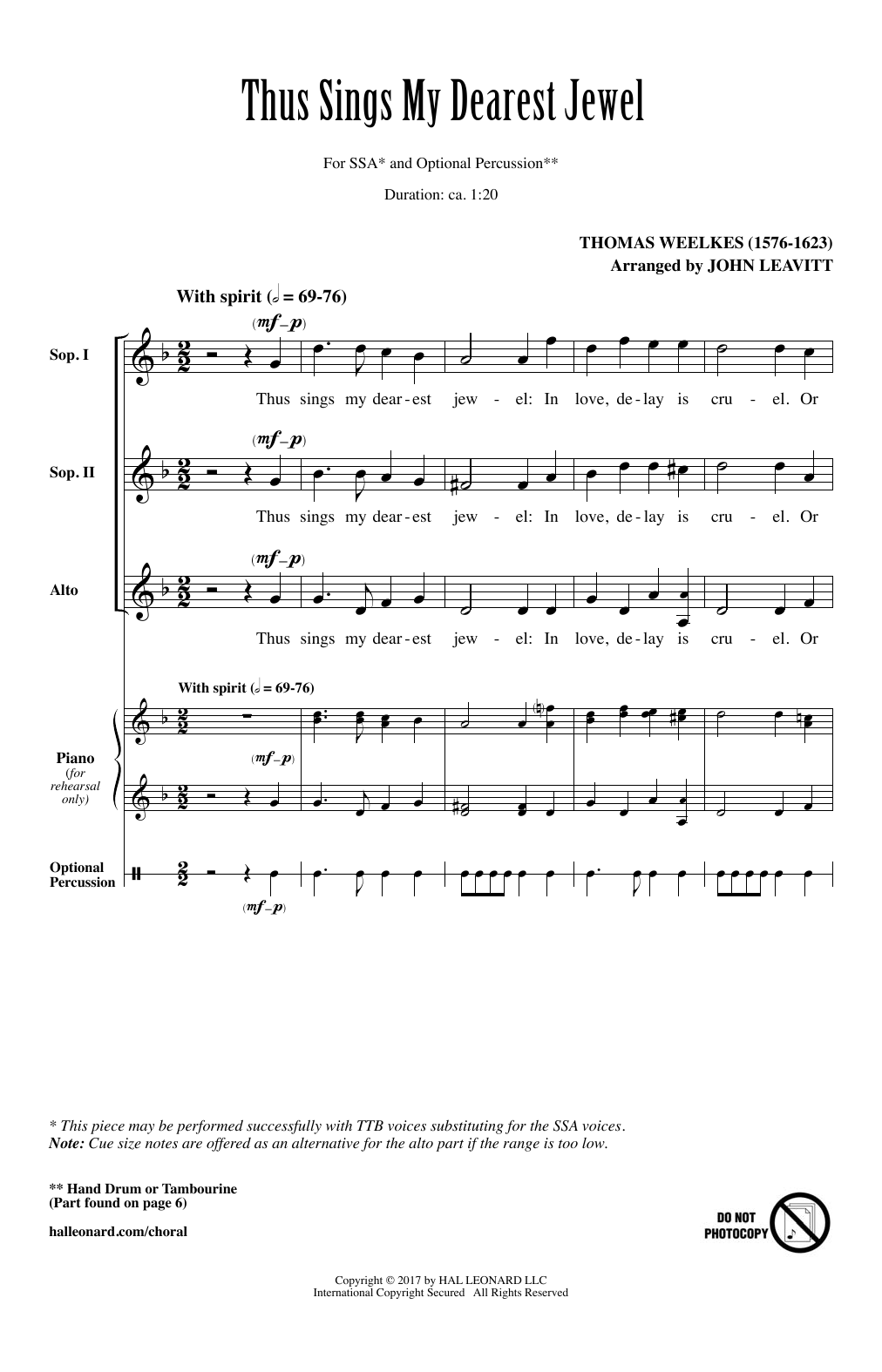
Thus Sings My Dearest Jewel: SSA Choral Octavo

As performed by Thomas Weelkes / Arranged by John Leavitt

Item: 35-DS00380431

Digital Download
$2.99
Description

Thus Sings My Dearest Jewel: SSA Choral Octavo isn't in MakeMusic Cloud just yet...but it could be. Let us know you'd like to see it, and you'll help shape what comes next. In the meantime, start a free trial and dive into thousands of interactive titles your students can play along with today.

Sample Audio
No sample audio found.
Sample Video
Additional Details
Publisher: Hal Leonard
Page Count: 5
SKU: 35-DS00380431

More about this title

About the Artist: Thomas Weelkes

Thomas Weelkes (1576-1623) stands among the finest English composers of the late Renaissance and early Baroque periods. His output spans sacred and secular vocal music, with his madrigals earning particular acclaim for their expressive text-painting and harmonic sophistication. Weelkes served as organist at Chichester Cathedral for much of his career, where he composed both liturgical works and the secular songs that showcase his gift for blending counterpoint with genuine emotional depth.

Why we love this

John Leavitt's arrangement makes this Renaissance gem genuinely singable for contemporary SSA ensembles without stripping away what makes Weelkes's writing luminous. The five pages offer substance and musical reward without overwhelming singers still building ensemble skills, and the text carries warmth that engages audiences who might otherwise dismiss early music as academic.

What to expect

Tender affection emerges through Weelkes's careful voice leading and the gentle arch of the melodic contours. The music feels intimate rather than grand, creating space for singers and listeners alike to sit with sincere emotion expressed through clean, elegant harmony.

Who it's for

SSA choirs seeking repertoire that honors vocal writing without requiring extensive Renaissance music experience. This works well for groups comfortable with three-part harmony and ready to explore music beyond contemporary styles without the technical demands of more complex polyphonic literature.

How to get the most out of it

  • Shape each phrase with gentle forward motion; the harmonic language benefits from a sense of flow rather than heavy punctuation between phrases.
  • Balance the text clarity against the counterpoint; sopranos and seconds often carry important melodic material simultaneously, so ensure both lines project without one drowning the other.
  • Lean into the vowel shapes on sustained notes to maintain resonance and blend, particularly where upper voices sit in their passaggio.

How to use it

Include this on concerts exploring the breadth of English music or on programs pairing Renaissance and contemporary works to show how direct emotional expression transcends era. Its five-page length makes it an ideal middle-program piece that resets the room before moving into weightier material.

Skills your students will build

  • Reading and balancing three independent vocal lines
  • Sustaining tone and blend on longer notes
  • Text-to-music relationships in a non-functional harmonic language
  • Performing with historical style and awareness of Renaissance vocal production

You May Also Like