
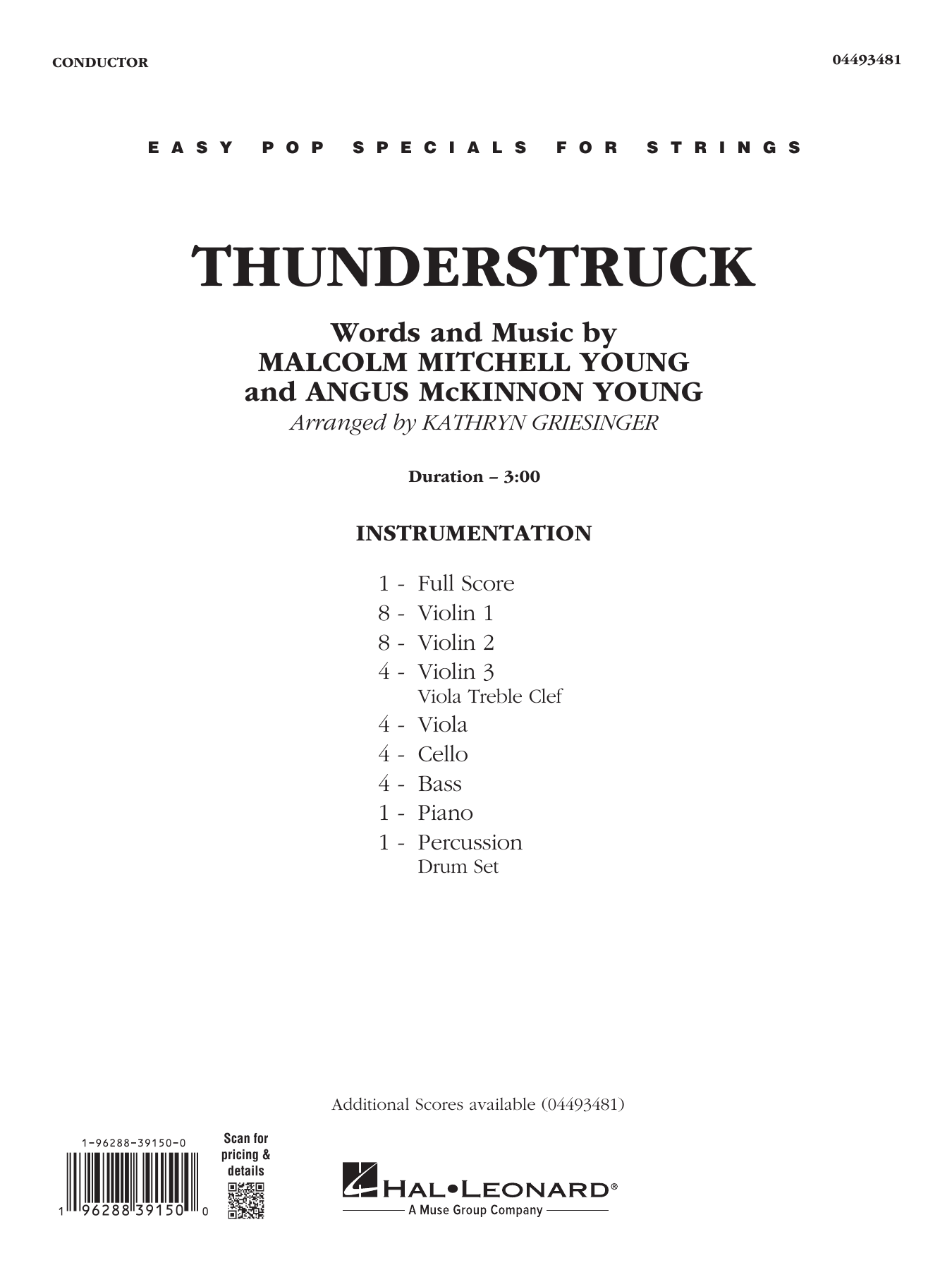

Thunderstruck (arr. Kathryn Griesinger): String Orchestra Conductor Score & Parts
As performed by AC/DC / Arranged by Kathryn Griesinger
Grade: 3
Item: 35-PK01913087
$60.00
Pickup currently not available
Buy Extra Parts (Digital PDF Download)
Parts Added to Cart!
Description
Don't miss the opportunity to bring one of the most iconic rock songs of all time to your next concert program! The students and especially the parents will love it! Drum Set part.


Discover MakeMusic Cloud: thousands of interactive titles your students can play along with today.
Sample Audio
No sample audio found.
Sample Video
Additional Details
Publisher:
Hal Leonard
SKU:
35-PK01913087
More about this title
About the Artist: AC/DC
AC/DC formed in Sydney in 1973 and became one of the defining bands of hard rock, with a catalog anchored by massive anthems and relentless groove. Their influence on popular music is immeasurable; generations of musicians have grown up learning their songs. For string players, AC/DC's catalog offers a rare chance to engage with repertoire that genuinely excites students and families alike, bridging the classical ensemble world with the rock canon that shaped modern musical culture.
Why we love this
Thunderstruck hits different when it's played by a string section instead of electric guitars. Griesinger's arrangement preserves the relentless energy and iconic opening riff while giving string players a visceral part to sink their teeth into, making this a genuine crowd-pleaser that validates why your students are learning their instruments in the first place. The Grade 3 level keeps the technical demands reasonable while the arrangement's authenticity means the payoff is immediate and powerful.
What to expect
Thunderstruck in strings is raw and propulsive, stripped of distortion but none of its urgency. The repeated figures and building intensity create a palpable sense of momentum that pulls everyone in the room forward, whether they're trained listeners or hearing their favorite rock song translated into an unfamiliar ensemble.
Who it's for
This arrangement serves directors who want to program something that energizes both their orchestra and their community without compromising musicianship. String players at the intermediate level benefit from the straightforward yet satisfying writing, and audiences appreciate hearing a beloved song performed with genuine artistry.
How to get the most out of it
- Anchor the opening riff with pristine rhythmic precision in the violins; this section defines whether the ensemble sounds electric or sluggish. Rehearse it daily as a warm-up until the articulation is unanimously tight.
- Coordinate the drum set carefully with your string dynamics, particularly in the build sections. If the drums push too far ahead or behind, the propulsive feel collapses.
- Shape the dynamic arcs in longer phrases rather than treating each bar as a unit. Let intensity breathe naturally so the repetitive sections feel purposeful instead of mechanical.
- Balance the divisi passages so inner voices support the melody without muddying the texture. Make sure violas and second violins can hear themselves clearly in rehearsal.
How to use it
Reserve this for concerts where you want to reward both student effort and audience investment. Pair it alongside your more traditional repertoire to show the full range of what a string orchestra can tackle, or use it as a finale to send people out of the concert hall on an adrenaline rush.
Skills your students will build
- Maintaining consistent rhythmic drive across repeated figures
- Articulation clarity in fast, syncopated passages
- Reading and performing divisi parts with textural awareness
- Balancing dynamic intensity with rhythmic precision
- Coordinating with percussion to maintain groove-oriented ensemble cohesion