Through the Vulcan's Eye: 1st & 2nd Flute Sheet Music Preview

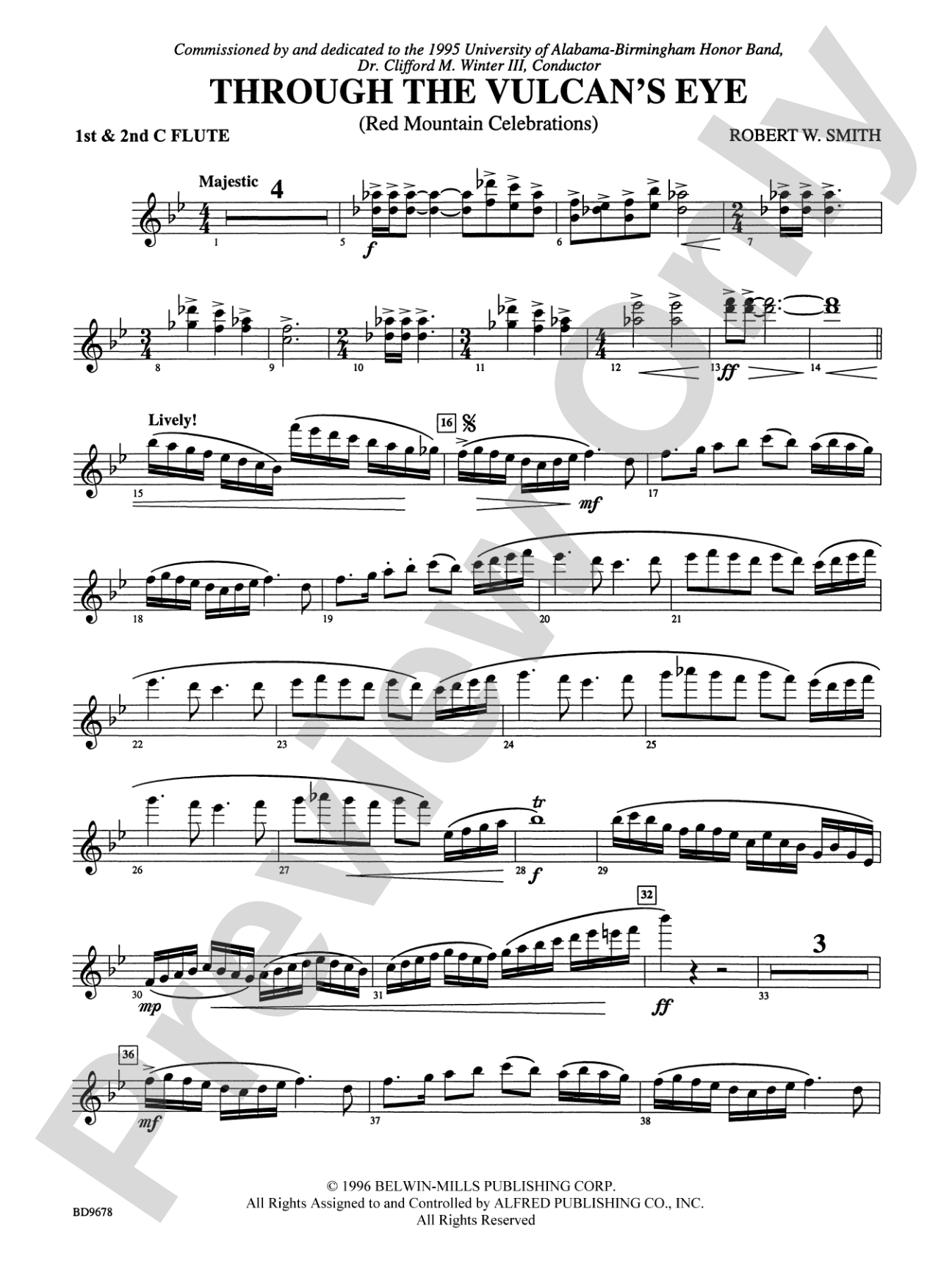
Through the Vulcan's Eye: 1st & 2nd Flute

By Robert W. Smith

Grade: 4 (Medium)

Item: 00-PC-0002043_F12

Digital Download
$3.00
Description
High atop a red mountain overlooking the magnificent city of Birmingham, Alabama, stands an iron sentinel---a monument of Vulcan that keeps watch over the "City of Steel." Through the Vulcan's Eye is comprised of four melodies, each aurally describing a view from the top of the mountain and inspired by the composer's childhood experiences in Alabama's largest metropolis. Broad brush strokes of sound blanket the work, enhanced by brilliant solo passages and total involvement from the percussion. A grand work on a grand scale! (7:09)

Don't just read it, hear it, play along with it, and watch your students grow with it. In MakeMusic Cloud, Through the Vulcan's Eye: 1st & 2nd Flute comes alive with professional accompaniment, adjustable tempo, and built-in practice tools that turn solo practice into real progress.

Sample Audio
0:00
0:00
Sample Video
Additional Details
Series: Belwin Symphonic Band
Publisher: Alfred Music
Page Count: 362
SKU: 00-PC-0002043_F12

More about this title

About the Composer: Robert W. Smith

Robert W. Smith

Robert W. Smith stands among America's most performed composers of concert band and orchestral music, with more than 400 published works distributed primarily through Alfred Music. He holds degrees from Troy State University (AL) and the University of Miami (FL), and his original compositions have circulated through performance venues across North America, Europe, Australia, and Asia. His symphonic works, including The Divine Comedy and The Odyssey, have become repertoire staples worldwide.

Beyond the concert hall, Smith's music has appeared in contexts ranging from Olympic broadcasts to the Macy's Thanksgiving Day Parade telecast, from presidential ceremonies in Japan to Opening Day at Dodger Stadium. His work as a guest conductor and clinician has taken him across the United States and to Canada, Japan, Australia, Italy, Austria, and the United Kingdom, where he continues to champion accessible yet sophisticated band literature.

Why we love this

Smith's narrative approach transforms a local landmark into a full ensemble experience, giving your band a story to tell rather than simply notes to play. The four contrasting sections allow you to showcase different character colors within a single, cohesive work, and the 7-minute duration makes it substantial enough for contest/festival programming without becoming unwieldy for rehearsal scheduling.

What to expect

Expansive and cinematic, with the reflective quality of someone gazing across a landscape they know intimately. Moments of brilliance break through longer stretches of sonorous sound, creating the visual rhythm of shifting light and shadow across a city from a high vantage point.

Who it's for

Grade 4 bands with solid fundamentals and the range to handle contrasting dynamics and tempos across a substantial work. Contest and festival programs benefit especially from its appeal to adjudicators and audiences alike.

How to get the most out of it

  • Balance the solo passages against the full ensemble backdrop so that featured instruments emerge clearly without the supporting harmonies receding into silence.
  • Engage your percussion section actively throughout; Smith's orchestration assigns them descriptive work that shapes the listener's sense of place and motion rather than marking time.
  • Shape the "broad brush strokes of sound" by conducting phrase arcs that honor the sweeping, panoramic character rather than sectional boundaries alone.

How to use it

Program this as a centerpiece work on a concert that pairs well with both shorter, character pieces and traditional band repertoire. Its moderate length and contest-viable difficulty make it equally suited to festival appearances and regular concert programming.

Skills your students will build

  • Shaping long melodic phrases across dynamic changes
  • Balancing solo passages within full ensemble texture
  • Reading and executing contrasting tempos and character shifts
  • Ensemble blend across four distinct musical sections
  • Rhythmic precision in passages featuring total percussion involvement

You May Also Like