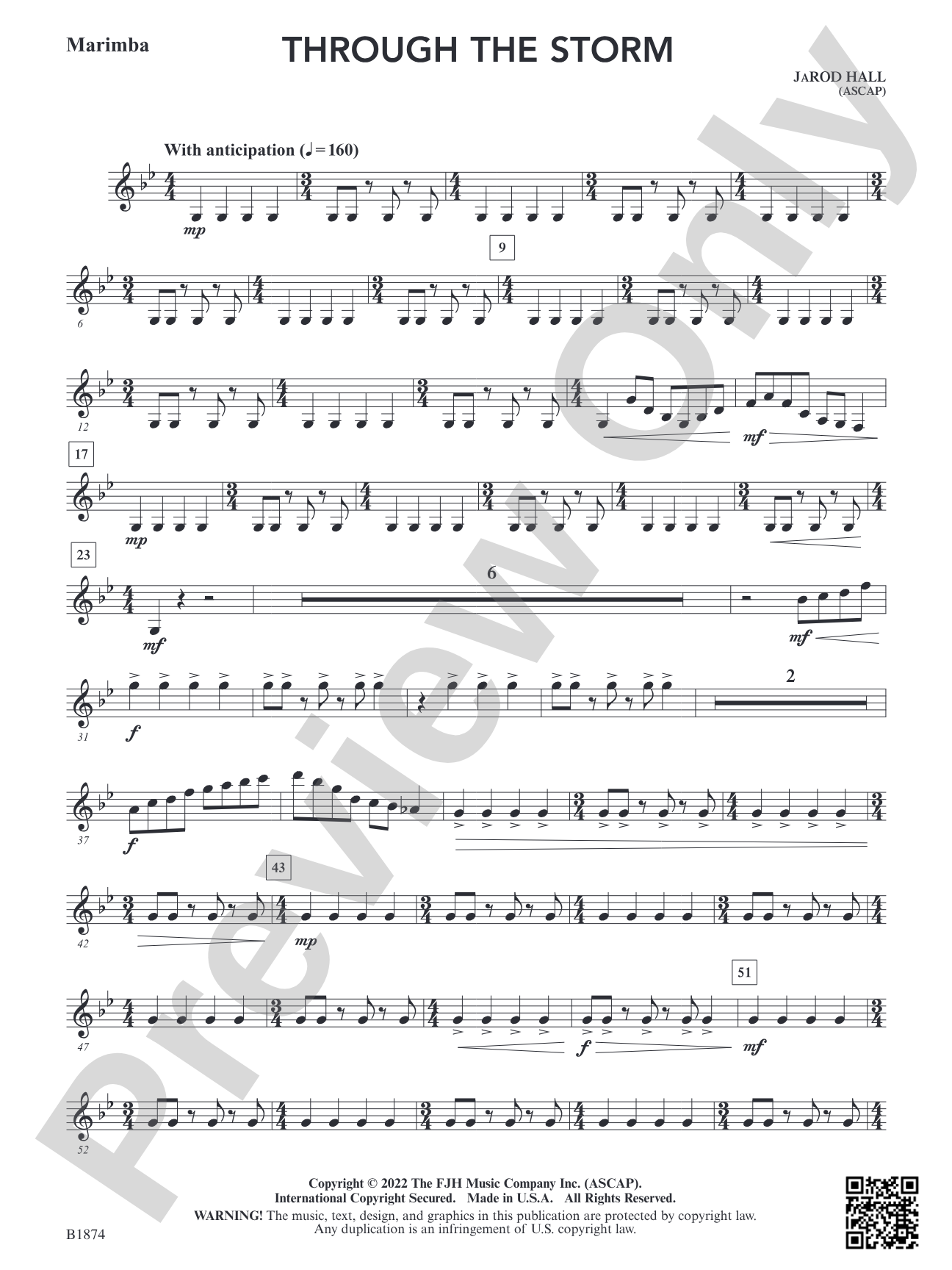
Through the Storm: Marimba
By JaRod Hall
Grade: 2.5
Item: 98-PC-DB1874_MAR
Pickup currently not available
Description
Don't just read it, hear it, play along with it, and watch your students grow with it. In MakeMusic Cloud, Through the Storm: Marimba comes alive with professional accompaniment, adjustable tempo, and built-in practice tools that turn solo practice into real progress.
Jump straight in and assign it today.
Open this title and explore the full library in minutes.
Sample Audio
Sample Video
Additional Details
More about this title
About the Composer: JaRod Hall

JaRod Hall was born in Texas in 1991 and trained in music education at the University of North Texas and Texas State University, studying composition with Dr. Michael Ippolito and Dr. Jack Wilds, and conducting with Dr. Nicholas Williams and Dr. Caroline Beatty. As both a performer and educator, he has maintained an eight-year career directing concert bands while serving as principal tuba and jazz trombonist with regional ensembles including the North Texas Wind Symphony and Texas State Wind Symphony.
Hall's work as a band director yielded consistent sweepstakes recognition at the UIL level, including a historic Citation of Excellence for the 2018 Griffin Middle School non-varsity band—the first middle school ensemble in Frisco ISD to achieve that honor. His compositions have earned significant recognition, appearing on the Texas Prescribed Music List and the Bandworld Top 100, with "Through the Storm" winning the 2021 Barbara Buehlman Prize for middle school band composition. His performance credentials include four years in the Texas All-State Band and appearances with the 2014 Disneyland All-American College Band.
Why we love this
Hall captures a genuine meteorological event—the 2021 Texas freeze—with musical specificity rather than vague storm theatrics. The piece moves through distinct dramatic phases: percussion violence giving way to sparse, falling snow, which gives conductors a natural arc and a clear dramatic payoff. At Grade 2.5, the writing remains accessible while avoiding the shallow energy that sometimes plagues easy contest music.
What to expect
From violent percussion cascades to the breathtaking quiet of snowfall, this score captures the raw power and eventual exhaustion of a winter storm. The music swells through danger and tension, pulling listeners into the eye of the tempest before releasing them into a gentle, sparse landscape of falling snow and fading cold.
Who it's for
Concert bands at the high school or advanced middle school level will find music that speaks to their current abilities without condescending to them. This work appeals to directors seeking repertoire with a strong programmatic foundation and a contest pedigree, offering students an engaging entry point into musically substantive band literature.
How to get the most out of it
- Balance the percussion section carefully during the opening clashes. These instruments drive the narrative, but they should punctuate rather than bury the melodic content being passed between sections.
- Shape the temperature drop using dynamics and tempo flexibility together. As tensions rise and fall, use small adjustments to pacing that reflect the volatile nature of the weather pattern.
- Isolate the eyewall passage in rehearsal to ensure clarity and control at the climactic moment. This section demands energy but not chaos; lock the ensemble's unison articulation before adding individual expression.
- Give the closing measures space and quietness. The sparse night air and slowing snow require restraint and a conductor who resists the urge to rush through stillness.
How to use it
Program this during the winter concert season or a regional/state contest where its Texas origins and award recognition will resonate with your audience. The narrative arc makes it an excellent centerpiece for a thematic program focused on nature, weather, or regional history, or pair it with other Grade 2.5 contest selections to build a compelling festival set.
Skills your students will build
- Maintaining ensemble cohesion through rapid sectional transfers of melodic content
- Dynamic control and contrast between thick, violent textures and sparse, transparent passages
- Reading and executing rhythmic figures at moderate tempo with precision
- Responding to dramatic arc and pacing cues from the conductor
- Balancing percussion accompaniment with wind melodic lines