
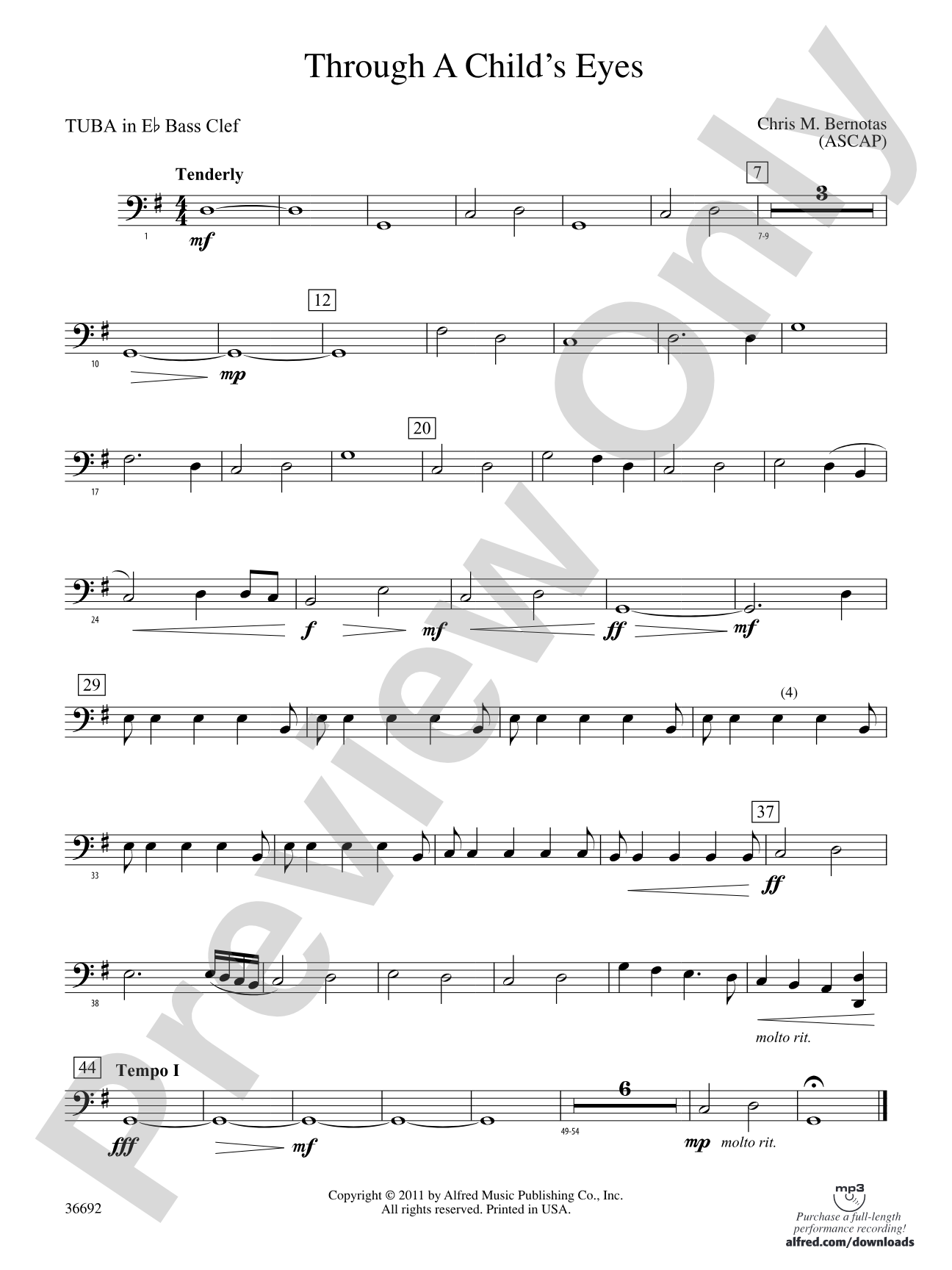

Through a Child's Eyes: (wp) E-flat Tuba B.C.
By Chris M. Bernotas
Grade: 2 (Medium Easy)
Item: 00-PC-0015120_wpTBEBC
$3.00
Pickup currently not available
Description
Through a Child's Eyes is a composition with reflection on the innocence of a child, the discovery of the world around them and the peacefulness of a sleeping baby. After the somewhat bold introduction, the first theme brings a simple sense of comfort. The trumpets then stand proudly with a feeling of strength and confidence. After a climax we are led to a slightly contemplative section. The ending is filled with a recapitulation of the main theme accompanied with the music box. Rest and comfort come through with the sounding of the final chord. This title is available in MakeMusic Cloud.


Don't just read it, hear it, play along with it, and watch your students grow with it. In MakeMusic Cloud, Through a Child's Eyes: (wp) E-flat Tuba B.C. comes alive with professional accompaniment, adjustable tempo, and built-in practice tools that turn solo practice into real progress.
Open in the Player
Jump straight in and assign it today.
Start Your Free Trial
Open this title and explore the full library in minutes.
Sample Audio
1
Audio File
--:--
0:00
0:00
Sample Video
No sample videos found.
Additional Details
Series:
Young Symphonic
Publisher:
Alfred Music
Page Count:
128
SKU:
00-PC-0015120_wpTBEBC
More about this title
About the Composer: Chris M. Bernotas

Chris M. Bernotas brings more than 25 years of music education experience to his work as a composer and conductor. As Director of Instrumental Publications at Alfred Music, he shapes band and orchestra curricula used in schools across the country, drawing on deep classroom knowledge to inform every piece he writes.
Bernotas understands what students need and what teachers face. He has worked directly with young musicians at all levels, conducted honor ensembles, and led clinics for directors seeking fresh approaches. That experience lives in his music: compositions that are genuinely playable, emotionally engaging, and worth rehearsing. He has co-authored several educational resources including Sound Innovations Ensemble Development and Sound Artistry. His work appears in concert halls worldwide, performed by everyone from beginning bands to advanced groups.
Why we love this
This score carries real emotional weight without asking your band to do the impossible. Bernotas crafts a journey that unfolds naturally—from bold opening through lyrical strength to contemplative rest—giving each section of your band meaningful moments to shine while keeping the technical demands accessible. The instrumentation and voicing keep younger players engaged without overexposing them, and the recapitulation with music box texture creates a genuinely moving final statement that audiences will remember.
What to expect
The piece opens with quiet boldness, then settles into tenderness and discovery. Trumpet fanfares bring pride and energy before the music turns inward, inviting reflection. Throughout, there's a sense of childlike wonder meeting gentle protection—not saccharine, but genuine. The closing brings that comfort full circle, like watching a child drift peacefully to sleep.
Who it's for
This piece suits Concert Band programs at the Grade 2 level where musicianship and character matter as much as technical fireworks. Directors seeking repertoire that connects students emotionally to what they're playing, and audiences ready to hear thoughtful writing from young musicians, will find exactly what they need here.
How to get the most out of it
- Shape the first theme with a singing tone in the woodwinds; this is the heart of the piece, and its simplicity demands warm phrasing rather than mechanical precision.
- Let the trumpet section own their moment of strength and confidence in the second theme. This passage rewards secure fundamentals and clear articulation.
- Balance transparency in the contemplative section by resisting the urge to layer dynamics too heavily; let silence and space do as much work as sound.
- In the final chord, sustain with patience. That closing moment is meant to rest and comfort the listener, so give it time to settle.
How to use it
Open a concert with this as a short centerpiece that establishes a reflective tone, or place it strategically to provide musical and emotional contrast alongside more energetic works. The piece also serves as an excellent teaching tool mid-season when your band has the fundamentals in place but needs repertoire that rewards expressive playing and sectional balance.
Skills your students will build
- Sustaining balanced sonorities across the full ensemble
- Phrasing and dynamic shaping in melody-driven writing
- Sectional coordination between woodwinds and brass in lyrical passages
- Listening for and responding to harmonic and textural shifts
- Interpreting emotional intent through musical expression rather than technical difficulty