
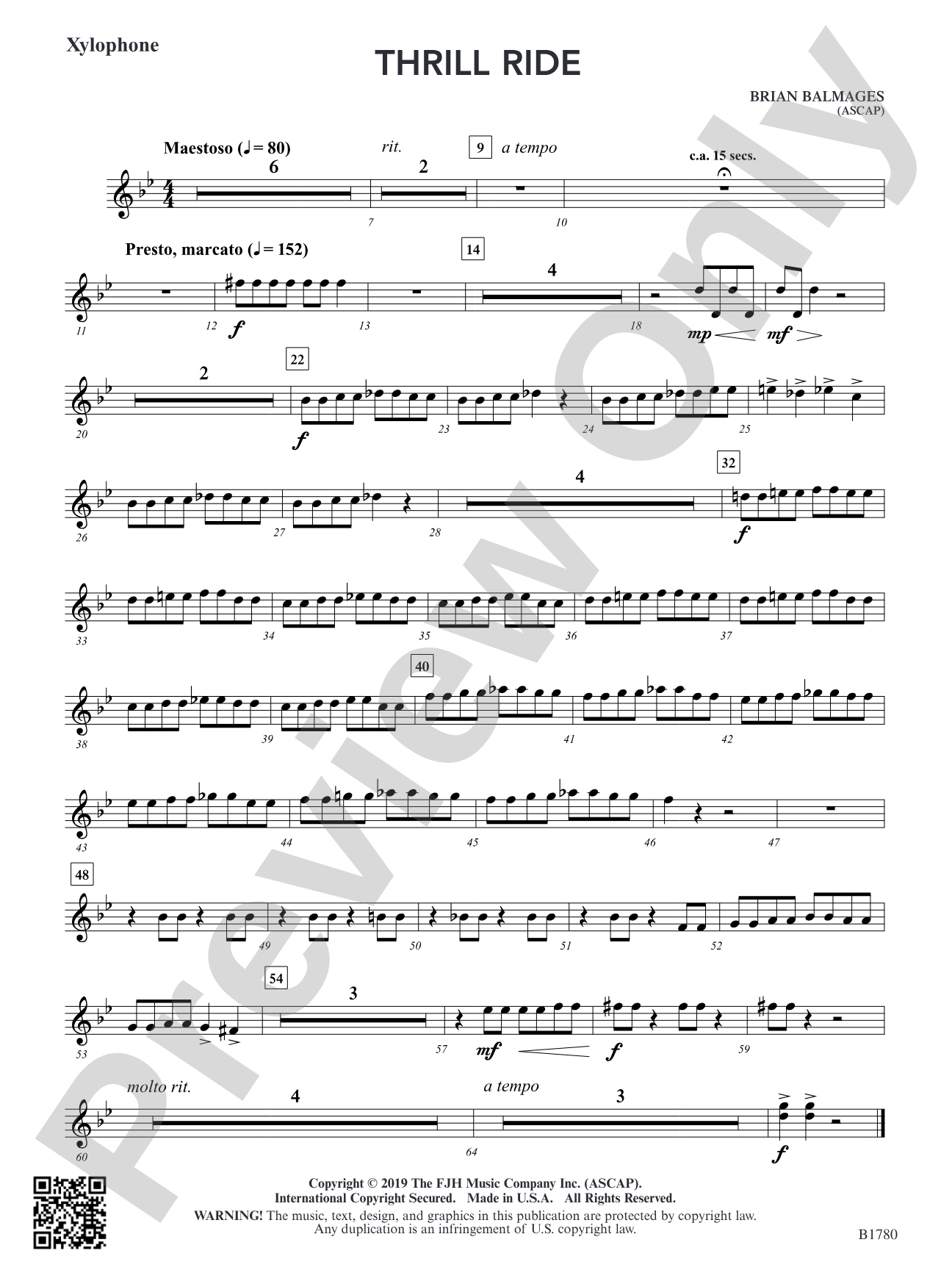

Thrill Ride: Xylophone
By Brian Balmages
Grade: 1
Item: 98-PC-DB1780_X
$7.00
Pickup currently not available
Description
Fear, anxiety, adrenaline, and a sheer rush of excitement all take center stage in this musical depiction of a rollercoaster ride. After percussion simulate the sound of a lift hill, the ride is off in an action-packed series of drops, turns, and loops. Eventually the riders get their hands up in the air and revel in the unabashed joy of the moment before the ride comes to its end. Unique and powerful!


Don't just read it, hear it, play along with it, and watch your students grow with it. In MakeMusic Cloud, Thrill Ride: Xylophone comes alive with professional accompaniment, adjustable tempo, and built-in practice tools that turn solo practice into real progress.
Open in the Player
Jump straight in and assign it today.
Start Your Free Trial
Open this title and explore the full library in minutes.
Sample Audio
1
Audio File
--:--
0:00
0:00
Sample Video
Additional Details
Series:
FJH Beginning Band
Publisher:
The FJH Music Company, Inc.
SKU:
98-PC-DB1780_X
More about this title
About the Composer: Brian Balmages

Brian Balmages has built an international reputation as a composer and conductor working across orchestral, band, and chamber music. His works have been commissioned and performed by ensembles ranging from professional orchestras to elementary school groups, with performances at venues including Carnegie Hall, the Kennedy Center, and the Sydney Opera House. He received the A. Austin Harding Award from the American School Band Directors Association and won the 2020 NBA William D. Revelli Composition Contest for Love and Light. An elected member of the American Bandmasters Association, Balmages was also honored with the inaugural James Madison University Distinguished Alumni Award and commissioned by the University of Miami to compose for the presidential inauguration of Dr. Julio Frenk.
As a conductor, Balmages appears regularly with all-state ensembles, university groups, and professional orchestras worldwide, with notable guest appearances at the Midwest Clinic, Western International Band Clinic, and the College Band Directors Conference. His music was performed at the 2013 Presidential Inaugural Prayer Service attended by President Obama and Vice President Biden. He currently serves as Director of MakeMusic Publications and Digital Education for Alfred and MakeMusic.
Why we love this
Balmages captures the visceral experience of a roller coaster with orchestration and pacing that keeps Grade 1 players engaged without overwhelming them. The narrative arc—from anxiety through exhilaration to resolution—gives students a dramatic context for their playing, transforming what could be a routine concert selection into a story they help tell. Contest appeal combined with genuine musical substance makes this a standout choice for festivals and festivals.
What to expect
The music careens between moments of anxious anticipation and unrestrained exhilaration, with clever orchestration and rhythmic propulsion creating the sensation of movement. Percussion effects ground the imagery, while the ensemble rises to moments of genuine joy, making the whole experience feel simultaneously theatrical and musically satisfying.
Who it's for
Grade 1 concert bands looking for a novelty piece with genuine musical substance and a clear narrative hook. This works equally well for beginning ensembles seeking engaging contest repertoire or for programs wanting to program something that connects with audiences beyond traditional concert fare.
How to get the most out of it
- Build the lift-hill section with clear attention to texture; let the percussion establish momentum before the band enters so the transition to the first drop lands with impact.
- Shape the drops and turns as distinct musical phrases rather than rushing through them; even at Grade 1 level, contrast in articulation and dynamics creates the illusion of speed.
- Keep the hands-in-the-air moment jubilant and unforced; resist the temptation to rush this celebratory section, as the joy should feel earned and expansive.
- Use the recorded accompaniment to lock ensemble timing during the most rhythmically active passages, especially where multiple sections have independent rhythmic figures.
How to use it
Program this as a festival or contest entry where its novelty appeal and Grade 1 accessibility become real assets. It also works well as an energizing opener for a concert program aimed at younger audiences or as a centerpiece for a thematic concert exploring programmatic music.
Skills your students will build
- Executing rhythmic figures across multiple meter changes while maintaining ensemble cohesion
- Responding to dynamic and articulation contrasts to shape musical narratives
- Balancing independent parts within the ensemble texture
- Sustaining focus and energy during repetitive rhythmic patterns
- Interpreting conductor cues that define specific dramatic moments